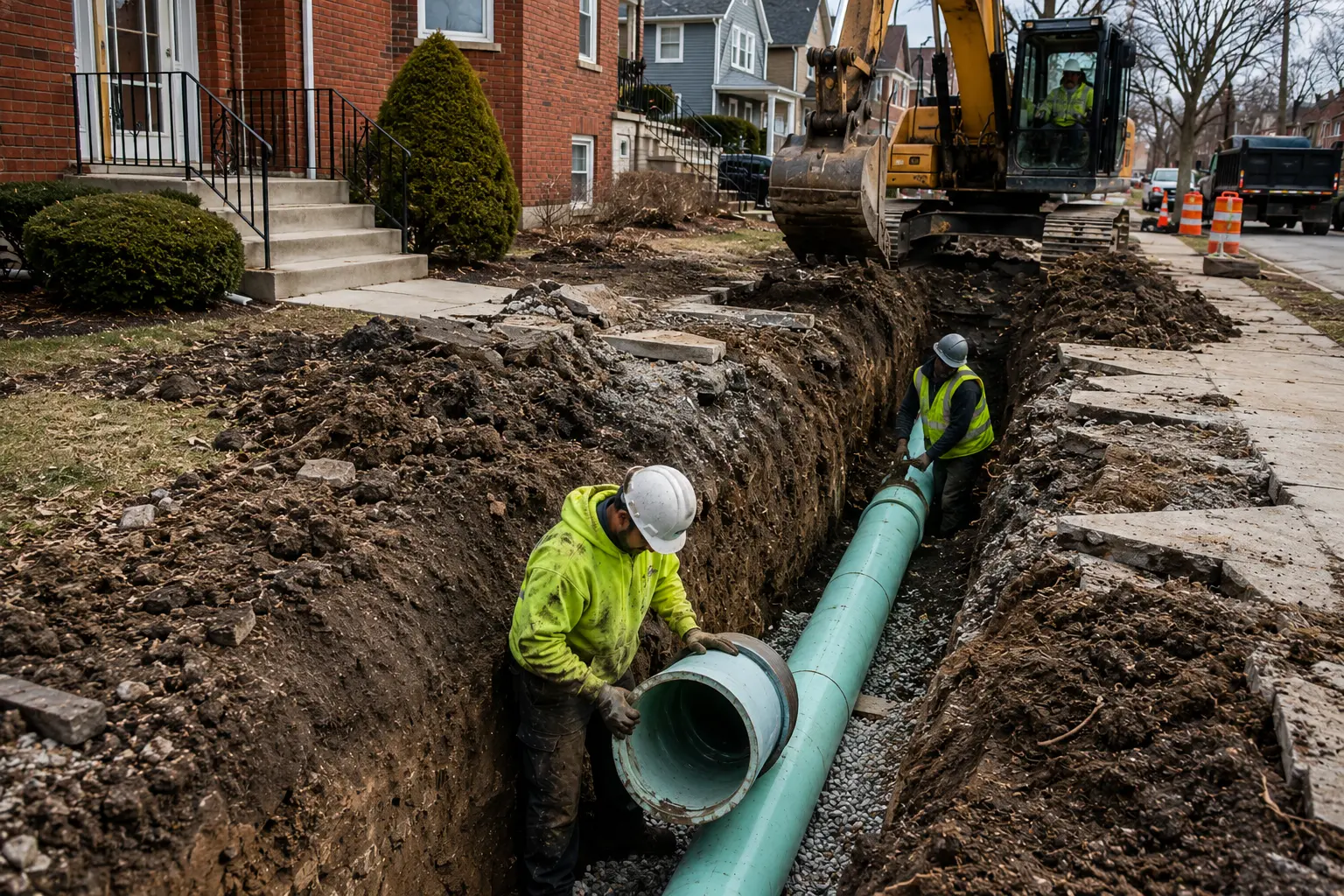
Replacing a sewer line is one of the largest plumbing-related projects many Chicago homeowners will ever face. While sewer pipes are designed to last for decades, age, shifting soil, tree root intrusion, corrosion, and structural failures can eventually make replacement necessary.
For homeowners in Chicago, sewer line replacement often involves unique challenges. Many neighborhoods contain older housing stock, aging clay sewer pipes, dense urban lots, alley access issues, and city permit requirements that can influence how replacement projects are performed.
This guide explains when sewer line replacement becomes necessary, what the process typically involves, factors that affect costs and timelines, and what Chicago homeowners should consider before moving forward. For additional local sewer resources, visit the Chicago Neighborhood Sewer Guides hub.
Key Takeaways
- Sewer line replacement is typically recommended when a pipe has significant structural damage or repeated failures.
- Many Chicago homes still contain aging clay, cast iron, or Orangeburg sewer lines that may eventually require replacement.
- Replacement methods include traditional excavation and trenchless technologies.
- Permits, access conditions, pipe depth, and restoration work can significantly affect project complexity.
- A sewer camera inspection is usually the best way to determine whether replacement is necessary.
- Not every sewer problem requires full replacement; some issues may be repairable.
When Does a Sewer Line Need Replacement in Chicago?
A sewer line replacement is generally necessary when the existing pipe has extensive cracking, collapse, severe root damage, major corrosion, repeated backups, or other structural defects that cannot be reliably repaired. In Chicago, older clay and cast iron sewer lines are particularly susceptible to age-related deterioration. A professional camera inspection typically determines whether repair or full replacement is the most practical long-term solution.
What Is a Sewer Line Replacement?
A sewer line replacement involves removing or bypassing an existing damaged sewer pipe and installing a new pipe that restores proper wastewater flow from the home to the municipal sewer connection.
Unlike a repair, which addresses a specific problem area, replacement typically resolves issues affecting a substantial portion of the sewer line or the entire system.
Common replacement scenarios include:
- Collapsed sewer pipes
- Multiple pipe breaks
- Severe root intrusion throughout the line
- Extensive corrosion
- Repeated sewer backups
- Chronic drainage problems
- Major pipe misalignment
- Failed older sewer materials
Signs Your Chicago Sewer Line May Need Replacement
Not every sewer issue requires a complete replacement, but certain warning signs often indicate significant underlying damage.
Frequent Sewer Backups
If backups continue returning despite repeated cleaning or root removal, the pipe itself may be deteriorating.
Multiple Slow Drains Throughout the House
When sinks, showers, tubs, and toilets all drain slowly, the problem may exist in the main sewer line rather than an individual fixture.
Persistent Tree Root Problems
Chicago’s mature neighborhoods contain large trees that frequently invade older sewer pipes. If roots repeatedly return after cleaning, replacement may become the more permanent solution.
Sewage Odors Outdoors
Unexplained sewer smells around the property can indicate cracks, separations, or leaks underground.
Camera Inspection Findings
A camera inspection often reveals structural problems such as:
- Pipe collapse
- Large cracks
- Severe offsets
- Corrosion
- Bellies or sagging sections
- Extensive root intrusion
In some situations, homeowners may first explore whether repair is possible before considering replacement. The differences are explained in Sewer Repair in Chicago.
Common Sewer Pipe Materials Found in Chicago Homes
| Pipe Material | Common Age | Typical Issues |
|---|---|---|
| Clay Tile | 50-100+ years | Root intrusion, cracking, separation |
| Cast Iron | 40-100 years | Corrosion, scaling, deterioration |
| Orangeburg | 1940s-1970s | Deformation, collapse, softening |
| PVC | Modern installations | Generally durable and resistant to roots |
| ABS | Some newer systems | Durable but less common locally |
Many Chicago neighborhoods still contain sewer systems installed decades ago. Age alone does not guarantee replacement is necessary, but older materials often require closer monitoring.
How Sewer Line Replacement Is Performed
Traditional Excavation
Traditional replacement involves digging a trench to expose the damaged pipe.
This approach may be necessary when:
- The pipe has collapsed
- Major sections are missing
- The line is severely offset
- Trenchless methods are not feasible
Excavation provides full access to the pipe but can disrupt landscaping, sidewalks, driveways, patios, and other surface features.
Trenchless Replacement
In suitable conditions, trenchless methods can reduce excavation requirements.
Common trenchless techniques include:
- Pipe bursting
- Cured-in-place pipe lining
Trenchless methods can preserve more of the property surface while still restoring pipe function. Learn more in Trenchless Sewer Repair in Chicago.
Chicago-Specific Considerations
Chicago homeowners often face circumstances that differ from suburban sewer projects.
Older Housing Stock: Many Chicago homes were built decades before modern sewer materials became standard. Aging infrastructure increases the likelihood of replacement projects.
Limited Property Access
Urban lots frequently provide less space for excavation equipment, staging materials, and restoration work.
Public Infrastructure Connections
Some projects involve connections near sidewalks, alleys, parkways, or public rights-of-way, potentially requiring additional approvals or inspections.
Weather Conditions
Chicago’s freeze-thaw cycles can contribute to soil movement and long-term pipe stress.
Neighborhood Differences
Sewer conditions can vary significantly throughout the city. Homeowners may benefit from reviewing local area resources such as Sewer Repair on Chicago’s North Side, Sewer Repair on Chicago’s South Side, and Sewer Repair on Chicago’s West Side.
What Factors Affect Sewer Line Replacement Costs?
Every property is different, which is why sewer replacement costs can vary considerably.
Pipe Length
Longer sewer lines generally require more labor and materials.
Pipe Depth
Deeper pipes often require additional excavation effort and safety measures.
Access Challenges
Limited access may require specialized equipment or additional labor.
Surface Restoration
Projects that disturb driveways, sidewalks, landscaping, patios, or retaining walls often involve additional restoration work.
Permit Requirements
Permit and inspection requirements vary depending on project scope and location.
Replacement Method
Traditional excavation and trenchless methods have different cost structures and suitability requirements.
Because these factors vary widely, homeowners should be cautious about relying on generalized online pricing estimates.
Repair vs. Replacement: Which Makes More Sense?
One of the biggest decisions homeowners face is whether a damaged sewer line should be repaired or fully replaced.
| Situation | Repair May Be Appropriate | Replacement May Be Appropriate |
|---|---|---|
| Single crack | Yes | Sometimes |
| Localized root intrusion | Yes | Sometimes |
| Pipe collapse | Rarely | Usually |
| Widespread deterioration | Rarely | Usually |
| Repeated failures | Sometimes | Often |
Homeowners facing active problems may also want to review Emergency Sewer Repair in Chicago when urgent action is required.
Potential Risks of Delaying Replacement
Ignoring a failing sewer line can increase both repair complexity and overall expense.
Potential consequences include:
- Repeated sewage backups
- Water damage inside the home
- Foundation concerns
- Soil erosion
- Property damage
- Unsanitary conditions
- More extensive excavation later
While replacement is rarely a project homeowners want to undertake, delaying necessary work can sometimes create larger problems.
Common Homeowner Mistakes
Assuming Every Backup Means Replacement
Many sewer backups are caused by clogs that can be cleared without replacing the pipe.
Skipping a Camera Inspection
A camera inspection provides objective evidence of the pipe’s condition and helps avoid unnecessary work.
Choosing Based Only on Price
The lowest proposal may not account for restoration, permits, inspections, or future durability.
Ignoring Small Warning Signs
Slow drains, recurring root problems, and intermittent backups can indicate larger issues developing underground.
Not Understanding Available Methods
Some homeowners assume excavation is the only option when trenchless alternatives may be available.
Frequently Asked Questions
How long does a sewer line replacement take in Chicago?
Project timelines vary based on pipe length, depth, weather, permit requirements, access conditions, and replacement method. Some projects may be completed in a few days, while more complex situations can take longer.
Does homeowners insurance cover sewer line replacement?
Coverage depends on the policy and cause of damage. Sudden covered events may qualify for some benefits, while gradual deterioration, wear, and age-related failures are often excluded. Homeowners should review their specific policy details.
Can a sewer line be replaced without digging up the entire yard?
Sometimes. Trenchless methods may allow replacement with significantly less excavation, although eligibility depends on the existing pipe’s condition and layout.
Do older Chicago homes have a higher risk of sewer line failure?
Yes. Older homes often contain clay tile, cast iron, or other aging sewer materials that are more susceptible to deterioration, root intrusion, and structural issues.
What inspection is typically performed before replacement?
A sewer camera inspection is usually the primary diagnostic tool. It helps identify the location, severity, and type of damage before deciding on repair or replacement.
Is sewer line replacement always an emergency?
No. Some sewer lines show gradual deterioration over time. However, severe backups, collapsed pipes, or complete drainage failures can require urgent attention.
Conclusion
Sewer line replacement in Chicago is a significant project, but understanding the process helps homeowners make informed decisions. Many sewer problems can be identified early through inspections, allowing property owners to evaluate repair and replacement options before a crisis develops.
Whether dealing with aging clay pipe, recurring root intrusion, structural failures, or repeated backups, the most important first step is obtaining accurate information about the condition of the sewer line. Once the problem is properly diagnosed, homeowners can better evaluate the available solutions and choose the approach that best fits their property’s needs.