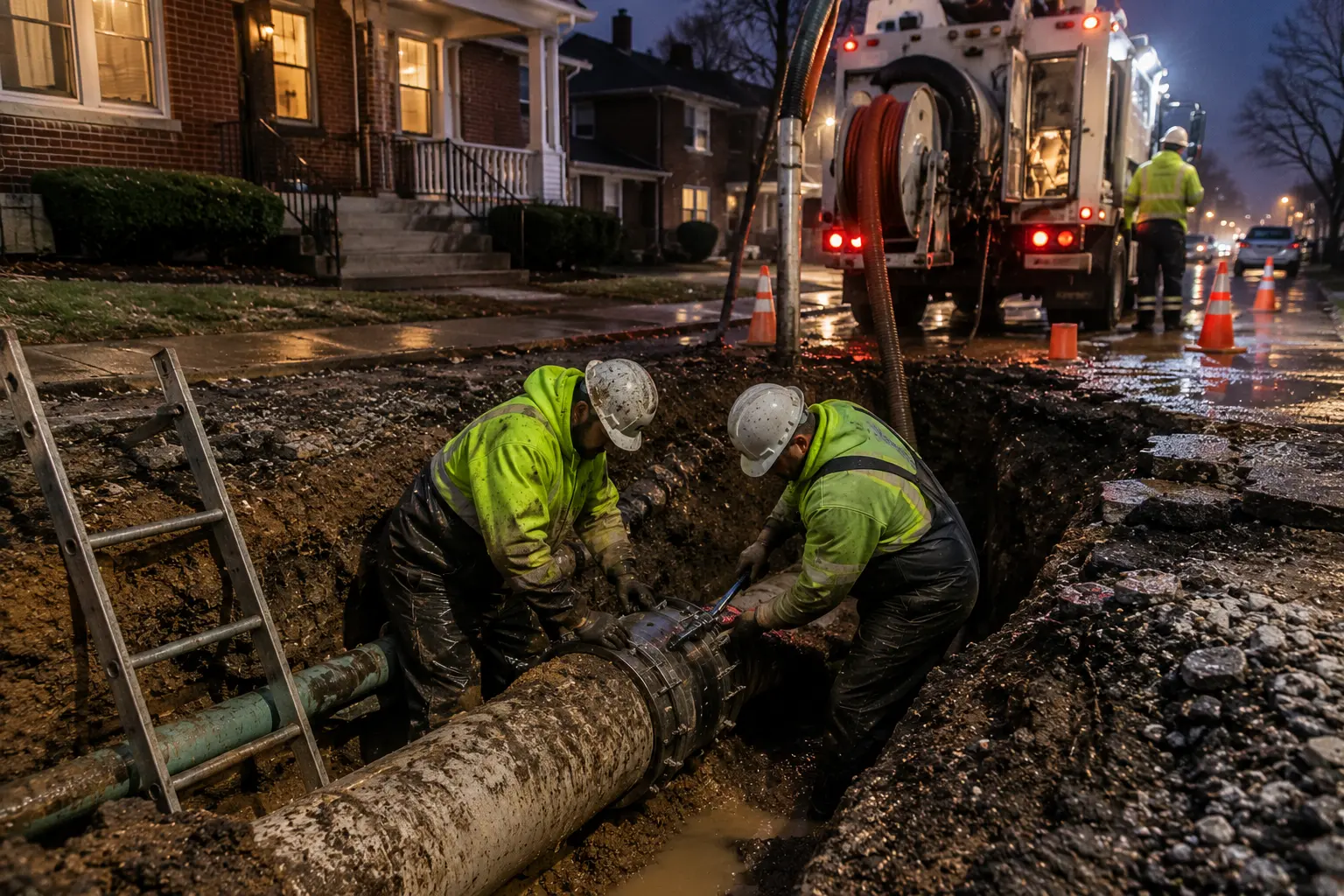
An emergency sewer repair in Chicago usually involves a sewer problem that is actively affecting health, safety, drainage, or property conditions. Raw sewage backing up into the home, multiple fixtures failing at once, a collapsed sewer line, or wastewater surfacing outdoors can all require urgent attention.
For Chicago homeowners, sewer emergencies can be especially stressful because many homes rely on older clay, cast iron, or mixed-material sewer lines. Tree roots, freeze-thaw movement, heavy rain, aging pipes, and dense urban lots can all complicate the situation.
This guide explains what qualifies as a sewer emergency, what to do first, how emergency repairs are typically diagnosed, which repair options may be available, and what Chicago homeowners should consider before approving urgent work. For more local sewer guidance, visit the Chicago Neighborhood Sewer Guides.
Key Takeaways
- A sewer emergency usually involves active sewage backup, complete drainage failure, wastewater exposure, or evidence of major pipe damage.
- Homeowners should stop using water, avoid contact with sewage, and document the damage as soon as possible.
- A camera inspection is often needed to confirm whether the problem is a clog, broken pipe, root intrusion, or collapse.
- Emergency sewer repair may involve cleaning, spot repair, trenchless repair, excavation, or full replacement depending on pipe condition.
- Chicago-specific factors such as older pipe materials, tree roots, alleys, sidewalks, and permits can affect timing and repair options.
- Insurance coverage depends on the policy, the cause of damage, and whether sewer backup or service line coverage is included.
What Counts as a Sewer Emergency?
A sewer problem is typically an emergency when sewage is backing up into the home, multiple drains stop working at the same time, wastewater is surfacing outside, or the sewer line appears collapsed or blocked beyond normal use. In these situations, homeowners should stop using water, keep people and pets away from contaminated areas, document the damage, and arrange for prompt diagnosis before approving a repair plan.
Common Emergency Sewer Problems in Chicago Homes
Not every sewer issue is an emergency. A slow drain or occasional clog may be inconvenient but not urgent. Emergency conditions usually involve active damage, sanitation concerns, or a complete loss of sewer function.
Raw Sewage Backing Up Indoors
This is one of the clearest emergency signs. Sewage may enter through a basement floor drain, shower, tub, toilet, or laundry drain. Because sewage can contain harmful contaminants, cleanup and repair decisions should be made quickly and carefully.
Multiple Fixtures Backing Up at Once
When several plumbing fixtures fail together, the problem is often in the main sewer line rather than a single sink, toilet, or tub drain.
Complete Drainage Failure
If toilets will not flush properly and water cannot drain from multiple areas of the home, the sewer line may be blocked, collapsed, or severely restricted.
Wastewater Surfacing Outside
Sewage odors, wet spots, or wastewater surfacing in the yard, gangway, parkway, or near the foundation can indicate a damaged underground line.
Sudden Sewer Odors With Drainage Problems
Sewer odors alone do not always mean an emergency, but odors combined with backups, slow drains, or standing wastewater require faster attention.
What to Do First During a Sewer Emergency
The first priority is to reduce additional damage and avoid unnecessary exposure to contaminated water.
- Stop using water. Avoid flushing toilets, running sinks, using the washing machine, or taking showers until the issue is diagnosed.
- Keep people and pets away from affected areas. Sewage exposure can create health risks.
- Do not try to clean deep sewage contamination without proper precautions. Surface cleanup may not address contaminated materials beneath flooring or walls.
- Take photos and videos. Documentation may help with insurance questions.
- Check whether the issue affects only your home. If nearby homes are also affected, the issue may involve a larger municipal sewer condition.
- Arrange for diagnosis. A sewer camera inspection or professional evaluation is usually needed before deciding on the repair.
Important: If sewage is actively entering the home, avoid running more water to “test” the drains. Additional water use can make the backup worse and increase cleanup needs.
Emergency Sewer Repair vs. Regular Sewer Repair
The difference between emergency sewer repair and standard sewer repair is usually urgency, risk, and the condition of the home at the time of the problem.
| Situation | Regular Sewer Repair | Emergency Sewer Repair |
|---|---|---|
| Slow drains | Often appropriate | Usually not unless worsening quickly |
| Occasional clog | Often appropriate | Usually not |
| Recurring backups | May be scheduled | Emergency if sewage is actively entering the home |
| Complete drainage failure | Sometimes | Often |
| Collapsed pipe | Sometimes | Often, depending on severity |
| Wastewater exposure | Rarely | Usually |
For non-emergency sewer issues, homeowners may want to review Sewer Repair in Chicago to understand standard repair methods and decision points.
How Emergency Sewer Problems Are Diagnosed
Emergency conditions often require fast decisions, but diagnosis still matters. Approving major work without understanding the problem can lead to unnecessary costs or incomplete repairs.
Sewer Camera Inspection
A sewer camera inspection is commonly used to locate blockages, root intrusion, cracks, offsets, collapsed areas, and pipe deterioration.
Drain Cleaning or Clearing
If the line is blocked, cleaning may be used to restore temporary flow and create a clear path for inspection.
Locating the Damaged Section
When a defect is found, locating equipment can help identify where the damaged section sits underground.
Assessing Whether the Pipe Is Repairable
The inspection should help determine whether the problem can be corrected with cleaning, spot repair, trenchless methods, or replacement.
Common Emergency Sewer Repair Methods
Emergency sewer repairs vary widely depending on the condition of the pipe and whether immediate flow can be restored.
Drain Cleaning and Root Removal
If the emergency is caused by a blockage or root intrusion, cleaning may restore drainage temporarily or fully. However, if roots entered through cracks or separated joints, the underlying pipe defect may still need repair.
Spot Repair
A localized repair may be possible when the damaged section is limited to one area. This often involves excavation at the specific defect rather than replacing the entire line.
Trenchless Repair
In some cases, trenchless methods can repair or rehabilitate the pipe with less digging. Suitability depends on the line’s condition, access points, and whether the pipe has collapsed. More detail is available in Trenchless Sewer Repair in Chicago.
Excavation and Replacement
If the pipe has collapsed, separated severely, or deteriorated throughout much of the line, excavation or replacement may be necessary. Homeowners comparing repair and replacement options may find Sewer Line Replacement in Chicago helpful.
Chicago-Specific Emergency Sewer Considerations
Emergency sewer repair in Chicago can involve conditions that are less common in newer suburban developments.
Older Pipe Materials
Many Chicago homes still have clay tile, cast iron, or older pipe materials. These can be more vulnerable to root intrusion, cracking, corrosion, and joint separation.
Basement Backups
Because many Chicago homes have basements, sewer backups can quickly damage finished living areas, stored belongings, mechanical systems, and flooring.
Dense Lots and Limited Access
Narrow gangways, garages, fences, patios, sidewalks, alleys, and nearby buildings can affect how quickly a sewer line can be reached.
Tree Roots in Established Neighborhoods
Mature trees are common across the city. Roots can repeatedly invade older sewer lines, especially where pipe joints or cracks provide entry points.
Weather and Ground Conditions
Cold weather, frozen ground, heavy rain, and freeze-thaw movement can complicate emergency work and may influence repair timing.
Neighborhood conditions can also vary by location. For area-specific context, see Sewer Repair on Chicago’s North Side, Sewer Repair on Chicago’s South Side, and Sewer Repair on Chicago’s West Side.
Cost Factors in Emergency Sewer Repair
Emergency sewer repair costs can vary significantly because the final scope depends on what is found underground. Homeowners should be cautious about any exact price estimate that is given before inspection.
| Cost Factor | Why It Matters |
|---|---|
| Severity of damage | A clog may be less complex than a collapsed or deteriorated sewer line. |
| Pipe depth | Deeper lines require more excavation, labor, and safety precautions. |
| Access conditions | Limited space, concrete, fences, garages, or alleys can make work harder. |
| Repair method | Cleaning, spot repair, trenchless repair, and replacement have different cost structures. |
| Surface restoration | Driveways, sidewalks, patios, landscaping, and floors may require restoration after repair. |
| Timing | After-hours, weekend, or urgent response work may involve different pricing than scheduled repairs. |
| Permits and inspections | Some projects may require local permits, inspections, or coordination with city requirements. |
Insurance Considerations for Sewer Emergencies
Homeowners insurance can be confusing during a sewer emergency. Coverage depends on the policy, endorsements, cause of damage, and whether the issue is considered sudden or gradual.
Sewer Backup Coverage
Some policies include or offer sewer backup coverage. This may help with cleanup or damage caused by sewage backing up into the home, depending on policy terms.
Service Line Coverage
Some homeowners carry service line coverage that may apply to underground utility lines, including certain sewer line failures.
Common Exclusions
Gradual deterioration, lack of maintenance, old pipe failure, and tree root issues may be limited or excluded depending on the policy.
Practical step: Before authorizing major cleanup or repair work, document the damage and contact the insurance carrier or agent to ask what documentation they need. Do not assume coverage applies without reviewing the policy.
How to Evaluate an Emergency Sewer Repair Recommendation
Emergency situations create pressure, but homeowners should still ask clear questions before approving major work.
- What exactly caused the emergency?
- Was a camera inspection completed?
- Where is the damaged section located?
- Is the problem a blockage, structural defect, or both?
- Can temporary flow be restored safely?
- Is repair possible, or is replacement necessary?
- Are trenchless options suitable for this pipe?
- What restoration work is included or excluded?
- Are permits or inspections required?
- What documentation will be provided after the work?
Common Mistakes During a Sewer Emergency
Continuing to Use Water
Running more water can worsen a backup and increase contamination.
Assuming the First Symptom Shows the Whole Problem
A basement backup may be caused by a clog, roots, pipe collapse, municipal issues, or a combination of problems.
Approving Major Work Without Inspection Evidence
Whenever possible, homeowners should request inspection findings, photos, video, or a clear explanation of the defect.
Ignoring Cleanup and Sanitation
Repairing the sewer line does not automatically address contaminated flooring, walls, belongings, or hidden moisture.
Failing to Review Insurance Quickly
Waiting too long to document damage or contact the insurer can complicate the claims process.
Frequently Asked Questions
Is a sewer backup always an emergency?
A small, isolated backup may not always be an emergency, but raw sewage entering the home, multiple fixtures backing up, or complete drainage failure should be treated as urgent.
Should I stop using water during a sewer emergency?
Yes. Avoid flushing toilets, running sinks, using showers, or operating laundry equipment until the problem is diagnosed. Additional water use can worsen the backup.
Can emergency sewer repair be done without digging?
Sometimes. Trenchless methods may be possible if the pipe is not fully collapsed and suitable access exists. A camera inspection is usually needed to confirm whether trenchless repair is realistic.
Will homeowners insurance cover emergency sewer repair?
It depends on the policy and cause of damage. Sewer backup coverage may help with interior damage or cleanup, while service line coverage may apply to some underground pipe failures. Age-related deterioration is often treated differently than sudden damage.
How do I know whether I need repair or replacement?
A camera inspection can show whether the damage is isolated or widespread. Localized defects may be repairable, while collapsed or heavily deteriorated lines may require replacement.
Are sewer emergencies more common in older Chicago homes?
Older homes may face higher risk because of aging clay, cast iron, or deteriorated sewer materials. Mature tree roots and older connections can also increase the likelihood of backups and pipe failures.
What should I document during a sewer emergency?
Take photos and videos of affected areas, visible backups, damaged property, cleanup work, inspection findings, and any written repair recommendations. This documentation may help with insurance and future decisions.
Conclusion
Emergency sewer repair in Chicago requires quick action, but it should still be based on accurate diagnosis. The most urgent step is to reduce additional damage by stopping water use, avoiding sewage contact, documenting conditions, and identifying the cause of the failure.
Once the sewer line is inspected, homeowners can better understand whether the issue can be cleared, repaired, rehabilitated with trenchless methods, or fully replaced. In a stressful situation, clear information is the best protection against unnecessary work, incomplete repairs, and avoidable property damage.