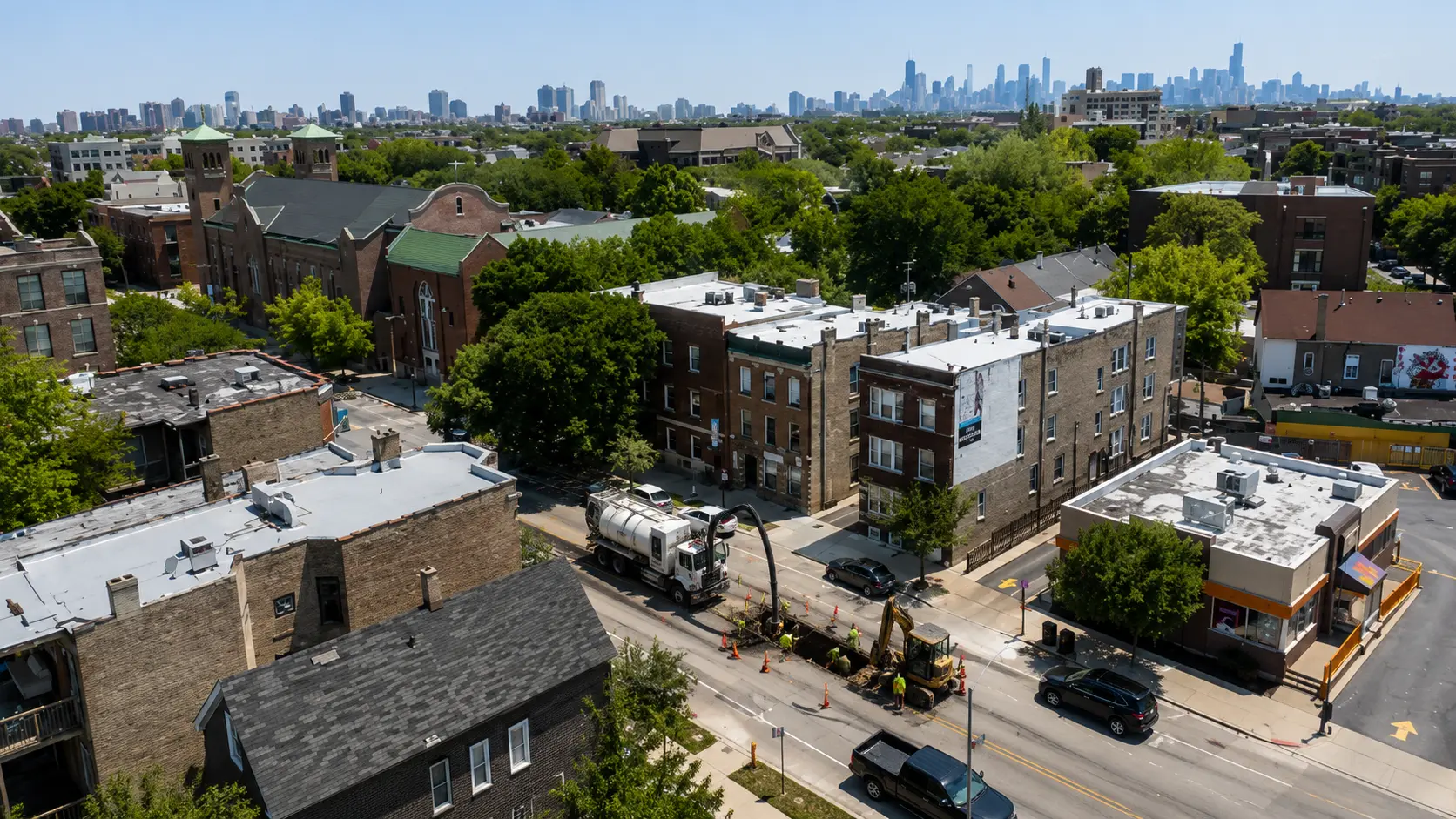
Sewer repair on Chicago’s North Side often involves older homes, mature tree roots, narrow lots, basement plumbing, and aging underground pipe materials. Many North Side neighborhoods contain residential sewer lines that have been in place for decades, which means homeowners may eventually face issues such as root intrusion, cracked clay tile, corroded cast iron, recurring backups, or slow drainage throughout the home.
For homeowners, the most important point is this: not every sewer problem requires a full replacement. Many sewer issues can be repaired if the damage is localized, the pipe remains structurally sound, and the underlying cause is properly diagnosed. A camera inspection is usually the best starting point because it shows whether the problem is a blockage, a damaged section, a slope issue, root intrusion, or a larger sewer line failure.
This guide explains common North Side sewer problems, repair methods, cost factors, inspection considerations, and how homeowners can decide whether repair, trenchless repair, emergency service, or replacement is the right next step. For more citywide local resources, visit the Chicago Neighborhood Sewer Guides.
Key Takeaways
- North Side sewer repair often involves older clay, cast iron, or mixed-material sewer lines.
- Tree roots are a common cause of recurring sewer problems in established Chicago neighborhoods.
- A sewer camera inspection helps determine whether repair or replacement makes more sense.
- Repair may be appropriate for localized cracks, root intrusion, joint separation, or damaged pipe sections.
- Trenchless repair may reduce digging when pipe conditions and access points allow it.
- Emergency sewer conditions include sewage backups, complete drainage failure, or wastewater exposure.
- Cost depends on pipe depth, access, repair method, surface restoration, and the severity of damage.
What Should North Side Homeowners Know About Sewer Repair?
Sewer repair on Chicago’s North Side usually starts with diagnosing the exact cause of the problem. Older pipe materials, mature tree roots, basement backups, and dense urban lots can all influence the repair approach. If the damage is limited, a spot repair, cleaning, relining, or trenchless method may be possible. If the pipe is collapsed or deteriorated throughout the line, replacement may be necessary.
Why Sewer Problems Are Common on Chicago’s North Side
The North Side includes many older residential neighborhoods with homes built across different periods of Chicago’s development. Sewer systems may include clay tile, cast iron, concrete, PVC replacements, or multiple materials joined together over time.
Older sewer systems can still function well, but they are more vulnerable to age-related problems. Small cracks, separated joints, corrosion, or root entry points may gradually turn into recurring drainage issues.
Common North Side Conditions That Affect Sewer Lines
- Older homes with original or partially replaced sewer lines
- Mature parkway trees and large root systems
- Finished basements vulnerable to backup damage
- Narrow gangways and limited excavation access
- Driveways, sidewalks, patios, and garages above sewer routes
- Freeze-thaw movement that can stress aging pipes
- Mixed pipe materials from past repairs or renovations
Common Sewer Repair Issues in North Side Homes
Tree Root Intrusion
Root intrusion is one of the most common sewer problems in older Chicago neighborhoods. Roots seek moisture and can enter through cracks, joints, or small gaps in the pipe. Once inside, they can trap waste, restrict flow, and cause recurring backups.
Cracked Clay Sewer Pipe
Clay tile sewer lines are common in older homes. Clay is durable but brittle. Over time, joints may separate and pipe sections may crack due to ground movement, age, or root pressure.
Corroded Cast Iron
Cast iron pipes can deteriorate internally as they age. Corrosion and scaling may reduce flow capacity and contribute to clogs or pipe failure.
Offset Pipe Joints
An offset occurs when pipe sections no longer align correctly. This can catch waste, allow root intrusion, and interfere with proper drainage.
Pipe Bellies
A belly is a low spot in the sewer line where water and solids collect instead of flowing smoothly. Some bellies are manageable, while others may require excavation or replacement if they cause repeated backups.
Collapsed Pipe Sections
A collapsed sewer line is more serious. If the pipe has lost its structure, simple cleaning will not solve the problem. Depending on the extent of the collapse, repair or replacement may be required.
Warning Signs of a Sewer Problem
Many homeowners first notice symptoms inside the house before realizing the issue may be underground.
- Multiple drains slowing down at the same time
- Gurgling toilets or drains
- Recurring basement floor drain backups
- Sewage odors indoors or outside
- Water backing up into tubs, showers, or laundry drains
- Frequent need for drain cleaning
- Wet or unusually green areas in the yard
- Clogs that return shortly after clearing
Homeowner note: A single slow sink is usually not enough to assume a sewer line problem. Multiple fixtures acting up together is more concerning because it may point to the main sewer line.
How North Side Sewer Problems Are Diagnosed
A reliable sewer repair decision should be based on evidence, not guesswork. The same symptom can come from several different causes.
Camera Inspection
A sewer camera inspection allows the inside of the sewer line to be viewed directly. This can reveal roots, cracks, offsets, corrosion, bellies, broken pipe, and collapses.
Line Locating
If a damaged section is found, locating equipment can help identify where the issue sits underground. This matters when planning a spot repair, excavation, or access point.
Drain Cleaning Before Inspection
In some cases, the pipe must be cleared before the camera can pass through. Heavy roots, sludge, or blockage may need to be removed first.
Repair Recommendation
After inspection, the repair recommendation should explain:
- What the defect is
- Where it is located
- How severe it is
- Whether it is isolated or widespread
- Whether the pipe can be repaired
- Whether replacement should be considered
For a broader citywide explanation of repair decisions, see Sewer Repair in Chicago.
Common Sewer Repair Options
The right repair method depends on pipe condition, access, severity, and long-term risk.
| Repair Option | Best For | Limitations |
|---|---|---|
| Drain cleaning or root cutting | Blockages, roots, buildup | May not fix cracks or root entry points |
| Spot repair | Localized pipe damage | Requires excavation at the damaged area |
| Pipe lining | Cracks, joints, limited root entry | Not ideal for collapsed or badly misaligned pipes |
| Pipe bursting | Replacing a damaged line with less trenching | Requires suitable access and pipe path |
| Full replacement | Widespread failure or collapse | More disruptive and often more involved |
Spot Repairs
A spot repair may make sense when the sewer line is mostly sound but has one damaged section. This can be a practical option if the rest of the pipe remains serviceable.
Trenchless Repair
Trenchless methods may reduce surface disruption when the pipe condition allows. This can be especially useful when the sewer line runs under hardscaping, landscaping, or difficult access areas. Learn more in Trenchless Sewer Repair in Chicago.
Full Sewer Line Replacement
If the sewer line has extensive deterioration, repeated failures, or collapse, replacement may be more practical than repeated repairs. Homeowners weighing that decision can review Sewer Line Replacement in Chicago.
Chicago-Specific Considerations for North Side Sewer Repair
Basement Backup Risk
Many North Side homes include basements or lower-level living areas. A sewer backup can quickly damage flooring, walls, storage, laundry areas, mechanical systems, and finished spaces.
Limited Access Around the Home
Narrow side yards, fences, garages, shared walkways, and dense lots may affect equipment access. This can influence whether a repair is simple or more complicated.
Sidewalks, Parkways, and Public Areas
Some sewer work may affect areas near sidewalks, parkways, or alleys. Depending on the location and scope of work, permits or inspections may be required.
Older Building Connections
Some homes may have older connections, past partial repairs, or mixed pipe materials. These conditions can complicate diagnosis and repair planning.
Neighborhood Variation
North Side sewer conditions can vary from one property to another. Two homes on the same block may have different pipe materials, depths, slopes, and repair histories.
Cost Factors for Sewer Repair on the North Side
Sewer repair costs vary because the work depends on what is underground and how difficult it is to access.
| Cost Factor | Why It Matters |
|---|---|
| Type of damage | A clog, crack, root issue, belly, or collapse each requires a different repair approach. |
| Pipe depth | Deeper lines require more excavation effort and safety planning. |
| Pipe location | Lines under concrete, patios, garages, sidewalks, or landscaping can increase complexity. |
| Repair method | Cleaning, spot repair, trenchless repair, and replacement have different cost structures. |
| Surface restoration | Concrete, landscaping, flooring, or hardscaping restoration may add to the total project impact. |
| Urgency | Emergency conditions may involve faster response, temporary measures, cleanup, or after-hours work. |
Because cost depends on site-specific conditions, homeowners should be cautious about exact estimates before inspection.
When a North Side Sewer Problem Becomes an Emergency
A sewer issue becomes urgent when it affects sanitation, safety, or the basic function of the home.
Emergency signs include:
- Raw sewage entering the basement or living area
- Multiple fixtures backing up at once
- Complete inability to drain water
- Wastewater surfacing outside
- Strong sewer odors combined with active drainage problems
- Evidence of a collapsed pipe
If the problem is active and worsening, see Emergency Sewer Repair in Chicago for urgent homeowner steps.
Repair vs. Replacement Decision Factors
The repair-or-replacement decision should be based on pipe condition and long-term risk.
Repair May Make Sense When:
- The damage is localized
- The rest of the pipe is in usable condition
- The pipe has not collapsed
- The slope is acceptable
- The defect can be accessed or lined effectively
Replacement May Make Sense When:
- The pipe is structurally failing in multiple areas
- There are repeated backups despite prior repairs
- The pipe has collapsed
- There is widespread root damage or corrosion
- The line has major slope or alignment problems
Practical guidance: Repeatedly clearing the same sewer line without addressing the pipe defect can become expensive over time. If the same problem keeps returning, inspection findings should guide the next decision.
Common Mistakes Homeowners Make
Assuming Roots Are Only a Cleaning Problem
Root cutting may clear the line temporarily, but roots usually enter through defects. If the opening remains, the problem can return.
Waiting Until a Basement Backup Happens
Recurring slow drains and gurgling can be early warning signs. Waiting for sewage to enter the home can make the situation more costly and disruptive.
Approving Work Without Seeing Inspection Findings
Homeowners should ask for a clear explanation of the problem and, when available, camera footage or images.
Ignoring Restoration Costs
Sewer repair may involve more than pipe work. Concrete, landscaping, flooring, or cleanup may affect the total project impact.
Assuming Trenchless Repair Always Works
Trenchless repair can be useful, but it depends on the condition and alignment of the existing pipe.
Frequently Asked Questions
Are sewer problems common in older North Side homes?
They can be. Older homes may have clay, cast iron, or mixed-material sewer lines that are more vulnerable to root intrusion, cracking, corrosion, and joint separation.
Can tree roots be permanently fixed without replacing the sewer line?
Sometimes. If root intrusion is limited and the pipe is structurally suitable, lining or a targeted repair may reduce future root entry. If the pipe is heavily damaged, replacement may be necessary.
Is trenchless sewer repair a good option for North Side properties?
It can be, especially where excavation would disturb hardscaping, sidewalks, driveways, or tight access areas. However, a camera inspection must confirm that the pipe is suitable.
How do I know whether the issue is a sewer line problem or a normal drain clog?
A single clogged sink or tub may be a local drain issue. Multiple fixtures backing up, basement floor drain problems, or recurring whole-house slow drainage may indicate a main sewer issue.
Will homeowners insurance cover sewer repair?
Coverage depends on the policy and cause of damage. Sewer backup coverage or service line coverage may help in some situations, but age-related deterioration and maintenance issues may be excluded.
Should I get a sewer inspection before buying a North Side home?
A sewer inspection is often worth considering for older homes, especially if there are mature trees, finished basements, or signs of prior sewer work. It can reveal defects before they become expensive surprises.
When should a sewer issue be treated as an emergency?
Raw sewage entering the home, complete drainage failure, wastewater exposure, or multiple fixtures backing up at once should be treated as urgent.
Conclusion
Sewer repair on Chicago’s North Side requires careful diagnosis because older homes, mature roots, dense lots, and mixed sewer materials can all affect the right solution. A recurring clog may be a simple blockage, but it may also point to cracks, offsets, root intrusion, or structural deterioration underground.
The best repair decision begins with understanding the condition of the pipe. Once the problem is identified, homeowners can compare cleaning, spot repair, trenchless repair, emergency repair, or replacement based on long-term value rather than guesswork.