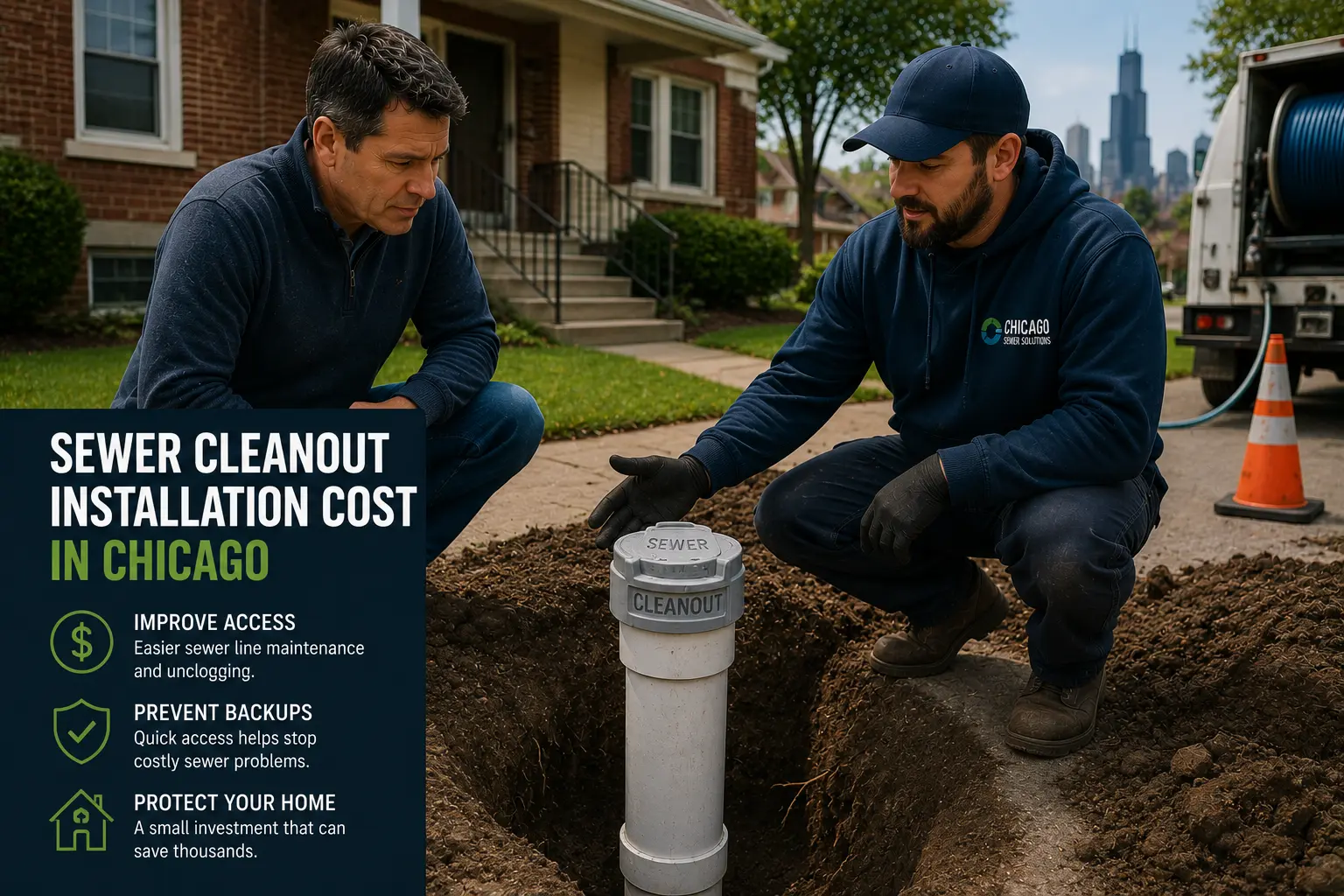
A sewer cleanout gives plumbers a direct access point to inspect, clean, and service the main sewer line without removing a toilet, opening a floor drain, or searching for another difficult entry point. For Chicago homeowners, a properly placed cleanout can make future sewer maintenance faster, less invasive, and sometimes less expensive.
The cost of sewer cleanout installation in Chicago depends on where the cleanout is installed, how deep the sewer line is, whether excavation is required, what surface must be opened, the condition of the existing pipe, permit needs, and how much restoration is included after the work is done.
A cleanout does not repair a damaged sewer line by itself. Its value is access. If a home has recurring sewer backups, root intrusion, older pipe, or no convenient way to inspect the main line, cleanout installation may make future diagnosis and service much easier.
Key Takeaways
- Sewer cleanout installation cost depends on pipe depth, location, access, excavation, pipe material, permits, and restoration.
- A cleanout provides access for sewer camera inspections, rodding, cleaning, and future maintenance.
- Chicago homes may have older clay pipe, cast iron sections, basements, narrow lots, sidewalks, alleys, parkways, and concrete surfaces that affect installation cost.
- Installing a cleanout may cost more if the sewer line is deep, under concrete, or difficult to reach.
- A cleanout does not fix cracks, collapse, root intrusion, or poor slope, but it can make those problems easier to diagnose and service.
- Homeowners should ask where the cleanout will be installed, what restoration is included, and whether the work is being done as part of a larger sewer repair.
How Much Does Sewer Cleanout Installation Cost in Chicago?
Sewer cleanout installation in Chicago is usually priced based on the location of the sewer line, the depth of the pipe, whether excavation is required, the condition of the existing pipe, and the surface that must be opened and restored. A cleanout installed in an accessible area may be much simpler than one installed under concrete, near a foundation, or in a tight side yard.
The cost can also change depending on whether the cleanout is installed as a standalone project or during a larger sewer repair or replacement. If the sewer line is already being excavated, adding a cleanout may be more efficient than installing one later as a separate project.
For broader sewer pricing context, see the main Chicago sewer replacement cost guide.
Main Cost Sections for Sewer Cleanout Installation
Cleanout Location
Location is one of the most important cost factors. A cleanout may be installed outside near the home, in a yard, along the sewer lateral, near an existing access point, or in another practical location based on the plumbing layout.
The best location is usually one that provides useful access without creating unnecessary disruption. A poorly placed cleanout may be less helpful during future inspections or cleanings.
Depth of the Sewer Line
The deeper the sewer line, the more work it takes to install a cleanout. A shallow line may require less excavation, while a deeper line may require more digging, soil removal, trench safety planning, backfill, and restoration.
Chicago homes with basements may have deeper sewer laterals than homeowners expect. Depth can also vary based on lot grade, foundation layout, and where the private line connects to the larger sewer system.
Excavation Requirements
If the cleanout is being installed outside, excavation is often needed to expose the sewer line. The cost rises when the line is under concrete, a driveway, a patio, a sidewalk, landscaping, or a narrow gangway where equipment access is limited.
If excavation is required, homeowners should ask whether the estimate includes digging, pipe access, backfill, compaction, cleanup, and surface restoration.
Existing Pipe Material
The existing sewer pipe material affects installation. Older Chicago homes may have clay pipe, cast iron, PVC from a previous repair, or a mix of materials. Installing a cleanout into older pipe may require careful transitions and fittings.
If the pipe is cracked, collapsed, or severely deteriorated where the cleanout is planned, the project may turn into a repair rather than a simple access installation.
Surface Restoration
Restoration can be a major part of the final cost. A cleanout installed through open soil may require basic backfill and lawn repair. A cleanout installed under concrete, pavers, a walkway, or a driveway may require cutting, removal, patching, or replacement.
Homeowners should ask whether the visible cleanout cap, surrounding grade, and finished surface will be restored in a way that is practical and safe.
Standalone Project vs Larger Sewer Work
Cleanout installation may be more efficient when done during another sewer project. If the sewer line is already exposed for repair or replacement, adding a cleanout can be less disruptive than scheduling a separate excavation later.
If the cleanout is being installed because of repeated backups, homeowners should also ask whether the underlying pipe problem has been identified.
Sewer Cleanout Installation Cost Drivers
| Cost Driver | Why It Matters | What Homeowners Should Ask |
|---|---|---|
| Cleanout location | The location affects access, excavation, and future usefulness. | Why is this location being recommended? |
| Pipe depth | Deeper lines require more digging, labor, and backfill. | What depth is assumed in the estimate? |
| Surface material | Concrete, pavers, sidewalks, or driveways increase removal and restoration work. | Is surface restoration included? |
| Pipe material | Clay, cast iron, PVC, and mixed materials may require different fittings. | What type of pipe is being connected to? |
| Access limitations | Narrow lots, fences, garages, or landscaping can make work harder. | Will access limitations affect the price? |
| Permit requirements | Some sewer work may involve permits or inspections. | Who handles permits and inspection scheduling? |
| Related sewer damage | A damaged pipe may need repair before or during cleanout installation. | Is the pipe structurally sound where the cleanout will be installed? |
Chicago-Specific Considerations
Older Homes Without Convenient Access
Many older Chicago homes may not have a convenient exterior cleanout. In some cases, plumbers may need to access the sewer line through a basement cleanout, floor drain, roof vent, or by removing a fixture. These access points can be less convenient and more disruptive.
Adding an exterior cleanout may make future inspections and cleaning easier, especially if the home has recurring sewer issues.
Clay Pipe and Older Sewer Laterals
Older clay sewer pipe is common in many established neighborhoods. Clay can crack, separate at joints, and allow roots to enter. If a cleanout is being installed into clay pipe, the condition of the pipe matters.
If the pipe is already failing, the cleanout may need to be installed along with a repair section instead of being added to damaged pipe that may continue to cause backups.
Basements and Main Line Backups
Chicago homeowners often notice sewer problems through basement floor drains, utility sinks, laundry tubs, or lower-level bathrooms. A cleanout can help provide better access for camera inspections and cleaning when a main line issue is suspected.
However, a cleanout does not prevent backups by itself. If the sewer line has roots, collapse, poor slope, or major offsets, those problems still need to be addressed.
Narrow Lots, Alleys, Sidewalks, and Parkways
Chicago properties can have tight side yards, fences, garages, sidewalks, alleys, and parkway areas that affect where a cleanout can be installed. The most convenient service location may not always be the easiest installation location.
Homeowners should ask whether the recommended location balances installation cost with future access value.
Winter and Weather Conditions
Frozen ground, heavy rain, snow, and saturated soil can make excavation more difficult. If cleanout installation is not urgent, scheduling may be easier during more favorable conditions. If the cleanout is part of an emergency repair, timing may be less flexible.
Cleanout Installation vs Sewer Repair or Replacement
A cleanout is an access point, not a repair method. It can make it easier to inspect, clean, and maintain the sewer line, but it does not fix structural problems inside the pipe.
That distinction matters. If a contractor recommends a cleanout after repeated backups, homeowners should ask whether the cleanout is being installed to improve access or because the pipe itself needs repair.
| Option | What It Solves | What It Does Not Solve |
|---|---|---|
| Cleanout installation | Provides better access for inspection, rodding, and maintenance. | Does not repair cracks, roots, collapse, or poor slope. |
| Sewer cleaning | Clears roots, debris, or blockages from the line. | Does not fix the opening where roots entered. |
| Spot repair | Repairs one isolated damaged section. | May not address deterioration elsewhere. |
| Pipe replacement | Replaces failed or deteriorated pipe. | Usually costs more and may require excavation or trenchless work. |
Important Homeowner Note
A sewer cleanout can make future service easier, but it should not be confused with fixing the sewer line. If backups are recurring, the pipe condition still needs to be evaluated.
Repair vs Replacement Considerations
Cleanout installation often comes up during repair or replacement discussions. If the sewer line is already being opened, adding a cleanout may make sense. If the line is not being opened, the cleanout should be justified by access needs and future maintenance value.
Cleanout Installation May Make Sense When
- The home does not have a convenient exterior sewer cleanout.
- Plumbers repeatedly need difficult interior access to clean the line.
- The homeowner has recurring sewer backups that require inspection or rodding.
- The sewer line is already being excavated for repair or replacement.
- A camera inspection is difficult because there is no practical access point.
- The cleanout can be placed in a useful and serviceable location.
Repair or Replacement May Also Be Needed When
- The sewer line has cracks, collapse, offsets, or separated joints.
- Tree roots keep returning after cleaning.
- The pipe has a belly that holds standing water.
- The cleanout location exposes damaged or deteriorated pipe.
- Backups are frequent even after cleaning.
- The camera inspection shows widespread pipe failure.
If repeated backups have already caused damage inside the home, review sewer backup cleanup cost in Chicago to understand related cleanup and restoration concerns.
What Should Be Included in a Cleanout Installation Estimate?
A cleanout installation estimate should explain the location, scope, and restoration details clearly. Homeowners should not have to guess whether excavation, fittings, backfill, or surface repair are included.
Before approving cleanout installation, ask whether the estimate includes:
- The proposed cleanout location
- The reason that location is being recommended
- The pipe depth and access assumptions
- The existing pipe material
- Excavation and soil removal
- Cleanout fitting and pipe connection details
- Permit and inspection responsibility
- Backfill and compaction
- Concrete, lawn, sidewalk, driveway, or landscape restoration
- Cleanup and debris removal
- Whether the cleanout cap will be protected and accessible
- Any additional repair needed if damaged pipe is found
If cleanout installation is part of a larger sewer project, compare the full scope against how much sewer line replacement costs in Chicago so the access work is not evaluated in isolation.
Common Mistakes and Warning Signs
Mistake: Thinking a Cleanout Prevents Sewer Backups
A cleanout provides access, but it does not prevent roots, clogs, collapsed pipe, poor slope, or sewer backups. It can make service easier, but the underlying cause still matters.
Mistake: Installing a Cleanout in a Poor Location
A cleanout should be useful for future service. If it is placed somewhere difficult to reach, easily buried, or poorly aligned with the sewer line, it may not provide the expected value.
Mistake: Ignoring Restoration Details
Installation may involve digging through soil, concrete, driveway areas, or landscaping. Ask what will be restored and what will remain unfinished.
Mistake: Not Inspecting the Pipe Condition
If the cleanout is being installed because of recurring backups, homeowners should also understand the pipe condition. The cleanout improves access, but it does not answer why the line keeps clogging.
Mistake: Waiting Until an Emergency
If a home has no practical sewer access and backups keep happening, waiting until sewage is actively backing up can make the situation more stressful. Planned cleanout installation may allow more time to compare scope and pricing.
Warning Signs That Better Sewer Access May Be Needed
- Repeated sewer cleaning requires difficult interior access
- There is no accessible exterior cleanout
- Camera inspections cannot be completed easily
- Basement floor drain backups keep recurring
- Tree roots are repeatedly removed from the line
- Multiple drains back up at the same time
- Plumbers recommend removing a toilet for sewer access
- The sewer line is being repaired and access can be improved at the same time
Decision Point
Cleanout installation is most valuable when it improves future access to a sewer line that may need inspection, cleaning, or maintenance. It should be viewed as an access upgrade, not a cure for pipe damage.
If the lack of access becomes an urgent issue during a backup, read emergency sewer repair cost in Chicago to understand how same-day service can affect pricing.
FAQ About Sewer Cleanout Installation Cost in Chicago
How much does sewer cleanout installation cost in Chicago?
The cost depends on where the cleanout is installed, how deep the sewer line is, whether excavation is required, what surface must be restored, the existing pipe material, and whether the work is part of a larger repair.
Is a sewer cleanout required for every home?
Not every homeowner knows whether they have one, and requirements can depend on the home, plumbing layout, and work being performed. Even when not part of an immediate repair, a cleanout can be useful if the sewer line needs frequent inspection or cleaning.
Does a cleanout stop sewer backups?
No. A cleanout provides access to the sewer line, but it does not stop roots, cracks, collapse, clogs, or poor slope. It can make future cleaning and inspection easier.
Can a cleanout help with sewer camera inspections?
Yes. A cleanout can provide a better access point for camera inspections, helping identify roots, cracks, offsets, standing water, collapse, or pipe material issues.
Will homeowners insurance cover cleanout installation?
Coverage depends on the policy and why the cleanout is being installed. Routine upgrades and access improvements may not be covered. If installation is tied to a covered sewer claim, homeowners should confirm details directly with their insurer.
What Chicago-specific issues affect cleanout installation?
Older sewer materials, deep laterals, basements, narrow lots, sidewalks, alleys, parkways, concrete surfaces, mature tree roots, and limited access can all affect installation complexity and cost.
Should I add a cleanout during sewer replacement?
It may be worth asking about. If the sewer line is already exposed, adding a cleanout may improve future access and may be more efficient than installing one later as a separate project.
Conclusion
Sewer cleanout installation cost for Chicago homeowners depends on location, depth, access, excavation, pipe material, permit needs, and restoration. A cleanout can make future sewer inspections, cleaning, and maintenance easier, especially for older homes without convenient exterior access.
However, a cleanout is not a sewer repair by itself. It does not fix root intrusion, cracks, collapse, offsets, or poor slope. If backups are recurring, the pipe condition should still be evaluated with inspection evidence.
For Chicago homeowners, the best cleanout installation decision balances cost, placement, future access, and the condition of the sewer line. A clear estimate should explain where the cleanout will go, why that location makes sense, what surfaces will be disturbed, and what restoration is included.