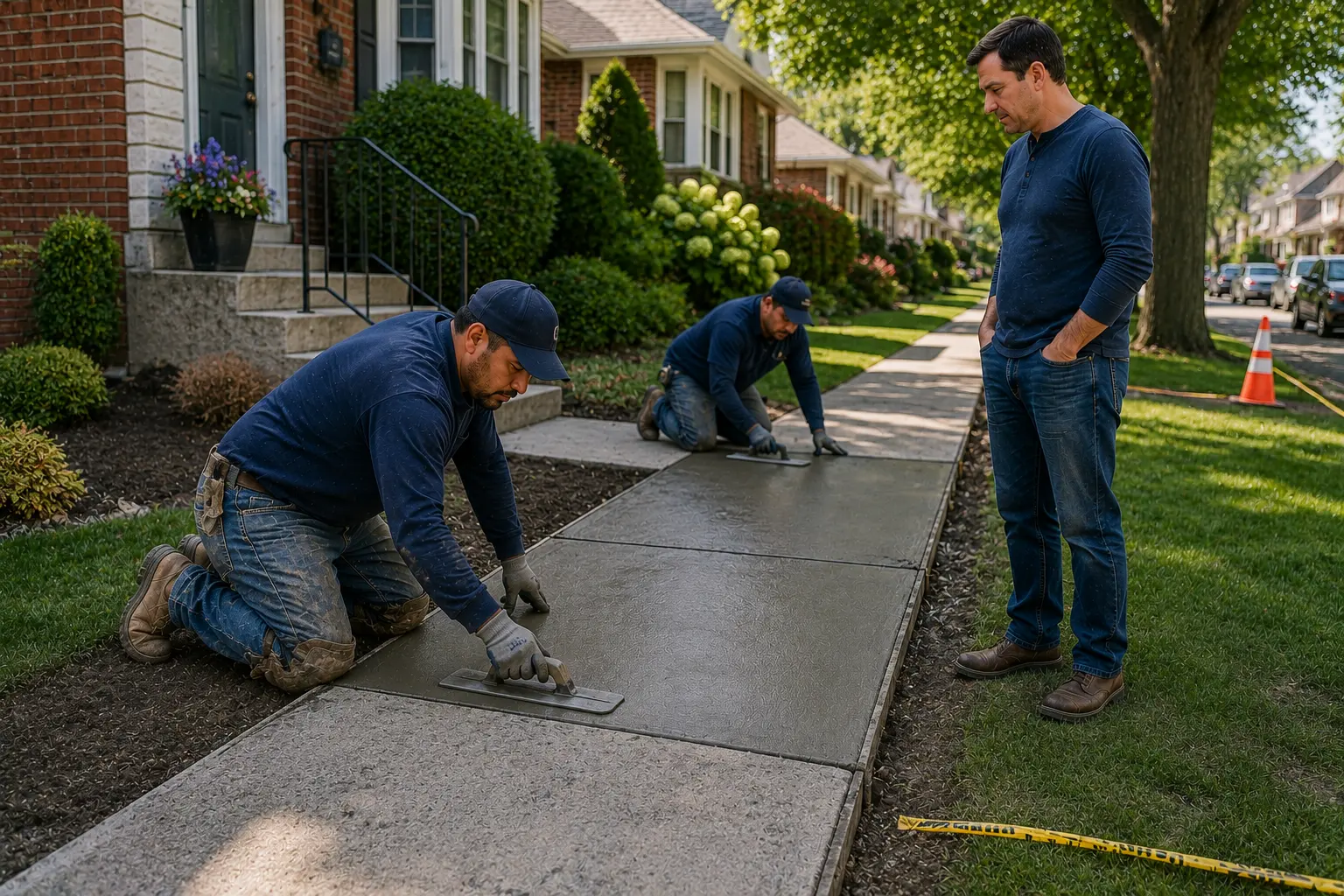
Sidewalk repair after sewer work can be one of the most confusing parts of a sewer replacement project because it often involves more than simply pouring new concrete. If excavation crosses a public sidewalk, parkway, driveway apron, or front walkway, homeowners may need to deal with temporary patches, municipal requirements, inspections, liability concerns, and timing delays before the surface is fully restored.
In Chicago, sidewalk restoration is especially important because many sewer lines run from the home toward the street, often passing beneath or near the public right-of-way. A successful sewer repair may solve the underground plumbing issue, but the surface above the trench still needs to be safe, properly graded, and compliant with local expectations.
This guide explains what homeowners should expect after sewer work affects a sidewalk, what repair options may be used, what risks to watch for, and how to think about responsibility, cost, inspections, and documentation. For broader post-project guidance, visit the Post-Repair Concerns hub.
Key Takeaways
- Sidewalk repair may be needed when sewer excavation crosses public walkways, private paths, driveway aprons, or parkway areas.
- Temporary sidewalk patches are common when permanent concrete work cannot be completed immediately.
- Public sidewalks may involve municipal standards, permits, inspections, and restoration rules.
- Proper base preparation is critical because soil settlement can cause cracking, sinking, or trip hazards later.
- Chicago freeze-thaw cycles can make poor sidewalk repairs fail faster.
- Homeowners should keep photos, contracts, permits, inspection records, and restoration documents after sewer work.
What Happens If Sewer Work Damages a Sidewalk?
If sewer work damages a sidewalk, the affected section is usually made safe first with temporary fill, barriers, or a temporary patch. Permanent repair may involve replacing one or more concrete sidewalk slabs, rebuilding the base beneath the surface, restoring proper grade, and completing any required inspection or permit closeout. If the sidewalk is part of the public right-of-way, local rules may affect how the repair is performed and approved.
Why Sidewalks Are Often Affected by Sewer Work
Residential sewer lines frequently run from the building toward a municipal sewer main located near the street or alley. Depending on the location of the main, the sewer route may pass under lawns, driveways, parkways, sidewalks, or paved walkways.
Sidewalk damage may happen because contractors need to:
- Cut through concrete to access the sewer line
- Excavate beneath the sidewalk
- Remove sidewalk panels to reach the pipe
- Stage equipment near the work area
- Backfill and compact soil beneath the sidewalk
- Restore the public walkway after the pipe is replaced
In some cases, sidewalk removal is unavoidable. If the damaged pipe is directly beneath the sidewalk or the excavation path must cross it to reach the sewer connection, the concrete surface may need to be cut and replaced.
Homeowners who are still getting oriented after the underground repair may also benefit from reading What to Expect After Sewer Line Replacement.
Public Sidewalk vs. Private Walkway
One of the most important distinctions is whether the affected concrete is a public sidewalk or a private walkway. The answer can influence responsibility, permitting, repair standards, and inspection requirements.
| Surface Type | Common Location | Why It Matters |
|---|---|---|
| Public sidewalk | Along the street or public right-of-way | May be subject to municipal repair standards and inspection requirements |
| Private front walk | Between the house and public sidewalk | Usually handled as part of private property restoration |
| Driveway apron | Where the driveway meets the street or sidewalk | May involve both driveway and right-of-way restoration considerations |
| Parkway area | Between sidewalk and curb | May require soil, grass, tree, or concrete restoration depending on damage |
Public right-of-way work is often more regulated than private walkway repair. Homeowners should clarify whether the contractor is handling all necessary restoration requirements or whether separate coordination is needed.
Temporary Sidewalk Repairs After Sewer Work
Temporary repairs are common after sewer excavation, especially when weather, inspections, scheduling, or settlement concerns delay permanent concrete replacement.
A temporary sidewalk repair may include:
- Gravel fill over the trench
- Temporary asphalt patching
- Steel plates
- Warning cones or barricades
- Temporary concrete patching
- Backfilled and compacted soil awaiting final repair
Important: A temporary repair should not create a dangerous walking surface. Uneven patches, soft fill, exposed edges, or unstable plates can create trip hazards and should be addressed promptly.
Temporary restoration may be practical in the short term, but homeowners should understand when permanent repair is expected and who is responsible for completing it.
Permanent Sidewalk Repair Options
Permanent sidewalk restoration usually means replacing the affected concrete section rather than simply patching a narrow trench line. Concrete sidewalks are generally repaired by removing damaged panels, preparing the base, setting forms, pouring new concrete, and finishing the surface.
Panel Replacement
Panel replacement is often the cleanest repair when a sewer trench cuts through a sidewalk. Instead of patching a narrow strip, the full slab or panel is replaced between control joints.
Partial Patch
A partial patch may be used in some situations, but it can be more noticeable and may not perform as well over time if the edges are thin or the base is unstable.
Walkway Rebuild
If a private walkway was already cracked, uneven, or poorly graded, homeowners may choose to rebuild a larger section rather than repair only the sewer trench area.
When sewer work also affects a driveway apron or driveway surface, homeowners may want to review Driveway Repair After Sewer Replacement.
Base Preparation and Soil Compaction
The quality of a sidewalk repair depends heavily on what happens below the surface. Sewer excavation disturbs the soil beneath the sidewalk. If that soil is not backfilled and compacted properly, the new concrete may crack, sink, or separate from adjacent panels.
Good restoration generally depends on:
- Stable backfill beneath the repaired section
- Layered compaction where appropriate
- Suitable stone or aggregate base
- Proper concrete thickness for the location
- Correct slope for drainage
- Clean transitions to adjacent sidewalk panels
Even a sidewalk that looks good immediately after repair can fail later if the underlying trench continues to settle.
Trip Hazards and Liability Concerns
Sidewalk damage is not just a cosmetic issue. Uneven sidewalk panels, sunken patches, broken edges, and unstable temporary surfaces can create trip hazards for pedestrians.
Homeowners should pay close attention to:
- Height differences between panels
- Loose temporary patches
- Exposed rebar or sharp concrete edges
- Sunken trench areas
- Water or ice collecting on the sidewalk
- Obstructions left after construction
In a dense city environment, sidewalk safety matters because pedestrians, delivery workers, neighbors, and visitors may all use the area. Promptly addressing unsafe conditions can reduce the risk of injury and disputes.
How Long Does Sidewalk Repair Take?
The timeline depends on the type of repair, the season, and whether public inspections or approvals are involved. Basic temporary stabilization may happen immediately after sewer work, while permanent concrete replacement may be scheduled later.
| Step | Typical Timing Consideration | Homeowner Concern |
|---|---|---|
| Temporary stabilization | Immediately after excavation | Safety and access |
| Backfill settlement monitoring | Days to weeks | Preventing future sinking |
| Permanent concrete work | Weather and scheduling dependent | Final appearance and durability |
| Concrete curing | After placement | Avoiding early damage |
| Final inspection or approval | Varies by local requirements | Permit closeout and documentation |
Homeowners should ask whether the sidewalk is safe for use, when permanent repair is expected, and whether any municipal approval is still pending.
Chicago-Specific Considerations
Public Right-of-Way Requirements
Sidewalks near the street may fall within the public right-of-way. When sewer work affects these areas, restoration may need to meet municipal standards. This can include proper concrete thickness, slope, finish, and panel replacement requirements.
Freeze-Thaw Damage
Chicago winters can worsen cracks and uneven surfaces. Water entering seams or small cracks can freeze, expand, and accelerate deterioration. This makes proper drainage and durable repair especially important.
Parkway and Tree Root Conditions
Many Chicago sidewalks are near parkway trees. Sewer excavation, tree roots, and sidewalk restoration can become complicated when roots are close to the trench or the concrete panels.
Winter Timing
If sewer work occurs in late fall or winter, permanent sidewalk restoration may be delayed until conditions are better for concrete placement. Temporary repairs should still maintain safe pedestrian access.
Inspection and Permit Closeout
After sewer work, final approval may depend on more than the pipe itself. Surface restoration, right-of-way repair, and cleanup may also matter. Homeowners can learn more in Sewer Replacement Final Inspection: What to Expect.
Cost Factors in Sidewalk Repair After Sewer Work
Sidewalk repair costs vary because every property and excavation route is different. Homeowners should be cautious about assuming a simple patch will always be enough.
Cost factors may include:
- Number of sidewalk panels affected
- Whether the sidewalk is public or private
- Concrete thickness and finish requirements
- Need for base reconstruction
- Extent of soil settlement
- Access limitations for equipment
- Permit or inspection requirements
- Removal and disposal of damaged concrete
- Weather-related delays
- Whether the driveway apron or walkway also needs repair
Replacing full panels usually costs more than a small patch, but it may reduce trip hazards and create a cleaner long-term repair.
Who Is Responsible for Sidewalk Restoration?
Responsibility depends on the project agreement, property location, local rules, and whether the damage was part of the planned excavation area. Some sewer contractors include basic restoration, while others only include backfill or temporary patching.
Before work begins, homeowners should ask:
- Is sidewalk restoration included in the estimate?
- Will the repair be temporary or permanent?
- Who handles permits and inspections?
- Will full panels be replaced or only the trench area?
- What happens if the repaired area settles later?
- Is there a separate warranty for concrete work?
After the project is complete, homeowners should keep records of the repair. For a full checklist, see What Documents Should You Keep After Sewer Replacement?.
Insurance and Sidewalk Damage
Insurance coverage for sidewalk repair after sewer work depends on the policy, the cause of the sewer problem, and any service line or property restoration coverage that may apply. Standard homeowner policies do not automatically cover every sewer-related repair or surface restoration cost.
Homeowners should document:
- Sidewalk condition before excavation
- Damage caused during the sewer project
- Temporary repairs
- Permanent restoration invoices
- Permit and inspection records
- Any communication with an insurer
Practical tip: If insurance may be involved, take clear photos before, during, and after sewer work. Documentation is easier to collect during the project than months later.
Related Property Repairs After Sewer Work
Sidewalk repair often overlaps with other restoration concerns. A single sewer excavation may affect the yard, driveway, landscaping, and cleanup process.
Helpful related resources include:
Warning Signs After Sidewalk Repair
Some cosmetic differences are normal after sidewalk replacement, but certain issues should be watched closely.
Potential warning signs include:
- New concrete sinking below adjacent panels
- Large cracks forming soon after repair
- Water pooling on or near the sidewalk
- Uneven transitions that create trip hazards
- Temporary patches that loosen or collapse
- Soil washing out from beneath the edge
- Persistent sewer odors or drainage problems nearby
If sidewalk concerns appear alongside plumbing symptoms, the issue may extend beyond surface restoration. Homeowners may also want to review Drain Problems After Sewer Replacement: Common Causes.
Common Mistakes Homeowners Make
- Assuming the sidewalk repair is final. Some repairs completed right after excavation are temporary.
- Not checking for trip hazards. Uneven patches can create safety concerns quickly.
- Ignoring public right-of-way requirements. Sidewalks near the street may involve municipal standards.
- Driving over fresh sidewalk or apron repairs too soon. New concrete needs time to cure properly.
- Failing to document the damage. Photos and paperwork may help with contractors, inspections, insurance, and future resale.
- Overlooking drainage. Water collecting near repaired concrete can accelerate cracking and settlement.
Frequently Asked Questions
Is sidewalk damage normal after sewer replacement?
It can be normal if the sewer line runs beneath or near the sidewalk and excavation is required. The key issue is whether the sidewalk is restored safely and properly after the underground work is complete.
Who pays for sidewalk repair after sewer work?
Responsibility depends on the contract, local rules, and the cause of the damage. Some sewer replacement estimates include basic restoration, while others leave permanent concrete repair as a separate cost.
Can a temporary sidewalk patch stay in place for a while?
Temporary patches may be used until permanent repair is possible, especially during poor weather. However, the area should remain safe for pedestrians and should not create a trip hazard.
Does the city inspect sidewalk repair after sewer work?
Inspection requirements vary depending on the location and scope of the work. If the public right-of-way is affected, homeowners should confirm whether approval or permit closeout is required.
Will new sidewalk concrete match the old concrete?
Not perfectly in most cases. New concrete may appear lighter, smoother, or slightly different in texture than older sidewalk panels. Replacing full panels can make the repair look more intentional than narrow patching.
Can sidewalk settlement indicate a sewer problem?
Settlement can be caused by backfill movement after excavation. However, if settlement appears along with sewer odors, slow drains, or recurring backups, further evaluation may be appropriate.
Should I keep sidewalk repair records?
Yes. Keep photos, contracts, permits, inspection records, invoices, and warranty information. These records may be useful for resale, insurance questions, or future repairs.
Conclusion
Sidewalk repair after sewer work is an important part of restoring a property after excavation. A repaired sidewalk should be safe, properly supported, well-drained, and compliant with any applicable local requirements. Temporary repairs may be acceptable for a limited period, but homeowners should understand when permanent restoration is expected.
For Chicago homeowners, weather, public right-of-way rules, tree roots, dense lot layouts, and freeze-thaw cycles can all affect sidewalk restoration. By clarifying responsibilities, watching for trip hazards, keeping documentation, and monitoring settlement, homeowners can reduce the risk of long-term sidewalk problems after sewer work.