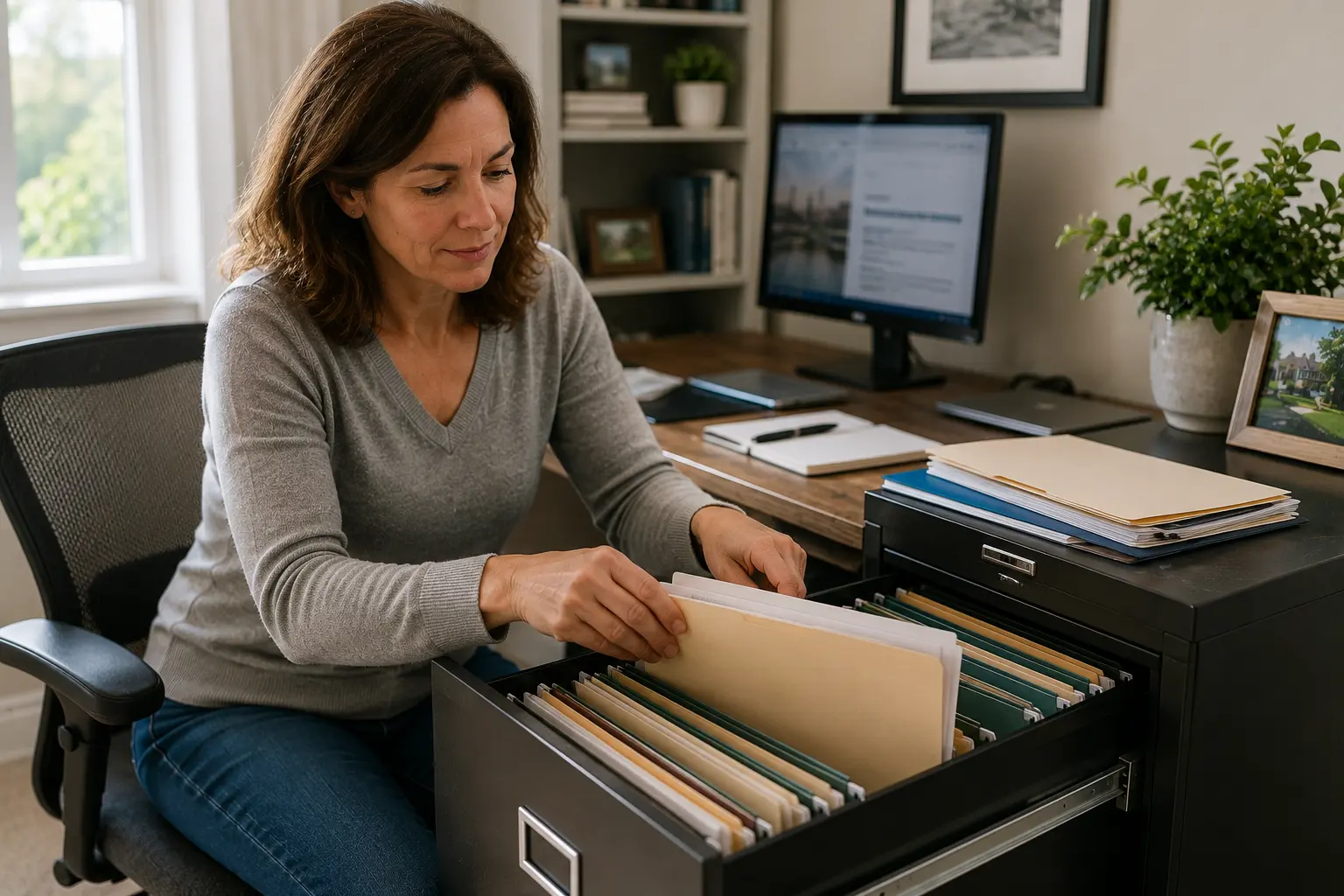
After sewer replacement, the documents may not feel as urgent as the repair itself. Once the line is working, the trench is filled, and the property is being restored, many homeowners are ready to move on. However, keeping the right paperwork is one of the most important post-repair steps because sewer replacement records can affect warranties, insurance questions, future repairs, and resale value.
For Chicago homeowners, documentation matters even more because sewer replacement may involve permits, inspections, public sidewalks, parkways, driveway aprons, basement backup cleanup, and staged restoration work. If a question comes up months or years later, written records can help prove what was replaced, when it was completed, what materials were used, and whether the work passed inspection.
This guide explains which documents to keep after sewer replacement, why each record matters, how they may help with future problems, and how to organize them. For more post-project guidance, visit the Post-Repair Concerns resource hub.
Key Takeaways
- Keep sewer replacement records for as long as you own the home.
- Important documents include contracts, invoices, permits, inspection approvals, warranties, photos, and pipe details.
- Final inspection records help show that permitted work was reviewed and approved.
- Warranty documents should explain what is covered, what is excluded, and whether coverage transfers to a future buyer.
- Photos and videos can help document buried work that will no longer be visible after backfill.
- Chicago homeowners should also keep records for sidewalk, driveway, yard, parkway, and cleanup restoration when applicable.
The Documents Homeowners Should Save
After sewer replacement, homeowners should keep the signed contract, scope of work, paid invoices, permit records, final inspection approval, warranty documents, pipe material details, camera inspection reports, before-and-after photos, cleanout location information, restoration records, and insurance paperwork if a claim was involved. These records should be stored for as long as you own the property.
Why Sewer Replacement Records Matter
Sewer replacement is different from many home repairs because the most important part of the work is buried underground. Once the trench is filled, it may be difficult to confirm exactly what was done without records.
Good documentation can help answer important questions later:
- Was the full sewer line replaced or only one section?
- What material was installed?
- Where is the new cleanout?
- Was the work permitted?
- Did the final inspection pass?
- What warranty coverage applies?
- Was restoration included in the project?
- What should be disclosed during a future home sale?
If you are still working through the period after the project, What to Expect After Sewer Line Replacement provides a broader overview of the post-repair process.
Core Documents to Keep After Sewer Replacement
Some records should be saved after nearly every sewer replacement project. These documents help establish what work was done, who performed it, what was paid, and whether the project was completed properly.
| Document | Why It Matters | How Long to Keep It |
|---|---|---|
| Signed contract | Shows the agreed scope, terms, responsibilities, and exclusions | As long as you own the home |
| Scope of work | Explains what was included and what was not included | As long as you own the home |
| Paid invoices | Proves payment and may support warranty, resale, or insurance questions | As long as you own the home |
| Permit records | Shows whether required approvals were obtained | As long as you own the home |
| Final inspection approval | Confirms that permitted work was reviewed and approved | As long as you own the home |
| Warranty documents | Defines coverage, exclusions, claim process, and coverage period | At least through the warranty period, preferably longer |
| Photos and videos | Document buried work, restoration, cleanout location, and property condition | As long as you own the home |
The Contract and Scope of Work
The signed contract is the starting point for understanding what the sewer replacement included. It should be saved with any written change orders, add-ons, or revisions that occurred during the project.
A useful sewer replacement contract may include:
- The section of sewer line being replaced
- The replacement method
- The pipe material
- The approximate length of replacement
- Excavation details
- Cleanout installation details
- Permit responsibilities
- Restoration responsibilities
- Warranty terms
- Payment schedule
- Exclusions or limitations
This document becomes especially important if there is later confusion about whether yard repair, driveway patching, sidewalk restoration, or cleanup was included.
Permit and Final Inspection Records
Permit and inspection records are among the most valuable documents to keep after sewer replacement. They help show that the work was performed through the proper approval process and reviewed before closeout.
Homeowners should save:
- Permit applications
- Permit numbers
- Inspection notices
- Final inspection approval
- Correction notices, if any
- Proof of permit closeout
For more detail on this step, review Sewer Replacement Final Inspection: What to Expect.
Important: A paid invoice does not automatically prove that the final inspection passed. Keep inspection approval records separately from payment records.
Warranty Documents
A sewer replacement warranty can be helpful, but only if the homeowner has the written terms. Do not rely only on a verbal statement about coverage.
Warranty documents should explain:
- What part of the sewer line is covered
- Whether labor is included
- Whether materials are covered separately
- How long coverage lasts
- What problems are excluded
- Whether clogs, roots, settlement, or misuse are excluded
- How to make a claim
- Whether the warranty transfers to a buyer
For a detailed explanation of warranty terms, see Sewer Line Replacement Warranties Explained.
Pipe Material and Installation Details
Because the sewer line is underground, future contractors may not know what was installed unless the homeowner has records. Pipe information can help with maintenance, future repairs, camera inspections, warranty claims, and resale questions.
Useful details include:
- Pipe material
- Pipe diameter
- Approximate replacement length
- Pipe depth
- Location of the sewer route
- Cleanout location
- Connection points
- Whether old pipe remains in place
- Any transition points between old and new pipe
These records also help homeowners understand the expected service life of the new line. For more context, see How Long Do New Sewer Lines Last?.
Camera Inspection Reports and Videos
If a camera inspection was performed before or after replacement, keep the report and video file if available. This documentation can show the condition of the old pipe, the reason replacement was recommended, and the condition of the new or remaining line.
Camera records may help with:
- Identifying the original defect
- Confirming what section was replaced
- Documenting remaining older pipe
- Supporting warranty claims
- Answering buyer questions
- Helping future contractors diagnose problems faster
If the video file is large, save it in a clearly labeled digital folder and keep a backup copy.
Photos Homeowners Should Keep
Photos are simple but valuable. Once the trench is backfilled, photos may be the only visual record of the buried work.
Useful photos include:
- Before photos of the yard, driveway, sidewalk, and basement if affected
- Excavation route photos
- Photos of the old damaged pipe
- Photos of the new pipe before backfill
- Cleanout location photos
- Backfill and grading photos
- Temporary patch photos
- Final restoration photos
- Photos after heavy rain if drainage is a concern
Photos may be useful for warranty issues, insurance claims, contractor disputes, and future home sale questions.
Cleanup and Restoration Records
Sewer replacement often affects more than the pipe. If excavation disturbed the yard, sidewalk, driveway, landscaping, or basement, keep those records with the sewer file.
Restoration records may include:
- Cleanup invoices
- Yard grading records
- Topsoil, seed, or sod receipts
- Driveway repair invoices
- Sidewalk repair documents
- Parkway restoration records
- Landscaping replacement receipts
- Before-and-after photos
- Written notes about temporary repairs
For cleanup-related guidance, review Sewer Repair Cleanup Checklist.
Chicago-Specific Documentation Considerations
Public Sidewalks, Parkways, and Aprons
In Chicago, sewer work may affect sidewalks, driveway aprons, parkways, or areas near the public right-of-way. Keep documentation for any surface restoration in these areas, especially if temporary patches were used before permanent repair.
Older Homes and Mixed Materials
Many Chicago homes have older plumbing systems. A sewer replacement may connect new pipe to older remaining pipe. Records should clearly show what was replaced and what was left in place.
Basement Backup History
If replacement followed a basement backup, save cleanup records, photos, insurance correspondence, and remediation invoices. These may matter for future insurance questions or resale disclosures.
Weather-Delayed Restoration
Concrete, asphalt, landscaping, and lawn restoration may be delayed by Chicago weather. If restoration is temporary or scheduled later, keep written confirmation of what remains unfinished.
Permit Closeout
When sewer work involves public-facing areas or municipal requirements, permit closeout records become especially important. Do not rely only on verbal confirmation.
Insurance Documents to Save
If insurance was involved in any part of the sewer replacement, backup cleanup, or property restoration, keep all claim documents. This applies whether the claim was approved, partially paid, or denied.
Save:
- Claim number
- Adjuster communications
- Photos sent to insurance
- Coverage letters
- Denial letters, if applicable
- Payment records
- Repair estimates
- Cleanup invoices
- Receipts for damaged belongings or building materials
Practical tip: Warranty documents and insurance documents should both be kept, but they are not the same thing. A warranty covers specific contractor or product issues, while insurance depends on policy terms and the cause of loss.
Documents That Help When Selling the Home
A documented sewer replacement can be a useful selling point, especially in older Chicago homes where buyers may worry about underground sewer conditions. Without records, it may be harder to prove what was done.
Helpful resale documents include:
- Signed contract
- Paid invoice
- Permit and final inspection approval
- Warranty documents
- Camera inspection report
- Pipe material details
- Cleanout location information
- Restoration photos
- Insurance or cleanup records if relevant
For resale-specific guidance, see Selling a House After Sewer Line Replacement.
How to Organize Sewer Replacement Records
The best system is simple: keep everything in one place and make sure digital files are backed up.
A practical organization system includes:
- A physical folder labeled with the project name and year
- A matching digital folder
- Subfolders for permits, invoices, warranties, photos, videos, restoration, and insurance
- File names that include dates and descriptions
- Cloud storage or an external backup for photos and videos
- A one-page summary with the most important details
The summary page can list the project date, contractor name, permit number, pipe material, replaced section, cleanout location, warranty term, and where the digital files are stored.
Warning Signs Your Documentation Is Incomplete
Missing records can create confusion later. Homeowners should follow up quickly if important documents were not provided.
Potential red flags include:
- No written warranty
- No final invoice
- No clear scope of work
- No permit information when permits were expected
- No final inspection confirmation
- No written explanation of restoration responsibilities
- No record of pipe material
- No confirmation of temporary versus permanent repairs
- No photos before backfill
If documents are missing, request them as soon as possible while the project details are still fresh.
Common Mistakes Homeowners Make
- Throwing away the estimate. The estimate may show what was included or excluded.
- Not saving inspection approval. A final inspection record can matter years later.
- Relying on verbal warranty promises. Warranty terms should be written.
- Failing to document the cleanout location. Future access can become harder if the cleanout is hidden.
- Not taking photos before backfill. Once the pipe is buried, visual proof is gone.
- Mixing sewer records with unrelated receipts. A dedicated folder is easier to use later.
- Discarding insurance letters. Even denied claims may be useful for future reference.
Frequently Asked Questions
How long should I keep sewer replacement documents?
Keep core sewer replacement records for as long as you own the home. Warranty documents should be kept at least through the warranty period, but saving them longer can help with resale and future repair questions.
Do I need proof that the final inspection passed?
Yes. Final inspection approval helps show that permitted work was reviewed and accepted. It may be useful for warranty claims, insurance questions, future repairs, and selling the home.
Should I keep photos of the sewer replacement?
Yes. Photos of the excavation, new pipe, cleanout, backfill, and restoration can help document work that is no longer visible after the trench is filled.
What if I never received a written warranty?
Request one in writing as soon as possible. If no separate warranty document exists, keep the contract, invoice, and any written communication describing warranty terms.
Are sewer replacement records useful when selling a house?
Yes. Buyers may feel more confident when a major sewer replacement is supported by permits, inspection approvals, invoices, warranty documents, and camera inspection records.
Should I keep insurance documents even if the claim was denied?
Yes. Denial letters, coverage explanations, estimates, and photos may still help explain the history of the sewer issue or property damage.
What document proves what pipe material was installed?
The contract, invoice, permit record, material receipt, camera inspection report, or installation summary may identify the pipe material. Photos before backfill may also help.
Can missing sewer replacement documents cause problems later?
They can. Missing permits, unclear warranties, incomplete restoration records, or lack of inspection approval may complicate warranty claims, resale questions, insurance issues, or future repairs.
Conclusion
The most important sewer replacement documents are the records that prove what was done, when it was completed, what materials were used, whether the work passed inspection, and what coverage applies afterward. Because much of the work is buried underground, paperwork, photos, and inspection records become the long-term proof of the project.
For Chicago homeowners, organized sewer records can help with warranties, insurance, restoration questions, future maintenance, and resale. Keeping a dedicated folder with contracts, permits, final inspection approval, invoices, warranties, photos, and cleanup records is a simple step that can prevent major confusion later.