Sewer Inspections & Diagnosis

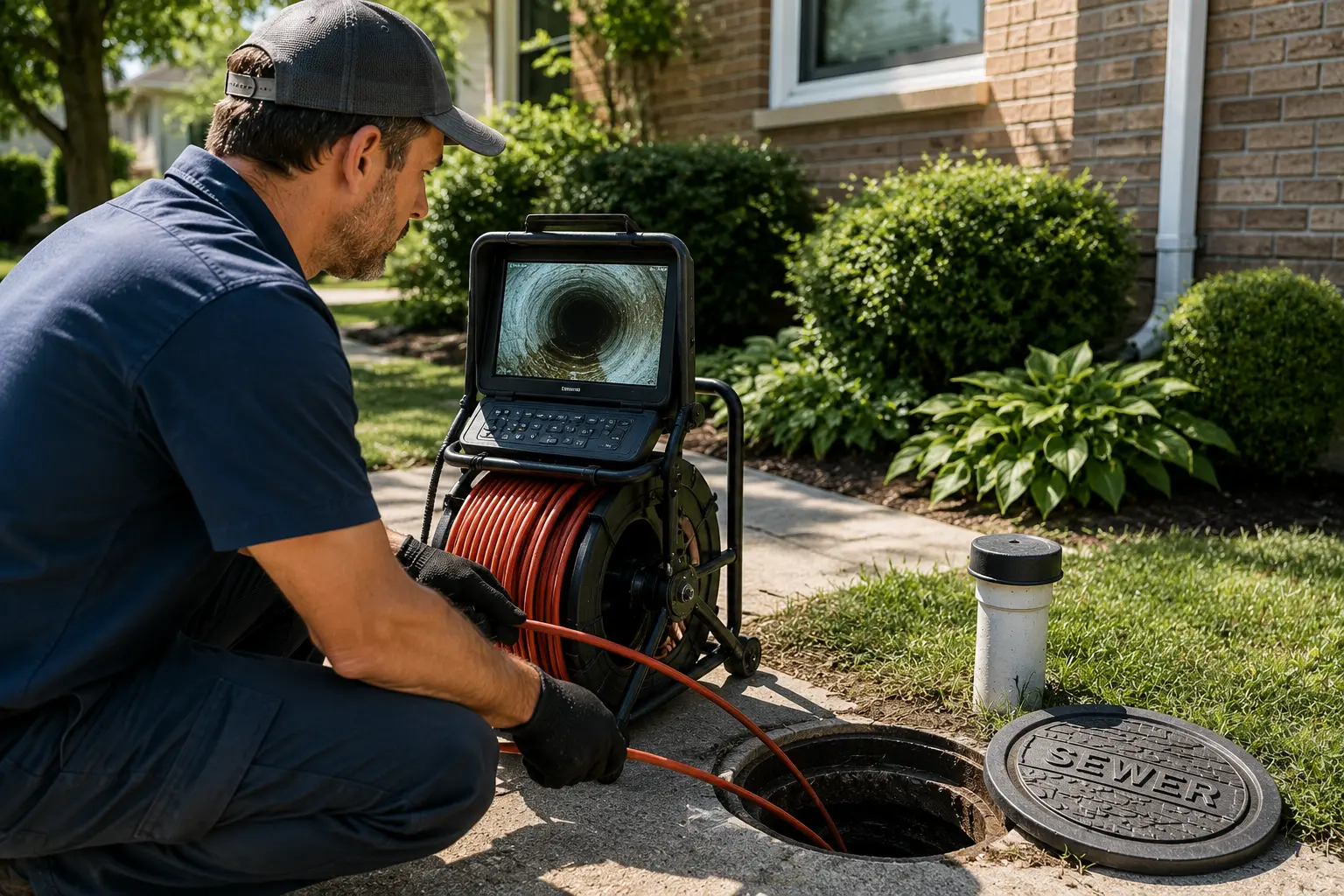
Technician performing a sewer camera inspection through a residential cleanout while viewing live footage on inspection equipment outside a Chicago-area home.

Sewer Camera Inspection in Chicago: What Homeowners Should Know

A sewer camera inspection is one of the most valuable diagnostic tools available to homeowners dealing with drainage problems, sewer backups, recurring clogs, or concerns about an aging sewer line. Rather than relying on guesswork, a camera inspection allows a technician to view the inside of the pipe and identify the actual cause of the […]
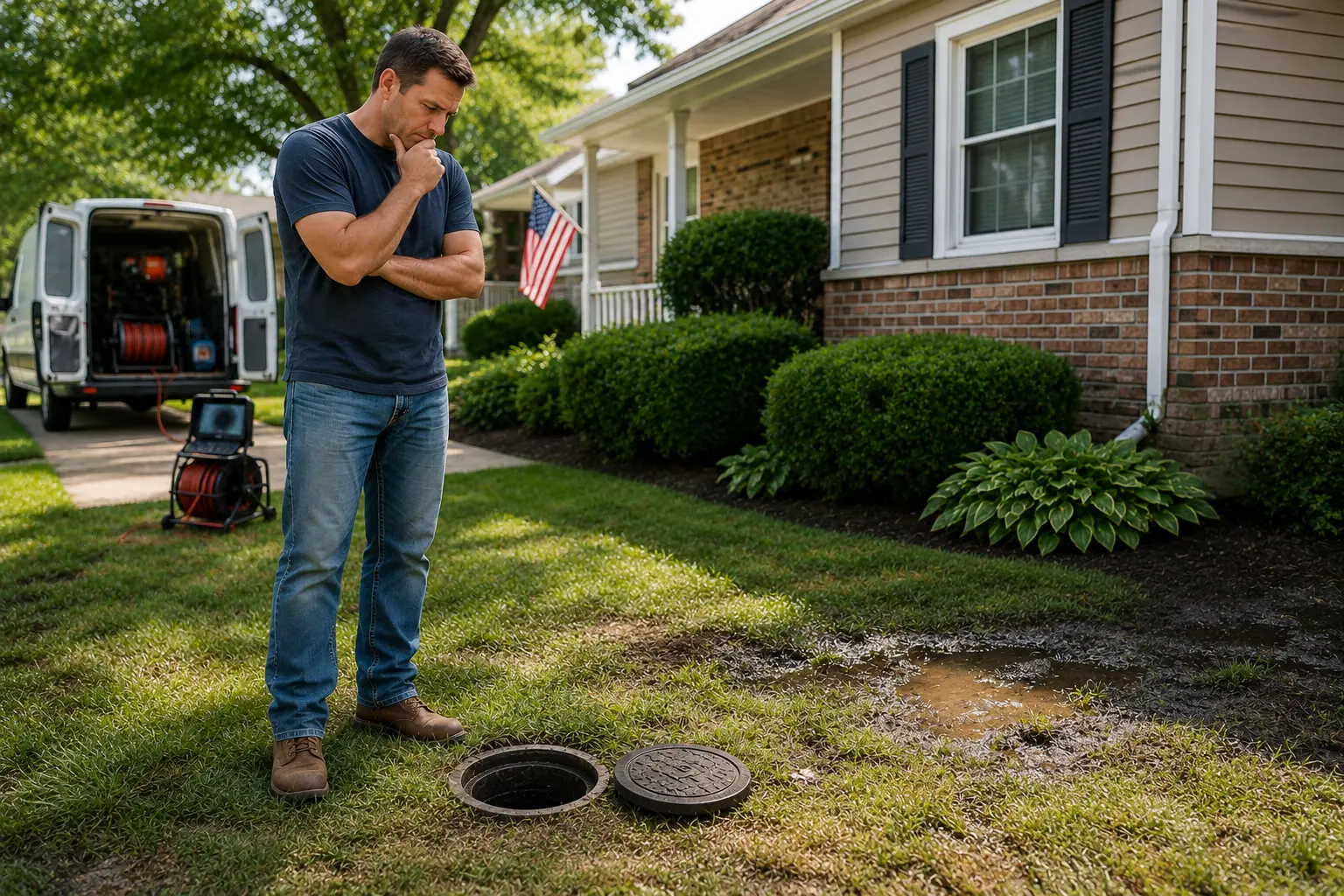
Homeowner standing near a residential sewer cleanout and wet area in the yard while sewer camera inspection equipment waits nearby before an inspection.

When Should You Get a Sewer Scope Inspection?

Many sewer line problems develop gradually underground long before homeowners notice obvious symptoms. By the time sewage backs up into a basement or drains stop functioning properly, the underlying issue may have existed for months or even years. A sewer scope inspection provides a direct look inside the sewer line, allowing homeowners to identify hidden

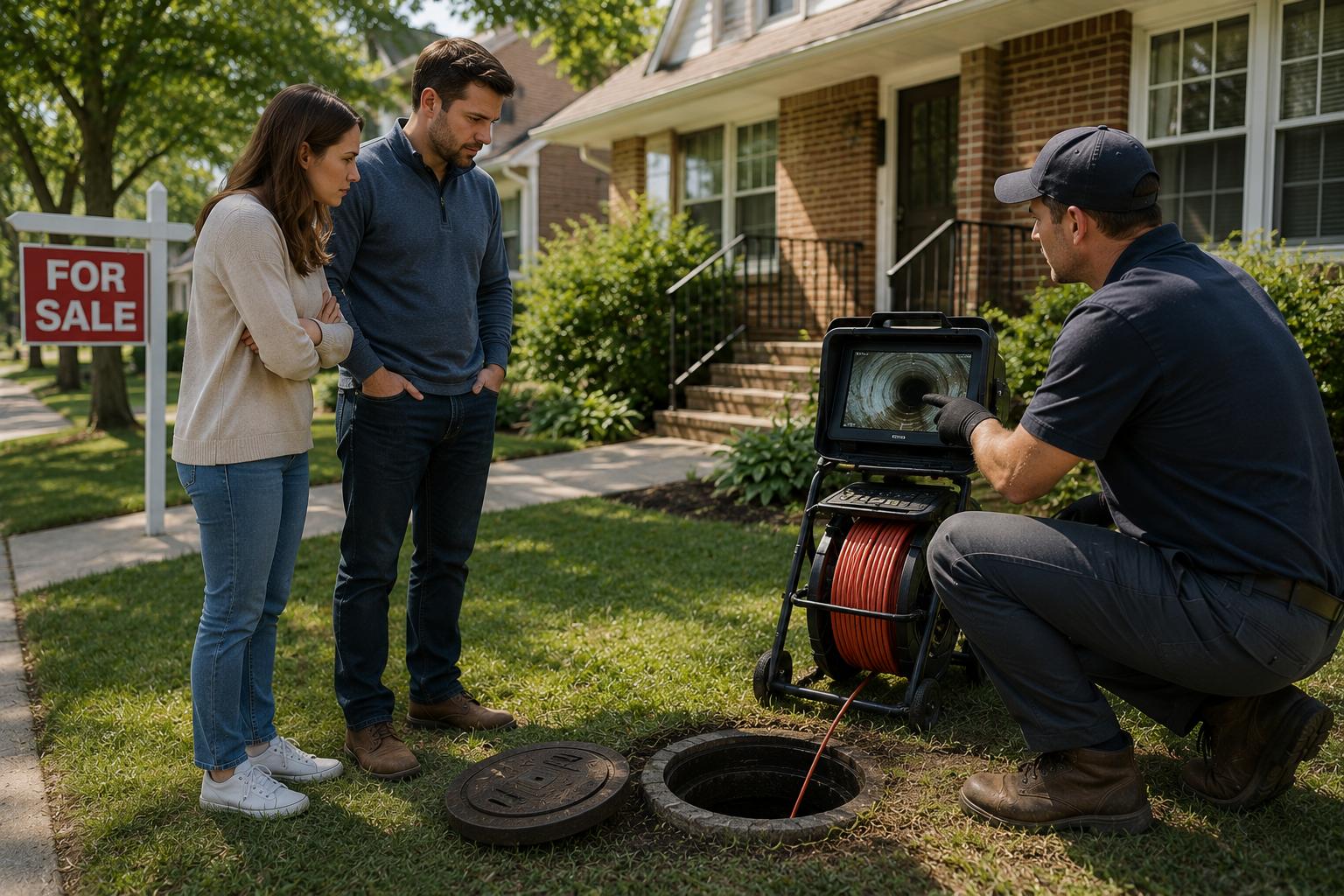
Prospective homebuyers watching a sewer camera inspection being performed at a home they are considering purchasing.

Sewer Inspection Before Buying a House

Buying a house in Chicago can move quickly, and most buyers focus on the visible parts of the property: roof condition, electrical panels, heating systems, windows, foundation cracks, and interior repairs. But one of the most expensive problems may be buried underground. A sewer inspection before buying a house gives buyers a direct look inside

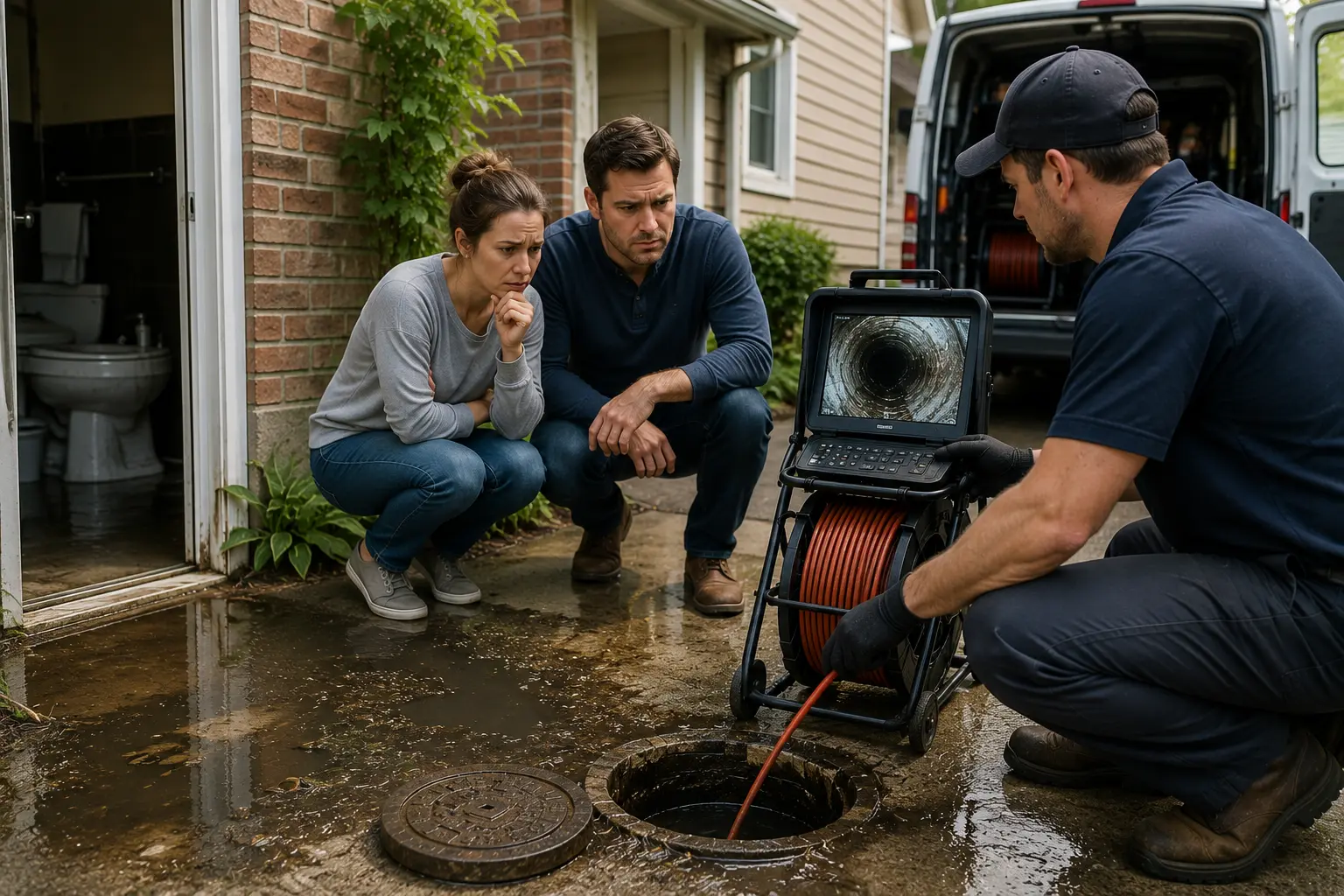
Homeowners watching a sewer camera inspection after a sewer backup while standing near a flooded basement entrance and an active cleanout inspection.

Sewer Inspection After a Sewer Backup

A sewer backup is one of the most stressful plumbing problems a homeowner can face. Once wastewater enters a basement, floor drain, tub, or lower-level fixture, the immediate priority is cleanup and safety. But after the visible mess is handled, an important question remains: why did the backup happen in the first place? A sewer

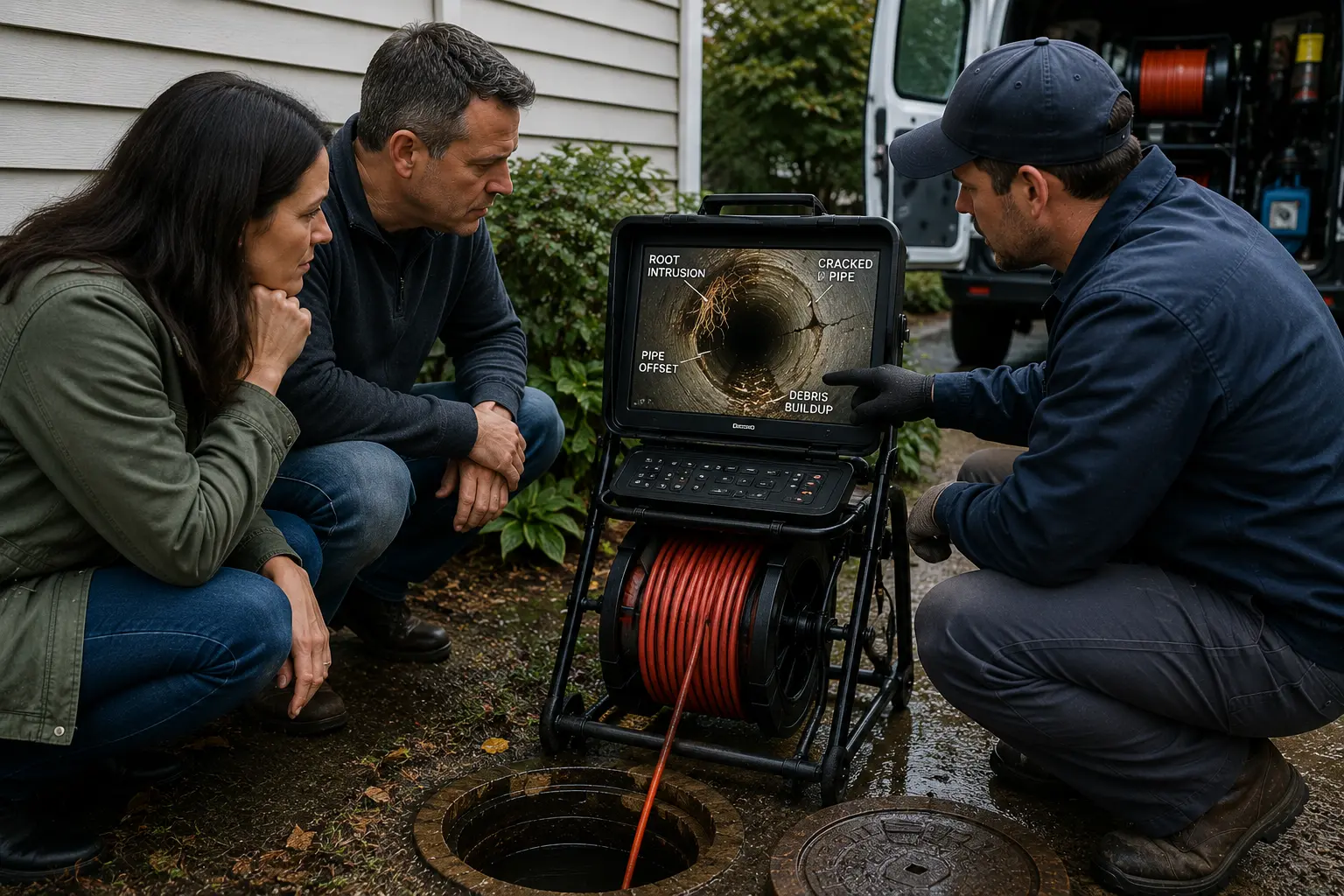
Homeowners viewing sewer camera inspection footage that reveals pipe defects such as root intrusion, cracks, offsets, and debris inside a residential sewer line.

What Does a Sewer Camera Inspection Show?

A sewer camera inspection gives homeowners a direct look inside the underground sewer line. Instead of guessing why drains are slow, why backups happen, or whether an older pipe is still in good condition, the inspection uses video footage to show what is actually happening inside the pipe. For Chicago homeowners, this can be especially

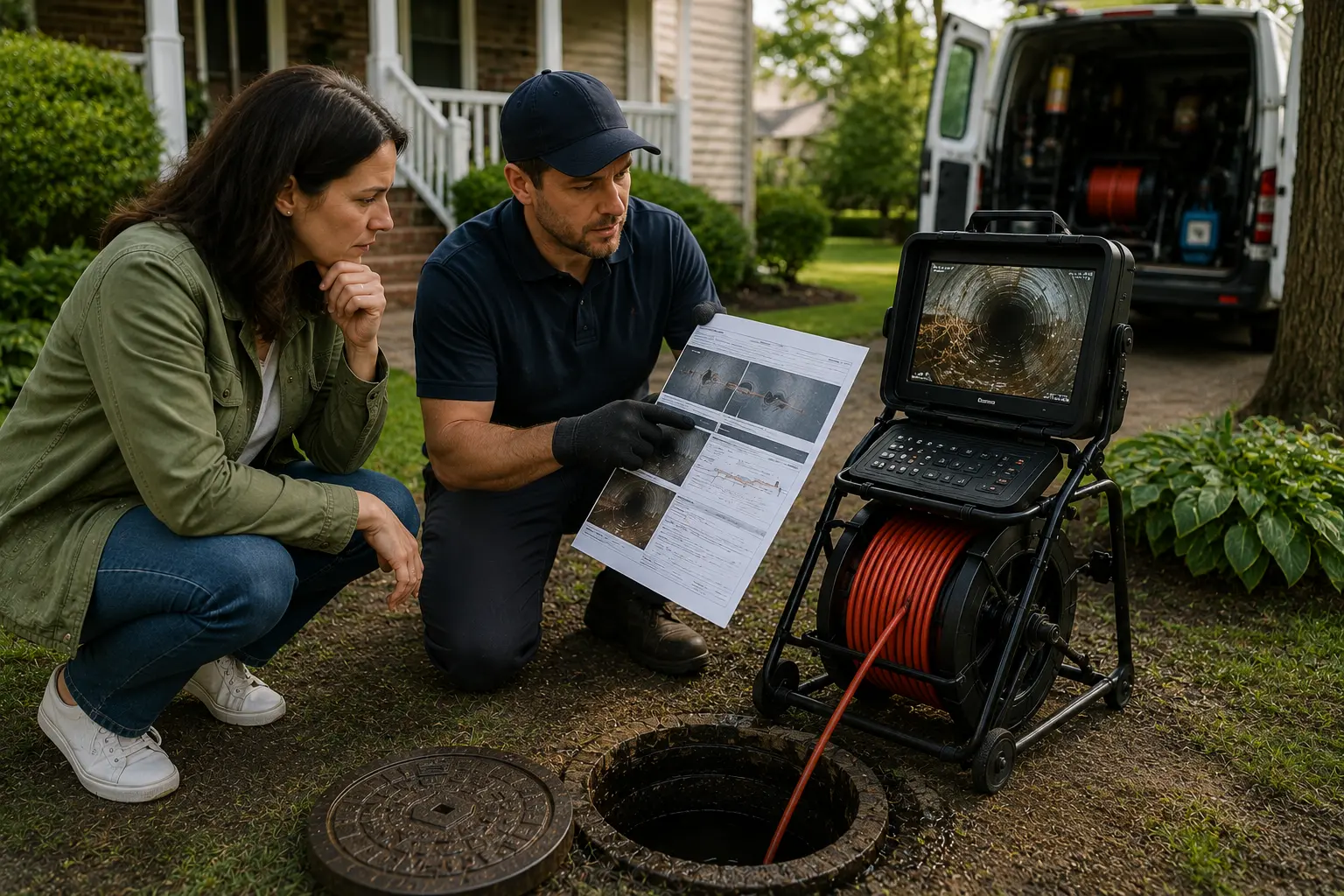
Homeowner reviewing a sewer scope report with a technician while comparing inspection images and live sewer camera footage at a residential property.

How to Read a Sewer Scope Report

A sewer scope report can feel confusing at first. Homeowners may receive a video link, a few still images, distance measurements, pipe material notes, and repair recommendations without knowing which findings are minor and which ones could become expensive problems. The purpose of a sewer scope report is to document what the camera inspection found

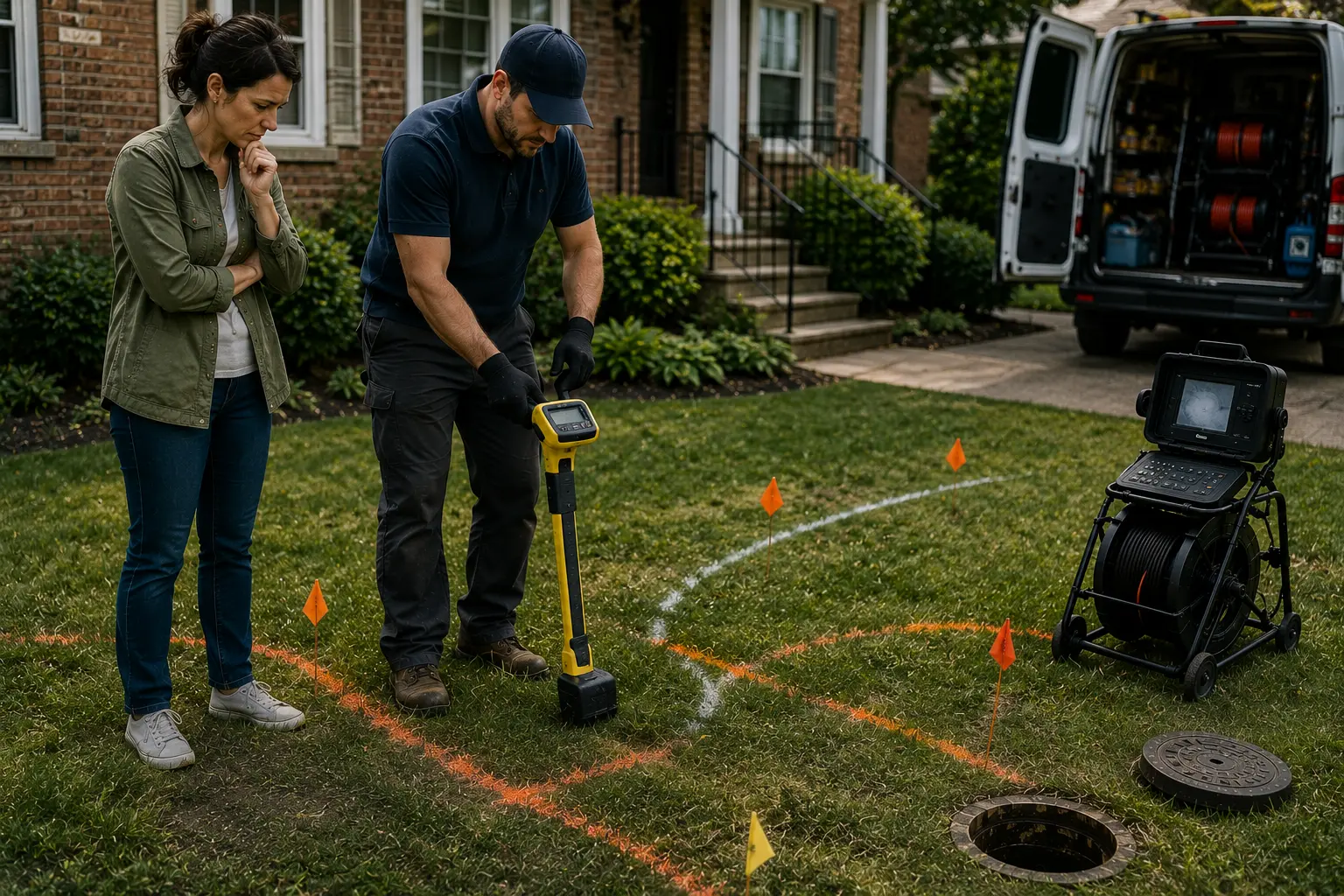
Technician using electronic locating equipment to trace the path of a buried residential sewer line while a homeowner observes marked utility locations in the yard.

Sewer Line Depth and Location Explained

Sewer line depth and location matter more than many homeowners realize. When a sewer problem appears, the repair decision is not based only on what is wrong with the pipe. It also depends on where the pipe runs, how deep it is buried, what is above it, and how difficult it would be to access

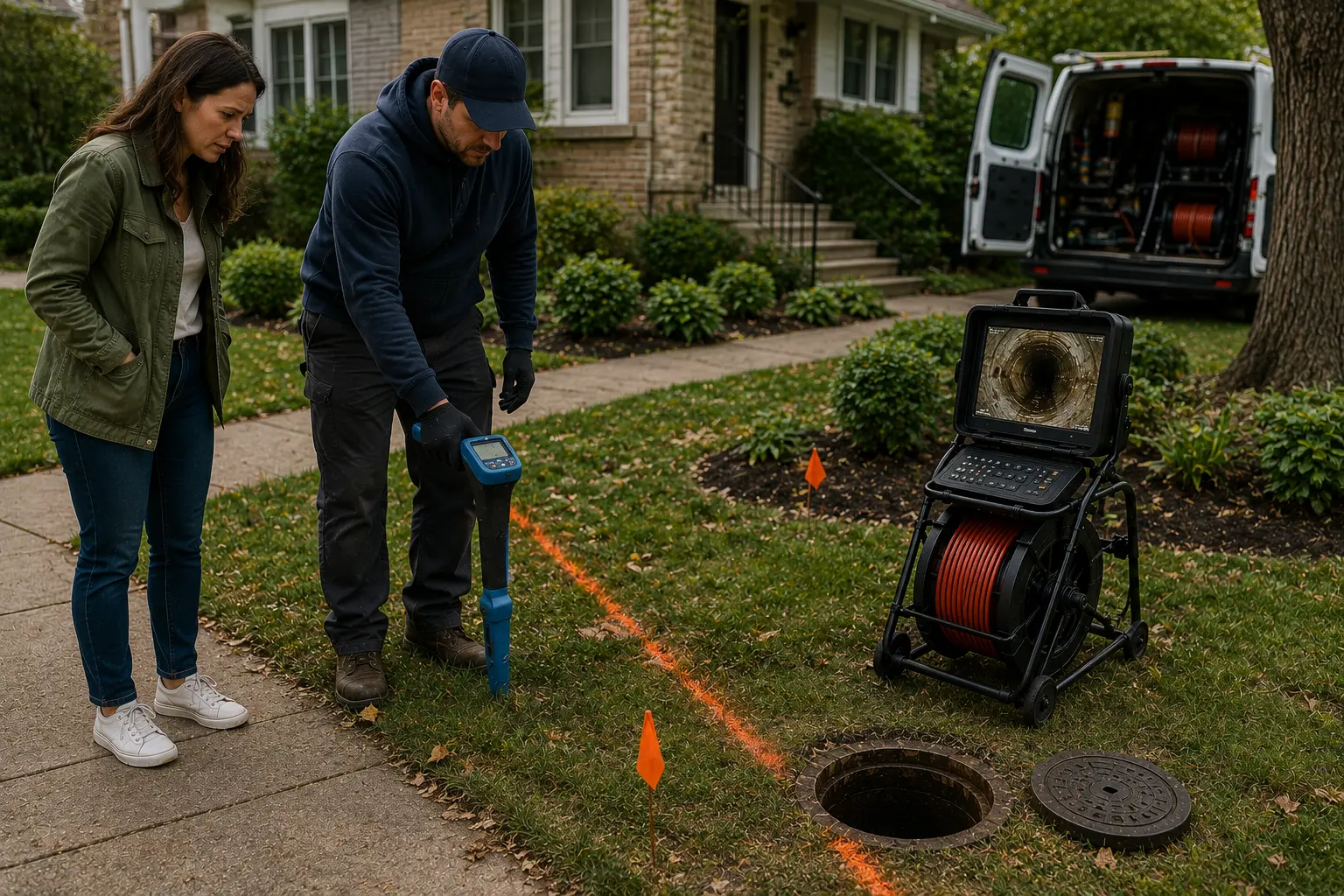
Technician using electronic locating equipment and utility markings to trace the path of a buried residential sewer line while a homeowner observes in the yard.

How to Find a Sewer Line Under Your Yard

Finding a sewer line under your yard is not always as simple as looking for a straight path from the house to the street. Sewer lines can run toward the front, back, side, alley, or another connection point depending on how the property was built, where the public sewer is located, and whether repairs or

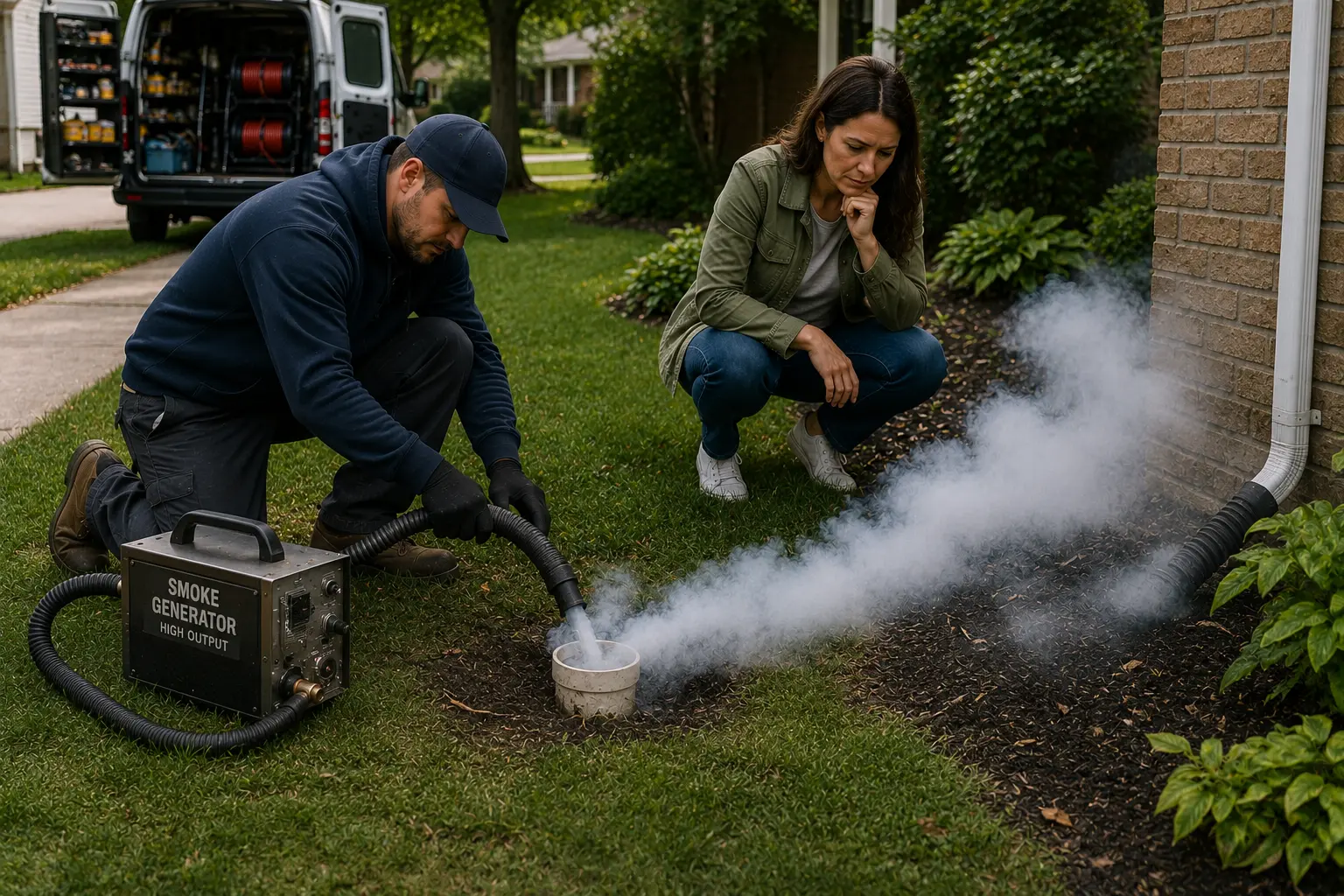
Technician performing a sewer smoke test by introducing non-toxic smoke into a residential sewer system while a homeowner observes smoke emerging near the home's exterior.

Sewer Line Smoke Testing Explained

Sewer line smoke testing is a diagnostic method used to find certain leaks, improper connections, venting problems, and openings in a sewer or drainage system. Instead of looking inside the pipe with a camera, smoke testing introduces non-toxic test smoke into the system and watches where the smoke escapes. For Chicago homeowners, smoke testing may

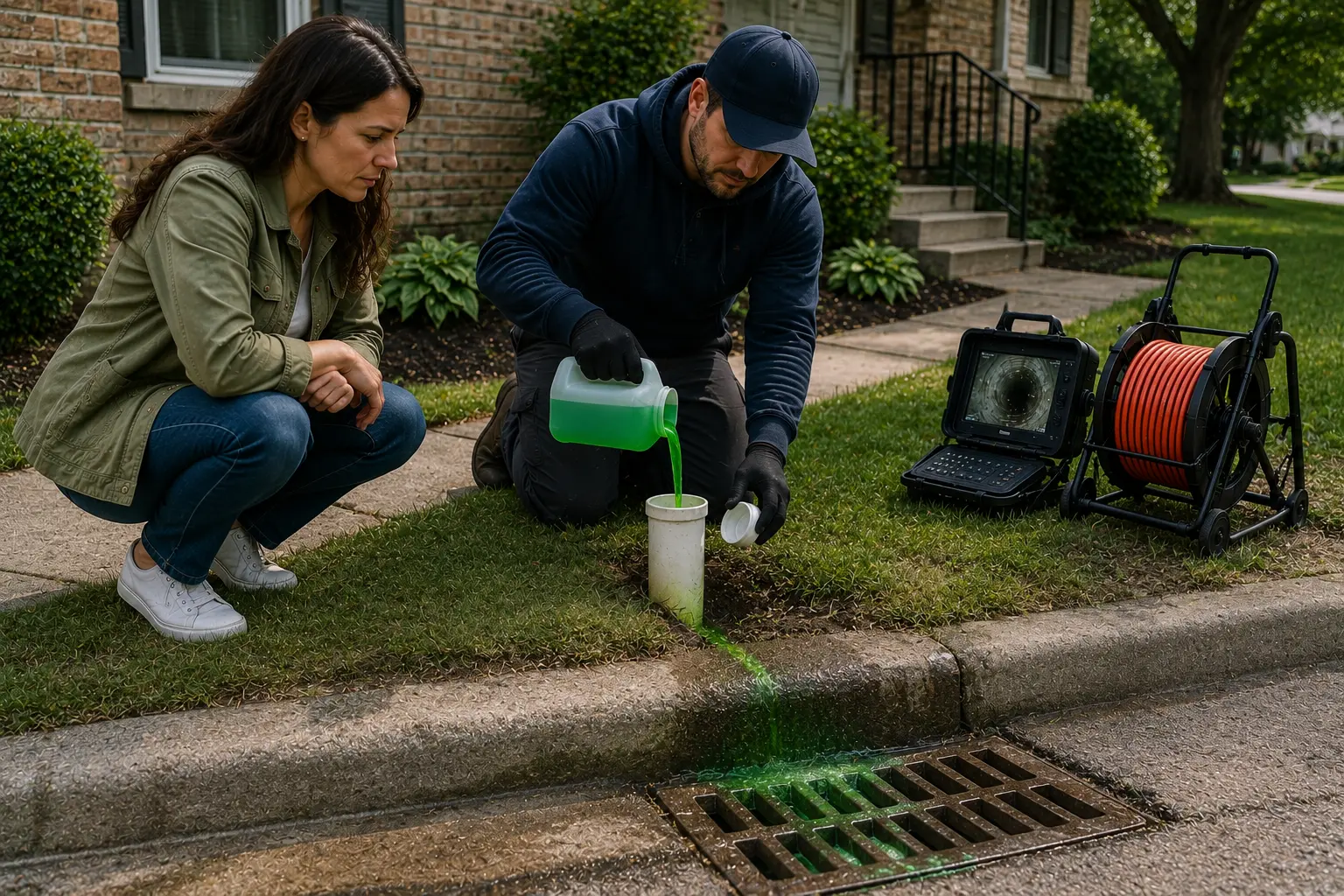
Technician performing a sewer dye test by introducing bright green tracing dye into a residential drain system while a homeowner observes the results at a nearby storm drain.

Sewer Dye Testing: When Is It Used?

Sewer dye testing is a diagnostic method used to trace where water is flowing in a plumbing, sewer, or drainage system. Instead of using a camera to inspect the inside of a pipe or smoke to find air leaks, dye testing uses brightly colored test dye and water to help confirm whether a drain, fixture,

Scroll to Top