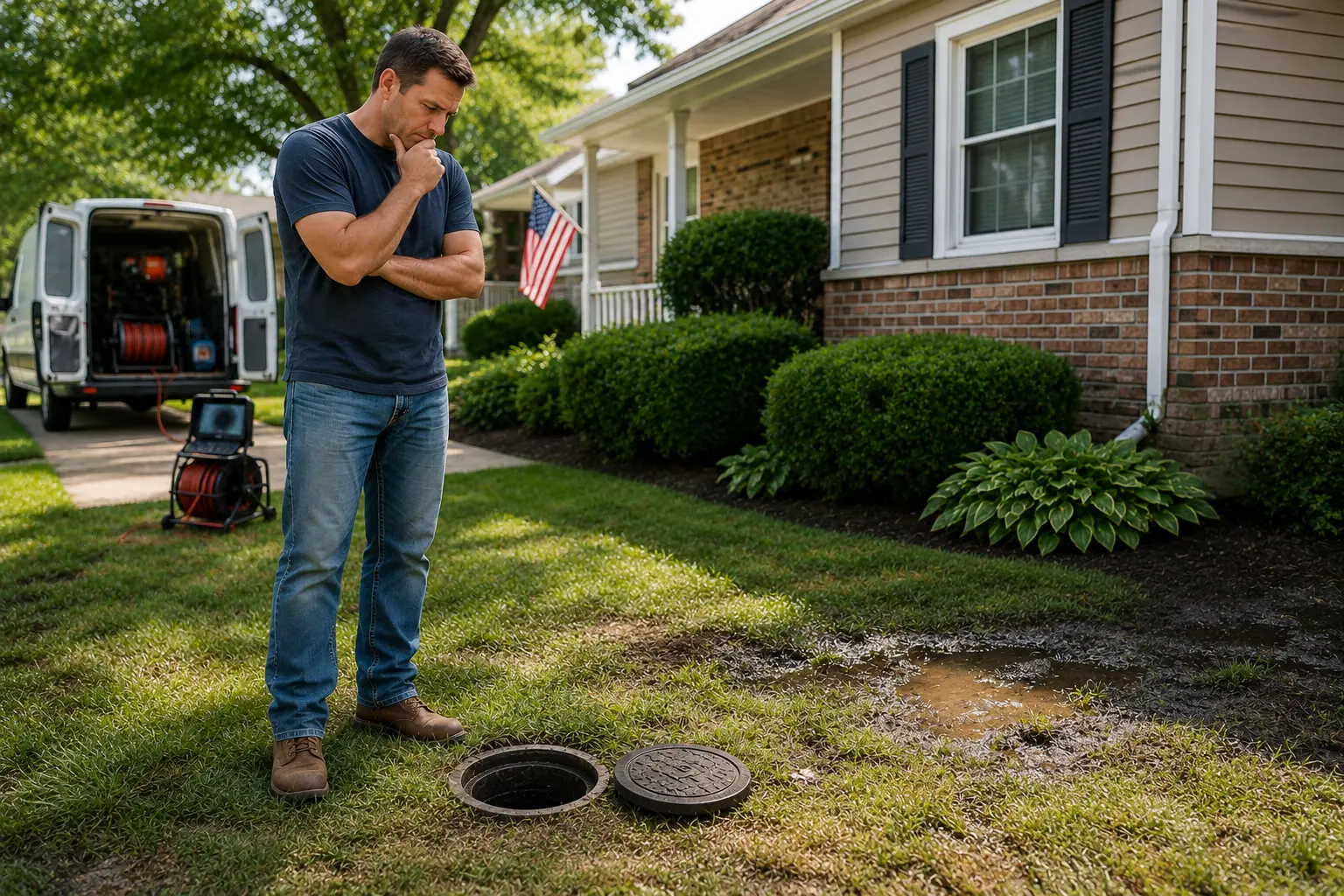
Many sewer line problems develop gradually underground long before homeowners notice obvious symptoms. By the time sewage backs up into a basement or drains stop functioning properly, the underlying issue may have existed for months or even years.
A sewer scope inspection provides a direct look inside the sewer line, allowing homeowners to identify hidden defects before they become major problems. But one of the most common questions homeowners ask is not what a sewer scope inspection is—it’s when they should actually schedule one.
In many cases, timing matters as much as the inspection itself. Knowing when to inspect can help prevent unnecessary repairs, reduce the risk of emergency backups, and provide valuable information before major property decisions are made.
For additional sewer inspection resources, visit the Sewer Inspections & Diagnosis hub.
Key Takeaways
- A sewer scope inspection is most valuable when there is a specific reason to evaluate the condition of a sewer line.
- Home purchases, recurring drain issues, sewer backups, and older homes are among the most common situations that justify an inspection.
- Many sewer defects remain hidden until a camera inspection reveals them.
- Early inspections can identify problems before they become expensive emergencies.
- Chicago homeowners often benefit from inspections because many neighborhoods contain aging sewer infrastructure and mature trees.
When Is the Right Time to Get a Sewer Scope Inspection?
Homeowners should consider a sewer scope inspection when buying a home, after a sewer backup, when recurring drainage problems occur, before major sewer repairs, or when evaluating an older property’s plumbing system. A sewer scope inspection provides visual evidence of pipe conditions that cannot be assessed from the surface.
Even when no immediate problems are present, inspections can serve as a proactive tool for understanding the condition of an aging sewer line and planning future maintenance.
What Is a Sewer Scope Inspection?
A sewer scope inspection uses a specialized waterproof camera that travels through the sewer line and transmits live video footage to a monitor. This allows the operator to examine the interior condition of the pipe and identify defects that would otherwise remain hidden underground.
If you are unfamiliar with the process itself, start with Sewer Camera Inspection in Chicago: What Homeowners Should Know.
The inspection can reveal:
- Tree root intrusion
- Pipe cracks
- Collapsed sections
- Offset joints
- Pipe corrosion
- Grease buildup
- Foreign object blockages
- Sagging pipe sections
Before Buying a Home
One of the most common reasons to schedule a sewer scope inspection is during a real estate transaction.
Most home inspections focus on visible systems and components. Because sewer lines are buried underground, significant defects can remain completely hidden during a standard inspection.
A sewer scope inspection may reveal:
- Root intrusion
- Cracked pipes
- Deteriorated clay tile lines
- Improper repairs
- Partial collapses
- Major blockages
Discovering these issues before closing can help buyers better understand potential future costs and negotiate accordingly.
For a more detailed discussion, see Sewer Inspection Before Buying a House.
After a Sewer Backup
Many homeowners assume that clearing a blockage solves the problem. In reality, a sewer backup is often a symptom rather than the root cause.
Once cleanup is complete, a sewer scope inspection can help determine why the backup occurred.
Potential causes may include:
- Tree roots
- Pipe damage
- Structural failures
- Heavy grease buildup
- Pipe bellies
- Recurring obstructions
Without an inspection, homeowners may only address the immediate symptom while the underlying issue continues to worsen.
Additional information is available in Sewer Inspection After a Sewer Backup.
When Drains Keep Clogging
Occasional clogs happen in most homes. However, recurring drain problems may indicate a larger issue within the main sewer line.
Warning signs include:
- Frequent drain cleaning
- Multiple drains clogging simultaneously
- Slow drains throughout the house
- Recurring toilet backups
- Gurgling fixtures
- Foul sewer odors
A sewer scope inspection helps determine whether the issue originates inside the home plumbing system or farther down the main sewer line.
Before Major Sewer Repairs
Homeowners should generally understand the condition of the sewer line before approving significant repair work.
A camera inspection provides visual evidence that can help answer important questions:
- Where is the damage located?
- How extensive is the problem?
- Is a repair possible?
- Is replacement necessary?
- Could additional issues exist elsewhere in the line?
The inspection helps ensure decisions are based on documented conditions rather than assumptions.
When Living in an Older Chicago Home
Chicago contains thousands of homes built long before modern sewer materials became standard.
Many older properties still contain:
- Clay tile sewer lines
- Cast iron sections
- Aging repair connections
- Original underground infrastructure
Even if no symptoms currently exist, periodic sewer scope inspections may help identify developing problems before they become emergencies.
Homeowners in older neighborhoods should also review Sewer Inspections for Older Chicago Homes.
When Planning Major Landscaping or Construction
Some homeowners schedule inspections before major outdoor projects.
Examples include:
- Installing a patio
- Building an addition
- Constructing a garage
- Installing a driveway
- Extensive landscaping projects
Understanding the location and condition of the sewer line before construction can help avoid costly surprises later.
In these situations, homeowners often combine inspections with line locating services. Learn more in Sewer Line Locating Services: What to Expect.
When You Need to Locate a Sewer Line
Modern sewer cameras can often be paired with locating equipment that identifies the path of the sewer line underground.
This information can be valuable when:
- Property records are incomplete
- The sewer route is unknown
- Excavation work is planned
- Repair estimates are being obtained
- Underground utilities need to be identified
Additional information can be found in How to Find a Sewer Line Under Your Yard and Sewer Line Depth and Location Explained.
Chicago-Specific Factors That Increase the Need for Sewer Inspections
Certain local conditions make sewer inspections particularly valuable for Chicago homeowners.
Mature Trees
Many Chicago neighborhoods feature large, established trees whose roots frequently seek moisture inside aging sewer pipes.
Aging Clay Sewer Lines
Older clay tile systems are especially vulnerable to root intrusion, cracking, and joint separation.
Freeze-Thaw Cycles
Seasonal ground movement can gradually worsen existing pipe defects over time.
Historic Housing Stock
Many homes contain sewer systems that have undergone decades of repairs, modifications, and material transitions.
Chicago Homeowner Tip: Even without current symptoms, homeowners in older neighborhoods may benefit from obtaining a baseline sewer scope inspection to document pipe condition and identify potential future concerns.
Situations Where a Sewer Scope Inspection May Not Be Necessary
Although sewer inspections are useful diagnostic tools, they are not required in every situation.
A sewer scope inspection may be less urgent when:
- The home is relatively new.
- No drainage issues have occurred.
- No major construction or purchase decisions are pending.
- The sewer line has recently been inspected and documented.
However, homeowners should weigh the age of the property and local risk factors before deciding to postpone an inspection.
Common Mistakes Homeowners Make
Waiting for a Major Backup
Many homeowners delay inspections until a severe problem develops. Earlier inspections often provide opportunities to address issues before significant damage occurs.
Assuming Drain Cleaning Solved Everything
Removing a blockage does not necessarily explain why the blockage formed in the first place.
Ignoring Older Sewer Systems
Age alone does not guarantee failure, but older sewer lines generally carry a higher risk of hidden defects.
Failing to Review the Inspection Footage
Homeowners should request documentation and understand the findings. If you receive a report, review How to Read a Sewer Scope Report.
Accepting Incomplete Inspections
Not all inspections are performed thoroughly. Learn what to watch for in Signs a Sewer Inspection Was Done Poorly.
Frequently Asked Questions
How often should a sewer scope inspection be performed?
There is no universal schedule. Older homes, properties with previous sewer issues, and homes located near large trees may benefit from more frequent inspections than newer properties.
Should I get a sewer scope inspection before buying a Chicago home?
Many homebuyers consider it a valuable part of due diligence because underground sewer problems are often invisible during a standard home inspection.
Can a sewer scope inspection find tree roots?
Yes. Root intrusion is one of the most common findings in older sewer systems and is typically easy to identify with a camera inspection.
How much does a sewer scope inspection cost?
Costs vary depending on the property, accessibility, equipment used, and whether the inspection is bundled with other services. Homeowners should compare what is included rather than focusing solely on price.
Will homeowners insurance pay for a sewer scope inspection?
Some insurance policies may cover diagnostic work associated with a covered claim, while others may not. Coverage depends on policy language and the circumstances involved.
Can a sewer scope inspection prevent future sewer problems?
While it cannot prevent defects from developing, it can identify existing issues early enough for homeowners to make informed maintenance and repair decisions.
Conclusion
The best time to schedule a sewer scope inspection is often before a problem becomes an emergency. Whether you are purchasing a home, recovering from a sewer backup, experiencing recurring drain issues, planning major property improvements, or simply evaluating an older Chicago home, a sewer scope inspection provides valuable information about the condition of the underground sewer line.
By understanding when inspections make sense and what they can reveal, homeowners can make better decisions about maintenance, repairs, and long-term property planning.