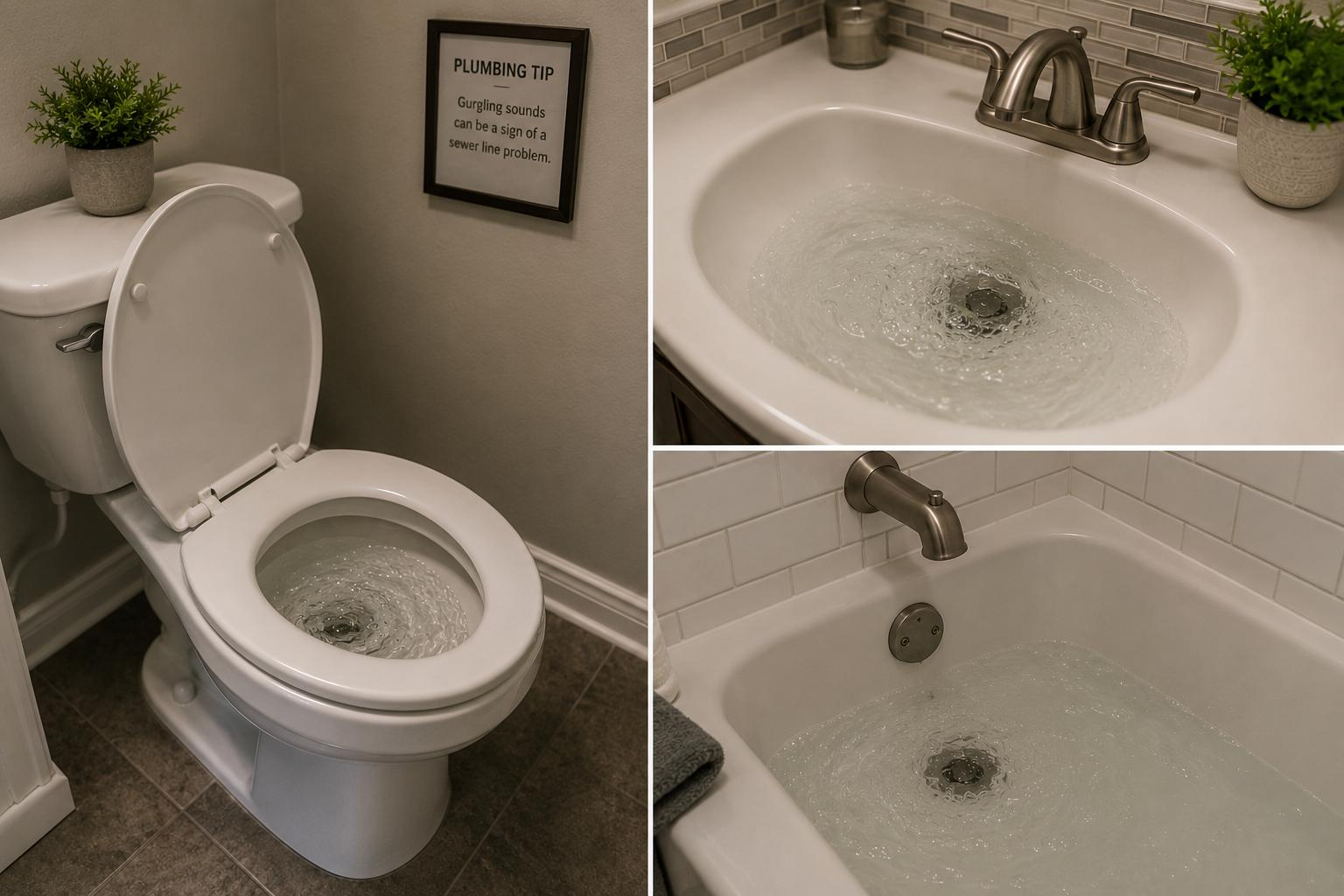
Gurgling toilets and drains usually happen when air is trapped, displaced, or pulled through the plumbing system because wastewater is not flowing normally. Common causes include a partial main sewer clog, blocked vent, tree roots in the sewer line, a sewer line belly, offset pipe joints, slow whole-house drainage, or a restriction that is building before a backup occurs.
One gurgling drain does not always mean the sewer line is broken. A single fixture can gurgle because of a local clog or venting issue. But when several drains gurgle, a toilet bubbles when another fixture runs, or basement drains make noise during laundry or showers, the problem may be connected to the main sewer line.
For Chicago homeowners, gurgling is worth taking seriously because many homes have older sewer laterals, basement floor drains, mature tree roots, and aging pipe materials. Gurgling can be an early warning sign before slow drains, sewer odors, or a basement sewer backup become more obvious.
Key Takeaways
- Gurgling drains usually mean air is moving through the plumbing system in an unusual way.
- A single gurgling fixture may be a local clog, but multiple gurgling fixtures can point to a main line problem.
- Toilets that bubble when showers, tubs, or laundry drains are used may indicate a downstream restriction.
- Common causes include partial sewer clogs, vent issues, tree roots, sewer line bellies, offset joints, and pipe damage.
- Gurgling paired with slow drains, sewage odors, or basement drain activity should be investigated promptly.
- A sewer camera inspection may be needed if symptoms keep returning or affect the whole house.
- Replacement is not always necessary, but repeated gurgling can be a warning sign that the sewer line needs diagnosis.
What Gurgling Toilets and Drains Usually Mean
Gurgling toilets and drains usually mean air is being forced through water in the drain system because the line is restricted, improperly vented, or struggling to move wastewater. If the gurgling happens in one sink or tub, the issue may be local. If toilets, tubs, showers, laundry drains, or basement drains gurgle together, the main drain or sewer line may be involved.
The concern increases when gurgling appears with slow drains throughout the house, sewer smells, repeated clogs, or water rising from a basement floor drain. Those combined symptoms may mean the sewer line is partially blocked, root-intruded, bellied, offset, or damaged.
Why Drains and Toilets Gurgle
Gurgling Comes From Air Movement
Drain systems need both water flow and air movement. When wastewater moves through a pipe, air must enter and exit the system properly. If the system is blocked, restricted, or poorly vented, air may be pulled through a fixture trap or pushed back through a toilet or drain.
That air movement creates the bubbling or gurgling sound. The sound may be brief, but it can reveal pressure changes inside the plumbing system.
The Location of the Gurgling Matters
A gurgling bathroom sink may point to a local drain or vent issue. A toilet that bubbles when the shower drains may point to a shared branch drain. A basement floor drain that gurgles when the washing machine runs may suggest a main line restriction.
The more fixtures involved, the more likely the problem is downstream of individual drains. When the issue affects the whole house, the sewer lateral should be considered.
Timing Matters Too
Homeowners should pay attention to when the gurgling happens. Does it happen after flushing a toilet? During laundry discharge? When the bathtub drains? During heavy rain? When several fixtures are used at once?
Timing can help identify whether the problem is related to high water volume, a partial blockage, a venting issue, storm-related pressure, or a sewer line restriction.
Common Causes of Gurgling Toilets and Drains
Partial Main Sewer Line Clog
A partial main sewer clog is one of the most important causes to consider. If wastewater cannot move freely through the main line, air may be pushed back through fixtures. This can cause toilets to bubble, tubs to gurgle, or basement drains to make noise.
A partial clog may be caused by grease, wipes, debris, sludge, paper buildup, or objects that should not have entered the drain system. If the clog is not cleared or keeps returning, the gurgling may eventually lead to a backup.
If gurgling appears with repeated blockages, Why Do Sewer Lines Keep Clogging? can help homeowners understand why the same line may keep slowing down.
Slow Drains Throughout the House
Gurgling often appears with slow drainage. When several fixtures drain slowly, the system may be struggling downstream. Toilets, showers, tubs, laundry drains, and basement drains may all be affected by the same restriction.
This pattern is more concerning than one slow sink. If the whole house drains slowly and gurgles, the problem may be in the main drain or sewer lateral. The related article What Slow Drains Throughout the House Can Mean explains how to recognize this larger pattern.
Blocked or Restricted Plumbing Vent
Plumbing vents help air enter the drain system so water can flow smoothly. If a vent is blocked, damaged, undersized, or not functioning correctly, drains may gurgle because air is being pulled through fixture traps instead of the vent system.
Vent issues can be hard to confirm without inspection because they may create symptoms similar to a sewer restriction. Gurgling, sewer odors, slow drainage, or trap water movement may all point to airflow problems.
Tree Roots in the Sewer Line
Tree roots can enter sewer pipes through cracks, loose joints, and offset pipe sections. Once inside, roots trap waste and narrow the pipe. As wastewater struggles to pass, air may move back through the system and cause gurgling.
In Chicago neighborhoods with mature trees and older sewer laterals, root intrusion is a common concern. If the line has been cleaned before and the gurgling keeps returning, roots may be one reason. For more detail, see Tree Roots in Sewer Lines: Signs and Solutions.
Sewer Line Belly
A sewer line belly is a low spot where water and waste sit instead of draining fully. This standing material can restrict flow and create pressure changes in the line. Gurgling may happen when new wastewater enters the system and pushes against the trapped material.
A belly is not fixed by ordinary drain cleaning. Cleaning may remove buildup temporarily, but the low section remains. If gurgling returns after service, a camera inspection may be needed to see whether water is standing in the pipe.
Offset Sewer Pipe Joints
An offset joint happens when two pipe sections shift out of alignment. The offset can catch waste, slow drainage, and create turbulence in the pipe. Air movement around the restriction may cause gurgling sounds in connected fixtures.
Offset joints are more common in older sewer systems where pipe sections have shifted over time. If roots are also entering through the joint, symptoms may become more frequent.
Cracked or Collapsed Sewer Pipe
A cracked pipe can allow roots and soil into the sewer line. A partially collapsed pipe can physically restrict flow. Either condition may cause slow drainage, repeated clogs, sewer odors, backups, and gurgling.
Gurgling alone does not prove the pipe has collapsed. But if the sound is paired with serious drainage problems or repeated backups, structural pipe damage should be considered. Homeowners can compare related symptoms in Common Signs of a Broken Sewer Line.
Heavy Rain or Sewer System Pressure
Some homeowners notice gurgling during or after heavy rain. This may happen when the sewer system is under more pressure or when the home has backflow vulnerabilities. Rain-related gurgling does not automatically prove the private sewer line is broken, but it should be documented if it happens repeatedly.
If gurgling during storms is followed by water rising from a basement drain, the issue may be more urgent.
When Gurgling Is a Warning Sign of a Bigger Sewer Problem
Gurgling becomes more serious when it appears with other sewer warning signs. The pattern matters more than the sound by itself.
| Gurgling Pattern | Possible Meaning | Level of Concern |
|---|---|---|
| One sink gurgles occasionally | Local clog or fixture vent issue | Lower if no other symptoms appear |
| Toilet bubbles when shower drains | Shared drain or downstream restriction | Moderate |
| Basement floor drain gurgles during laundry | Main line may be struggling with high-volume discharge | Moderate to high |
| Multiple fixtures gurgle throughout the house | Main drain or sewer lateral issue | Higher |
| Gurgling with sewage smell | Sewer gas or trapped waste may be involved | Higher |
| Gurgling with water rising from a drain | Backup may be developing | High |
| Gurgling after repeated sewer cleaning | Underlying pipe defect may remain | Higher |
Chicago-Specific Considerations
Basement Floor Drains Can Show Trouble Early
Many Chicago homes have basement floor drains, laundry drains, utility sinks, or lower-level bathrooms. These fixtures may be close to the main drain path and low in the plumbing system, which makes them common places to hear gurgling before a larger problem appears.
If a basement drain gurgles when the washing machine empties or when several fixtures are used, homeowners should watch closely for slow drainage, odors, or water rising from the drain.
Older Sewer Laterals May Be More Vulnerable
Older Chicago homes may have clay pipe, cast iron, or older repair sections in the sewer lateral. Over time, these materials can crack, shift, corrode, or allow roots to enter. Gurgling may be one early symptom of restricted flow through an aging line.
If an inspection shows clay pipe damage, Cracked Clay Sewer Pipes: Causes and Risks can help homeowners understand why older pipe materials can contribute to recurring sewer symptoms.
Mature Trees Can Increase Root-Related Restrictions
Tree-lined streets and parkways can increase the risk of root intrusion where sewer pipes have cracks or weak joints. Roots can restrict flow gradually, so the first signs may be slow drains, occasional gurgling, or recurring clogs rather than an immediate backup.
Storm Timing Should Be Noted
Gurgling during heavy rain should be documented. The timing may help determine whether the issue relates to backflow pressure, sewer system surcharge, private line condition, or a combination of factors.
Repair Access Can Affect Decisions
If the cause turns out to be a damaged sewer lateral, Chicago properties can present access and restoration challenges. The affected section may be under a basement floor, concrete walkway, yard, parkway, alley, or public way. These details can affect cost, method, and timing.
What Homeowners Should Do When Drains Gurgle
Track Which Fixtures Are Involved
Make note of whether the gurgling happens at one fixture or several. Write down whether it happens after flushing, showering, laundry, dishwashing, or heavy rain. This information can help narrow down the cause.
Watch for Backup Warning Signs
Gurgling can come before a backup. If water begins rising from a basement floor drain, tub, shower, or toilet, reduce water use and treat the issue as more urgent. The related article Sewer Backup in Basement: Causes and Warning Signs explains why lower-level backups are especially important.
Avoid Assuming It Is Just the Toilet
A bubbling toilet may not be a toilet problem. The toilet may simply be the place where pressure changes are easiest to see. If the sound happens when other fixtures drain, the cause may be farther downstream.
Be Careful With Repeated Chemical Drain Cleaners
Chemical cleaners are not designed to fix sewer line bellies, tree roots, offset joints, cracked pipe, or venting problems. If gurgling affects multiple fixtures, diagnosis is usually more useful than repeated chemical treatment.
Consider Inspection if the Pattern Repeats
If gurgling happens repeatedly, affects multiple drains, or appears with slow drainage, sewer odors, or recurring clogs, inspection may be needed. A camera inspection can help identify whether the problem is a clog, roots, standing water, pipe damage, or collapse.
Practical Homeowner Tip
Gurgling is most useful as a pattern warning. One sound may not mean much. Gurgling with slow drains, odors, or basement drain activity should be treated as part of a broader sewer warning sign. The Sewer Problems & Warning Signs hub can help compare related symptoms.
Repair, Cleaning, or Replacement: How the Decision Is Made
The right solution depends on what is causing the gurgling. Homeowners should avoid assuming replacement is necessary, but they should also avoid ignoring repeated symptoms.
Cleaning May Be Enough When
- The issue is caused by a simple clog.
- Only one fixture is affected.
- Drainage returns to normal after cleaning.
- No sewer odors, backups, or recurring symptoms appear.
- Inspection shows the pipe is intact.
Vent or Fixture Repair May Be Needed When
- The problem appears isolated to one area.
- Gurgling happens without main line backup symptoms.
- Trap water is being pulled from fixtures.
- Odors appear because sewer gas is entering through a fixture or drain.
- The sewer lateral appears clear and functional.
Sewer Repair May Be Needed When
- Roots enter through a specific crack or joint.
- An offset joint is catching waste.
- A sewer line belly is holding water.
- A damaged pipe section is restricting flow.
- The rest of the line appears stable enough for targeted repair.
Replacement May Be Considered When
- The sewer line is collapsed.
- Multiple pipe sections are cracked, shifted, or root-filled.
- Gurgling appears with repeated backups.
- Cleaning no longer provides reliable relief.
- The line has widespread structural problems.
Cost Factors Homeowners Should Understand
The cost to address gurgling drains depends on the cause. A local clog, venting issue, main line cleaning, camera inspection, targeted sewer repair, and sewer replacement are very different situations.
Important cost factors include:
- Number of fixtures affected: One fixture may be simpler than a whole-house drainage problem.
- Cause of the gurgling: Clogs, vent issues, roots, bellies, offsets, and collapse require different solutions.
- Inspection needs: Repeated symptoms may justify camera inspection or additional diagnosis.
- Pipe location: Damage under a yard is different from damage under a basement floor, sidewalk, alley, or street area.
- Pipe depth and access: Deep or hard-to-access lines may increase repair complexity.
- Restoration: Concrete, flooring, landscaping, or parkway restoration can affect total project cost.
- Urgency: If gurgling progresses into a sewer backup, homeowners may have less time to compare options.
- Insurance: Insurance may treat sewer backup damage differently from wear-and-tear repairs to the sewer line itself.
The most practical approach is to diagnose before committing to a major repair. Gurgling can be a minor airflow issue or a warning sign of sewer failure. The cost decision depends on which one it is.
Common Mistakes Homeowners Make
Ignoring Gurgling Until Wastewater Appears
Gurgling can be an early warning sign. Waiting until water backs up into the basement can increase cleanup costs, urgency, and property damage.
Assuming the Toilet Is the Problem
A toilet may bubble because of pressure changes farther downstream. If the toilet gurgles when another fixture drains, the cause may not be the toilet itself.
Using Drain Cleaner Repeatedly
Drain cleaner may not reach or solve a main sewer restriction. It also will not fix roots, bellies, offset joints, cracked pipe, or venting problems.
Overlooking Sewer Odors
Gurgling with sewage smell is more concerning than sound alone. Sewer odors may mean trapped waste, sewer gas movement, dry traps, vent issues, or backup risk. Homeowners can compare odor-related causes in Why Your House Smells Like Sewage.
Approving Major Work Without Seeing the Evidence
Gurgling does not automatically mean the sewer line needs replacement. Homeowners should ask what the inspection shows, where the problem is located, and whether cleaning or targeted repair is realistic.
Failing to Notice Patterns During Laundry or Storms
Laundry discharge and heavy rain can reveal restrictions because they add water volume or system pressure. Timing is useful information and should not be ignored.
FAQ
Why does my toilet gurgle when the shower drains?
This can happen when water draining from the shower changes pressure in a shared drain line or downstream pipe. If the toilet bubbles when other fixtures drain, the issue may be a partial blockage, venting problem, or main line restriction.
Is a gurgling toilet a sign of a sewer backup?
It can be an early warning sign, especially if it happens with slow drains, sewer odors, or water rising from lower drains. Gurgling alone does not prove a backup is coming, but repeated gurgling should be watched closely.
Why does my basement floor drain gurgle during laundry?
Laundry discharge sends a large amount of water into the drain system. If the main line is partially restricted, that water may push air back through the basement floor drain. This can be a warning sign of a developing backup.
Can tree roots cause gurgling drains?
Yes. Roots can narrow the sewer line and trap waste, which restricts flow and changes air movement in the system. Root-related gurgling may return after cleaning if the pipe defect remains.
Can a blocked vent cause gurgling?
Yes. Plumbing vents allow air into the drainage system. If a vent is blocked or not working correctly, air may be pulled through drains or toilets, causing gurgling and sometimes sewer odors.
Should I get a sewer camera inspection for gurgling drains?
A camera inspection may make sense if gurgling affects multiple fixtures, returns after cleaning, or appears with slow drains, sewer odors, recurring clogs, or basement drain activity. It can help identify roots, bellies, offsets, cracks, or collapse.
Will insurance cover damage if gurgling turns into a sewer backup?
Coverage depends on the policy, endorsements, cause of loss, and whether sewer backup or service line coverage applies. Gurgling itself is usually a symptom, not a covered loss. If damage occurs, documentation and policy language become important.
Does gurgling mean my sewer line needs replacement?
Not always. Gurgling can come from a local clog or vent issue. Replacement becomes more likely when inspection shows serious structural problems, repeated backups, collapse, widespread roots, or multiple damaged pipe sections.
Conclusion
Gurgling toilets and drains usually mean air is moving through the plumbing system in an unusual way. The cause may be simple, such as a local clog or venting issue, or more serious, such as a main sewer restriction, tree roots, a sewer line belly, offset joints, cracked pipe, or partial collapse.
For Chicago homeowners, the most important question is whether the gurgling is isolated or part of a larger pattern. Gurgling with slow drains, sewer odors, basement drain activity, recurring clogs, or storm-related symptoms should be treated as a warning sign worth investigating.
The right response is to track the pattern, avoid assuming the cause, and use inspection when symptoms repeat or affect multiple fixtures. Early diagnosis can help homeowners address a sewer problem before it becomes a basement backup or emergency repair.