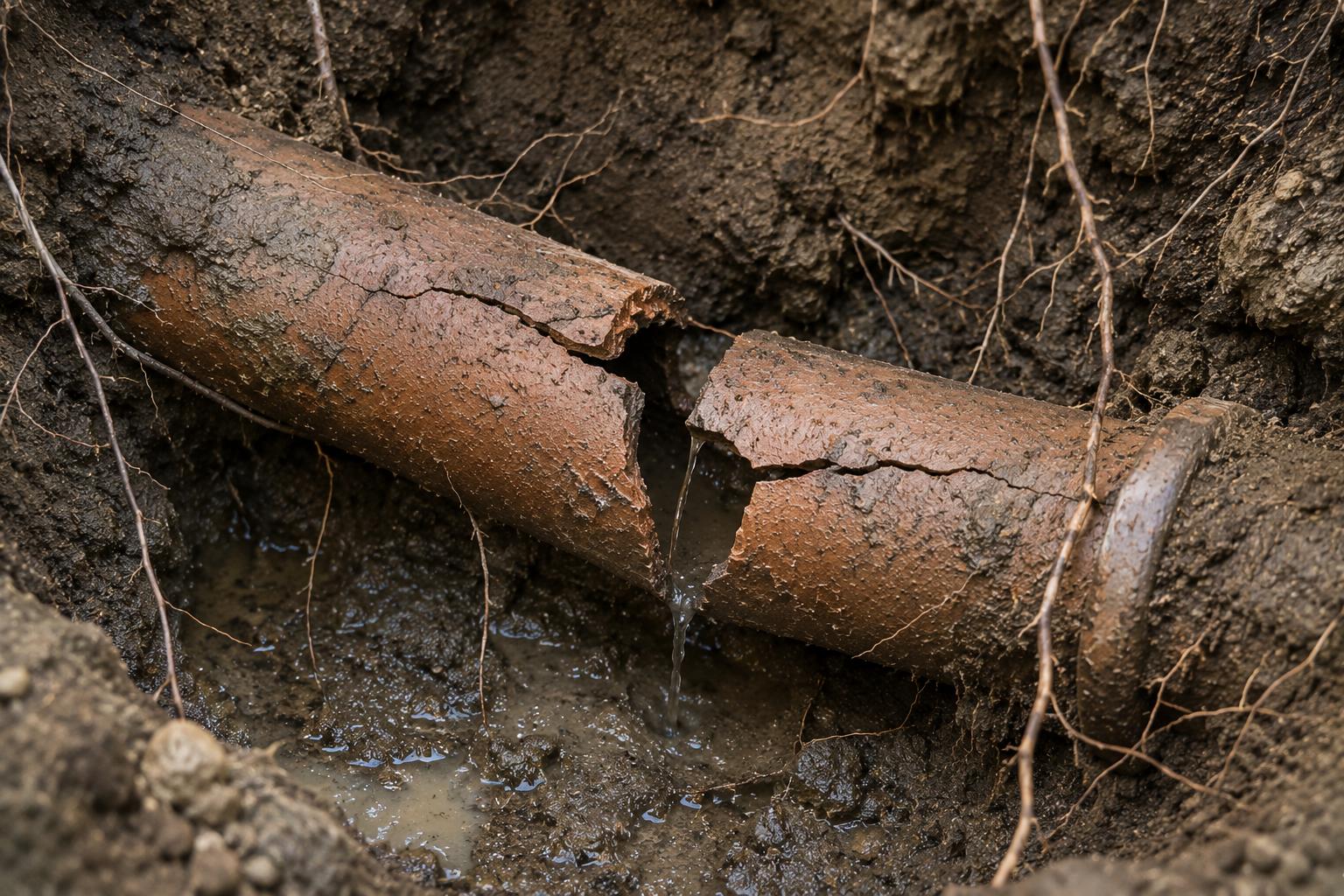
Cracked clay sewer pipes can cause recurring clogs, tree root intrusion, slow drains throughout the house, sewer odors, basement backups, water pooling in the yard, and eventually partial or full pipe collapse. Clay pipe can last for many years, but once it cracks, separates, or shifts, the sewer line may become vulnerable to repeated problems that cleaning alone cannot permanently solve.
For Chicago homeowners, cracked clay sewer pipe is especially relevant because many older homes still have clay sections in the private sewer lateral. These pipes may run beneath basements, yards, gangways, sidewalks, parkways, or older concrete. When clay pipe begins to fail, the signs may appear slowly at first: a drain that keeps clogging, a faint sewage smell, a basement floor drain that gurgles, or roots that return after repeated cleaning.
A cracked clay pipe does not always mean the entire sewer line must be replaced. The right decision depends on where the crack is, how severe it is, whether roots or soil are entering, whether the pipe has shifted, and whether the problem is isolated or part of broader sewer line deterioration.
Key Takeaways
- Clay sewer pipes can crack from age, soil movement, root pressure, poor support, freezing conditions, heavy loads, or past repairs.
- Cracked clay pipe often allows roots, soil, water, and debris into the sewer line.
- Common warning signs include frequent sewer clogs, slow drains, gurgling fixtures, sewage odors, basement backups, and wet yard areas.
- A sewer camera inspection is usually needed to confirm cracked clay pipe and identify the damaged section.
- Cleaning may restore flow temporarily, but it does not repair the crack that allowed roots or debris to enter.
- Some cracked sections can be repaired, while widespread cracking, offsets, collapse, or repeated failures may point toward replacement.
- Chicago homes with older clay sewer laterals should treat repeated sewer symptoms as a reason for diagnosis, not just another drain cleaning issue.
What Cracked Clay Sewer Pipe Usually Means
A cracked clay sewer pipe means the pipe wall has opened, shifted, or weakened enough to let roots, soil, water, or debris enter the sewer line. Wastewater may still drain for a while, but the crack can create recurring clogs, sewer odors, leaks, and future structural failure.
The seriousness depends on the condition of the rest of the line. A single cracked section may be repairable. Multiple cracked sections, roots at several joints, offset pipe connections, or signs of collapse may indicate a larger sewer replacement issue.
Why Clay Sewer Pipes Crack
Age and Long-Term Deterioration
Clay sewer pipe is durable, but it is not immune to time. Older clay pipes can become more brittle, especially when surrounding soil shifts or pipe joints lose support. Over decades, small defects can turn into cracks, separations, and broken sections.
In older Chicago homes, clay sewer lines may have been in place for many years before symptoms become obvious. A homeowner may not know the pipe is clay until a camera inspection identifies the material.
Soil Movement and Settlement
Sewer pipes need stable support. If the soil beneath the pipe settles, washes away, freezes and thaws, or shifts due to nearby work, the pipe may lose support. Clay pipe is rigid, so it may crack instead of flexing when the ground moves.
Soil settlement can also create low spots, offsets, and stress at pipe joints. These issues may appear together during an inspection.
Tree Root Pressure
Tree roots do not need a large opening to create a sewer problem. Roots may enter through small cracks or gaps between clay pipe sections. Once inside, they can expand, trap waste, and worsen the crack over time.
Root intrusion is one of the most common reasons cracked clay pipe becomes a recurring problem. If roots are part of the issue, Tree Roots in Sewer Lines: Signs and Solutions explains how roots enter and why they often return after cleaning.
Offset Joints and Pipe Separation
Clay sewer systems are made of sections. If one section shifts away from another, the joint can become offset. Waste catches at the edge, roots enter through the gap, and the pipe may crack or separate further.
Offset joints are closely related to cracked clay pipe because both involve alignment and structural weakness. Homeowners who see this term on an inspection report may want to review Offset Sewer Pipe Joints Explained.
Heavy Surface Loads
Driveways, garages, patios, equipment, or heavy concrete above a sewer line can add stress if the pipe is already old, shallow, poorly supported, or deteriorated. Heavy loads do not automatically crack clay pipe, but they can contribute to damage when the pipe has other vulnerabilities.
Poor Previous Repairs
Older repairs can create weak points, especially where different pipe materials meet or where the pipe was not properly supported. A poorly aligned repair can place stress on clay sections nearby, increasing the chance of cracking, separation, or recurring blockages.
Warning Signs of Cracked Clay Sewer Pipe
Frequent Sewer Clogs
Recurring clogs are one of the most common warning signs of cracked clay pipe. A crack or broken edge can catch toilet paper, wipes, grease, debris, and roots. The line may clear after service, then clog again when waste collects in the same area.
If the same sewer line keeps clogging after cleaning, the issue may be structural. The guide Why Do Sewer Lines Keep Clogging? explains how repeated clogs can point to defects inside the pipe.
Slow Drains Throughout the House
A cracked clay pipe can restrict the main sewer line enough to slow several drains at once. Toilets, tubs, showers, laundry drains, and basement floor drains may all begin draining poorly if wastewater is meeting resistance downstream.
One slow sink is usually a local issue. Several slow drains suggest the problem may be in the main drain or sewer lateral. For more detail, see What Slow Drains Throughout the House Can Mean.
Tree Roots Found During Cleaning
If roots are removed during sewer cleaning, that usually means roots found an opening into the pipe. In a clay sewer line, that opening may be a crack, loose joint, or offset section.
Root cutting can restore flow, but it does not seal the pipe. If roots entered through cracked clay, they may return unless the entry point is repaired or otherwise addressed.
Gurgling Toilets and Drains
Gurgling can happen when air is pushed or pulled through the plumbing system because flow is restricted. Cracked clay pipe can contribute to this by allowing roots, soil, or debris to narrow the line.
Gurgling becomes more concerning when it appears with multiple slow drains, sewer odors, or basement floor drain activity.
Sewage Smells Inside or Outside
A cracked clay pipe can allow sewer gas or wastewater to escape. Inside the home, smells may appear near basement floor drains, utility areas, lower-level bathrooms, or laundry drains. Outside, odors may appear near the sewer route, yard, parkway, or foundation area.
Sewer smells can come from many causes, so the location and pattern matter. The article Why Your House Smells Like Sewage can help homeowners compare possible sources.
Basement Sewer Backups
If cracked clay pipe allows roots or debris to block the line, wastewater may back up into the basement. In many Chicago homes, basement drains are the lowest plumbing openings, which makes them common places for a main line problem to appear first.
A backup does not prove the pipe is cracked, but repeated basement backups are a strong reason to inspect the main sewer line.
Wet Soil, Yard Pooling, or Sinking Ground
If wastewater leaks through cracked clay pipe, it may saturate surrounding soil. Homeowners may notice soft ground, wet areas, sewage odors, unusually green grass, or small depressions along the sewer route.
On Chicago lots, exterior signs may be subtle because many sewer lines run near concrete, gangways, sidewalks, or parkways.
How Cracked Clay Pipe Is Diagnosed
A sewer camera inspection is usually the most practical way to identify cracked clay pipe. The camera may show visible cracks, missing pipe pieces, root entry points, soil intrusion, offset joints, standing water, or sections where the pipe has started to collapse.
A useful inspection should help answer:
- Where is the cracked section located?
- Is the crack minor, severe, or open to soil?
- Are roots entering through the crack?
- Is there an offset joint or pipe separation nearby?
- Is the pipe holding water or developing a belly?
- Is the damage isolated or present in multiple sections?
- Can the camera pass through the damaged area?
- What surface is above the damaged section?
Practical Homeowner Tip
If cracked clay pipe appears on a camera inspection, ask whether the crack is only visible or actively causing flow problems. The repair decision should be based on severity, symptoms, pipe condition, and whether the defect is allowing roots, soil, or wastewater movement.
How Serious Is a Cracked Clay Sewer Pipe?
Cracked clay pipe can range from a manageable defect to a serious sewer failure. The key issue is whether the crack affects flow, allows intrusion, or indicates broader deterioration.
| Inspection Finding | What It May Mean | Typical Concern |
|---|---|---|
| Small visible crack | The pipe wall has damage but may still be mostly aligned. | May need monitoring if no symptoms are present. |
| Crack with root entry | Roots are using the opening to enter the line. | Recurring clogs are likely if the opening remains. |
| Crack with soil intrusion | Surrounding ground is entering the pipe. | Higher risk of blockage and soil movement. |
| Cracked pipe with offset joint | Pipe alignment has shifted. | Waste may catch and roots may enter. |
| Multiple cracked sections | The clay line may be deteriorating more broadly. | Spot repair may be less practical. |
| Cracked pipe with collapse | The pipe may be structurally failing. | Repair or replacement becomes more urgent. |
Chicago-Specific Considerations
Older Housing Stock
Chicago has many older homes where clay sewer pipe may still be present. A homeowner may have updated fixtures, remodeled bathrooms, or a finished basement while the buried sewer lateral remains much older.
Because sewer lines are hidden, cracked clay pipe is often discovered only after repeated clogs, sewer odor, basement backup, or a camera inspection during a home sale or repair call.
Basement Risk
Basements make cracked clay sewer problems more consequential. If roots or debris block the line, wastewater may back up through basement floor drains, laundry drains, toilets, or showers. Finished basements can turn a sewer problem into a cleanup and restoration issue.
If a basement backup has already happened, Sewer Backup in Basement: Causes and Warning Signs is a useful related resource.
Mature Trees and Parkway Roots
Mature trees are common on many Chicago streets. Roots from trees on private property, parkways, or nearby lots can reach vulnerable sewer lines when cracks or loose joints are present. The tree itself is not the only issue; the pipe opening is what allows roots to enter.
Concrete, Sidewalks, and Access
Cracked clay pipe may be located beneath a yard, basement floor, gangway, sidewalk, alley, driveway, or parkway. The surface above the damaged area can affect repair complexity and restoration costs.
Homeowners comparing options should ask whether concrete removal, excavation, backfill, permits, inspection, and surface restoration are included in the quoted scope.
Storm Timing Can Expose Weakness
Heavy rain may make an already vulnerable sewer line show symptoms. If the pipe is cracked, partially blocked, or root-intruded, added water volume or pressure can contribute to backups or slow drainage. Rain may reveal the problem, but it does not always explain the underlying pipe condition.
Repair, Cleaning, or Replacement: What Are the Options?
The right option depends on the severity and location of the cracked clay pipe. Homeowners should avoid assuming either extreme: not every crack requires full replacement, but repeated problems should not be treated as routine clogs forever.
Cleaning May Be Enough Temporarily When
- The line is clogged but still structurally open.
- The immediate goal is to restore drainage.
- Roots or debris are removed successfully.
- The homeowner understands cleaning does not fix the crack.
- Further inspection is planned if symptoms return.
Monitoring May Be Reasonable When
- The crack is minor.
- There are no roots entering.
- The pipe is aligned and draining properly.
- There is no history of backups or recurring clogs.
- The defect is documented for future comparison.
Targeted Repair May Be Needed When
- The crack is isolated to one section.
- Roots or soil are entering through a specific area.
- The rest of the line appears stable.
- The damaged section is accessible.
- The repair can address the actual entry point.
Replacement May Be Considered When
- Several clay sections are cracked or separated.
- Roots are entering through multiple areas.
- The pipe has collapsed or is close to collapse.
- Repeated backups continue after cleaning.
- Multiple spot repairs would be needed.
- The line is broadly deteriorated.
If cracked clay pipe is part of a broader failure pattern, Signs Your Sewer Line May Need Replacement can help homeowners understand when replacement becomes more likely.
Cost Factors and Tradeoffs
The cost of dealing with cracked clay sewer pipe depends on whether the solution is cleaning, monitoring, targeted repair, lining, partial replacement, or full replacement. Exact pricing depends on site conditions and should not be assumed before inspection.
Important cost factors include:
- Location of the cracked section: Damage under open soil is different from damage under concrete, a basement floor, sidewalk, alley, or parkway.
- Depth of the sewer line: Deeper lines usually require more labor, equipment, and safety planning.
- Severity of cracking: A hairline crack is different from a broken, open, or collapsing pipe section.
- Root or soil intrusion: Roots and soil entering the line can increase urgency and complexity.
- Number of damaged sections: One crack may be repairable; widespread cracking may change the decision.
- Pipe alignment: Cracks combined with offsets, bellies, or collapse are more serious.
- Restoration needs: Concrete, flooring, landscaping, and public-way restoration may add cost.
- Emergency timing: Active backups can limit time for comparison and planning.
- Insurance coverage: Policies may treat sewer backup damage, service line repairs, roots, settling, and deterioration differently.
The main tradeoff is short-term cost versus long-term reliability. Repeated cleaning may be less expensive each time, but if the crack keeps allowing roots and debris into the line, temporary service can become an ongoing cycle.
When Cracked Clay Pipe Becomes an Emergency
Cracked clay pipe is not always an immediate emergency. It becomes urgent when wastewater cannot leave the home, sewage is actively backing up, the pipe has collapsed, or contaminated water is affecting living areas.
Emergency warning signs include:
- Sewage backing up into the basement
- Multiple drains refusing to drain
- Toilets backing up or bubbling during normal use
- Strong sewage odors with slow drainage
- Water rising from basement floor drains
- Camera footage showing collapse or severe blockage
- Wet or sinking ground near the sewer route
- Repeated clogs shortly after cleaning
If the situation may be urgent, homeowners can compare symptoms with When Does a Sewer Problem Become an Emergency?.
Common Mistakes Homeowners Make
Assuming Clay Pipe Is Fine Because It Has Lasted This Long
A clay sewer line can work for many years before showing symptoms. Once cracks, roots, offsets, or recurring clogs appear, the age of the pipe should not be used as reassurance by itself.
Thinking Root Cutting Fixes the Crack
Root cutting removes roots from inside the line, but it does not repair the opening where roots entered. If cracked clay pipe remains open, roots may return.
Ignoring Repeated Clogs
Repeated clogs are often a sign that something inside the pipe is catching waste. Cracked clay pipe, offsets, roots, and bellies can all create that pattern.
Approving Replacement Without Understanding the Scope
Replacement may be appropriate in some cases, but homeowners should understand whether the damage is isolated or widespread. A clear scope should explain what section is being replaced and why.
Comparing Quotes Without Restoration Details
Sewer work may affect concrete, flooring, yards, sidewalks, parkways, or landscaping. Restoration can be a major difference between quotes.
Waiting Until the Pipe Collapses
A cracked pipe may continue draining for a while, but waiting can increase the risk of roots, soil intrusion, backups, and collapse. Early diagnosis often gives homeowners more options.
FAQ
Is cracked clay sewer pipe serious?
It can be. A small crack may be monitored if the pipe is draining well and no roots or soil are entering. A crack becomes more serious when it causes recurring clogs, root intrusion, soil entry, leaks, backups, offsets, or collapse.
How do I know if my sewer pipe is clay?
A sewer camera inspection can usually identify pipe material. Homeowners may also learn from old records, prior repair documentation, or inspection reports, but camera footage is often the most practical way to confirm what is underground.
Can cracked clay pipe be repaired without replacing the whole sewer line?
Sometimes. If the cracked section is isolated and the rest of the pipe is stable, targeted repair may be possible. Full replacement becomes more likely when there are multiple cracked sections, widespread root intrusion, collapse, or repeated failures.
Can tree roots cause clay sewer pipe to crack?
Roots often enter through an existing crack or weak joint, then worsen the problem over time. Root growth can increase pressure, catch waste, and contribute to further pipe damage.
Will cleaning solve cracked clay sewer pipe?
Cleaning may restore flow by removing roots or debris, but it does not repair the cracked pipe. If the crack remains open, roots, soil, or waste may continue causing problems.
Can cracked clay pipe cause a sewage smell?
Yes. A cracked pipe can contribute to sewer odors if wastewater or sewer gas escapes, or if roots and debris trap waste in the line. Odors should be evaluated with other symptoms such as slow drains, clogs, or backups.
Will homeowners insurance cover cracked clay sewer pipe?
Coverage depends on the policy, endorsements, cause of damage, and whether there is related backup damage. Many policies treat wear and tear, roots, settling, and deterioration differently from sudden covered events. Service line coverage may also have separate terms.
Does cracked clay pipe mean replacement is inevitable?
Not always. Some isolated cracks can be repaired or monitored. Replacement becomes more likely when the pipe has widespread cracking, multiple root entry points, offsets, collapse, or repeated backups that cleaning no longer controls.
Conclusion
Cracked clay sewer pipes can create recurring sewer clogs, root intrusion, slow drains, gurgling fixtures, sewage odors, wet yard areas, basement backups, and eventual pipe collapse. The crack itself matters, but the larger concern is what the crack allows into or out of the sewer line.
For Chicago homeowners, cracked clay pipe is an important issue because older sewer laterals, mature trees, basements, concrete surfaces, and tight access conditions can make repeated sewer problems more disruptive and expensive. A camera inspection can help determine whether the crack is minor, isolated, repairable, or part of broader line deterioration.
The best decision depends on evidence: where the crack is, whether roots or soil are entering, whether the pipe is aligned, how often symptoms return, and whether the rest of the sewer line is stable. Homeowners who understand these factors can better compare cleaning, monitoring, repair, and replacement options.