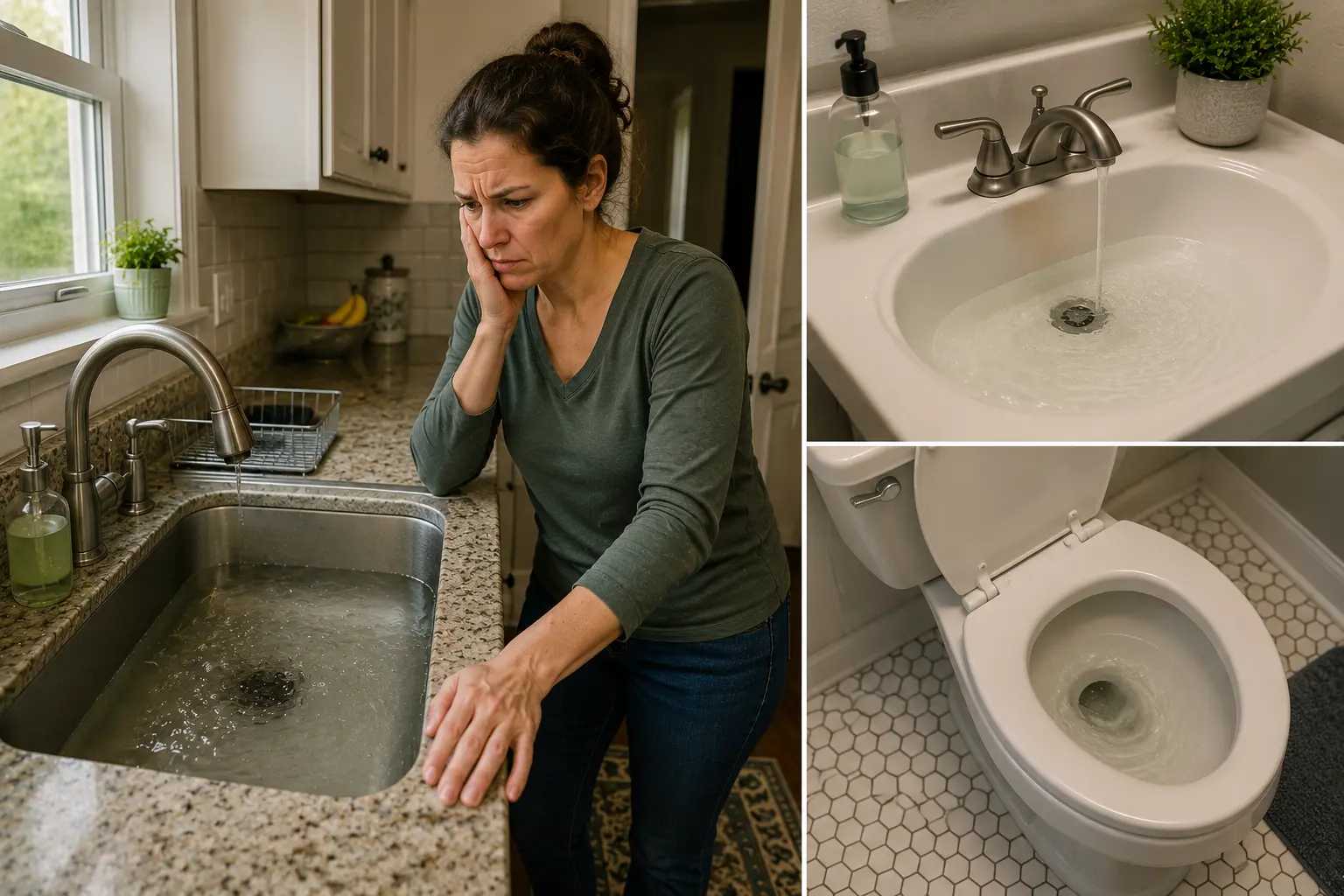
Slow drains throughout the house usually mean there is a restriction somewhere beyond one individual sink, tub, or toilet. When several fixtures drain slowly at the same time, the issue may involve the main drain line, the sewer lateral, a venting problem, tree roots, a sewer line belly, pipe damage, or a partial blockage that is limiting flow from the entire home.
A single slow bathroom sink is usually a local clog. Slow drains across multiple rooms are more concerning because they can point to a larger sewer problem. For Chicago homeowners, this matters because many homes have older sewer laterals, basement floor drains, clay pipe sections, mature tree roots, and lower-level plumbing that can show warning signs before a full backup occurs.
Slow drainage does not always mean the sewer line needs replacement. Some problems can be cleared, repaired, or monitored. But if the symptoms keep returning, affect several fixtures, or appear with gurgling, sewage odors, basement backups, or recurring clogs, homeowners should treat the issue as a warning sign instead of a normal plumbing annoyance.
Key Takeaways
- Slow drains throughout the house are more serious than one slow sink or tub.
- Multiple slow fixtures often point to a main drain or sewer line restriction.
- Common causes include tree roots, grease buildup, wipes, pipe scale, sewer line bellies, offset joints, cracked pipe, or partial collapse.
- Slow drains paired with gurgling, sewage odors, or basement backups should be investigated promptly.
- Chicago homes with basements and older sewer laterals may show drainage problems at lower-level fixtures first.
- A sewer camera inspection may be needed if the problem returns after cleaning or affects the whole house.
- The right solution may be cleaning, targeted repair, or replacement depending on the actual pipe condition.
What Whole-House Slow Drains Usually Mean
If drains throughout the house are slow, the problem is often in the main drain line or sewer lateral rather than one fixture. Wastewater may be meeting resistance after it leaves the home’s branch drains, which can cause toilets, tubs, showers, laundry drains, and basement floor drains to empty slowly or react to each other.
The situation becomes more urgent when slow drains appear with gurgling toilets, sewage smells, water rising from basement drains, or repeated sewer clogs. Those symptoms suggest the line may be partially blocked, damaged, root-intruded, bellied, or at risk of backing up.
How to Tell If Slow Drains Are a Main Sewer Warning Sign
One Slow Drain Usually Points to a Local Problem
If only one sink, shower, or tub is slow, the blockage is usually close to that fixture. Hair, soap buildup, food waste, grease, or a small object may be restricting that individual drain. This can be annoying, but it does not usually prove there is a sewer line problem.
For example, a slow bathroom sink with no toilet issues, no basement odor, and no problems elsewhere in the house is usually less concerning than multiple slow drains at once.
Several Slow Drains Suggest a Larger Restriction
When several drains slow down together, the problem may be farther downstream. The main drain line collects wastewater from the home and carries it toward the sewer lateral. If that line becomes restricted, multiple fixtures may begin showing symptoms.
Common patterns include toilets flushing weakly, tubs draining slowly, the laundry drain struggling during discharge, or water rising near a basement floor drain when another fixture is used. These patterns suggest wastewater is not leaving the home fast enough.
Slow Drains With Gurgling Are More Concerning
Gurgling sounds can happen when trapped air moves through the drainage system. If a toilet bubbles when a tub drains, or a basement floor drain gurgles while the washing machine runs, the system may be under pressure from a blockage or airflow issue.
Gurgling does not always mean the sewer line is broken, but it is more concerning when it appears with slow drains throughout the home. For a closer look at this symptom, see What Causes Gurgling Toilets and Drains?.
Slow Drains With Sewer Odors Need Attention
A sewage smell near drains, bathrooms, basement floor drains, or laundry areas can indicate trapped waste, sewer gas, venting problems, or a main line issue. If the smell appears while drains are slow, homeowners should not treat it as only an odor problem.
Sewer odors can have simple causes, but when they appear with whole-house drainage problems, the risk of a main line restriction increases. The related guide Why Your House Smells Like Sewage explains how odor patterns can point to different causes.
Common Causes of Slow Drains Throughout the House
Main Sewer Line Clog
A main sewer line clog can slow multiple drains at once. Wastewater from toilets, sinks, showers, tubs, and laundry fixtures all depends on the main line. If that line is partially blocked, the entire home may drain poorly.
Common clog materials include grease, wipes, paper products, sludge, debris, and objects that should not enter the drain system. If the clog is simple and the pipe is otherwise sound, cleaning may solve the problem. If clogs return, the pipe may have an underlying defect.
Tree Roots in the Sewer Line
Tree roots can enter sewer lines through cracks, loose joints, offset sections, and deteriorated pipe. Once inside, they form a web that catches waste and slows water flow. The result may start as occasional slow drainage and eventually become a basement backup.
Chicago neighborhoods with mature trees and older sewer laterals can be vulnerable to root intrusion. If slow drains keep returning after cleaning, tree roots may be one possible cause. Homeowners can learn more in Tree Roots in Sewer Lines: Signs and Solutions.
Sewer Line Belly
A sewer line belly is a low spot in the pipe where water and waste collect instead of draining smoothly. This can create slow drainage, recurring clogs, sewer odors, and backups.
A belly is different from a simple clog because the shape or slope of the pipe is part of the problem. Cleaning may remove the buildup temporarily, but the low spot remains. If symptoms return repeatedly, a camera inspection may show standing water in the line.
Offset Sewer Pipe Joints
An offset joint occurs when pipe sections shift out of alignment. Waste can catch at the edge of the offset, and roots may enter through the gap. Over time, the line may become more restricted and several drains may begin slowing down.
Offset joints are more likely in aging sewer systems, especially where soil movement, old pipe materials, or previous repairs have affected alignment.
Cracked or Deteriorated Sewer Pipe
A cracked sewer pipe can allow roots and soil into the line. It can also create rough edges where waste collects. Older clay pipe sections may crack, separate, or shift over time, especially in homes with mature trees nearby.
Slow drains throughout the house may be one of the earlier signs that pipe condition is affecting flow. If the pipe continues to deteriorate, backups and more serious sewer problems may follow.
Partial Collapse
A partially collapsed sewer line can restrict flow without stopping drainage completely. Homeowners may notice slow drains, weak toilet flushing, recurring clogs, or repeated cleaning attempts that do not fully solve the issue.
If the line collapses further, the situation can become urgent. For related warning signs, see Warning Signs of a Collapsed Sewer Line.
Plumbing Vent Problems
Drainage systems need proper air movement. If a plumbing vent is blocked, damaged, or not functioning correctly, drains may move slowly or gurgle. Vent issues can mimic sewer line problems, which is why diagnosis matters.
A vent problem may be more likely if drains gurgle, traps lose water, or odors appear without clear evidence of a main sewer blockage. However, venting and sewer restrictions can sometimes create overlapping symptoms.
Warning Signs That Slow Drains May Lead to a Backup
Slow drains can be an early warning sign before a sewer backup. The risk increases when slow drainage is paired with other symptoms.
| Warning Sign | What It May Mean | Why It Matters |
|---|---|---|
| Water rises in a basement floor drain | The main line may be restricted. | The basement is often the first place wastewater appears. |
| Toilets gurgle after using other fixtures | Air is being displaced by poor flow. | May suggest a main line or venting problem. |
| Several drains slow at once | The problem may be downstream of individual fixtures. | More concerning than one clogged drain. |
| Sewage smell near drains | Waste or sewer gas may not be moving properly. | Can point to trapped waste, venting issues, or sewer restriction. |
| Clogs return after cleaning | The pipe may have roots, a belly, offset, or damage. | Cleaning may be treating the symptom only. |
| Drain problems worsen during laundry | High-volume water discharge is exposing the restriction. | Often shows up before a full backup. |
If wastewater has already entered the basement, the issue is no longer just slow drainage. The article Sewer Backup in Basement: Causes and Warning Signs explains what this can mean and why it should be taken seriously.
Chicago-Specific Considerations
Basements Reveal Problems Early
Many Chicago homes have basements with floor drains, laundry connections, utility sinks, bathrooms, or finished living space. Because these fixtures are low in the plumbing system, they may show main line problems before upstairs fixtures do.
A homeowner may first notice slow laundry drainage, a damp floor drain area, or gurgling in a basement bathroom. These signs can be easy to dismiss until wastewater backs up.
Older Sewer Laterals Can Restrict Flow
Older Chicago homes may have clay sewer pipe, cast iron, or older replacement sections. Over time, these materials can crack, shift, corrode, or allow roots to enter. A sewer lateral that has narrowed, shifted, or deteriorated may cause slow drainage throughout the house.
Older pipe does not automatically require replacement, but it does make inspection more important when symptoms are repeated.
Mature Trees Can Contribute to Recurring Problems
Tree-lined streets and mature parkway trees are common in many Chicago neighborhoods. Roots can enter vulnerable sewer lines and gradually restrict flow. Homeowners may not notice a sudden failure at first. Instead, the first clue may be increasingly slow drains.
Heavy Rain Can Complicate the Pattern
Some homeowners notice slow drainage or basement drain activity during heavy rain. Rain-related symptoms may involve sewer system pressure, backflow risk, private line condition, or drainage configuration. If slow drains happen mainly during storms, the timing should be documented and discussed during diagnosis.
Access and Restoration Can Affect Decisions
If the cause is structural and repair is needed, Chicago properties can be more complicated than they appear. Sewer lines may run under basement floors, sidewalks, parkways, gangways, alleys, or paved areas. Restoration can be a significant part of the decision.
How Homeowners Should Respond to Slow Drains Throughout the House
Watch the Pattern
Start by identifying which fixtures are affected. One fixture suggests a local clog. Multiple fixtures suggest a main line or system-wide issue. Pay attention to whether symptoms happen after laundry, showers, flushing, heavy rain, or long periods of water use.
Avoid Overusing Chemical Drain Cleaners
Chemical drain cleaners may not solve a main line problem and can be harsh on older plumbing. They also do not fix roots, cracked pipe, offset joints, bellies, or collapsed sections. If the problem affects several fixtures, diagnosis is usually more useful than repeated chemical treatment.
Do Not Keep Sending Water Into a Backing-Up System
If water rises from a basement drain or fixtures begin backing up, stop using plumbing as much as possible until the issue is evaluated. Continuing to run water can increase basement damage.
Consider Cleaning Plus Inspection
Cleaning can restore flow, but inspection can explain why the line slowed in the first place. If this is the first issue and the line clears fully, immediate replacement may not be necessary. If the problem repeats, a camera inspection may help identify the cause.
Practical Homeowner Tip
Slow drains throughout the house should be treated as a pattern, not a single symptom. If slow drainage appears with gurgling, odors, basement drain activity, or repeated clogs, review the broader Sewer Problems & Warning Signs hub to compare related warning signs before deciding what to do next.
When a Sewer Camera Inspection Makes Sense
A sewer camera inspection can help determine whether slow drains are caused by a temporary clog or a physical problem in the sewer line. It can also show the location and severity of the issue.
A camera inspection may reveal:
- Tree roots entering the line
- Grease, sludge, wipes, or debris buildup
- Standing water from a sewer line belly
- Offset pipe joints
- Cracked or broken pipe
- Pipe scale or narrowing
- Collapsed or partially collapsed pipe
- Improper slope
- Evidence of previous repairs
Inspection is especially useful when slow drains keep returning after cleaning, affect multiple fixtures, or come with sewer odors or basement backups. The goal is not to assume replacement, but to identify whether cleaning, repair, or replacement is the right next step.
Repair, Replacement, or Maintenance: How to Think About the Decision
The best solution depends on the cause of the slow drainage. Homeowners should avoid both extremes: ignoring repeated symptoms and approving major work without evidence.
Maintenance May Be Enough When
- Only one fixture is slow.
- The issue is caused by ordinary buildup.
- The line clears fully and symptoms do not return.
- There are no odors, gurgling, or backups.
- A camera inspection shows the pipe is in usable condition.
Repair May Be Needed When
- There is one damaged section of pipe.
- Roots are entering at one joint.
- An offset joint is catching waste.
- A localized belly is creating repeated blockages.
- The rest of the sewer line appears stable.
Replacement May Be Considered When
- Multiple sections are cracked, separated, or root-filled.
- The pipe has collapsed or is close to collapse.
- Slow drainage keeps returning after cleaning.
- Several spot repairs would be needed.
- The line has a long history of clogs and backups.
- The pipe condition suggests ongoing failure, not a one-time blockage.
If slow drains are part of a larger failure pattern, Signs Your Sewer Line May Need Replacement can help homeowners understand when replacement becomes more likely.
Cost Factors Homeowners Should Understand
The cost of addressing slow drains depends on whether the problem is local, main-line related, structural, or tied to cleanup after a backup. A simple clog is very different from a damaged sewer lateral under a basement floor or sidewalk.
Key cost factors include:
- Location of the restriction: Local fixture clogs are usually simpler than main sewer line problems.
- Cause of the restriction: Grease, roots, bellies, offsets, and collapsed sections require different solutions.
- Inspection needs: Repeated or whole-house symptoms may justify camera inspection.
- Pipe depth and access: Repairing a buried sewer line can become more complex if the pipe is deep or hard to access.
- Surface restoration: Work under concrete, basement floors, sidewalks, yards, or parkways may involve restoration costs.
- Urgency: A slow drain problem that becomes a backup may require faster, less flexible decision-making.
- Insurance: Insurance may treat cleanup, backup damage, service line repair, and wear-and-tear issues differently depending on the policy.
Homeowners should ask whether the recommendation is based on symptoms alone or confirmed pipe condition. Written scopes should explain what is included, what is excluded, and whether the work addresses the actual cause of the slow drainage.
Common Mistakes Homeowners Make
Assuming All Slow Drains Are Local Clogs
One slow drain may be local. Several slow drains throughout the house may point to a main line issue. Treating the entire problem like a sink clog can delay proper diagnosis.
Waiting Until Wastewater Backs Up
Slow drains can be an early warning sign. Waiting until sewage enters the basement can increase cleanup costs, property damage, and urgency.
Using Repeated Cleaning Without Asking Why
Repeated cleaning may keep the line moving temporarily, but it does not explain why the line keeps slowing. Roots, bellies, offsets, and cracks usually require diagnosis.
Ignoring Gurgling and Odors
Slow drainage paired with gurgling or sewage smells is more concerning than slow drainage alone. These combined symptoms may indicate pressure, trapped waste, or sewer gas movement in the system.
Approving Major Sewer Work Without Evidence
Slow drains alone do not prove the sewer line needs replacement. Homeowners should ask for inspection findings, footage when available, and a clear explanation of why cleaning or repair is not enough.
Comparing Quotes Without Comparing Scope
One quote may include cleaning only. Another may include camera inspection. Another may include repair, restoration, or replacement. The price only makes sense when the scope is clear.
FAQ
Why are all the drains in my house slow?
When all drains are slow, the problem may be in the main drain line or sewer lateral rather than one fixture. Common causes include a partial clog, tree roots, grease buildup, a sewer line belly, offset joints, cracked pipe, or a venting problem.
Does slow drainage mean my sewer line is broken?
Not always. Slow drainage can come from a clog or buildup. A broken sewer line becomes more likely when the problem affects multiple fixtures, returns after cleaning, or appears with backups, gurgling, sewer odors, or camera-visible pipe damage.
Why does my basement drain gurgle when other drains are used?
Gurgling can happen when air is trapped or displaced because wastewater is not moving freely. If the basement drain gurgles when laundry, showers, or toilets are used, the main line may be restricted or the venting system may not be working properly.
Should I stop using water if drains are slow throughout the house?
If water is only draining slowly, careful use may be possible while the issue is evaluated. If water starts rising from a basement drain, toilet, tub, or shower, stop using plumbing as much as possible to reduce the risk of a backup.
Can heavy rain make slow drains worse in Chicago homes?
Yes. Heavy rain can add pressure to drainage and sewer systems, especially if the home has backflow risk, a vulnerable sewer lateral, or existing restrictions. If slow drains happen mainly during storms, the timing should be documented.
When should I get a sewer camera inspection?
A camera inspection makes sense when slow drains affect multiple fixtures, return after cleaning, or appear with gurgling, sewer odors, recurring clogs, or basement drain activity. The inspection helps identify the condition and location of the problem.
Will insurance cover damage from slow drains or a sewer backup?
Insurance coverage depends on the policy, endorsements, cause of damage, and whether the issue involves backup damage, service line coverage, or gradual deterioration. Slow drains alone may not be covered, but resulting backup damage may be handled differently if the policy includes relevant coverage.
Can slow drains throughout the house mean replacement is needed?
Sometimes. Replacement becomes more likely when inspection shows collapsed pipe, widespread cracking, severe root intrusion, major offsets, or a sewer line belly that repeatedly causes blockages. If the line is structurally sound, cleaning or targeted repair may be enough.
Conclusion
Slow drains throughout the house usually mean the problem is bigger than one clogged sink or shower. When multiple fixtures drain poorly, the issue may involve the main drain line, sewer lateral, venting system, tree roots, pipe damage, or a partial blockage that is restricting flow from the entire home.
For Chicago homeowners, the most important warning signs are slow drains paired with basement floor drain activity, sewage odors, gurgling toilets, recurring clogs, or backups during heavy water use or storms. These patterns should be taken seriously because they can appear before a more damaging basement sewer backup.
The right next step depends on the cause. Some slow drainage problems can be cleaned and monitored. Others require camera inspection, targeted repair, or replacement. Homeowners can make a better decision by focusing on the pattern of symptoms, the condition of the pipe, and whether the problem keeps returning after temporary fixes.