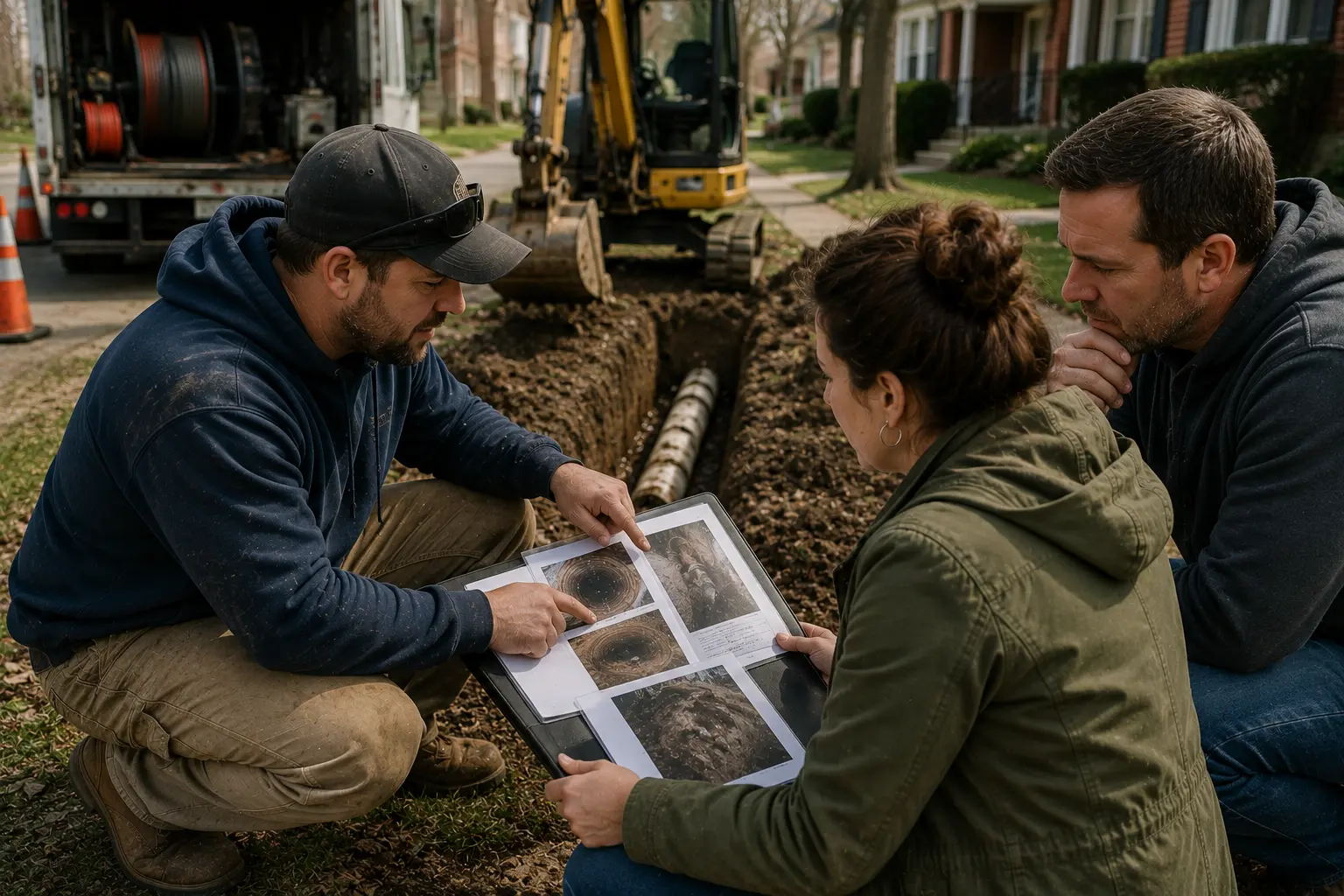
Comparing sewer replacement quotes is not as simple as choosing the lowest price. A sewer replacement estimate can vary based on pipe length, depth, access, repair method, permits, restoration, warranty coverage, and the contractor’s interpretation of the problem. Two quotes may look similar at first glance while covering very different work.
For Chicago homeowners, this matters because sewer replacement can involve older pipe materials, tight urban lots, alleys, sidewalks, basements, parkways, and local permitting requirements. A quote that leaves out important details may lead to unexpected costs after the project begins.
This guide explains how to compare sewer replacement quotes carefully, what should be included, what questions to ask, and which warning signs suggest a quote may not be reliable. For more help evaluating contractors and estimates, visit the Contractor Selection & Quotes hub.
Key Takeaways
- Do not compare sewer replacement quotes by price alone.
- Make sure each quote is based on a clear diagnosis and, when possible, camera inspection findings.
- Compare repair method, pipe length, excavation requirements, permits, restoration, and warranty terms.
- A lower quote may exclude important work such as concrete repair, hauling, inspections, or final restoration.
- Ask contractors to explain major price differences in writing.
- Chicago properties may have added access, permitting, and restoration issues that should be reflected in the estimate.
- The best quote is usually the one that is clear, complete, and tied to the actual sewer problem.
What Is the Best Way to Compare Sewer Replacement Quotes?
The best way to compare sewer replacement quotes is to review each estimate line by line instead of focusing only on the total price. Homeowners should compare the diagnosis, pipe length, repair method, excavation plan, materials, permits, inspections, cleanup, restoration, warranty, payment terms, and exclusions. If one quote is much lower or higher than the others, ask what is included, what is not included, and why the contractor recommends that specific approach.
Start With the Diagnosis
Before comparing prices, compare the diagnosis behind each quote. A sewer replacement quote should explain why replacement is being recommended and what problem the contractor found.
Common reasons for sewer replacement include:
- Collapsed pipe
- Severe cracking
- Major root intrusion
- Offset joints
- Pipe belly or sagging line
- Deteriorated clay, cast iron, or other aging materials
- Repeated failures across multiple sections of pipe
If one contractor recommends full replacement while another recommends a spot repair, the first question is not “Which price is better?” The better question is “Why are the recommendations different?”
Homeowners should ask each contractor to explain what they found and how that finding supports the proposed work. If you are still gathering information before approving replacement, review Questions to Ask Before Sewer Line Replacement.
Make Sure the Quotes Are Based on Comparable Information
Quotes are easier to compare when contractors are working from the same facts. If one estimate is based on a camera inspection and another is based only on symptoms, the recommendations may not be equally reliable.
A sewer camera inspection can help identify:
- The location of the damaged pipe
- The type of defect
- Whether the problem is isolated or widespread
- How much pipe appears affected
- Whether replacement is clearly justified
Ask whether each contractor reviewed the same footage or performed their own inspection. If no inspection has been done, it may be worth reading Should You Get a Sewer Camera Inspection Before Hiring a Contractor? before comparing major replacement quotes.
Compare the Scope of Work
The scope of work is the heart of the quote. It explains what the contractor is actually agreeing to do.
One quote may include replacing a short section of damaged pipe. Another may include replacing the full line from the house to the main connection. A third may include excavation, replacement, backfill, concrete repair, and permits. These are not the same project.
When comparing scope, ask:
- How much pipe is being replaced?
- Where does the replacement begin and end?
- Does the quote include excavation?
- Does the quote include backfill?
- Does the quote include removal of old pipe and debris?
- Does the quote include restoration of disturbed areas?
- Are cleanouts included?
- Are permit fees included?
If any of these items are missing, ask the contractor to clarify the estimate before making a decision. The Sewer Repair Estimate Checklist can help you review each line item more carefully.
Use a Side-by-Side Quote Comparison
A side-by-side comparison can reveal major differences that are easy to miss when reading estimates separately.
| Comparison Item | Quote A | Quote B | Quote C |
|---|---|---|---|
| Diagnosis Explained | Yes or No | Yes or No | Yes or No |
| Camera Inspection Referenced | Yes or No | Yes or No | Yes or No |
| Pipe Length Included | Clarify | Clarify | Clarify |
| Repair Method | Clarify | Clarify | Clarify |
| Permits Included | Included or Excluded | Included or Excluded | Included or Excluded |
| Restoration Included | Included or Excluded | Included or Excluded | Included or Excluded |
| Warranty Terms | Written or Vague | Written or Vague | Written or Vague |
| Payment Schedule | Clear or Unclear | Clear or Unclear | Clear or Unclear |
This type of comparison helps homeowners see whether a lower price is actually a better deal or simply a less complete proposal.
Compare the Replacement Method
Sewer replacement can be completed in different ways depending on the pipe condition, location, access, and contractor capabilities.
Common approaches include:
- Traditional excavation: The damaged line is dug up and replaced directly.
- Pipe bursting: A new pipe is pulled through while breaking apart the old pipe.
- Trenchless lining: A liner is installed inside the existing pipe when conditions allow.
- Partial replacement: Only the damaged section is replaced.
- Full replacement: A larger portion or the entire line is replaced.
Each method has tradeoffs. Excavation may be more disruptive but necessary for collapsed or severely damaged pipes. Trenchless methods may reduce digging but may not be suitable for every pipe condition. Partial replacement may cost less upfront but may not solve problems spread across the line.
Ask each contractor why their proposed method is appropriate for your sewer line.
Compare Materials and Code Requirements
A complete quote should identify the pipe materials and related components being installed. Materials affect durability, inspection approval, and long-term performance.
Ask contractors to clarify:
- Pipe material
- Pipe diameter
- Fittings and connections
- Cleanout installation
- Backfill materials
- Whether materials meet local code requirements
If a quote does not identify materials, request more detail. A proposal that simply says “replace sewer line” is not specific enough for a major project.
Compare Excavation, Access, and Restoration
Excavation and restoration are often where quotes differ the most.
A sewer line may run under a lawn, driveway, sidewalk, basement slab, porch, patio, or parkway. The cost and disruption can vary dramatically depending on what must be disturbed to reach the pipe.
Ask whether each quote includes restoration for:
- Concrete
- Asphalt
- Pavers
- Grass or sod
- Landscaping
- Fences
- Interior flooring
- Basement slab areas
Important: A quote that excludes restoration may appear cheaper than a quote that includes it. Always ask what the property will look like when the contractor is finished and what repairs the homeowner must arrange separately.
Compare Permits and Inspection Responsibilities
Many sewer replacement projects require permits and inspections. The quote should explain who is responsible for obtaining permits, scheduling inspections, and paying related fees.
Ask each contractor:
- Are permits required for this project?
- Who obtains the permits?
- Are permit fees included in the quote?
- Who schedules inspections?
- What happens if inspection delays the project?
- Will the quote change if additional permit requirements apply?
Permit responsibilities can affect cost, scheduling, and legal compliance. If a contractor avoids discussing permits, slow down and ask for clarification.
Compare Warranties Carefully
Warranty terms can make two similar quotes very different. A lower price may be less attractive if warranty protection is weak, vague, or excluded.
Compare warranty details such as:
- Length of coverage
- Labor coverage
- Material coverage
- Coverage for settling or workmanship issues
- Exclusions for roots, clogs, misuse, or unrelated pipe sections
- Transferability if the home is sold
- How claims must be submitted
Do not rely on verbal warranty promises. Ask for written terms before signing. For a more focused list, see Warranty Questions to Ask Before Sewer Line Replacement.
Chicago-Specific Considerations When Comparing Quotes
Chicago sewer replacement quotes should reflect local conditions, not just generic sewer pricing.
Older Sewer Materials
Many Chicago homes have aging clay, cast iron, or older sewer materials. Quotes should account for the condition of the existing pipe and whether failures are isolated or widespread.
Urban Lot Constraints
Dense lots, narrow side yards, garages, alleys, sidewalks, and neighboring structures can affect excavation access. A quote that ignores these realities may be incomplete.
Basement Connections
Many Chicago homes have basements, and sewer work may involve connections near or beneath the foundation. Contractors should explain how they will protect the home and manage access.
Public Property and Parkways
If the sewer work affects sidewalks, parkways, alleys, or streets, the quote should address any added requirements, permits, or restoration obligations.
Seasonal Scheduling
Winter conditions, heavy rain, and saturated soil can affect excavation and restoration timing. Ask whether the timeline is realistic for the season.
When a Higher Quote May Be Reasonable
A higher quote is not automatically overpriced. Sometimes it reflects a more complete scope of work, better restoration, stronger warranty, more difficult access, or a repair method better suited to the property.
A higher quote may be reasonable if it includes:
- More pipe replacement
- Permit handling
- Inspection coordination
- Concrete or pavement restoration
- Additional cleanouts
- Better warranty terms
- More difficult excavation
- Higher-quality materials
The key is whether the contractor explains the price clearly. A higher quote should come with a better explanation, not just a larger number.
When a Lower Quote Should Raise Questions
A lower quote may be legitimate, but it deserves careful review.
Ask whether it excludes:
- Permits
- Inspections
- Camera inspection or locating
- Concrete repair
- Landscaping restoration
- Debris removal
- Cleanouts
- Warranty coverage
- Change order protections
If the contractor cannot explain why the quote is lower, or if the estimate is vague, be cautious. Homeowners should also review Red Flags to Watch for in Sewer Repair Contractors when an estimate feels incomplete or pressured.
Common Mistakes Homeowners Make When Comparing Quotes
Avoid these common mistakes:
- Choosing the lowest total price without reviewing scope
- Assuming all quotes include permits
- Ignoring restoration exclusions
- Not asking whether camera footage supports the recommendation
- Failing to compare warranty terms
- Overlooking payment schedules and deposit requirements
- Accepting vague descriptions such as “replace sewer line”
- Not asking how change orders are handled
- Comparing a spot repair quote against a full replacement quote
- Signing before all details are in writing
If you are unsure whether you have enough information, What Should Be Included in a Sewer Repair Quote? can help you identify missing details.
Should You Get More Than One Quote?
For major sewer replacement work, multiple quotes are often useful. They help homeowners understand whether the diagnosis, repair method, price, and warranty are consistent across contractors.
Multiple quotes can reveal:
- Different interpretations of the sewer problem
- Different repair methods
- Different assumptions about pipe length
- Missing restoration costs
- Unclear permit responsibilities
- Major differences in warranty coverage
For more guidance, see Do You Need Multiple Sewer Repair Estimates?.
Frequently Asked Questions
How many sewer replacement quotes should I get?
For a major sewer replacement, getting at least two or three written quotes is often helpful. This allows homeowners to compare scope, repair methods, warranties, and contractor communication before making a decision.
Should I choose the cheapest sewer replacement quote?
Not automatically. The cheapest quote may exclude permits, restoration, inspection coordination, cleanouts, or warranty coverage. Compare the full proposal before deciding.
Why do sewer replacement quotes vary so much?
Quotes vary because contractors may propose different repair methods, pipe lengths, materials, excavation plans, restoration work, permit handling, and warranty terms. They may also interpret the sewer problem differently.
Should every quote include camera inspection results?
For major replacement work, it is helpful when quotes reference camera inspection findings. Camera footage can support the recommendation and make it easier to compare bids.
What should I ask if one quote is much higher than the others?
Ask what additional work, materials, permits, restoration, warranty coverage, or access challenges are included. A higher quote may be reasonable if it covers more work or reduces future risk.
What should I ask if one quote is much lower than the others?
Ask what is excluded. Clarify permits, inspections, restoration, debris removal, warranty terms, cleanouts, and possible change orders before assuming the lower quote is a better deal.
Does homeowners insurance affect which sewer quote I should choose?
Insurance may influence documentation requirements, timing, and payment, but homeowners should still choose a qualified contractor and a complete scope of work. Coverage depends on the policy and the cause of damage.
Conclusion
Comparing sewer replacement quotes requires more than looking at the final price. Homeowners should review each estimate for diagnosis, scope, method, materials, permits, restoration, warranty, exclusions, and payment terms.
For Chicago homeowners, this careful review is especially important because older sewer lines, dense lots, public property, basements, and local permitting requirements can all affect the true cost and complexity of the project.
The strongest quote is usually the one that clearly explains the problem, matches the repair method to the pipe condition, includes important project details in writing, and gives the homeowner enough information to make a confident decision.