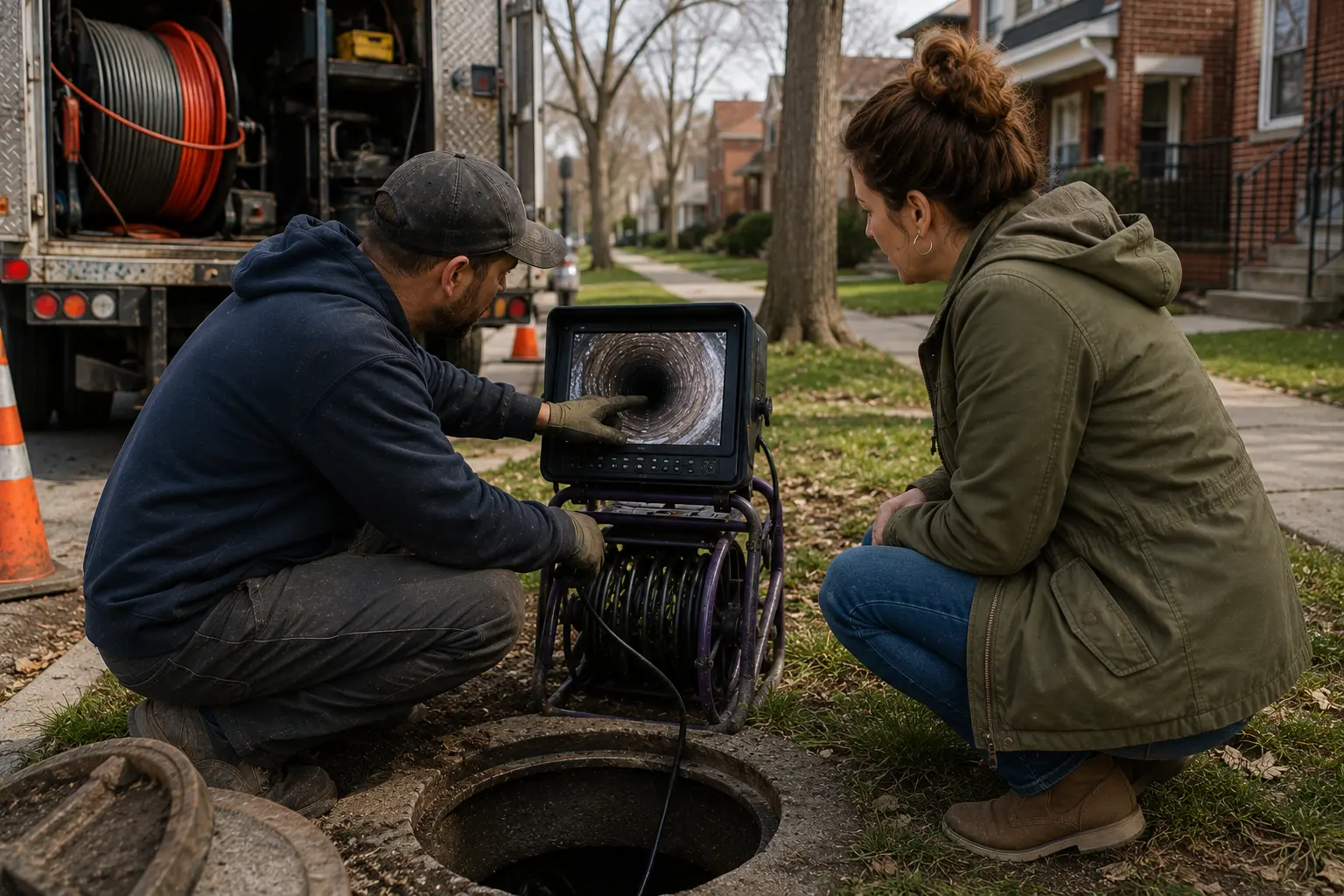
A sewer camera inspection can be one of the most useful steps before hiring a contractor for sewer repair or replacement. It helps identify what is happening inside the pipe, where the problem is located, and whether the contractor’s recommended solution is supported by visible evidence.
For Chicago homeowners, this is especially important because many sewer problems involve older pipe materials, tree root intrusion, collapsed sections, offset joints, or underground conditions that are difficult to evaluate from symptoms alone. Without a camera inspection, homeowners may be relying too heavily on guesswork or a contractor’s verbal recommendation.
This guide explains when a sewer camera inspection is worth getting before hiring a contractor, what it can and cannot show, how to use the results when comparing estimates, and what warning signs to watch for. For more help with contractor evaluation, visit the Contractor Selection & Quotes hub.
Key Takeaways
- A sewer camera inspection is often worthwhile before approving major sewer repair or replacement work.
- Camera footage can help confirm the location, type, and severity of the sewer problem.
- An inspection does not always determine pipe depth, exact repair cost, or every underground condition.
- Homeowners should ask contractors to explain the footage clearly before signing a contract.
- Camera inspections can make it easier to compare estimates from different contractors.
- Chicago’s older sewer infrastructure makes documentation especially helpful before major decisions.
- A camera inspection is not a substitute for hiring a qualified, properly insured contractor.
Is a Sewer Camera Inspection Worth Getting Before Hiring a Contractor?
Yes, in many cases a sewer camera inspection is worth getting before hiring a contractor, especially if the proposed work is expensive, involves sewer line replacement, or is based on recurring backups. The inspection can show visible pipe defects, root intrusion, blockages, bellies, cracks, or collapsed sections. Homeowners should use the footage to ask better questions, compare estimates, and avoid approving unnecessary or poorly explained work.
What a Sewer Camera Inspection Does
A sewer camera inspection uses a specialized waterproof camera attached to a flexible cable. The camera is inserted into the sewer line through a cleanout, drain opening, or other access point. As the camera moves through the pipe, it records visible conditions inside the line.
The goal is to identify what is happening inside the sewer pipe without immediately digging. This can be extremely useful when symptoms suggest a larger sewer issue but the exact cause is unclear.
A camera inspection may reveal:
- Tree root intrusion
- Cracks or breaks in the pipe
- Collapsed pipe sections
- Offset joints
- Standing water
- Pipe bellies or sagging areas
- Heavy buildup or scale
- Foreign objects
- Improper connections
- Sections where previous repairs were made
For homeowners trying to decide whether to approve a repair, this visual evidence can be much more helpful than a general statement that the “line is bad” or “the sewer needs replacement.”
When You Should Strongly Consider a Camera Inspection
A sewer camera inspection is not always necessary for every minor drain issue. However, it becomes much more important when the problem suggests structural damage or when the proposed repair is expensive.
Recurring Sewer Backups
If the same sewer line continues to back up after cleaning, a camera inspection can help determine whether the issue is roots, a broken pipe, a sagging section, or another recurring defect.
Before Sewer Line Replacement
Before approving a replacement, homeowners should ask to see evidence that replacement is truly necessary. The camera footage should help explain why a smaller repair is not enough.
When Estimates Vary Widely
If one contractor recommends a spot repair and another recommends full replacement, camera findings can help clarify the difference. You can also use the inspection results alongside How to Compare Sewer Replacement Quotes when reviewing proposals.
Before Buying or Selling a Home
Sewer camera inspections are common during real estate transactions, especially for older homes. A visible sewer defect can affect negotiations, repair planning, or future budgeting.
When the Contractor Cannot Clearly Explain the Problem
If a contractor recommends major work without a clear explanation, a camera inspection can provide documentation and help you ask more specific questions.
What a Sewer Camera Inspection Cannot Always Tell You
Camera inspections are useful, but they have limits. Homeowners should understand what the camera can and cannot confirm.
| Inspection Finding | What It Can Show | What May Still Need Confirmation |
|---|---|---|
| Roots | Visible root intrusion inside the pipe | How severe the surrounding pipe damage is |
| Cracks | Visible openings or fractures | Whether excavation is required in every case |
| Standing Water | Possible belly, blockage, or slope issue | Exact pipe grade or soil conditions |
| Collapsed Pipe | Obstruction or loss of pipe shape | Exact excavation depth and access conditions |
| Offset Joint | Misalignment between pipe sections | Whether lining, spot repair, or replacement is best |
A camera inspection may not provide exact pipe depth, soil conditions, utility conflicts, or the full cost of repair. Those details may require locating equipment, contractor evaluation, permits, or excavation planning.
Should the Contractor Perform the Camera Inspection?
Many sewer contractors offer camera inspections, and that can be convenient. However, homeowners should understand the potential tradeoff: the contractor performing the inspection may also be the contractor recommending paid repair work.
This does not mean the inspection is unreliable, but it does mean homeowners should ask for clear documentation.
Before relying on a contractor’s inspection, ask:
- Can I watch the inspection in real time?
- Will I receive a copy of the video?
- Will the damaged section be marked or located?
- Will the report explain the findings?
- Will the inspection fee apply toward the repair if I hire you?
- Can you explain why your proposed repair matches what the camera shows?
If the contractor refuses to show footage or only provides vague conclusions, that is a reason to slow down. Homeowners should also review Red Flags to Watch for in Sewer Repair Contractors before agreeing to major work.
How Camera Footage Helps You Compare Contractors
Camera footage can make contractor comparisons much more practical. Instead of relying only on sales presentations or rough explanations, homeowners can ask each contractor to interpret the same visible problem.
This can help clarify:
- Whether the contractor agrees with the diagnosis
- Whether full replacement is necessary
- Whether a spot repair may be enough
- Whether trenchless methods are possible
- How much pipe needs to be repaired
- Whether the estimate matches the actual defect
If you are reviewing bids, a written checklist can help. See the Sewer Repair Estimate Checklist for the main items to look for in each proposal.
What to Ask During a Sewer Camera Inspection
Homeowners do not need to be sewer experts, but they should ask practical questions while reviewing the footage.
Questions to ask while reviewing camera footage:
- Where exactly is the problem located?
- How far is it from the access point?
- Is the pipe cracked, collapsed, blocked, or misaligned?
- Is the issue isolated or spread across the line?
- Is there standing water in the pipe?
- Does the footage show root intrusion?
- Can the pipe be repaired, or does it need replacement?
- What repair methods are realistic?
- What happens if no action is taken?
These questions can also prepare you for the broader contractor discussion covered in Questions to Ask Before Sewer Line Replacement.
Chicago-Specific Considerations
Chicago sewer camera inspections can be especially useful because many homes have older sewer laterals and neighborhood conditions that increase the chance of underground pipe issues.
Older Clay and Cast Iron Pipes
Many Chicago-area homes have older sewer materials that may crack, separate, corrode, or allow root intrusion over time. A camera inspection can help identify whether the pipe is still functioning or showing signs of structural failure.
Mature Trees and Root Intrusion
Tree-lined streets are common throughout Chicago neighborhoods. Roots can enter through small cracks or joints, creating recurring blockages and worsening pipe damage over time.
Basements and Sewer Backup Risk
Many Chicago homes have basements, which can make sewer backups especially damaging. If backups are recurring, camera documentation can help determine whether the issue is a blockage, pipe defect, or broader drainage concern.
Alleys, Sidewalks, and Dense Lots
Repair access can be complicated by alleys, sidewalks, garages, fences, and tight property layouts. A camera inspection can help identify where the problem is before excavation planning begins.
Permit and Inspection Planning
If a repair or replacement is needed, the contractor should explain whether permits and inspections are required. Camera findings may help support the proposed scope of work.
How Camera Inspection Results Affect Cost Decisions
A camera inspection does not produce a final repair price by itself, but it can help explain why costs vary.
Inspection findings may affect cost by showing:
- How much pipe is damaged
- Whether excavation is likely
- Whether the damage is under concrete, pavement, or landscaping
- Whether trenchless repair may be possible
- Whether the pipe has multiple defects
- Whether the issue is isolated or widespread
For example, a single cracked section near an accessible cleanout may lead to a very different estimate than a collapsed line under a driveway or sidewalk.
When reviewing costs, make sure the quote explains what work is included. The article What Should Be Included in a Sewer Repair Quote? can help you identify missing details.
When a Camera Inspection May Not Be Enough
Sometimes a camera inspection is only the starting point. Additional evaluation may be needed if the footage is unclear, the camera cannot pass through the line, or the suspected problem involves conditions outside the pipe.
Additional steps may include:
- Locating the damaged section from above ground
- Measuring approximate pipe depth
- Reviewing property drainage patterns
- Checking for utility conflicts
- Evaluating access for excavation equipment
- Obtaining multiple contractor opinions
If the camera cannot move beyond a blockage or collapse, the contractor should explain what that limitation means and how it affects the repair recommendation.
Common Mistakes and Warning Signs
A sewer camera inspection is useful only if the information is explained clearly and used responsibly. Homeowners should watch for situations where the inspection is being used as a sales tool rather than a diagnostic tool.
Warning signs include:
- The contractor refuses to show the video
- The contractor will not explain what appears on screen
- The recommendation jumps immediately to full replacement without discussion
- The damaged area is not located or measured
- The estimate does not match what the camera appears to show
- The contractor pressures you to sign the same day
- You are told no other repair method is possible without explanation
- The contractor will not provide written findings
If you feel pressured or uncertain, getting another estimate may be a reasonable next step. For guidance, read Do You Need Multiple Sewer Repair Estimates?.
Frequently Asked Questions
Should I get a sewer camera inspection before hiring a contractor?
For major sewer repairs, recurring backups, or replacement recommendations, a camera inspection is usually a smart step. It provides visible evidence that can help you understand the problem before choosing a contractor.
Can a sewer camera inspection prove I need replacement?
It can show visible defects that may support replacement, such as collapse, severe cracking, or widespread deterioration. However, the contractor should still explain why replacement is better than repair alternatives.
How much does a sewer camera inspection cost?
Costs vary by contractor, access, property conditions, and whether the inspection includes locating or a written report. Some contractors may apply the inspection fee toward repair work, while others charge separately.
Can I use one camera inspection to get multiple estimates?
Yes, if you receive usable video or written findings. Sharing the inspection results with multiple contractors can make it easier to compare recommendations and pricing.
Does homeowners insurance cover sewer camera inspections?
Coverage depends on the policy and the reason for the inspection. Insurance may be more likely to become involved when there is a covered loss, but routine inspections or maintenance-related sewer issues are often not covered.
Can a camera inspection miss problems?
Yes. A camera can only show what is visible inside the pipe. It may not reveal soil conditions, exact pipe depth, exterior pipe damage, or every issue beyond a blockage the camera cannot pass.
Should I hire an independent inspector instead of a repair contractor?
An independent inspection may be helpful if you want a diagnosis without a repair sales process. However, many qualified sewer contractors also provide useful inspections when they explain findings clearly and provide documentation.
Conclusion
A sewer camera inspection is often one of the best tools a Chicago homeowner can use before hiring a sewer repair contractor. It helps turn a stressful underground problem into something more visible, specific, and easier to discuss.
The inspection should not be treated as the only factor in the decision, but it can help homeowners ask better questions, compare estimates, and avoid approving work based on vague explanations. Before committing to a major sewer repair or replacement, ask to see the evidence, understand the findings, and confirm that the proposed solution matches the condition of the pipe.