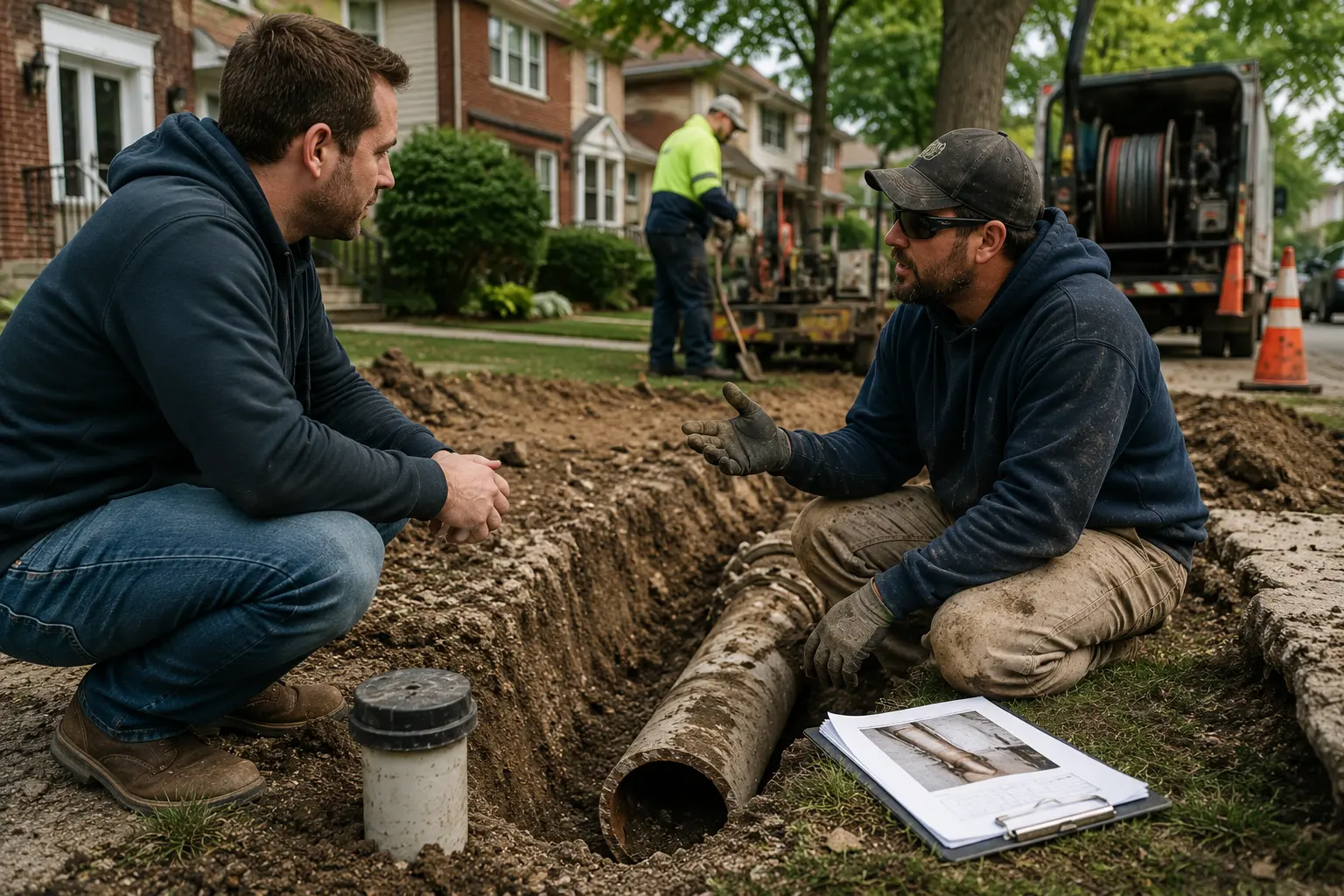
Replacing a sewer line is one of the largest and most disruptive plumbing-related projects many homeowners will ever face. The work can involve excavation, permits, inspections, landscaping restoration, and significant expense. Because of the complexity involved, asking the right questions before approving a sewer line replacement is critical.
Many homeowners assume that once a contractor recommends replacement, the decision is straightforward. In reality, there are often multiple repair options, varying project scopes, different warranty terms, and substantial differences between contractor proposals.
Understanding what to ask before signing a contract can help you avoid unnecessary work, compare estimates more effectively, and make a more informed decision. If you’re evaluating contractors, estimates, and replacement options, the resources in our Contractor Selection & Quotes hub can help guide the process.
Key Takeaways
- Always ask why replacement is being recommended and whether alternatives exist.
- Request evidence of the sewer problem, including camera inspection findings.
- Understand exactly what work is included in the quoted price.
- Ask about permits, inspections, restoration, and project timelines.
- Review warranty coverage carefully before signing any agreement.
- Obtaining multiple estimates can reveal major differences in recommendations.
- Chicago’s aging sewer infrastructure makes proper diagnosis especially important.
What Are the Most Important Questions to Ask Before Sewer Line Replacement?
Before approving a sewer line replacement, homeowners should ask why replacement is necessary, what evidence supports the recommendation, whether less expensive alternatives exist, what the project includes, who handles permits and inspections, how long the work will take, and what warranty protection is provided. The answers can help identify qualified contractors and prevent costly surprises later.
Question #1: Why Does the Sewer Line Need to Be Replaced?
This should always be the first question.
A contractor should clearly explain the underlying cause of the sewer problem and why replacement is being recommended instead of repair.
Common reasons for replacement include:
- Pipe collapse
- Severe cracking
- Major offset joints
- Extensive root intrusion
- Deteriorated pipe materials
- Repeated failures throughout the line
The explanation should be specific to your sewer line rather than based on general assumptions.
If the answer seems vague, consider obtaining additional opinions before proceeding.
Question #2: Can I See the Camera Inspection Footage?
Homeowners should never feel obligated to approve a major sewer project without seeing evidence of the problem.
A sewer camera inspection often provides the most reliable information about:
- Pipe condition
- Root intrusion
- Cracks
- Pipe separation
- Bellies or sagging sections
- Structural failures
Ask the contractor to walk you through the footage and explain what you’re seeing.
If no camera inspection has been performed, consider reading Should You Get a Sewer Camera Inspection Before Hiring a Contractor? before moving forward.
Question #3: Are There Alternatives to Full Replacement?
Not every sewer problem requires a complete replacement.
Depending on the condition of the pipe, potential alternatives may include:
- Spot repairs
- Pipe lining
- Pipe bursting
- Sectional replacement
- Root removal and maintenance
Ask the contractor:
- What alternatives exist?
- Why are they not being recommended?
- How long would alternative solutions likely last?
- What are the tradeoffs?
A trustworthy contractor should be willing to discuss multiple options when appropriate.
Question #4: What Exactly Is Included in the Quote?
Many homeowners discover too late that estimates vary significantly in what they include.
Ask for a detailed breakdown of the proposed work.
| Project Item | Should Be Clarified |
|---|---|
| Excavation | What areas will be dug up? |
| Pipe Replacement | How much pipe will be replaced? |
| Permits | Who obtains and pays for permits? |
| Inspections | Who schedules inspections? |
| Restoration | What repairs are included afterward? |
| Cleanup | Who removes debris and excess soil? |
For a more detailed review, see What Should Be Included in a Sewer Repair Quote?.
Question #5: Will Permits and Inspections Be Required?
Sewer line replacement projects frequently require permits and inspections.
Ask the contractor:
- What permits are required?
- Who handles the permit application?
- Will inspections occur during the project?
- Are permit fees included in the estimate?
Failure to obtain proper permits can create problems when selling a home and may lead to compliance issues later.
Question #6: How Long Will the Project Take?
Sewer replacement can affect daily household activities and access to plumbing fixtures.
Ask contractors for realistic expectations regarding:
- Project duration
- Excavation schedule
- Utility interruptions
- Inspection timing
- Restoration work
- Weather-related delays
Understanding the timeline helps homeowners prepare for temporary disruptions.
Question #7: What Type of Pipe Will Be Installed?
Not all replacement materials are identical.
Ask contractors which materials they plan to install and why.
Topics worth discussing include:
- Expected lifespan
- Resistance to root intrusion
- Maintenance requirements
- Local code compliance
- Suitability for your property
The contractor should be able to explain the advantages and limitations of the selected material.
Question #8: What Warranty Is Provided?
Warranty coverage varies substantially between contractors.
Ask detailed questions regarding:
- Coverage period
- Labor coverage
- Material coverage
- Transferability
- Exclusions
- Claim procedures
Verbal promises are not enough. Warranty information should always be provided in writing.
Homeowners comparing warranty protection should review Warranty Questions to Ask Before Sewer Line Replacement.
Question #9: Who Will Actually Perform the Work?
Some companies use in-house crews, while others subcontract portions of the project.
Ask:
- Will employees perform the work?
- Will subcontractors be involved?
- Who supervises the project?
- Who serves as the primary point of contact?
Understanding who will be on-site can help avoid communication issues later.
Question #10: What Happens if Additional Problems Are Found?
Unexpected conditions are sometimes discovered after excavation begins.
Examples include:
- Additional pipe damage
- Utility conflicts
- Groundwater issues
- Structural concerns
- Code-related upgrades
Ask how change orders are handled and whether additional work requires written approval.
Question #11: Should I Get Multiple Estimates?
In many cases, yes.
Multiple estimates can help homeowners compare:
- Diagnoses
- Repair recommendations
- Project scope
- Pricing structures
- Warranty coverage
Significant differences between proposals may indicate the need for further investigation.
Learn more in Do You Need Multiple Sewer Repair Estimates? and How to Compare Sewer Replacement Quotes.
Question #12: Why Should I Choose Your Company?
This question often reveals more than homeowners expect.
Look for answers focused on:
- Experience
- Qualifications
- Communication
- Project management
- Technical expertise
- Customer service
Be cautious of responses that rely primarily on pressure tactics or vague claims.
If you’re still evaluating contractors, review How to Choose a Sewer Repair Contractor in Chicago.
Chicago-Specific Considerations
Chicago homeowners face several unique sewer-related challenges.
Older Housing Stock
Many Chicago homes have aging clay or cast iron sewer lines that may be approaching the end of their service lives.
Tree Root Intrusion
Mature neighborhood trees frequently contribute to root intrusion issues, especially in older sewer systems.
Limited Access Areas
Urban lots, alleys, sidewalks, and neighboring structures can affect excavation methods and project costs.
Municipal Requirements
Permit and inspection procedures can vary depending on the municipality and project scope.
Contractors familiar with local conditions are often better equipped to address these challenges efficiently.
Common Mistakes Homeowners Make
Avoid these common mistakes before approving sewer replacement:
- Accepting the first estimate without comparison
- Skipping a camera inspection review
- Focusing solely on price
- Ignoring permit requirements
- Failing to verify insurance coverage
- Not reviewing warranty details
- Signing incomplete contracts
- Rushing into a decision during a stressful situation
Homeowners concerned about deceptive practices should also review Red Flags to Watch for in Sewer Repair Contractors and How to Avoid Common Sewer Repair Scams.
Frequently Asked Questions
How many questions should I ask before sewer line replacement?
There is no fixed number, but homeowners should fully understand the diagnosis, repair options, costs, permits, timeline, and warranty before signing any agreement.
Is a sewer camera inspection necessary before replacement?
In many cases, yes. A camera inspection helps verify the condition of the sewer line and provides evidence supporting the contractor’s recommendation.
Can a sewer line be repaired instead of replaced?
Sometimes. The answer depends on the type, location, and severity of the damage. Some sewer problems can be addressed with spot repairs or trenchless methods.
Should I get a second opinion before approving replacement?
For expensive projects, obtaining additional estimates is often a wise decision. Comparing recommendations can help identify unnecessary work or alternative solutions.
Will homeowners insurance cover sewer line replacement?
Coverage depends on the cause of the damage and the terms of the policy. Many sewer line failures are not automatically covered under standard homeowners insurance policies.
How do I know if a sewer replacement quote is reasonable?
The best approach is comparing multiple written estimates while evaluating scope, materials, warranties, permits, and restoration work—not just total cost.
Conclusion
Asking the right questions before sewer line replacement can prevent misunderstandings, reduce financial risk, and help homeowners make informed decisions. The goal is not simply to find the lowest price but to understand why the work is being recommended, what alternatives exist, and what protections are included.
By reviewing inspection findings, comparing multiple estimates, evaluating warranties, and understanding project details, Chicago homeowners can approach sewer replacement with greater confidence and avoid many of the common pitfalls associated with major underground repairs.