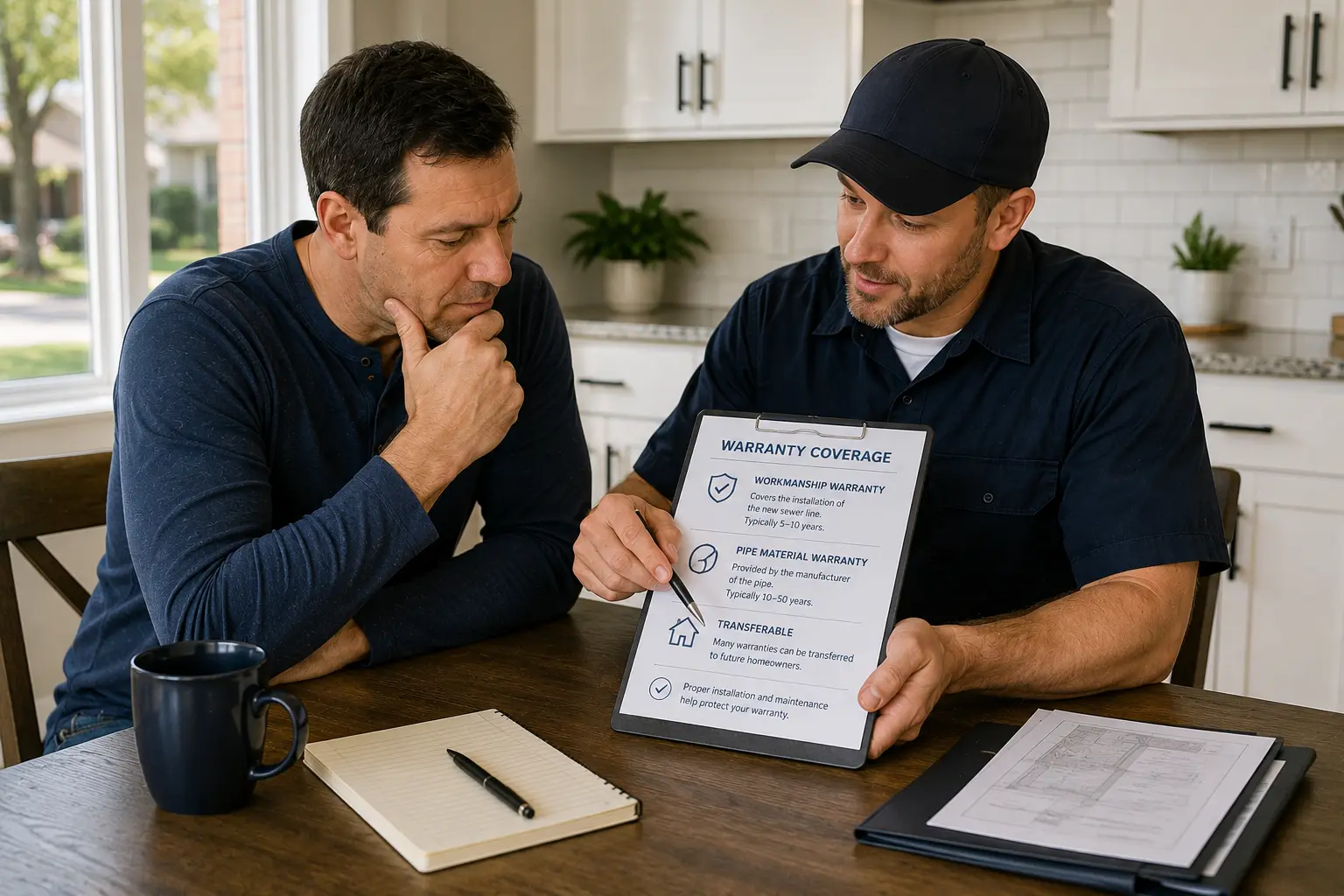
A sewer line replacement warranty can be reassuring, but it is only useful if homeowners understand what it actually covers. Many people hear “warranty” and assume every future sewer problem, yard issue, driveway repair, or drain backup will be handled at no additional cost. In reality, sewer replacement warranties vary widely by contractor, pipe material, installation method, manufacturer terms, and the exact language in the agreement.
For Chicago homeowners, understanding the warranty matters because sewer replacement is a major project that can affect the pipe itself, the yard, sidewalks, driveways, landscaping, and long-term property value. A warranty should help clarify responsibility after the work is complete, but it should not be treated as a substitute for reading the contract, keeping records, and monitoring the property for problems.
This guide explains the major types of sewer line replacement warranties, what they commonly include, what they often exclude, and what homeowners should ask before relying on warranty protection. For more post-project guidance, visit the Post-Repair Concerns resource hub.
Key Takeaways
- Sewer line replacement warranties are not all the same, and the details matter more than the length of coverage.
- Most warranties distinguish between workmanship, materials, and manufacturer defects.
- Surface restoration, landscaping, driveway repair, sidewalk repair, and drain clogs may not be covered the same way as the sewer pipe itself.
- Warranty coverage may be limited by improper use, outside damage, tree roots, soil movement, settlement, or lack of maintenance.
- Chicago weather, older infrastructure, and public right-of-way issues can affect post-replacement concerns.
- Homeowners should keep contracts, permits, inspection records, photos, warranty documents, and invoices after the project is complete.
What Does a Sewer Line Replacement Warranty Usually Cover?
A sewer line replacement warranty usually covers certain defects in the installed pipe, materials, or workmanship for a defined period of time. It may cover problems caused by improper installation, failed pipe material, or defective fittings, but it often excludes unrelated clogs, misuse, damage from outside forces, surface restoration issues, pre-existing plumbing problems, and problems outside the repaired section. The exact coverage depends on the written warranty terms.
Why Sewer Replacement Warranty Terms Matter
Sewer line replacement is not a single simple repair. It may involve excavation, pipe installation, connections to existing plumbing, backfilling, inspections, permits, and restoration of disturbed property. Because so many parts of the project are involved, warranty language can become complicated.
For example, a homeowner may receive one warranty for the pipe installation, a separate manufacturer warranty for the pipe material, and no long-term coverage for lawn restoration. Another project may include a limited workmanship warranty but exclude damage caused by soil settlement or tree roots.
Homeowners should not rely on verbal promises alone. The most important warranty details should be written into the contract or provided in a separate warranty document.
For a broader look at the period after replacement, review What to Expect After Sewer Line Replacement.
The Main Types of Sewer Line Replacement Warranties
Workmanship Warranty
A workmanship warranty covers defects related to how the job was performed. This may include issues such as improper slope, poor connections, incorrect installation methods, or other problems caused by installation errors.
Workmanship coverage is important because even high-quality pipe material can fail to perform if it is installed incorrectly.
Material Warranty
A material warranty applies to the pipe, fittings, liner, or other products used in the replacement. This may come from the manufacturer, the contractor, or both.
Material warranties often have specific conditions. For example, the product may need to be installed according to manufacturer requirements for the warranty to remain valid.
Manufacturer Warranty
Some pipe products, liners, or fittings may carry a manufacturer warranty. This type of coverage usually focuses on defects in the product itself, not the labor required to diagnose, excavate, remove, or replace the defective material.
Limited Service Warranty
A limited service warranty may cover specific service calls or repairs related to the replaced sewer section. The language should define what qualifies as a covered issue and what does not.
Restoration Warranty
Some projects include limited coverage for surface restoration, such as concrete, asphalt, or yard repair. Others exclude restoration work entirely or treat it as a separate service.
What Sewer Line Warranties Commonly Cover
Although every warranty is different, coverage may include certain problems directly tied to the new sewer line or the installation work.
Commonly covered issues may include:
- Defective pipe material within the replaced section
- Improper pipe connections caused by installation error
- Installation defects that affect flow
- Workmanship problems discovered after completion
- Failure of certain fittings or components
- Specific issues documented during the warranty period
The key question is whether the problem is directly related to the replaced section and whether it falls within the written warranty language.
Important: A warranty is not the same as insurance. It usually covers specific defects or failures, not every possible future sewer or property problem.
What Sewer Line Warranties Often Exclude
Exclusions are just as important as coverage. Many homeowner disputes happen because expectations differ from the written warranty terms.
Sewer replacement warranties may exclude:
- Clogs caused by grease, wipes, hygiene products, or improper use
- Problems in sections of pipe that were not replaced
- Interior drain issues unrelated to the main sewer line
- Damage caused by tree roots after installation
- Ground movement, soil settlement, or erosion
- Damage caused by other contractors or utility work
- Flooding or sewer backups caused by municipal system surcharging
- Damage from freezing, shifting, or outside pressure
- Landscaping, sod, trees, or decorative features
- Driveway, sidewalk, or hardscape repairs unless separately included
If post-replacement drain problems appear, the issue may or may not be covered by the sewer warranty. Homeowners can learn more in Drain Problems After Sewer Replacement: Common Causes.
Warranty Length Is Not the Only Thing That Matters
Many homeowners focus only on the number of years listed in a warranty. While the term length matters, it is not the full story.
A longer warranty with narrow exclusions may provide less practical protection than a shorter warranty with clear, meaningful coverage. Homeowners should look beyond the headline number and review the actual terms.
| Warranty Detail | Why It Matters |
|---|---|
| Coverage period | Defines how long the warranty remains active |
| Covered components | Clarifies whether pipe, fittings, labor, and restoration are included |
| Exclusions | Identifies situations where coverage does not apply |
| Transferability | Determines whether coverage passes to a future buyer |
| Claim process | Explains how homeowners report a covered issue |
| Documentation requirements | Shows what records may be needed for a claim |
Does the Warranty Cover Yard, Driveway, or Sidewalk Repairs?
Surface restoration is one of the most misunderstood parts of sewer replacement warranty coverage. A sewer pipe warranty may not cover the yard, driveway, sidewalk, or landscaping after the underground work is complete.
Some contractors include limited restoration in the original project scope. Others only backfill the trench and leave permanent surface repairs to separate specialists. Even when restoration is included, there may be different terms for grass, concrete, asphalt, pavers, or decorative landscaping.
Homeowners should review these related resources if their warranty questions involve property restoration:
- Yard Repair After Sewer Excavation
- Driveway Repair After Sewer Replacement
- Sidewalk Repair After Sewer Work
- Landscaping After Sewer Line Replacement
If restoration coverage matters, it should be written clearly into the agreement before the project begins.
Chicago-Specific Warranty Considerations
Older Housing Stock
Many Chicago homes have older plumbing systems. A new sewer line may solve the main exterior pipe problem, but it does not automatically correct aging interior drain lines, venting issues, or other plumbing defects inside the home.
Combined Sewer Conditions
Some areas of Chicago rely on combined sewer infrastructure, where stormwater and wastewater share parts of the system. A private sewer replacement may not prevent every backup risk during extreme rain events if the public system is overwhelmed.
Freeze-Thaw Cycles
Chicago winters can affect soil movement, restoration areas, concrete repairs, and driveway or sidewalk patches. A warranty may exclude damage caused by weather-related settlement or surface deterioration.
Public Right-of-Way Work
If replacement work affects sidewalks, parkways, alleys, or other public areas, municipal requirements may apply. Final inspection and permit closeout records may be important if a warranty claim or future property sale occurs.
For more detail on closeout expectations, see Sewer Replacement Final Inspection: What to Expect.
Questions to Ask Before Relying on a Warranty
Homeowners should ask direct questions before assuming the warranty provides broad protection.
- What exact section of sewer line is covered?
- Does the warranty cover labor, materials, or both?
- Are service calls included if a problem appears?
- What problems are excluded?
- Does the warranty cover clogs or only installation defects?
- Is the warranty transferable if the home is sold?
- Does coverage include yard, sidewalk, driveway, or landscaping restoration?
- What documentation is required to make a claim?
- What voids the warranty?
- Who decides whether a problem is covered?
Practical tip: Ask for warranty details in writing. Verbal explanations can be helpful, but written terms are what homeowners should rely on.
What Can Void a Sewer Replacement Warranty?
Warranty terms vary, but certain homeowner actions or outside events may limit or void coverage.
Common warranty risks include:
- Improper disposal of grease, wipes, or foreign objects
- Unauthorized modifications to the sewer line
- Damage caused by another contractor
- Failure to report problems promptly
- Ignoring known drainage problems
- Tree planting too close to the sewer route
- Failure to maintain required access points or cleanouts
- Using the system in ways not covered by the agreement
Homeowners should also keep in mind that a sewer line’s expected lifespan is different from its warranty period. For more context, review How Long Do New Sewer Lines Last?.
Warranty Claims: What to Do If a Problem Appears
If a sewer issue appears after replacement, homeowners should document the problem before assuming it is covered or not covered.
- Review the warranty documents. Confirm the coverage period, exclusions, and claim process.
- Document the symptoms. Take photos or videos of backups, odors, settlement, or surface damage when relevant.
- Check whether the problem is related to the replaced section. Interior drain problems may have a different cause.
- Request diagnostic information. A camera inspection or service report may help identify the issue.
- Keep all communication in writing. Written records help avoid confusion later.
- Save invoices and inspection results. These may be needed if the issue escalates.
If sewer odors are the main symptom, homeowners may want to review Why Is There a Sewer Odor After Sewer Repair?.
Documents Homeowners Should Keep
Warranty protection is easier to use when documentation is organized. Homeowners should keep all project records in one place.
Important documents include:
- Signed contract
- Warranty terms
- Permits
- Inspection approvals
- Invoices and payment records
- Before-and-after photos
- Pipe material details
- Camera inspection reports
- Restoration agreements
- Insurance claim records, if applicable
For a deeper checklist, see What Documents Should You Keep After Sewer Replacement?.
Common Mistakes Homeowners Make
- Assuming every sewer problem is covered. Warranties usually cover specific defects, not all future issues.
- Focusing only on the warranty length. Coverage details and exclusions matter just as much.
- Not getting terms in writing. Verbal promises are difficult to rely on later.
- Ignoring restoration exclusions. Yard, driveway, sidewalk, and landscaping repairs may be separate.
- Throwing away project documents. Warranty claims often require records.
- Waiting too long to report a problem. Delayed reporting can complicate coverage questions.
- Confusing warranty coverage with insurance coverage. These are separate forms of protection.
Frequently Asked Questions
How long is a typical sewer line replacement warranty?
Warranty length varies widely by contractor, material, and installation method. Homeowners should focus on the written terms rather than assuming a longer warranty automatically provides better protection.
Does a sewer replacement warranty cover clogs?
Sometimes, but not always. Many warranties exclude clogs caused by grease, wipes, foreign objects, or problems outside the replaced section. Coverage depends on the cause of the clog and the warranty language.
Will the warranty cover sewer backups during heavy rain in Chicago?
Not necessarily. If a backup is caused by municipal sewer surcharging, extreme rainfall, or a problem outside the replaced private sewer line, it may not be covered by the replacement warranty.
Does the warranty cover yard or concrete restoration?
Only if the warranty or contract specifically says so. Surface restoration is often treated separately from the pipe installation warranty.
Is a sewer line warranty transferable when selling a house?
Some warranties are transferable, while others apply only to the original homeowner. If resale value matters, ask whether the warranty can be transferred and what paperwork is required.
Can tree roots void a sewer warranty?
Tree root damage may be excluded, especially if roots enter through areas outside the replaced section or if new trees are planted too close to the sewer route. The warranty terms should explain how root-related damage is handled.
What should I do if I think I have a warranty claim?
Review the written warranty, document the problem, gather inspection records, and follow the claim process described in the agreement. Keep communication and repair records organized.
Does homeowner’s insurance replace a sewer warranty?
No. Insurance and warranties serve different purposes. A warranty may cover installation or material defects, while insurance may cover certain losses depending on policy terms, endorsements, exclusions, and cause of damage.
Conclusion
A sewer line replacement warranty can provide useful protection, but only when homeowners understand its limits. The most important details are not just how long the warranty lasts, but what it covers, what it excludes, how claims are handled, and whether restoration work is included.
For Chicago homeowners, warranty questions often overlap with inspections, public right-of-way work, freeze-thaw damage, yard repair, driveway restoration, and future resale concerns. Keeping clear records, asking specific questions, and reviewing written terms can help homeowners avoid surprises after sewer replacement is complete.