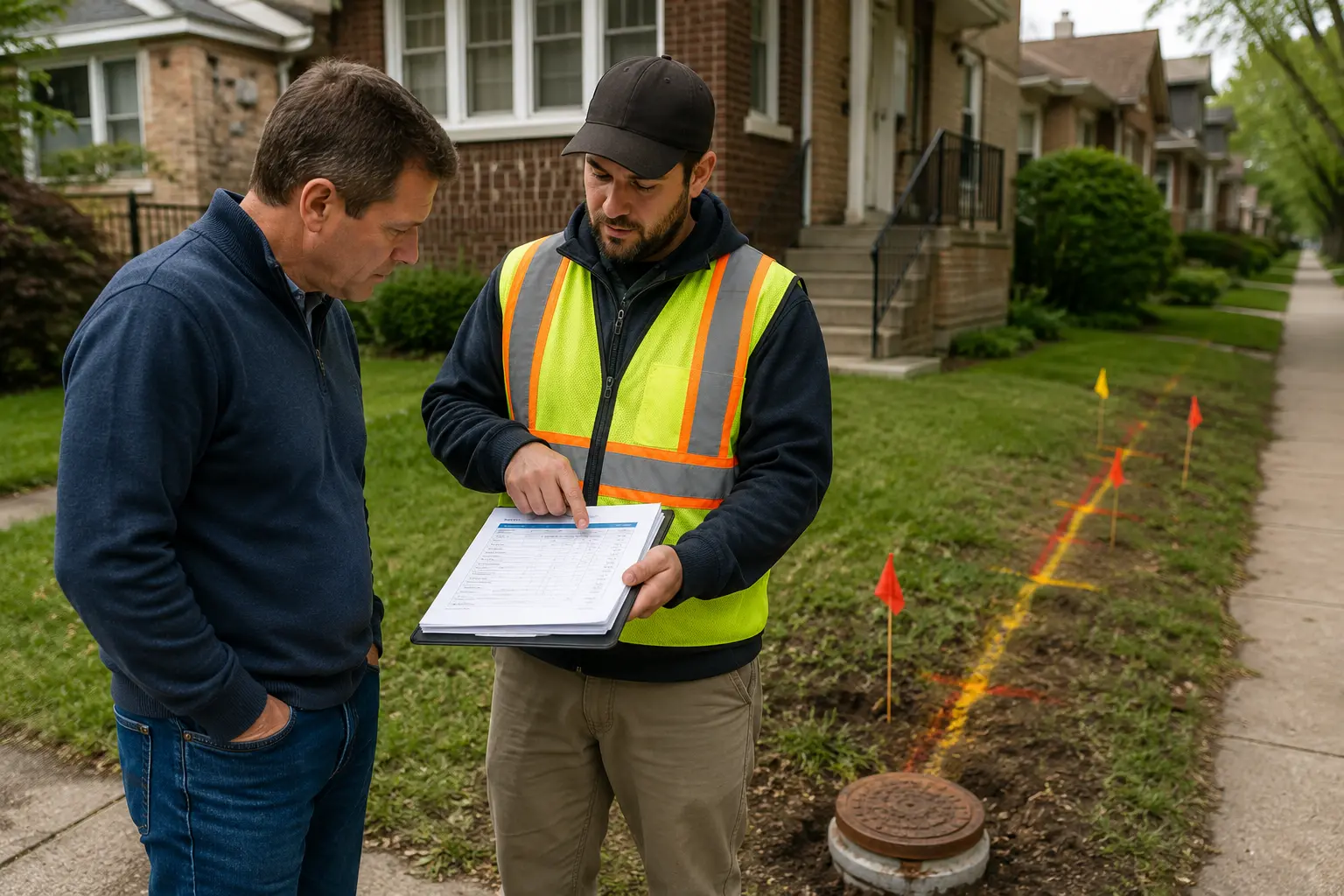
Sewer line replacement cost per foot in Chicago is a useful starting point, but it should not be treated as a complete estimate by itself. The same length of sewer pipe can cost very different amounts depending on depth, access, excavation conditions, pipe condition, permit needs, and how much restoration is required after the work is done.
For most Chicago homeowners, the better question is not only “What is the price per foot?” It is “What does that price include, and what conditions could change the final cost?” A short replacement under concrete or deep soil can be more expensive than a longer replacement through an open yard with easier access.
This guide explains how sewer line replacement cost per foot works, why pricing varies so much in Chicago, and what homeowners should look for before comparing estimates.
Key Takeaways
- Sewer line replacement cost per foot depends heavily on depth, access, excavation, pipe condition, replacement method, permits, and restoration.
- A per-foot price can be misleading if it does not include concrete repair, backfill, inspection, permits, or cleanup.
- Chicago homes may have older clay pipe, cast iron sections, root intrusion, tight lots, sidewalks, alleys, basements, and parkway-related complications.
- Trenchless replacement may reduce digging in some situations, but it is not always cheaper or possible.
- A sewer camera inspection is one of the most important steps before deciding whether replacement is necessary.
- Homeowners should compare detailed written scopes of work instead of choosing based only on the lowest price per foot.
How Much Does Sewer Line Replacement Cost Per Foot in Chicago?
Sewer line replacement in Chicago is often estimated using a cost-per-foot framework, but the final project price depends on far more than the number of feet being replaced. Pipe depth, excavation difficulty, access, surface restoration, permit requirements, and the repair method can all raise or lower the effective cost per foot.
A straightforward replacement through accessible soil may have a lower per-foot cost. A replacement under a sidewalk, driveway, basement slab, porch, mature landscaping, or tight gangway can be much more expensive per foot because the work is harder and the restoration is more involved.
For homeowners comparing prices, the safest approach is to treat cost per foot as only one part of the estimate. The full written scope matters more than the headline number. For a broader overview of related pricing topics, see the main Chicago sewer replacement cost guide.
Why Sewer Replacement Cost Per Foot Varies So Much
Sewer replacement is not like buying pipe by the foot at a store. The pipe material matters, but the largest costs often come from labor, excavation, equipment, access, disposal, inspection, permits, and restoration.
That is why two homeowners can receive very different quotes even if both are replacing a similar length of sewer line. One home may have easy access through a yard. Another may require cutting concrete, working near a foundation, managing deep excavation, or restoring a sidewalk or driveway.
The cost per foot becomes more useful only after the contractor has identified the exact section being replaced, the depth of the sewer line, the surface above it, and the condition of the existing pipe.
Main Cost Sections Homeowners Should Understand
Pipe Length
The number of feet being replaced is the most obvious cost factor. A longer sewer line generally requires more pipe, more labor, more excavation, and more backfill. However, length alone does not tell the full story.
Many sewer replacement projects include fixed costs that apply whether the contractor replaces a short section or a longer run. These may include bringing equipment to the site, locating utilities, opening the ground, setting up safe excavation, inspecting the line, removing damaged pipe, and cleaning up afterward.
Because of those fixed costs, a small partial replacement can sometimes look expensive on a per-foot basis, while a larger project may have a lower cost per foot but a higher total cost.
Pipe Depth
Depth is one of the most important cost drivers. A shallow sewer line is usually easier to expose, replace, and backfill. A deeper line requires more digging, more soil removal, more safety precautions, and more time.
In Chicago, depth can vary by property, neighborhood, basement configuration, and where the private line connects to the larger sewer system. Lines near foundations, alleys, and street connections can be more complicated than homeowners expect.
Excavation Conditions
Excavation often drives a large share of the cost. Replacing a sewer line under open soil is very different from replacing one under concrete, pavers, a driveway, a garage slab, basement flooring, or a city sidewalk.
Hard surfaces must often be cut, removed, hauled away, and replaced. Tight areas may limit equipment access and require more hand digging. For a deeper look at these cost drivers, read Sewer Line Excavation Cost: What Drives the Price Higher?.
Pipe Condition
The existing sewer line’s condition affects both the recommended solution and the cost. Common problems include cracked clay pipe, separated joints, collapsed sections, root intrusion, offset connections, corrosion, bellied pipe, and poor slope.
If the damage is limited to one clearly defined section, a partial replacement may be possible. If the pipe has multiple failed sections or widespread deterioration, a larger replacement may be more practical.
Replacement Method
The method used to replace the line can change the cost structure. Traditional excavation involves digging down to the damaged pipe, removing it, and installing new pipe. Trenchless methods may reduce surface disruption, but they require the pipe to be a suitable candidate.
Trenchless replacement is not automatically cheaper. It may save on restoration in some cases, but specialized equipment and preparation can still make it a substantial project.
Restoration Work
Restoration is one of the easiest parts of a sewer estimate to overlook. After the pipe is replaced, the area above the line must be restored. Depending on the property, that may include soil backfill, grass repair, concrete replacement, driveway patching, basement slab repair, or cleanup of disturbed landscaping.
A low per-foot price may not include full restoration. Homeowners should always ask what the property will look like when the job is finished and what restoration work is excluded.
Common Cost Drivers by Situation
| Situation | How It Affects Cost Per Foot | What Homeowners Should Ask |
|---|---|---|
| Open yard access | Usually simpler than hard-surface excavation. | Does the estimate include backfill, grading, and lawn repair? |
| Pipe under concrete | Raises cost because concrete must be cut, removed, and possibly replaced. | Is concrete restoration included or separate? |
| Deep sewer line | Requires more digging, labor, soil handling, and safety precautions. | What depth is assumed in the quote? |
| Tight Chicago lot | May limit equipment access and increase hand labor. | Will access limitations affect the final price? |
| Root-damaged pipe | May require partial replacement, lining, or full replacement depending on pipe condition. | Where are roots entering, and is the pipe structurally damaged? |
| Collapsed section | Can limit trenchless options and require excavation. | Can the damaged section be isolated on camera? |
| Emergency work | May increase cost because timing is urgent and options are limited. | Is the project being priced as emergency service? |
Chicago-Specific Considerations
Older Sewer Materials
Many Chicago homes were built before modern sewer materials became common. Older properties may have clay sewer pipe, cast iron sections, or a mix of materials from previous repairs. These older materials can develop cracks, separations, root openings, corrosion, and alignment problems over time.
Mixed-material lines can also create weak points where older pipe transitions into newer pipe. A camera inspection can help identify these transitions and show whether the problem is isolated or part of a larger pattern.
Mature Trees and Root Intrusion
Chicago neighborhoods often have mature parkway trees, backyard trees, and established landscaping. Roots can enter sewer lines through cracks, loose joints, or separated pipe sections. Once inside, they can grow, catch debris, and cause recurring backups.
Rodding or cleaning may restore flow temporarily, but it does not repair the opening that allowed roots to enter. If roots keep returning, homeowners should ask whether the pipe itself is damaged.
Basements and Floor Drain Backups
Because many Chicago homes have basements, sewer problems may first appear as basement floor drain backups, laundry tub backups, slow basement fixtures, or sewage odors. These symptoms can be alarming, but they do not always mean the whole sewer line must be replaced.
The pattern matters. One isolated clog is different from repeated whole-house backups or camera evidence of structural pipe failure.
Sidewalks, Alleys, Parkways, and Access Issues
Chicago sewer replacement can be complicated by sidewalks, alleys, narrow side yards, garages, fences, porches, and parkway areas. These conditions can affect excavation planning, equipment access, permit coordination, and restoration responsibility.
If the pipe runs beneath or near public-facing areas, homeowners should be especially clear about who handles permits, inspections, traffic or pedestrian considerations, and surface restoration.
Weather and Seasonal Timing
Weather can affect sewer work. Frozen ground, heavy rain, saturated soil, or winter conditions may make excavation more difficult. If a sewer line is already showing signs of serious failure, waiting until a full backup occurs can reduce flexibility and make the project more stressful.
How Trenchless Replacement Affects Cost Per Foot
Trenchless sewer replacement may reduce digging by using access points instead of opening the entire sewer line. This can be valuable when the pipe runs under concrete, landscaping, sidewalks, or areas that would be expensive to restore.
However, trenchless work is not always available. The existing pipe must be suitable for the method being used. A severely collapsed pipe, major belly, poor slope, or badly misaligned section may still require excavation.
| Method | Potential Cost Advantage | Potential Limitation |
|---|---|---|
| Traditional excavation | Allows direct access to remove and replace damaged pipe. | Can create higher restoration costs when surfaces are disturbed. |
| Trenchless replacement | May reduce digging and surface restoration. | May not work for collapsed, bellied, or severely misaligned pipe. |
| Partial replacement | Can reduce upfront cost if damage is isolated. | May leave aging pipe in place elsewhere. |
| Full replacement | Can address widespread deterioration and recurring failures. | Usually costs more upfront than a small spot repair. |
Important Homeowner Note
Trenchless replacement should be judged by whether it solves the actual pipe problem, not just by whether it avoids digging. If the line has slope issues, severe collapse, or multiple structural problems, excavation may still be necessary.
Repair vs Replacement Considerations
Not every sewer problem requires replacement. Some issues can be resolved with cleaning, rodding, spot repair, or a smaller partial replacement. Other problems point toward a larger replacement because the pipe is structurally failing.
The decision should be based on evidence from inspection, the age and condition of the pipe, the number of problem areas, and the likelihood of recurring backups.
Repair May Make Sense When
- The damaged section is small and clearly located.
- The rest of the sewer line appears stable on camera.
- The problem is not recurring after repeated cleanings.
- The issue is caused by one isolated crack, joint, or obstruction.
- The homeowner understands the possibility of future repairs elsewhere.
Replacement May Make Sense When
- The sewer line has multiple cracks, offsets, or separated joints.
- Roots keep returning after repeated rodding.
- The pipe has collapsed or lost proper slope.
- Several sections of the line show deterioration.
- Emergency backups are becoming more frequent.
- The cost of repeated repairs is approaching the cost of replacement.
If the damaged line is the main sewer lateral serving the home, review main sewer line replacement cost for Chicago homes for a more focused breakdown.
What Should Be Included in a Per-Foot Sewer Replacement Estimate?
A per-foot estimate should still include a detailed scope of work. Without that scope, homeowners may not know whether they are comparing similar projects.
Before approving work, ask whether the estimate includes:
- The exact section or approximate footage being replaced
- The assumed pipe depth
- The replacement method
- The pipe material being installed
- Camera inspection findings
- Permit responsibility and inspection requirements
- Utility locating
- Excavation and soil removal
- Backfill and compaction
- Concrete, driveway, sidewalk, or landscape restoration
- Cleanup and disposal
- Conditions that could change the final price
If any of these items are unclear, the per-foot number may not tell the full story.
Common Mistakes and Warning Signs
Mistake: Comparing Only the Price Per Foot
A lower per-foot price may look attractive, but it may exclude important work. Permits, restoration, concrete replacement, cleanup, and unexpected excavation conditions can change the total cost.
Mistake: Skipping the Camera Inspection
A sewer camera inspection helps show whether the pipe has roots, cracks, offsets, standing water, collapse, or widespread deterioration. Without inspection evidence, it is harder to know whether replacement is necessary.
Mistake: Assuming Cleaning Is a Permanent Fix
Cleaning can clear a blockage, but it does not repair broken pipe. If roots or backups return repeatedly, the underlying pipe may need repair or replacement.
Mistake: Not Asking About Restoration
Restoration can be a major cost. Homeowners should ask whether the estimate includes concrete repair, lawn repair, driveway patching, basement slab replacement, or only basic backfill.
Warning Signs That May Point to Sewer Replacement
- Multiple drains backing up at once
- Basement floor drain backups
- Recurring clogs after rodding
- Gurgling toilets or drains
- Sewage odors indoors or outside
- Soft, wet, or sunken areas in the yard
- Tree roots repeatedly removed from the line
- Camera inspection showing cracks, offsets, collapse, or standing water
Decision Point
A single clog does not automatically mean sewer replacement is needed. Repeated backups, visible structural defects, recurring root intrusion, or a collapsed pipe are stronger signs that a replacement discussion may be necessary.
If the problem has become urgent or requires after-hours service, review emergency sewer repair cost in Chicago to understand how timing may affect the final price.
FAQ About Sewer Line Replacement Cost Per Foot in Chicago
How much does sewer line replacement cost per foot in Chicago?
The cost per foot depends on pipe length, depth, access, excavation conditions, pipe material, replacement method, permits, and restoration. A simple per-foot quote is not enough unless it clearly explains what is included and what could increase the final cost.
Why can a short sewer replacement cost so much?
Short replacements can still involve fixed costs such as equipment, labor, utility locating, excavation setup, inspection, permits, disposal, and restoration. If the short section is deep or under concrete, the cost per foot can be high.
Is trenchless sewer replacement cheaper per foot?
Sometimes, but not always. Trenchless replacement may reduce digging and restoration, which can help when the pipe runs under expensive surfaces. However, trenchless methods require suitable pipe conditions and specialized work, so they should be compared by total project scope rather than price per foot alone.
Do I need a sewer camera inspection before replacement?
In most cases, yes. A camera inspection helps identify the location, severity, and type of damage. It can show whether the problem is isolated or widespread and whether repair, trenchless work, partial replacement, or full replacement is more appropriate.
Will homeowners insurance cover sewer line replacement?
Coverage depends on the policy, cause of damage, and whether the homeowner has sewer backup or service line coverage. Many standard policies exclude age-related deterioration, wear and tear, and long-term root intrusion. Homeowners should confirm details directly with their insurer before assuming coverage.
What Chicago-specific factors can increase the cost per foot?
Older pipe materials, mature tree roots, narrow lots, alleys, sidewalks, basements, parkway areas, concrete surfaces, and city permit requirements can all affect the final cost. These factors may make a Chicago sewer replacement more involved than a simple open-yard repair.
Can only part of the sewer line be replaced?
Yes, if the damage is isolated and the rest of the line appears to be in good condition. Partial replacement can reduce upfront cost, but it may not be the best long-term solution if other sections of the pipe are also deteriorating.
Conclusion
Sewer line replacement cost per foot in Chicago is helpful for understanding the scale of a project, but it should never be the only factor used to compare estimates. The total cost depends on the pipe’s depth, access, condition, replacement method, permit needs, excavation difficulty, and restoration work.
The best estimate explains the full scope in plain language. It should identify what section is being replaced, why replacement is recommended, what method will be used, what surfaces will be disturbed, and what is included after the pipe is installed.
For Chicago homeowners, the goal is not simply to find the lowest per-foot price. It is to understand the real project conditions and make a decision based on evidence, long-term reliability, and a complete written scope.