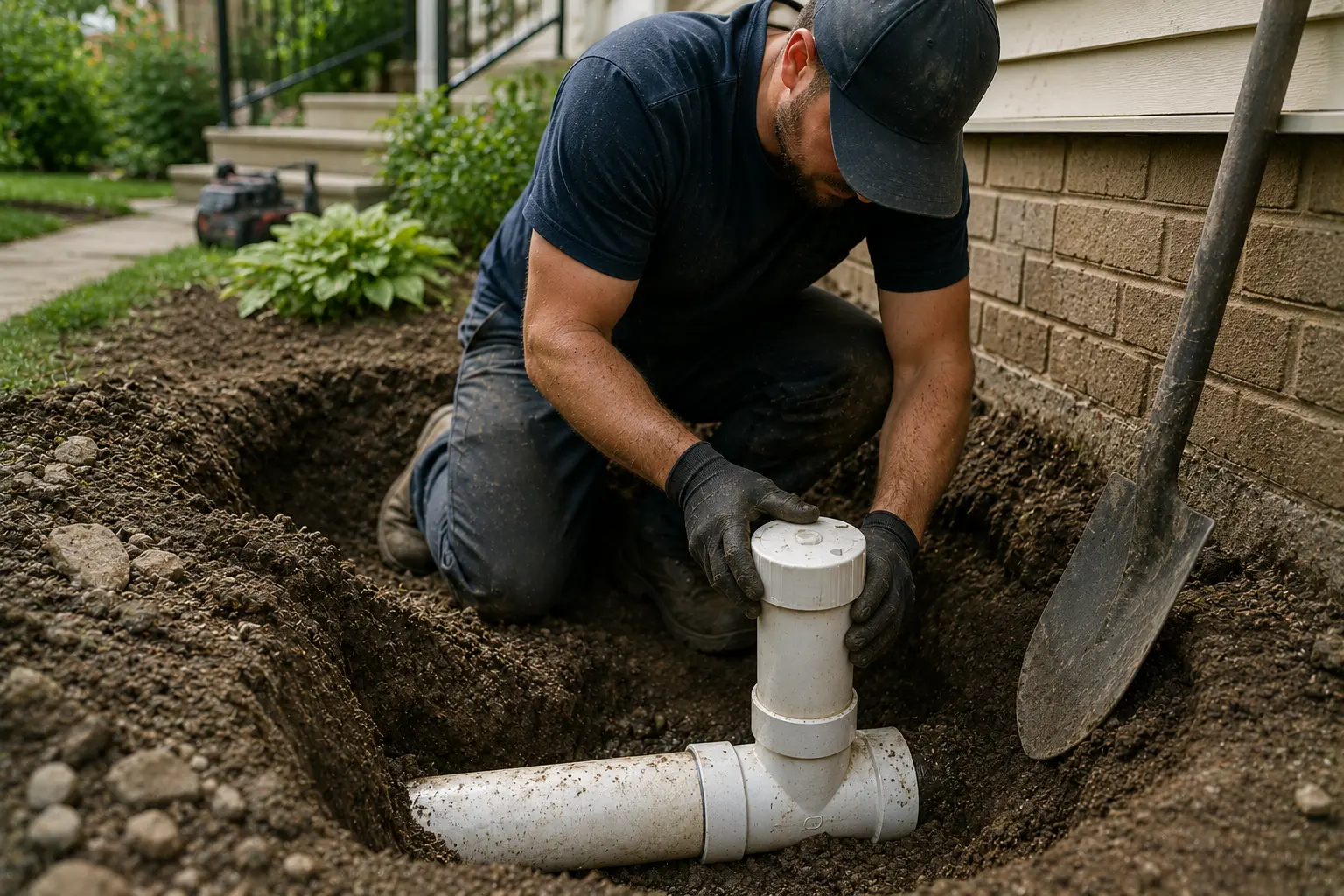
A sewer cleanout is an access point that allows a sewer line to be inspected, cleared, and maintained more easily. For homeowners, it can make a major difference when a main sewer line backs up, needs rodding, requires camera inspection, or must be evaluated for repair.
Many Chicago homes, especially older properties, may have limited sewer access or cleanouts that are difficult to locate, damaged, buried, or missing entirely. When access is poor, even basic sewer diagnosis can become harder, slower, and more expensive. Installing a properly located cleanout can improve future maintenance and help contractors identify problems without unnecessary disruption.
Sewer cleanout installation is not the same as sewer repair, but it often supports sewer repair work. It may be recommended before inspection, rodding, hydro jetting, pipe lining, or replacement planning. For a broader overview of related methods, visit the Sewer Repair Methods hub.
Key Takeaways
- A sewer cleanout provides direct access to the main sewer line for inspection, cleaning, and maintenance.
- Cleanouts can make sewer rodding, hydro jetting, camera inspections, and some trenchless repairs easier.
- Older Chicago homes may have missing, buried, damaged, or poorly located cleanouts.
- Installation cost depends on location, depth, pipe material, access, permits, and surface restoration.
- A cleanout does not fix a damaged sewer line by itself, but it can make diagnosis and future service more efficient.
- Cleanout placement should be planned carefully so it remains accessible and useful over time.
Why Sewer Cleanout Installation Matters
A sewer cleanout gives plumbers and sewer contractors a practical access point to inspect or clear the main sewer line. Without one, they may need to access the sewer through a toilet, floor drain, roof vent, or another less convenient opening.
Installing a cleanout can be especially useful when a home has recurring backups, limited access, older sewer piping, or upcoming repair work. It can reduce future service complications, but it should be viewed as an access improvement rather than a cure for sewer line damage.
What Is a Sewer Cleanout?
A sewer cleanout is a capped pipe fitting connected to the home’s drain or sewer system. When the cap is removed, the cleanout provides access to the line so equipment can be inserted for inspection, clearing, or maintenance.
Cleanouts may be located indoors or outdoors depending on the home’s plumbing layout. Some are found in basements, utility areas, crawl spaces, yards, parkways, or near the foundation. In some homes, cleanouts are easy to see. In others, they may be hidden behind finished walls, buried under landscaping, covered by flooring, or missing from older installations.
The main purpose is access. A cleanout gives professionals a way to work on the sewer line without dismantling fixtures or guessing where to enter the system.
What a Sewer Cleanout Is Used For
A cleanout can support several common sewer services. It does not repair the sewer line by itself, but it makes many repair and maintenance tasks more practical.
A sewer cleanout may be used for:
- Sewer camera inspections
- Sewer rodding
- Hydro jetting
- Clearing main line blockages
- Locating sewer defects
- Evaluating root intrusion
- Preparing for pipe lining
- Checking repair or replacement work after completion
If a homeowner is dealing with repeated clogs, a cleanout can make it easier to determine whether the issue is a blockage or a deeper pipe problem. For more context on cleaning versus repair, see Sewer Rodding vs Sewer Repair: What’s the Difference?.
When Homeowners May Need a Sewer Cleanout Installed
Cleanout installation may be recommended when the existing sewer access is missing, unsafe, inconvenient, or poorly located.
Common reasons include:
- No visible main sewer cleanout
- Existing cleanout is buried or inaccessible
- Cleanout cap is damaged, seized, or leaking
- Service providers must remove a toilet to access the sewer line
- Recurring backups require easier inspection access
- Hydro jetting or rodding equipment needs better entry
- A trenchless repair method requires access
- A sewer replacement project includes updated access planning
Cleanout installation may also be considered during a larger sewer project so future maintenance is easier after the repair is complete.
How Sewer Cleanout Installation Works
The installation process depends on where the cleanout is being added and how the existing sewer line is configured. In general, the goal is to expose the sewer line, install an access fitting, and leave a capped opening that remains reachable for future service.
1. Locating the Sewer Line
The first step is determining where the main sewer line runs. This may involve reviewing visible plumbing, using locating equipment, or performing a camera inspection if access already exists elsewhere.
2. Choosing the Cleanout Location
The cleanout should be placed where it provides practical access and remains reachable. A cleanout buried under landscaping or hidden behind finished materials may be less useful later.
3. Excavating or Opening the Access Area
If the cleanout is installed outside, digging may be required to expose the sewer line. If it is installed indoors, flooring, walls, or a basement slab may be affected depending on the pipe location.
4. Installing the Cleanout Fitting
A fitting is installed into the sewer line to create the access point. The fitting is capped so the system remains sealed during normal use.
5. Backfill and Restoration
After installation, the area is backfilled or restored. Outdoor work may involve soil, grass, concrete, pavers, or landscaping. Indoor work may involve floor or wall repairs.
Indoor vs Outdoor Sewer Cleanouts
Cleanouts can be installed in different locations. The best location depends on the plumbing layout, accessibility, local requirements, and the purpose of the cleanout.
| Location | Potential Benefits | Potential Challenges |
|---|---|---|
| Outdoor cleanout | Can allow service without bringing equipment through the home | May require digging, weather exposure, or yard restoration |
| Basement cleanout | May be easier to access in homes with exposed plumbing | Can create mess or odor concerns during service if not handled carefully |
| Cleanout near foundation | Often provides practical access to the building sewer | May involve excavation near landscaping, walkways, or foundation areas |
| Cleanout near damaged section | Can support inspection or repair work in a problem area | May not be the most convenient long-term service location |
How a Cleanout Helps With Sewer Inspections
A sewer camera inspection is often the most useful way to understand what is happening inside the main sewer line. A cleanout gives the camera a direct access point, which can make the inspection easier and more complete.
Camera footage can help identify:
- Tree root intrusion
- Grease or sludge buildup
- Cracked pipe
- Offset joints
- Pipe bellies
- Collapsed sections
- Cast iron corrosion
- Clay pipe separation
- Blockage locations
This information can help homeowners decide whether cleaning, spot repair, pipe lining, pipe bursting, or full replacement should be considered.
How a Cleanout Supports Sewer Cleaning
Cleanouts are especially useful for clearing and maintaining main sewer lines. Without a cleanout, technicians may have to use less convenient access points that can limit equipment options or increase disruption inside the home.
For sewer rodding, a cleanout can allow mechanical equipment to reach the blockage more directly. For hydro jetting, the access point may allow water-jetting equipment to clean the line more effectively when the pipe condition allows it.
Homeowners comparing cleaning approaches can read Hydro Jetting vs Sewer Line Replacement to understand when cleaning is enough and when pipe failure may require a larger solution.
How a Cleanout Relates to Trenchless Sewer Repair
Some trenchless sewer repair methods require good access to the sewer line. A cleanout may help with inspection, cleaning, preparation, or final verification.
For example, pipe lining usually requires the sewer line to be inspected and cleaned before a liner can be installed. A cleanout may make those steps easier. In some situations, additional access points may still be needed depending on pipe layout and repair scope.
Homeowners considering limited-excavation options can review Trenchless Sewer Repair in Chicago Explained and Pipe Lining for Sewer Repair: How It Works.
Cost Factors for Sewer Cleanout Installation
Sewer cleanout installation costs can vary because the work depends heavily on pipe location, access, depth, and restoration needs. Exact pricing should be based on an on-site evaluation and a clear scope of work.
Major cost factors include:
- Location of the sewer line
- Depth of the pipe
- Indoor versus outdoor installation
- Pipe material
- Whether excavation is required
- Whether concrete, flooring, asphalt, or pavers must be opened
- Condition of the existing pipe
- Permit and inspection requirements
- Backfill and surface restoration
- Whether the cleanout is installed during another sewer project
Installing a cleanout during a planned sewer repair may sometimes be more efficient than installing one as a separate project, because the pipe may already be exposed.
Benefits of Installing a Sewer Cleanout
A cleanout can provide practical long-term benefits even though it does not repair the pipe itself.
Potential benefits include:
- Easier access for future sewer cleaning
- More convenient camera inspections
- Reduced need to remove fixtures for access
- Faster diagnosis during backups
- Better access for rodding or hydro jetting
- Support for certain repair methods
- Improved maintenance planning for older sewer lines
For homeowners with older sewer systems or recurring sewer issues, a cleanout can make future decisions more informed and less disruptive.
Limitations of Sewer Cleanout Installation
A cleanout is useful, but it is not a solution to every sewer problem. It should not be confused with sewer repair or replacement.
A cleanout will not:
- Repair cracked pipe
- Remove root entry points permanently
- Correct a pipe belly or sag
- Replace deteriorated clay or cast iron pipe
- Stop backups caused by structural failure
- Fix collapsed or severely offset pipe
If inspection shows structural damage, homeowners may need to compare repair options such as Spot Repair for Sewer Lines: When Is It Enough? or Full Sewer Line Replacement: What Homeowners Should Know.
Chicago-Specific Considerations
Older Homes and Hidden Sewer Access
Many Chicago homes have older plumbing layouts. Some may have cleanouts that are hidden, capped improperly, inaccessible, or not located where modern service equipment can easily reach the main sewer line.
Basements and Concrete Slabs
In homes with basement plumbing, cleanout access may involve finished areas, utility rooms, or concrete floors. If a cleanout must be installed through a slab, the restoration work should be clarified before the project begins.
Driveways, Sidewalks, and Parkways
Outdoor cleanout installation can become more complex when the sewer line runs beneath concrete, pavers, sidewalks, driveways, or parkway areas. Surface restoration may significantly affect total project scope.
When work involves paved surfaces, homeowners may find Sewer Repair Under a Driveway: Methods and Challenges and Sewer Repair Under a Sidewalk: What Homeowners Need to Know useful.
Freeze-Thaw and Accessibility
Outdoor cleanouts should be installed and protected so they remain accessible and functional through Chicago weather. A cleanout that becomes buried, damaged, or inaccessible can lose much of its practical value.
Questions to Ask Before Installing a Sewer Cleanout
Before approving cleanout installation, homeowners should understand where it will be placed and how it will be used.
- Where is the main sewer line located?
- Why is a new cleanout recommended?
- Will the cleanout be indoors or outdoors?
- Will excavation or concrete removal be required?
- Does the estimate include restoration?
- Will the cleanout allow camera inspection of the full line?
- Will it support future rodding or hydro jetting?
- Are permits or inspections required?
- What pipe material will be used?
- How will the cleanout be protected and kept accessible?
Common Mistakes Homeowners Make
- Assuming a cleanout fixes the sewer problem by itself
- Installing a cleanout in a location that is hard to access later
- Failing to ask whether restoration is included
- Ignoring the condition of the sewer line beyond the access point
- Waiting until an emergency backup to think about access
- Assuming all homes already have a usable main sewer cleanout
- Confusing cleanout installation with pipe repair or replacement
- Not asking whether permits or inspections are required
The most important mistake is treating cleanout installation as a substitute for diagnosis. A cleanout improves access, but a camera inspection or repair evaluation may still be necessary to understand the actual sewer problem.
Frequently Asked Questions
What is the purpose of a sewer cleanout?
A sewer cleanout provides access to the main sewer line for inspection, cleaning, rodding, hydro jetting, and certain repair-related tasks.
Does every Chicago home have a sewer cleanout?
Not necessarily. Some homes have cleanouts that are visible and usable, while others may have hidden, buried, damaged, or missing access points.
Can a sewer cleanout prevent backups?
A cleanout does not prevent backups by itself. It helps provide access to diagnose and clear problems more efficiently when backups occur.
Is sewer cleanout installation expensive?
Cost depends on pipe depth, location, access, excavation, surface restoration, permits, and whether the work is done during another sewer project.
Can a cleanout be installed outside?
Yes. Outdoor cleanouts are common and can make future sewer service easier, especially when they allow access without bringing equipment through the home.
Will homeowners insurance cover cleanout installation?
Coverage depends on the policy and reason for installation. Many policies do not cover preventive upgrades or access improvements unless tied to a covered sewer event.
Do I need a cleanout before hydro jetting or rodding?
A cleanout is often the preferred access point, but service may sometimes be possible through other openings. A usable cleanout can make the process easier and less disruptive.
Can a cleanout help with pipe lining?
It may help with inspection, cleaning, and access, but pipe lining requirements depend on the pipe condition, layout, and repair scope. Additional access may still be needed.
Conclusion
Sewer cleanout installation is a practical access improvement that can make sewer inspection, cleaning, and maintenance easier. For Chicago homeowners with older homes, recurring backups, limited access, or upcoming sewer repair work, a properly located cleanout can reduce future complications and make diagnosis more straightforward.
However, a cleanout is not a repair by itself. It does not fix cracked pipe, collapsed sections, root entry points, pipe bellies, or deteriorated sewer materials. The best approach is to understand both the access problem and the condition of the sewer line before deciding whether cleanout installation, repair, or replacement is needed.