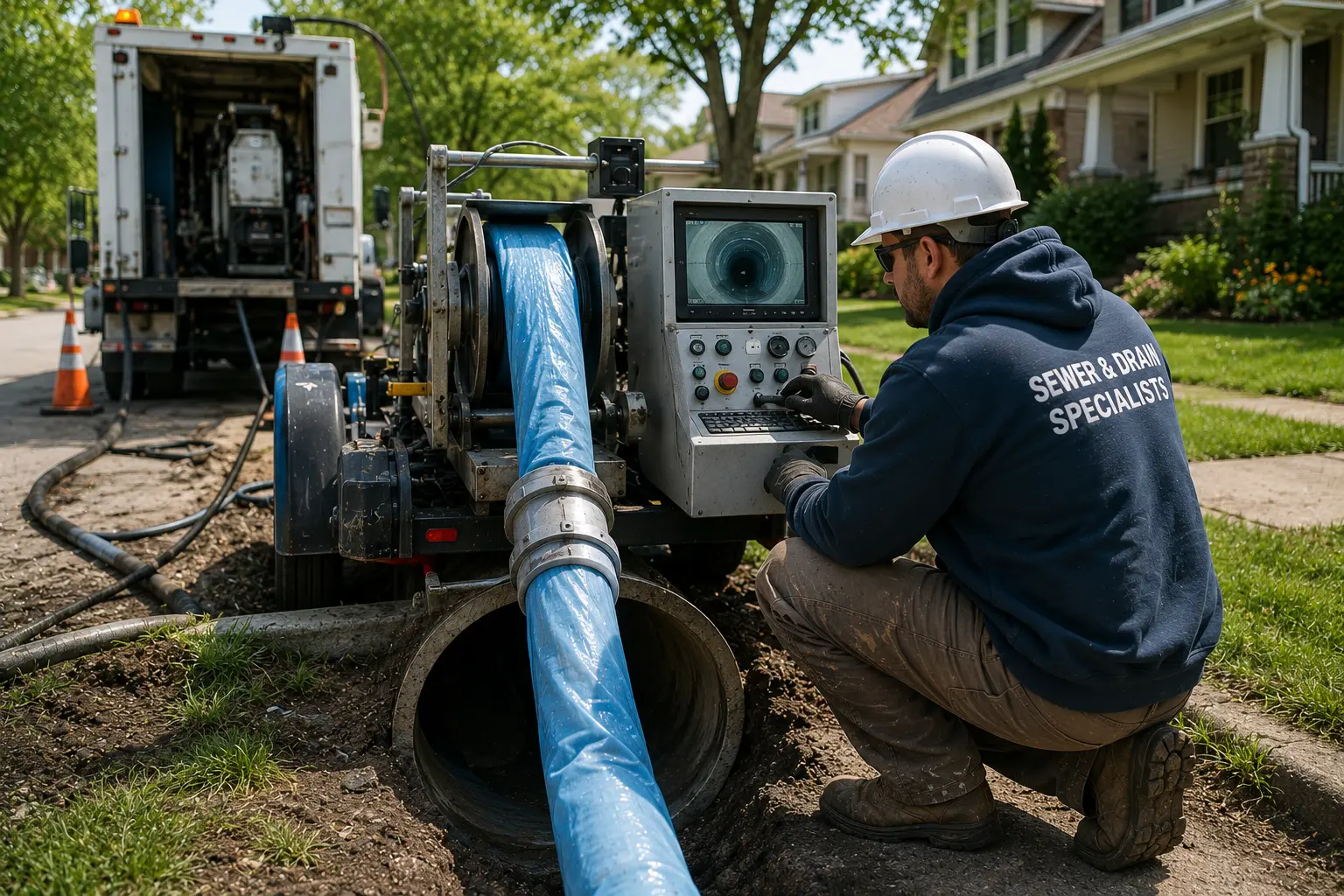
Trenchless sewer repair is a method of repairing or replacing underground sewer lines with minimal excavation. Instead of digging a long trench across a yard, driveway, sidewalk, or landscaping, trenchless methods typically require only one or two access points while most of the work occurs inside the existing pipe.
For many Chicago homeowners, trenchless technology offers an appealing alternative to traditional excavation because it can reduce property disruption while still addressing serious sewer line problems. However, trenchless repair is not appropriate for every sewer issue, and understanding its advantages, limitations, and costs is important before deciding whether it is the right solution.
This guide explains how trenchless sewer repair works, when it is commonly used, and what Chicago homeowners should consider before choosing a repair method. For a broader overview of available approaches, visit the Sewer Repair Methods hub.
Key Takeaways
- Trenchless sewer repair minimizes excavation compared to traditional digging.
- The two most common trenchless methods are pipe lining and pipe bursting.
- Many driveways, sidewalks, landscaping features, and patios can remain largely intact during trenchless projects.
- Not every sewer line qualifies for trenchless repair.
- A sewer camera inspection is typically required before determining eligibility.
- Trenchless methods may reduce restoration costs but can still involve significant project expenses.
How Does Trenchless Sewer Repair Work?
Trenchless sewer repair uses specialized equipment to repair or replace underground sewer pipes without excavating the entire length of the line. Depending on the condition of the existing pipe, contractors may install a new pipe liner inside the original pipe or replace the pipe entirely using techniques such as pipe bursting.
The primary advantage is reduced surface disruption, making trenchless methods especially attractive when sewer lines run beneath driveways, sidewalks, landscaping, garages, or other hard-to-access areas.
What Is Trenchless Sewer Repair?
Traditional sewer repairs often involve digging a trench from the home to the municipal sewer connection. In contrast, trenchless repair focuses on accessing the pipe through limited entry points while completing most of the work underground.
Rather than exposing the entire sewer line, trenchless equipment works from strategically placed access areas to repair or replace damaged piping.
Although the term “trenchless sewer repair” is often used broadly, it actually describes several different technologies designed to solve different sewer problems.
The Two Most Common Trenchless Methods
Pipe Lining
Pipe lining, sometimes called cured-in-place pipe (CIPP) lining, creates a new pipe within the existing sewer line.
A flexible liner coated with specialized materials is inserted into the damaged pipe. Once positioned, the liner is cured and hardened, forming a durable interior pipe.
Pipe lining is often used when the existing pipe remains structurally stable but has cracks, minor joint separation, root intrusion, or leaks.
Homeowners interested in this method can learn more in Pipe Lining for Sewer Repair: How It Works.
Pipe Bursting
Pipe bursting is a trenchless replacement method rather than a repair method.
Specialized equipment breaks apart the old pipe while simultaneously pulling a new pipe into place behind it. This allows the entire sewer line to be replaced without excavating along the entire route.
Pipe bursting is often considered when a sewer line has reached the end of its useful life or has sustained extensive structural damage.
For additional details, see Pipe Bursting for Sewer Replacement Explained.
Advantages of Trenchless Sewer Repair
Trenchless technology has become increasingly popular because it can significantly reduce disruption to a property.
Potential benefits include:
- Less digging across yards and landscaping
- Reduced impact on driveways and sidewalks
- Shorter restoration projects after completion
- Less disruption to mature trees and gardens
- Faster project completion in some situations
- Reduced need for major excavation equipment
- Long-lasting repair and replacement options
For properties with expensive landscaping or extensive hardscaping, avoiding large-scale excavation can be a significant advantage.
Limitations of Trenchless Sewer Repair
Despite its advantages, trenchless repair is not a universal solution.
Certain sewer line conditions may prevent trenchless methods from being practical or effective.
- Completely collapsed pipes
- Severely offset pipe sections
- Significant pipe bellies or sagging
- Poor alignment between pipe segments
- Insufficient access points
- Extensive structural deterioration
In some situations, traditional excavation may still be necessary to properly address the problem.
Homeowners comparing methods may also benefit from reviewing Traditional Sewer Line Excavation: What Homeowners Should Expect.
How Contractors Determine Whether Trenchless Repair Is Possible
A sewer camera inspection is typically the first step in evaluating any trenchless project.
The inspection helps identify:
- Pipe material
- Pipe diameter
- Cracks and fractures
- Root intrusion locations
- Pipe collapse
- Joint separation
- Overall structural integrity
- Accessibility for equipment
The goal is to determine whether the existing pipe can support a liner or whether a replacement method such as pipe bursting is more appropriate.
Trenchless Repair vs Traditional Excavation
| Factor | Trenchless Repair | Traditional Excavation |
|---|---|---|
| Property Disruption | Typically lower | Often higher |
| Landscape Impact | Usually reduced | Often significant |
| Driveway Removal | Sometimes avoidable | May be required |
| Restoration Costs | Often lower | Can be substantial |
| Pipe Access | Limited excavation | Full trench access |
| Suitability for Severe Damage | Varies by condition | Generally effective |
The best approach depends on the condition of the sewer line rather than simply choosing the least disruptive option.
Cost Factors That Affect Trenchless Sewer Repair
There is no universal cost for trenchless sewer repair because every sewer system presents unique challenges.
Major cost factors include:
- Total length of the sewer line
- Pipe diameter
- Pipe depth
- Repair versus replacement scope
- Amount of root intrusion
- Accessibility of the property
- Permit requirements
- Existing pipe material
- Need for cleaning before repair
While trenchless methods can reduce restoration expenses, the specialized equipment and materials involved may offset some of those savings.
Chicago-Specific Considerations
Older Sewer Infrastructure
Many Chicago homes were built decades ago and may still contain clay or cast iron sewer lines. These materials can often benefit from trenchless rehabilitation if the pipe structure remains sufficiently intact.
Homeowners dealing with aging pipes may also want to review Cast Iron Sewer Pipe Repair Options and Clay Sewer Pipe Replacement: What to Expect.
Dense Urban Development
Chicago properties often have limited space between homes, garages, sidewalks, alleys, and neighboring structures. Trenchless methods can be particularly attractive when excavation access is restricted.
Driveways and Sidewalks
Many sewer lines pass beneath concrete surfaces. Trenchless technology may reduce the need to remove and replace portions of these structures.
Related challenges are discussed in Sewer Repair Under a Driveway: Methods and Challenges and Sewer Repair Under a Sidewalk: What Homeowners Need to Know.
Winter Weather Conditions
Chicago’s freeze-thaw cycles can contribute to soil movement and pipe deterioration over time. These environmental factors may influence both the condition of the sewer line and the selection of repair methods.
When Repair Makes More Sense Than Replacement
Not every damaged sewer line requires complete replacement.
Repair may be sufficient when:
- The damage is localized
- The majority of the pipe remains structurally sound
- The issue involves isolated cracks or leaks
- Root intrusion is limited
- The sewer line has substantial remaining life expectancy
Homeowners weighing these options can learn more in Sewer Line Repair vs Replacement: Which Option Makes Sense?.
Common Mistakes Homeowners Make
- Assuming trenchless methods work for every sewer problem
- Skipping a camera inspection before evaluating options
- Focusing only on excavation avoidance instead of pipe condition
- Ignoring recurring backups after previous repairs
- Comparing project costs without considering restoration expenses
- Delaying repairs until a partial collapse occurs
- Assuming trenchless repair always costs less than excavation
A successful sewer project depends on matching the repair method to the actual condition of the sewer system rather than choosing a technology based solely on convenience.
Frequently Asked Questions
How long does trenchless sewer repair typically last?
The lifespan depends on the repair method, materials used, installation quality, and existing pipe conditions. Many modern trenchless systems are designed to provide long-term service when properly installed.
Can trenchless repair be used on clay sewer pipes?
Often yes. Many clay sewer lines can be repaired or rehabilitated using trenchless methods if the pipe has not experienced severe structural collapse.
Does trenchless sewer repair eliminate tree root problems?
Depending on the repair method, trenchless solutions may significantly reduce future root intrusion by sealing cracks and joints that previously allowed roots to enter the pipe.
Will my driveway need to be removed?
One of the primary benefits of trenchless repair is the potential to avoid extensive removal of driveways, sidewalks, and landscaping. However, some excavation is usually still required at access points.
Is trenchless repair covered by homeowners insurance?
Insurance coverage varies widely. Some policies exclude damage resulting from wear, deterioration, or root intrusion. Homeowners should review their policy language carefully.
How do contractors determine whether my sewer line qualifies for trenchless repair?
A camera inspection is typically used to evaluate the pipe’s condition, identify structural defects, and determine whether trenchless methods are feasible.
Can trenchless methods replace an entire sewer line?
Yes. Pipe bursting is one example of a trenchless replacement technique that installs a completely new sewer pipe while minimizing excavation.
Conclusion
Trenchless sewer repair has transformed how many sewer problems are addressed by allowing repairs and replacements with far less excavation than traditional methods. For Chicago homeowners dealing with aging sewer infrastructure, driveways, sidewalks, landscaping, and limited access areas, trenchless technology can offer significant advantages.
However, trenchless repair is not automatically the best solution for every sewer issue. The condition of the existing pipe, the nature of the damage, and the long-term goals for the property should all be considered before selecting a repair method. A thorough inspection remains the most important step in determining whether trenchless technology is appropriate.