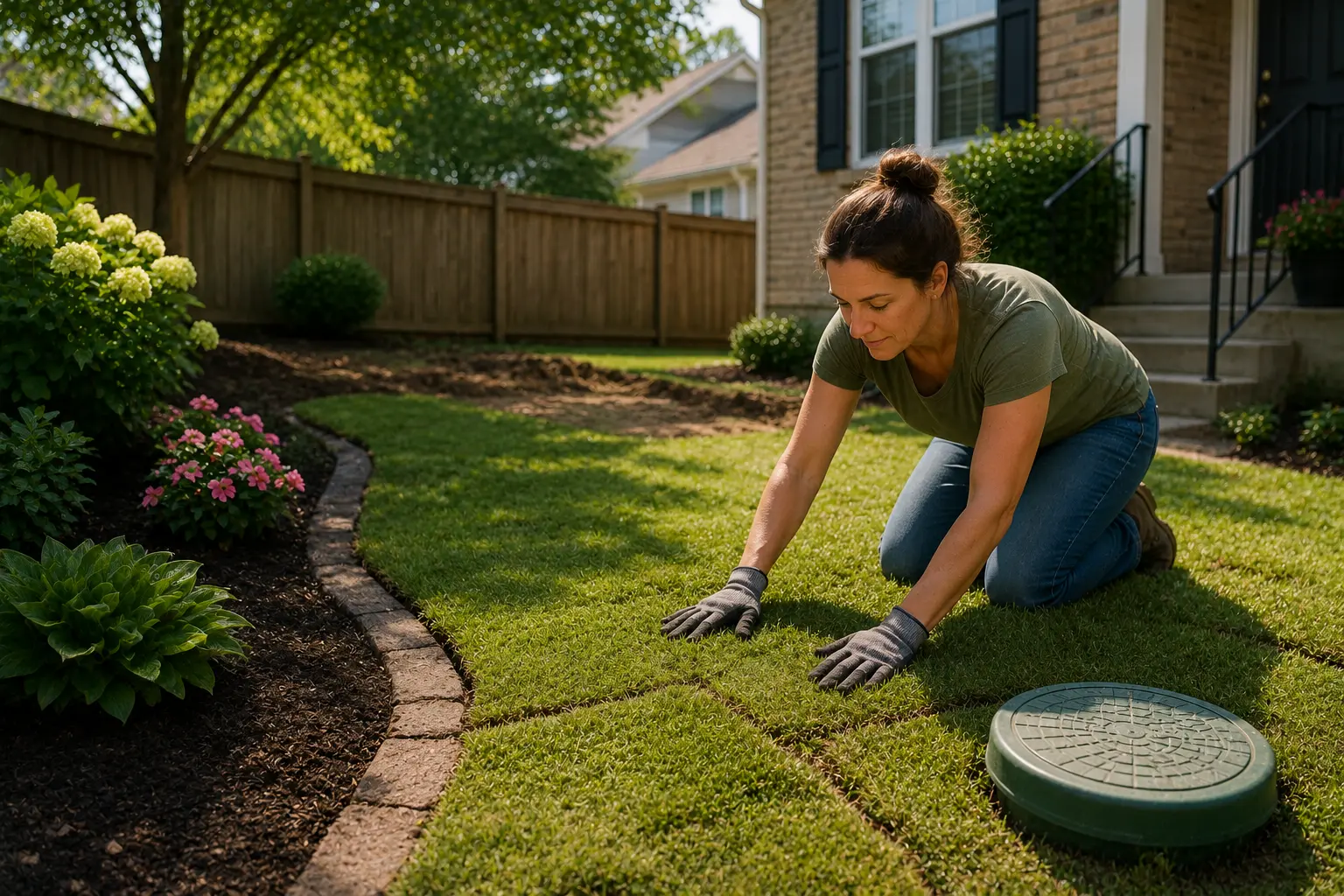
Landscaping after sewer line replacement often takes longer than homeowners expect. The sewer repair may be finished underground, but the yard above it may be left with disturbed soil, damaged plants, uneven grading, missing grass, compacted areas, or temporary restoration. In many cases, the landscaping recovery becomes the most visible reminder of the project.
For Chicago homeowners, landscaping restoration can be affected by excavation depth, clay-heavy soil, mature trees, tight city lots, parkway rules, freeze-thaw cycles, and the time of year the sewer work was completed. Some yards recover with basic grading and seeding, while others require a more planned approach involving soil replacement, drainage correction, new plantings, and hardscape repair.
This guide explains what to expect when rebuilding landscaping after sewer line replacement, what to avoid planting near a new sewer route, how to think about timing and costs, and what warning signs may indicate a larger restoration issue. For broader post-project guidance, visit the Post-Repair Concerns resource hub.
Key Takeaways
- Landscaping recovery after sewer replacement can take weeks, months, or a full growing season depending on the damage.
- Soil settlement is common after excavation and should be considered before permanent landscaping is installed.
- Grass, shrubs, trees, mulch beds, edging, lighting, and irrigation may all be affected by sewer work.
- Deep-rooted trees and aggressive plantings should be kept away from the sewer route when possible.
- Chicago weather can delay seeding, sod, concrete, hardscape, and planting work.
- Homeowners should document restoration work, warranty terms, photos, and final inspection records.
How Soon Can You Landscape After Sewer Line Replacement?
Basic grading, topsoil, grass seed, sod, mulch, and erosion control can often begin soon after sewer replacement, but permanent landscaping should account for soil settlement. Large shrubs, trees, patios, retaining walls, and expensive planting beds may be better delayed until the ground has stabilized. The best timing depends on the season, soil conditions, restoration plan, and whether the affected area is still settling.
Why Landscaping Is Affected by Sewer Replacement
Sewer replacement often requires digging a trench through the yard, parkway, driveway area, or side yard to reach the damaged pipe. Even when the pipe repair is successful, excavation can disrupt the soil layers and damage nearby landscaping.
Landscaping damage may involve:
- Removed grass or sod
- Disturbed topsoil
- Compacted soil from equipment
- Damaged shrubs or planting beds
- Tree root disturbance
- Displaced mulch or decorative stone
- Broken edging or landscape borders
- Damaged irrigation lines or lighting wires
- Uneven grading after backfill
Homeowners who want a broader overview of the recovery period may also find What to Expect After Sewer Line Replacement helpful.
The Typical Landscaping Recovery Process
Landscaping restoration usually happens in stages. Trying to make everything perfect immediately can lead to wasted money if the soil continues to settle.
1. Initial Cleanup
The first step is removing debris, old pipe material, excess soil, construction waste, and temporary barriers. The property should be safe and accessible before detailed landscaping begins.
2. Backfill and Rough Grading
The trench is filled and shaped to restore the basic contour of the yard. This is not always the final grade because some settling may occur later.
3. Topsoil and Soil Correction
Excavation can mix subsoil with topsoil. Adding quality topsoil may be needed before planting grass, shrubs, or garden beds.
4. Grass or Sod Restoration
Lawn areas may be restored with seed, sod, or hydroseeding depending on season, budget, and appearance goals.
5. Planting Bed Repair
Mulch, edging, shrubs, perennials, and decorative materials can be replaced once the soil is stable enough to support them.
6. Long-Term Monitoring
After rain, snowmelt, and seasonal freeze-thaw cycles, homeowners should check for settlement, pooling water, or erosion.
For a closer look at lawn and soil recovery, review Yard Repair After Sewer Excavation.
What Should Be Repaired Before Landscaping?
Before spending money on permanent landscaping, homeowners should make sure the underlying restoration work is stable. Landscaping over poor grading or unsettled backfill can lead to repeated repairs.
| Area to Check | What to Look For | Why It Matters |
|---|---|---|
| Trench route | Low spots, soft soil, sinking, or uneven grade | Settlement can damage new landscaping |
| Drainage | Standing water or runoff toward the foundation | Poor drainage can harm plants and create property issues |
| Topsoil | Thin soil, clay-heavy fill, rocks, or construction debris | Plants and grass may struggle without good soil |
| Hard edges | Driveway, sidewalk, patio, or edging damage | Hardscape repairs may disturb landscaping again |
| Cleanout access | Buried or blocked cleanout cap | Future sewer maintenance requires access |
| Tree roots | Exposed, cut, or damaged roots | Root damage can affect tree health and sewer planning |
Grass Seed, Sod, or Hydroseeding?
Lawn restoration is often the first landscaping decision after sewer replacement. The best option depends on timing, budget, appearance, and how quickly the homeowner wants the yard usable again.
Grass Seed
Grass seed is often less expensive and can blend well with the existing lawn. It requires consistent watering and enough time to establish before extreme heat, heavy rain, or freezing weather.
Sod
Sod provides immediate coverage and can reduce erosion, but it costs more and still needs careful watering. If the soil underneath settles, sod may become uneven.
Hydroseeding
Hydroseeding can help cover larger disturbed areas and may provide better erosion control than basic seed in some situations.
Practical tip: If the sewer trench is still settling, consider basic stabilization first. Permanent lawn finishing may be more successful after the ground has had time to compact naturally.
Replanting Shrubs and Perennials
Shrubs and perennials can restore curb appeal after sewer work, but planting directly over or near the sewer route should be planned carefully. Some plants have shallow, manageable root systems, while others can become a problem over time.
Good post-replacement planting decisions usually consider:
- Root depth and spread
- Distance from the sewer line
- Access to cleanouts
- Future maintenance needs
- Soil stability
- Sun and moisture conditions
- Whether the area may need future sewer access
Small perennials, grass, and shallow-rooted plantings are generally less risky than large shrubs or trees placed directly over the sewer line.
Be Careful With Trees Near Sewer Lines
Trees are one of the biggest landscaping considerations after sewer replacement. A new sewer line may be more resistant to root intrusion than an old cracked clay pipe, but roots still seek moisture and can cause problems near weak points, older connected sections, or damaged fittings.
Homeowners should be cautious with:
- Large shade trees near the sewer route
- Fast-growing trees with aggressive roots
- Planting directly over the replaced line
- Planting near cleanouts or pipe transition points
- Replacing a removed tree without considering root spread
If mature trees were disturbed during excavation, homeowners may need to monitor them for stress, dieback, leaning, or reduced leaf growth over the following seasons.
Protecting Cleanout Access
A common landscaping mistake is covering the sewer cleanout with soil, mulch, shrubs, sod, stone, or decorative features. The cleanout should remain visible and accessible for future inspections, cleaning, or emergency service.
When landscaping around a cleanout:
- Keep the cap accessible
- Avoid burying it under mulch or soil
- Do not plant large shrubs directly over it
- Do not place heavy planters or hardscape over it
- Photograph and document its location
Cleanout location details should also be saved with project records. For documentation guidance, see What Documents Should You Keep After Sewer Replacement?.
Chicago-Specific Landscaping Considerations
Clay Soil and Slow Drainage
Many Chicago-area properties have clay-heavy soils that drain slowly and compact easily. After excavation, these soils may hold water, become muddy, or make it difficult for grass and plants to establish.
Freeze-Thaw Cycles
Newly backfilled soil may shift during Chicago winters. Freeze-thaw movement can create low spots, surface cracks, and uneven lawn areas during the first year after sewer replacement.
Parkway Restrictions and Public Areas
If sewer work affected the parkway, sidewalk edge, or area near the curb, landscaping choices may be limited by local rules or restoration expectations. Homeowners should be cautious before installing permanent features in public-facing areas.
Small Lots and Tight Access
Chicago homes often have narrow side yards, gangways, alleys, and compact front yards. These layouts can limit equipment access and make landscaping restoration more delicate.
Mature Trees in Older Neighborhoods
Established neighborhoods often have large trees with broad root systems. Landscaping after sewer work should consider both the health of existing trees and the risk of future root pressure near the sewer line.
Cost Factors in Landscaping After Sewer Replacement
Landscaping costs vary widely because some homes only need grass repair, while others need full planting bed reconstruction, soil correction, hardscape repair, and drainage improvements.
Important cost factors include:
- Size of the excavated area
- Amount of topsoil needed
- Grass seed versus sod
- Plant replacement
- Mulch, stone, edging, or border repair
- Tree or shrub removal
- Drainage correction
- Irrigation or lighting repair
- Driveway, sidewalk, or patio restoration
- Whether work is done immediately or in stages
If hard surfaces were affected, landscaping may need to wait until driveway or sidewalk repairs are complete. Related guidance is available in Driveway Repair After Sewer Replacement and Sidewalk Repair After Sewer Work.
Should You Upgrade the Landscaping After Sewer Work?
Sewer replacement can create an opportunity to improve the yard rather than simply replacing what was removed. Since the ground is already disturbed, some homeowners choose to address drainage, simplify plantings, or rebuild aging landscape beds.
Potential upgrades include:
- Improving grading away from the foundation
- Replacing high-maintenance plantings
- Adding erosion control
- Installing shallow-rooted plants near the sewer route
- Rebuilding mulch beds
- Correcting low spots in the lawn
- Improving walkway or driveway edges
The tradeoff is cost. Upgrades can improve long-term usability and appearance, but they should be planned around soil settlement and future sewer access.
Landscaping and Warranty Considerations
Homeowners should review the sewer replacement warranty before making major landscaping changes. Some warranties may exclude damage caused by future digging, tree roots, heavy equipment, or changes made near the sewer line.
Before installing expensive landscaping, check:
- Whether the sewer warranty mentions root damage
- Whether future excavation by others could affect coverage
- Whether restoration work has a separate warranty
- Whether the contractor documented the sewer route
- Whether the cleanout must remain accessible
For more detail, review Sewer Line Replacement Warranties Explained.
Warning Signs After Landscaping
After landscaping is restored, homeowners should keep an eye on the area for signs of settlement, drainage trouble, or unresolved sewer concerns.
Watch for: sinking soil, water pooling over the sewer route, dying grass in a narrow line, recurring sewer odors, slow drains, or wet areas that do not dry normally.
Potential warning signs include:
- Large depressions along the trench
- Mulch or soil washing away after rain
- Standing water near the foundation
- New cracks near hardscape edges
- Sewer odor near the restored area
- Plants struggling only above the trench route
- Soft soil that does not firm up
- Drain symptoms inside the home
If odor or drain symptoms appear after landscaping, review Why Is There a Sewer Odor After Sewer Repair? and Drain Problems After Sewer Replacement: Common Causes.
Common Landscaping Mistakes After Sewer Replacement
- Planting large trees too close to the sewer route. Root pressure can create long-term risk.
- Covering the cleanout. Cleanouts should remain accessible for future maintenance.
- Installing expensive landscaping too soon. Soil settlement can damage new plantings and beds.
- Ignoring drainage. Poor grading can harm plants and create water problems near the home.
- Using poor soil over the trench. Grass and plants may struggle without quality topsoil.
- Forgetting documentation. Photos and restoration records can help with warranties, resale, and future repairs.
- Assuming all restoration is included. Landscaping may be separate from sewer replacement unless the contract says otherwise.
Frequently Asked Questions
Can I landscape immediately after sewer line replacement?
Basic grading, seed, sod, and erosion control may begin soon after the work is complete, but major planting beds, trees, patios, or expensive landscaping should account for possible soil settlement.
Will grass grow over the sewer trench?
Yes, grass can grow over a sewer trench if the area has proper topsoil, grading, seed or sod, and watering. Growth may be uneven at first if the soil is compacted or still settling.
Should I plant trees near a new sewer line?
Use caution. Large or aggressive-rooted trees should generally be kept away from the sewer route when possible. Smaller, shallow-rooted plants are usually less risky.
What if the yard sinks after landscaping?
Minor settling is common after excavation. Large depressions, pooling water, or repeated sinking may require additional fill, grading, or further evaluation.
Does the sewer replacement warranty cover landscaping?
Only if the written warranty or contract specifically includes landscaping restoration. Pipe warranties often do not cover grass, plants, mulch, trees, or decorative features.
Can landscaping cause sewer problems later?
Yes. Deep roots, heavy structures, improper grading, or digging near the sewer route can create future risks. Cleanouts should also remain accessible.
Should I keep records of landscaping restoration?
Yes. Keep invoices, photos, warranty details, and notes about restoration work. These records may help with future repairs, warranty questions, insurance issues, or resale.
Can insurance pay for landscaping after sewer replacement?
Coverage depends on the policy, endorsements, cause of damage, and claim details. Landscaping restoration may be limited or excluded even when some sewer-related damage is covered.
Conclusion
Landscaping after sewer line replacement is part restoration, part planning. The goal is not only to make the yard look better, but also to protect the new sewer line, preserve drainage, maintain cleanout access, and avoid planting decisions that create future problems.
For Chicago homeowners, soil conditions, weather, tree roots, parkway areas, and freeze-thaw cycles can all affect landscaping recovery. By allowing for settlement, choosing appropriate plants, documenting the sewer route, and watching for warning signs, homeowners can restore curb appeal while protecting the investment they made in the new sewer line.