Chicago Home Sewer Insights

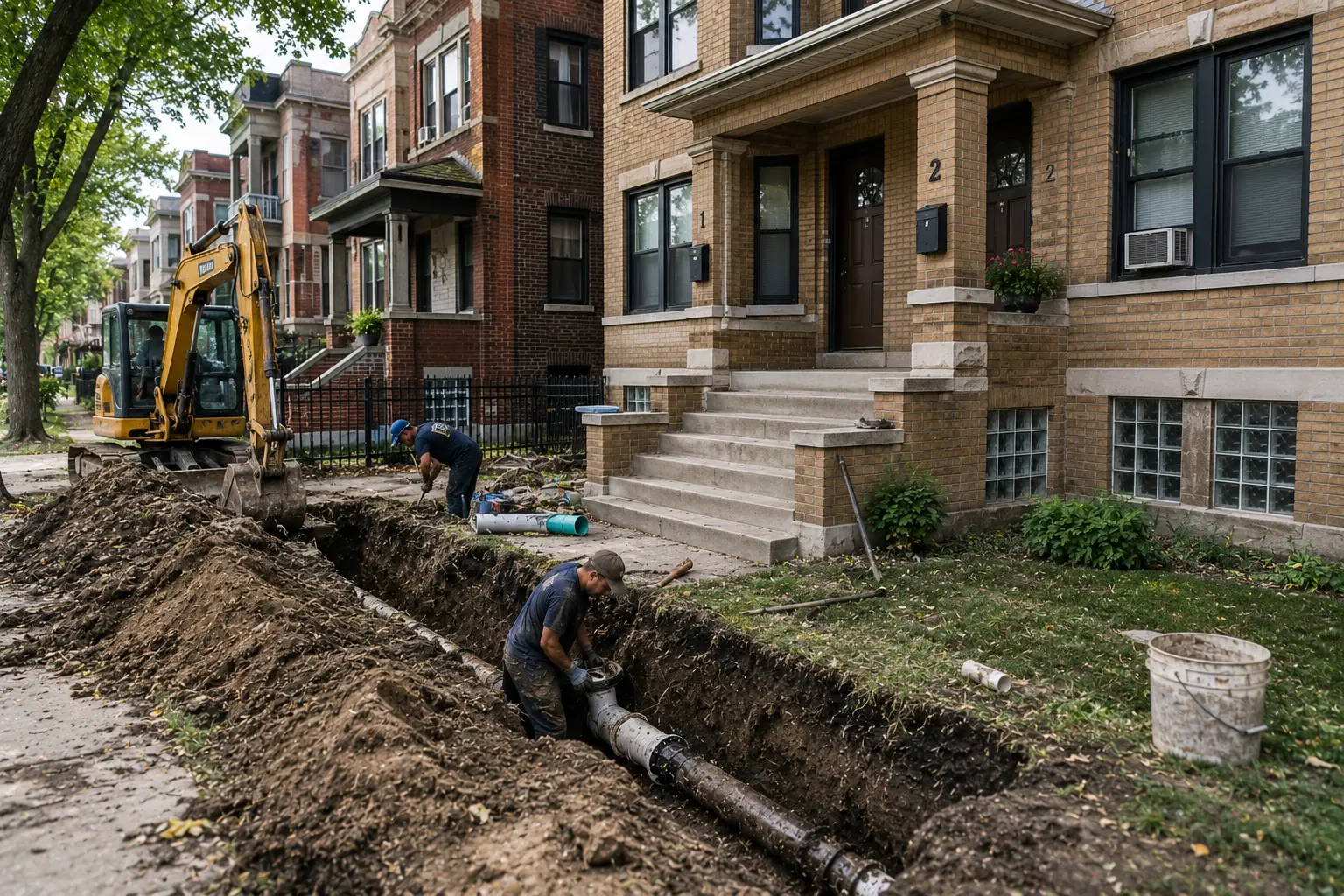
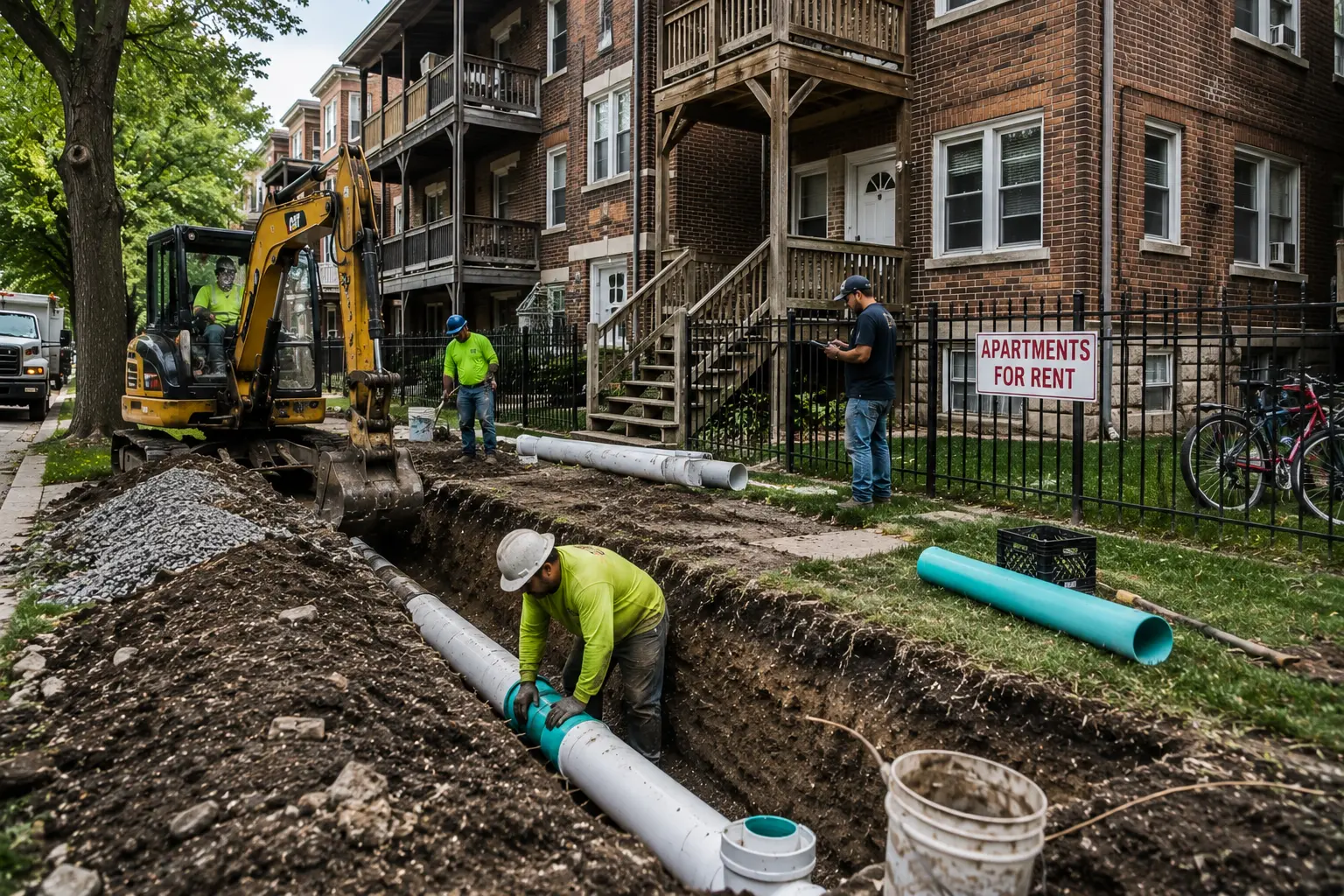
Workers replacing a sewer line outside a Chicago rental property with an excavated trench, new sewer pipe installation, and a multi-unit residential building in the background.

Sewer Replacement for Rental Properties

Sewer replacement for rental properties in Chicago is not just a plumbing decision. For landlords and small property owners, a failing sewer line can affect tenants, rent collection, habitability, insurance documentation, repair scheduling, and long-term property value. Many Chicago rental properties are older buildings, including two-flats, three-flats, greystones, converted single-family homes, small apartment buildings, and […]
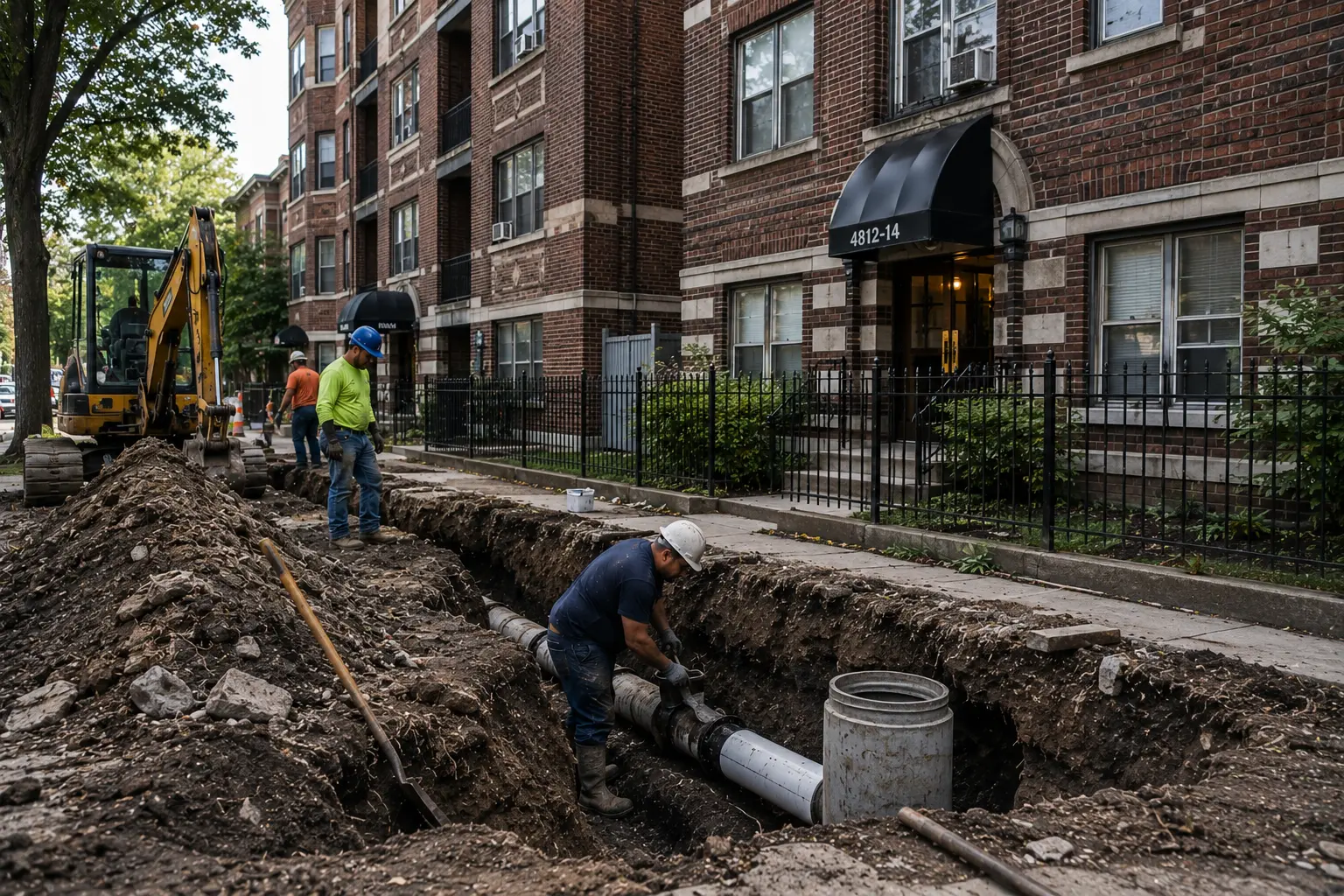
Workers repairing a large sewer line in front of a multi-story Chicago apartment building with an excavated trench and underground utility work underway.

Sewer Repair for Multi-Family Buildings

Multi-family buildings are a major part of Chicago’s housing stock, from three-flats and courtyard buildings to small apartment properties and converted older homes. These buildings often depend on shared sewer lines that serve multiple units, bathrooms, kitchens, laundry areas, basement drains, and common spaces. When a sewer problem develops, the impact can spread quickly across

Workers repairing a sewer line in front of a Chicago two-flat building with separate residential entrances and an excavated trench running through the front yard and parkway.

Sewer Repair for Two-Flats in Chicago

Two-flats are a major part of Chicago’s residential landscape. Many were built decades ago to house extended families, rental tenants, or owner-occupants living in one unit while renting the other. These buildings are practical, durable, and familiar across many Chicago neighborhoods, but their sewer systems can be more complicated than a typical single-family home. Sewer

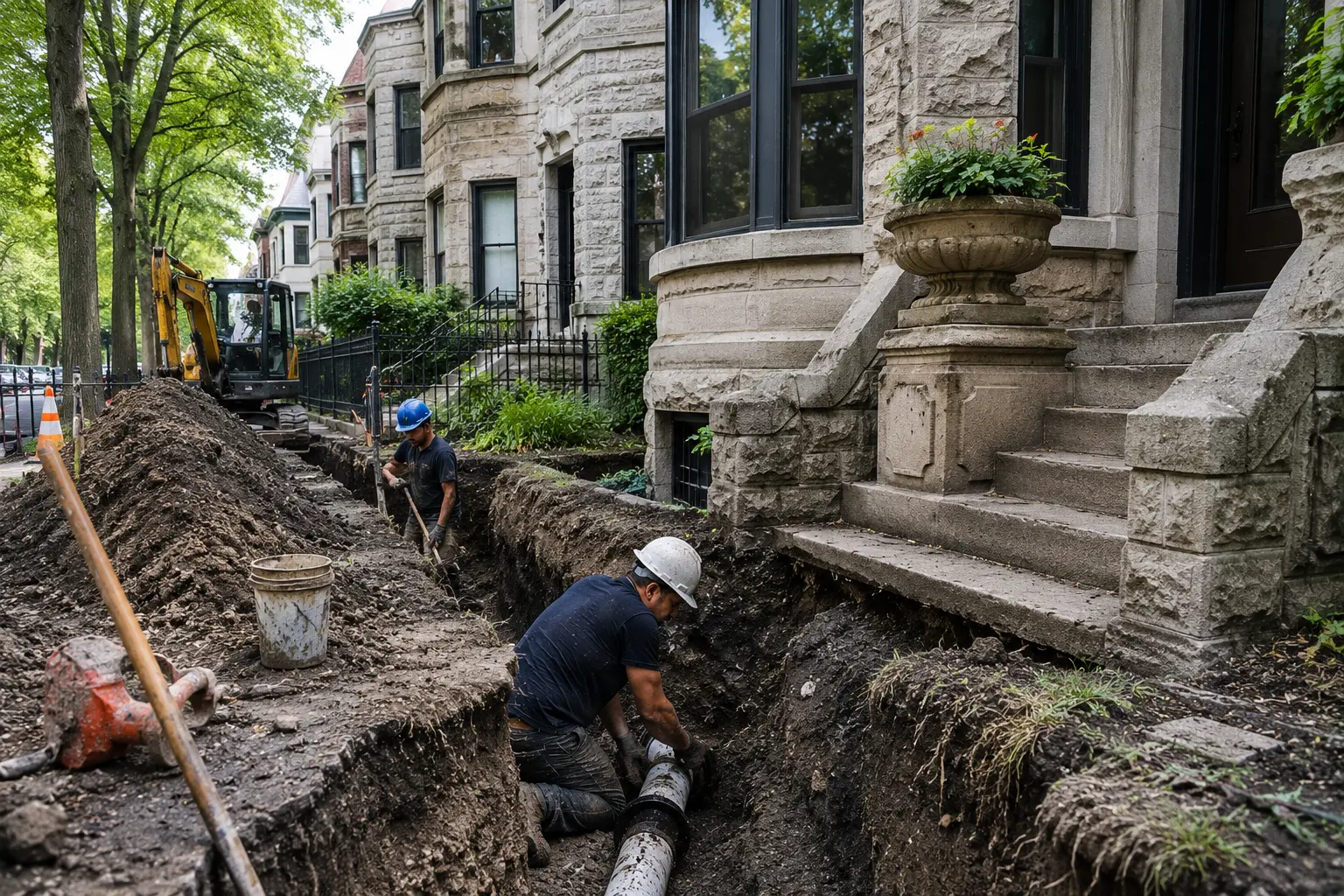
Workers repairing a sewer line in a narrow trench beside a historic Chicago greystone home with limestone architecture and mature tree-lined streets.

Sewer Repair for Chicago Greystone Homes

Chicago greystone homes are some of the city’s most recognizable older properties. Built with limestone façades, raised entries, basements, and durable masonry construction, many greystones have stood for more than a century. But while the visible structure may still look solid, the underground sewer line may be aging, damaged, or partially original. Sewer repair for

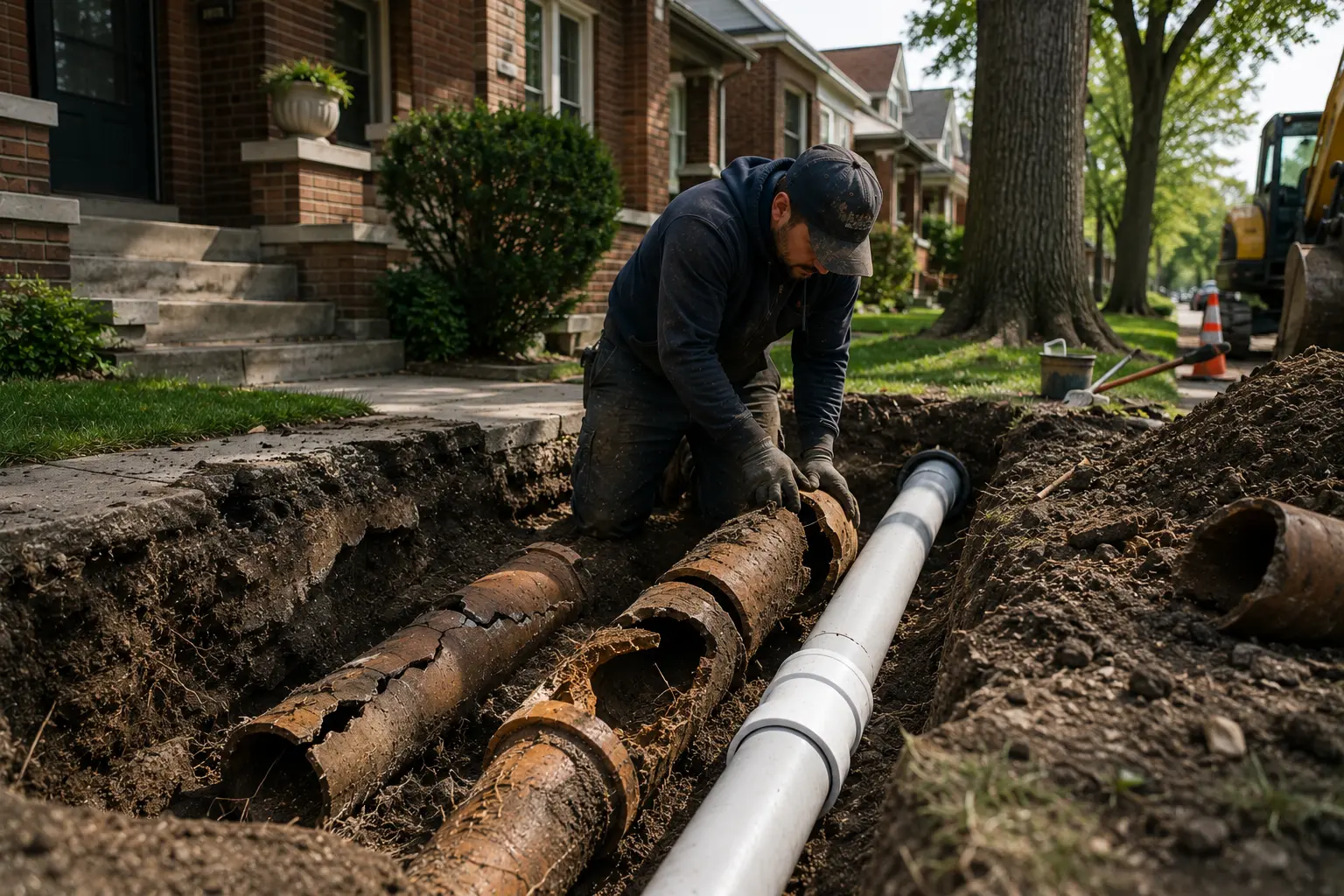
Damaged clay sewer pipe sections being removed from an excavated trench while new PVC sewer pipe is installed outside an older Chicago brick home.

Clay Sewer Pipes in Chicago Homes: Risks and Replacement Options

Clay sewer pipes are common in many older Chicago homes, especially properties built before modern plastic sewer materials became standard. These pipes were widely used because they were durable, available, and appropriate for the construction practices of their time. Decades later, many clay sewer lines are still in service, but age, tree roots, shifting soil,

Technician performing a sewer camera inspection outside an older Chicago brick home with mature tree roots, uneven sidewalk sections, and visible signs of aging infrastructure.

Common Sewer Problems in Older Chicago Homes

Older Chicago homes often offer character, craftsmanship, and architectural features that are difficult to find in newer construction. From classic bungalows and greystones to two-flats and vintage multi-family buildings, these properties remain a major part of Chicago’s housing stock. However, many of these homes also share a common challenge: aging sewer infrastructure. Sewer systems installed

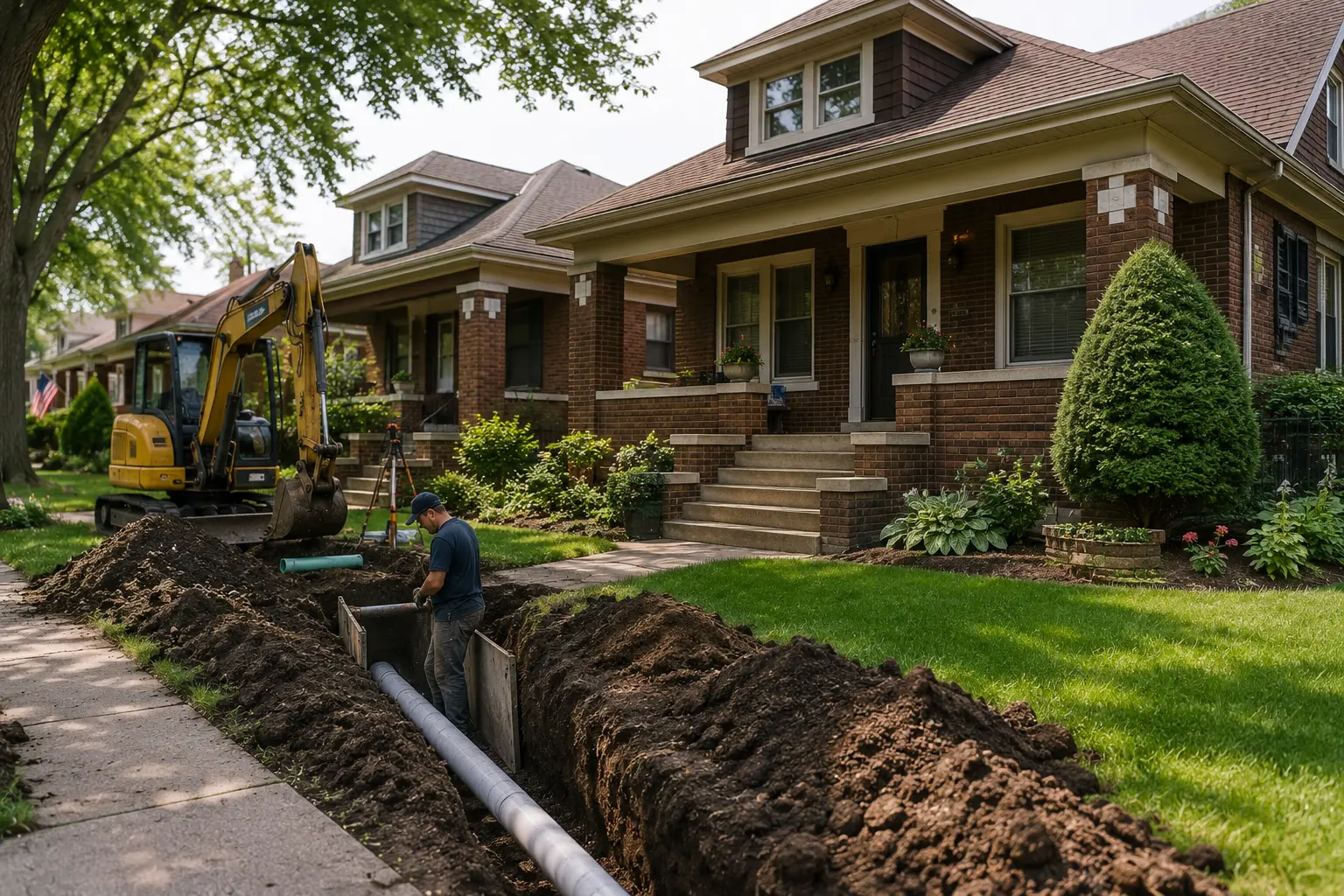
Sewer line replacement underway in front of a classic Chicago brick bungalow with an excavated trench, new sewer pipe installation, and construction equipment visible.

Sewer Replacement for Chicago Bungalows: What Homeowners Should Know

Chicago bungalows are among the city’s most recognizable residential property types. Built primarily between the 1910s and 1940s, these homes make up a significant portion of many neighborhoods on Chicago’s Northwest and Southwest Sides. While their brick construction and durable design have helped them endure for generations, many still rely on aging sewer systems that

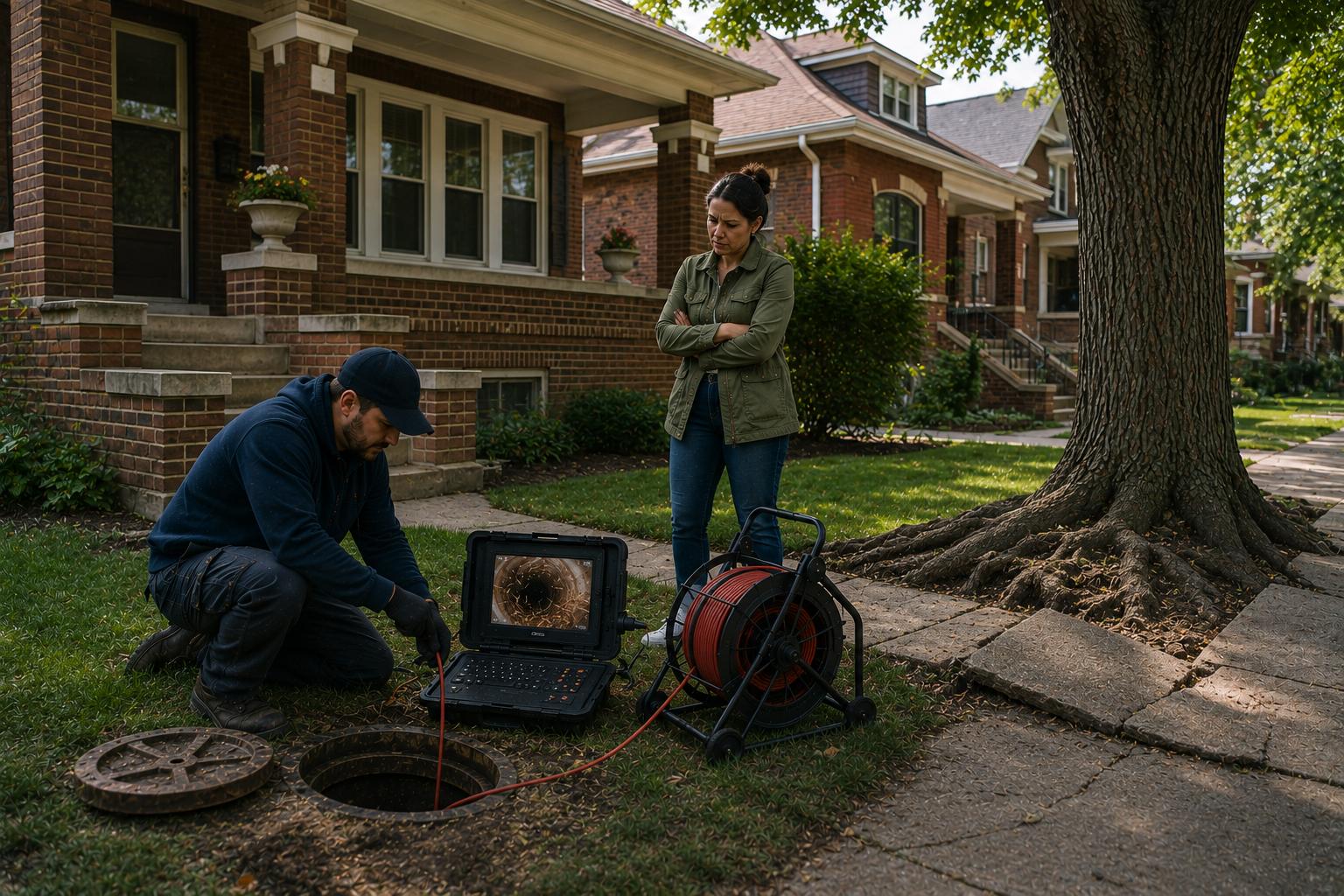
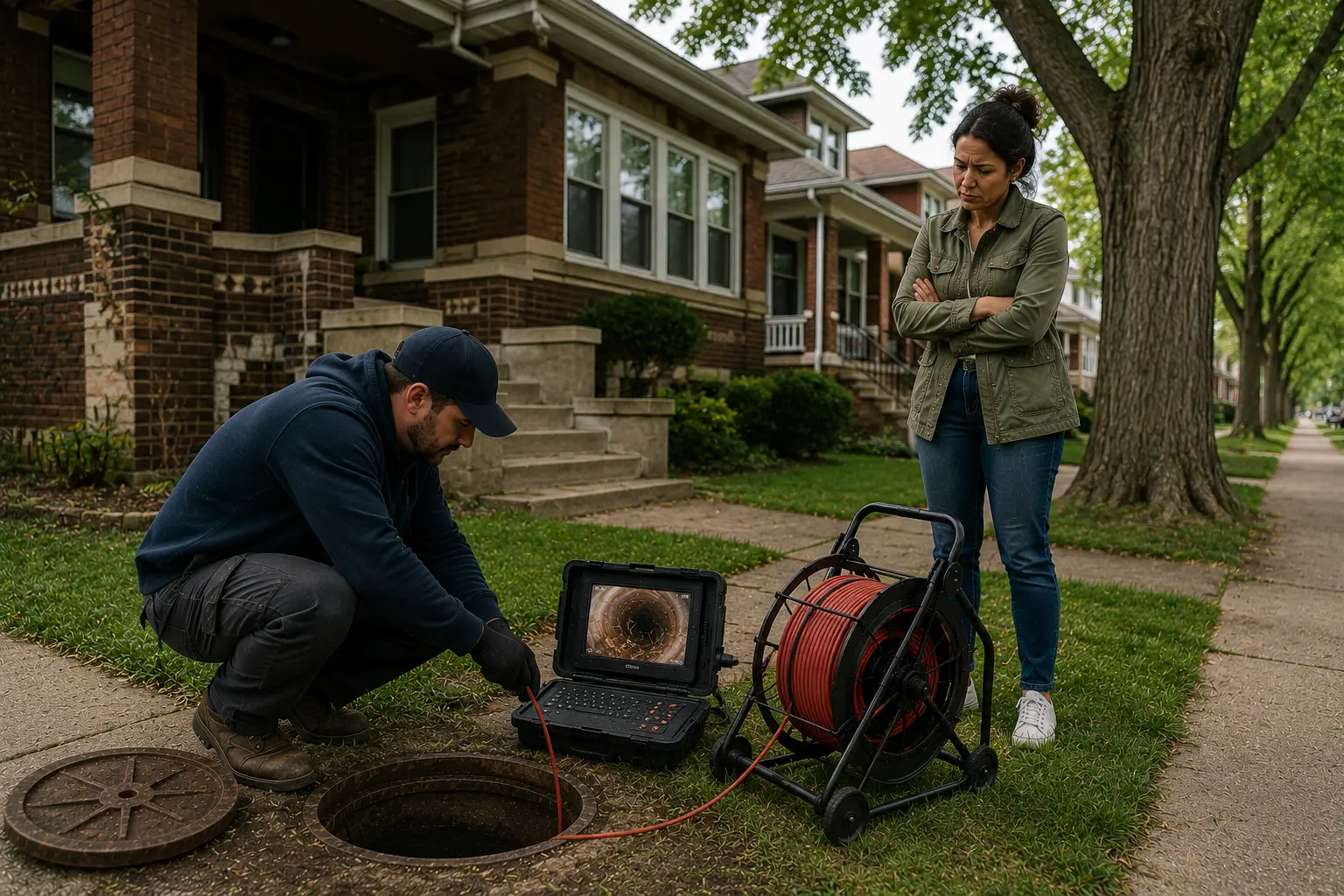
Technician performing a sewer camera inspection at an older Chicago brick home while a homeowner observes and mature trees line the residential street.

Sewer Inspections for Older Chicago Homes

Older Chicago homes often have character, solid construction, and established neighborhoods, but they can also come with sewer systems that are decades old. A home may look well maintained on the surface while the underground sewer line has aging clay pipe, cast iron deterioration, root intrusion, offsets, partial repairs, or other hidden defects. A sewer

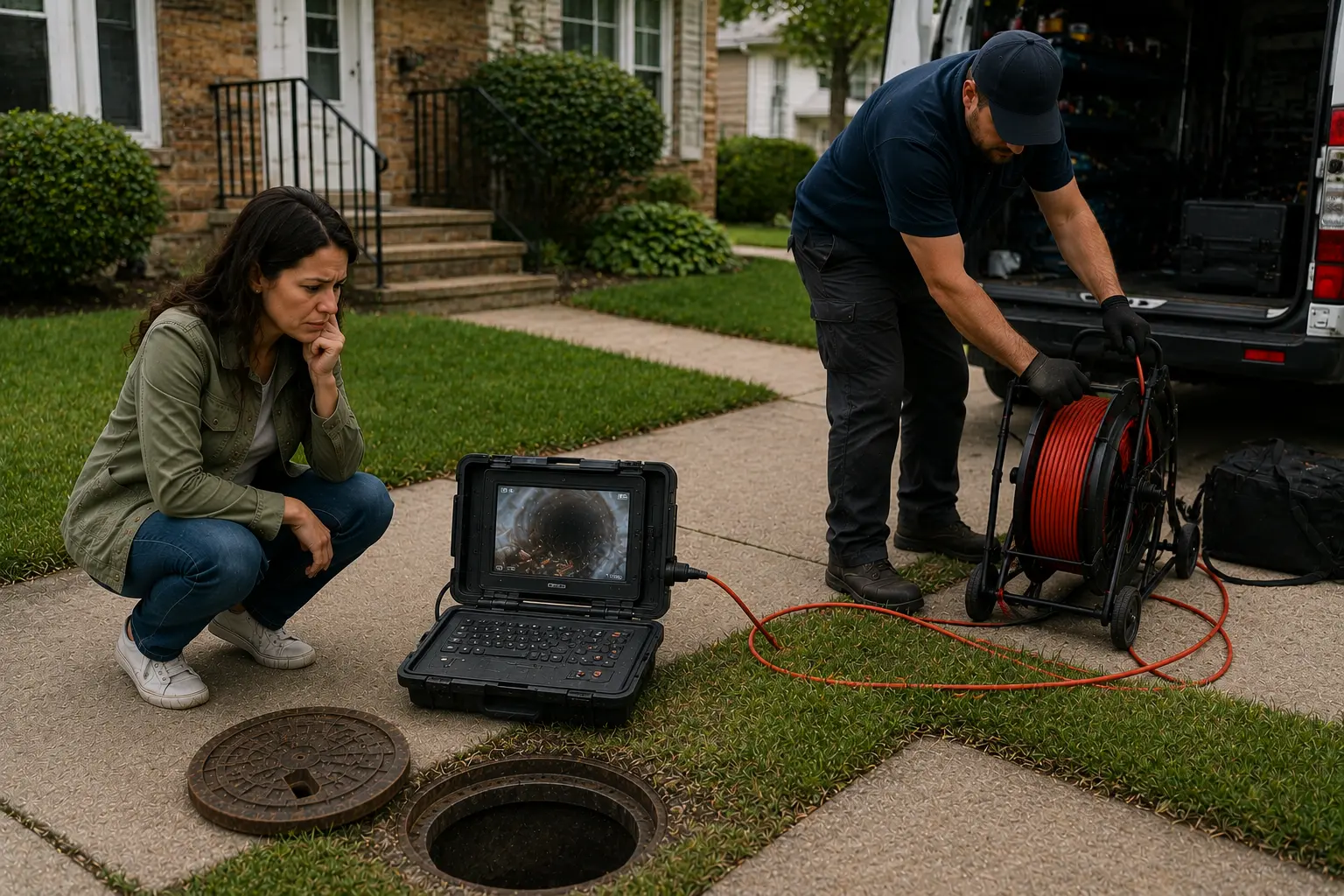
Concerned homeowner reviewing limited sewer camera footage while a technician packs up inspection equipment beside a residential cleanout.

Signs a Sewer Inspection Was Done Poorly

A sewer inspection should make an underground problem clearer, not more confusing. When the inspection is done well, homeowners should understand what part of the sewer line was inspected, what the camera showed, where defects were found, and what questions remain. When it is done poorly, the result may be vague, incomplete, rushed, or unsupported

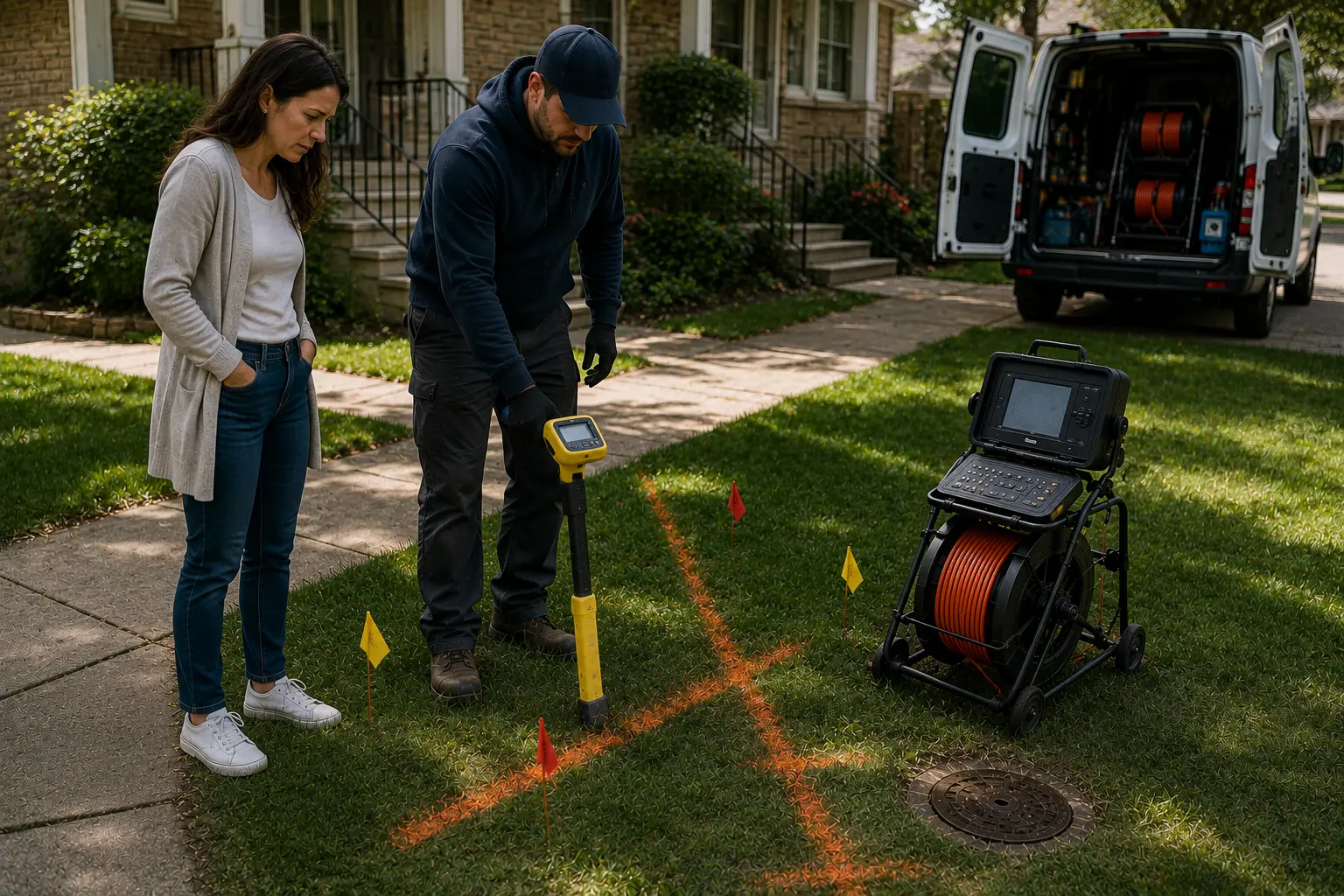
Technician using electronic sewer locating equipment to trace a buried sewer line while a homeowner observes marked utility locations in a residential yard.

Sewer Line Locating Services: What to Expect

Sewer line locating services help homeowners identify where a sewer line runs underground, where a defect may be located, and sometimes how deep the pipe is buried. This information can be critical before excavation, repair planning, home improvements, landscaping, or interpreting a sewer camera inspection. For Chicago homeowners, sewer locating can be especially useful because

Scroll to Top