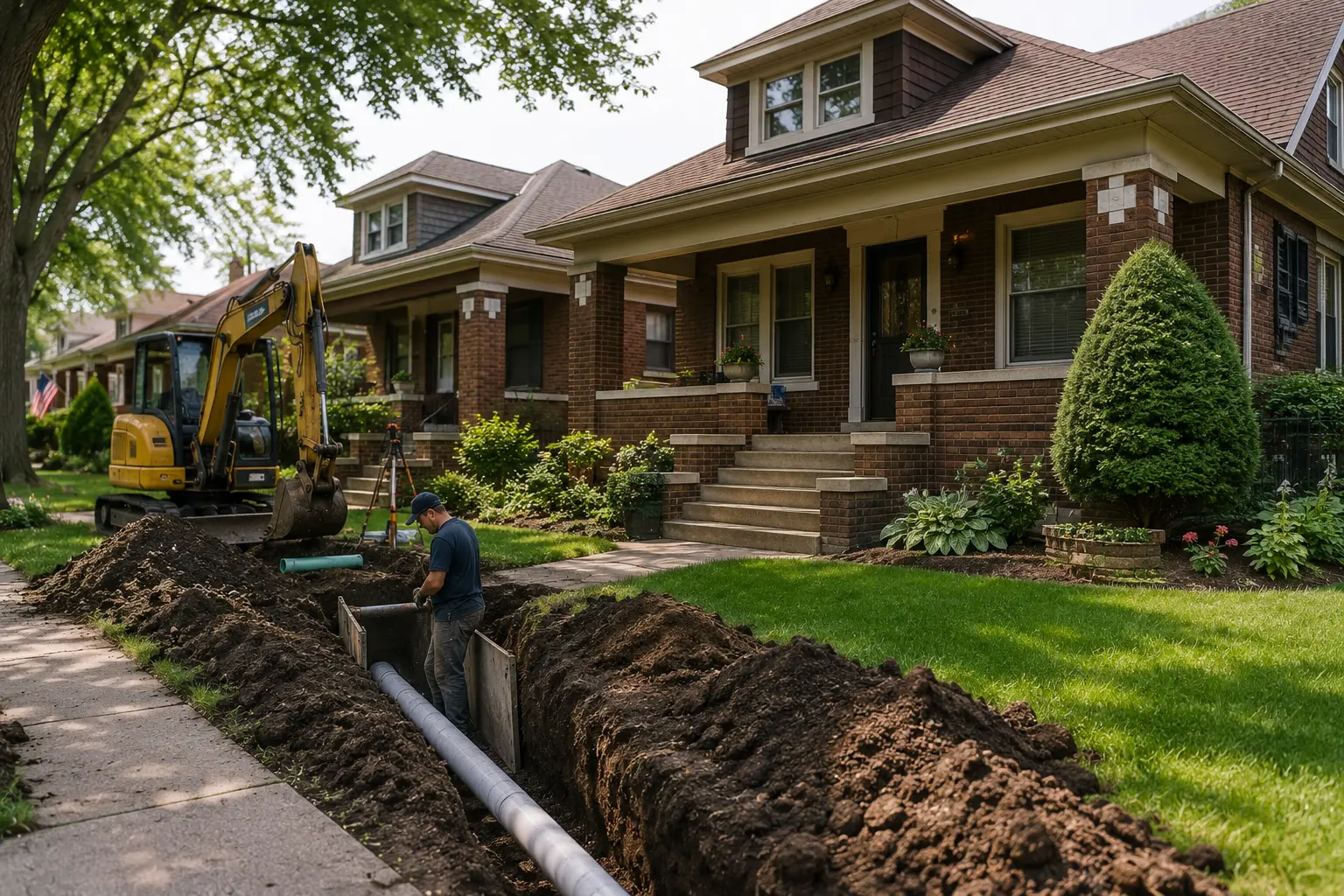
Chicago bungalows are among the city’s most recognizable residential property types. Built primarily between the 1910s and 1940s, these homes make up a significant portion of many neighborhoods on Chicago’s Northwest and Southwest Sides. While their brick construction and durable design have helped them endure for generations, many still rely on aging sewer systems that were installed decades ago.
For bungalow owners, sewer replacement decisions often involve more than simply fixing a damaged pipe. Factors such as clay sewer lines, mature trees, finished basements, alley access, city permits, and long service line lengths can all influence the scope of a project. Understanding these issues can help homeowners make informed decisions before a sewer problem becomes an emergency.
Homeowners exploring older property concerns may also benefit from the broader resources available in the Older Chicago Homes & Property Types section.
Key Takeaways
- Many Chicago bungalows still have original or aging clay sewer pipes.
- Tree root intrusion is one of the most common sewer problems affecting bungalow properties.
- Finished basements can increase the consequences of sewer backups.
- Sewer replacement methods vary depending on pipe condition, depth, and property layout.
- Early inspections can identify problems before major damage occurs.
- Chicago’s climate, soil conditions, and mature urban tree canopy can accelerate sewer line deterioration.
What Should Chicago Bungalow Owners Know About Sewer Replacement?
Chicago bungalow owners should understand that many of these homes were built with sewer systems that are now approaching or exceeding their expected service life. Aging clay pipes, root intrusion, shifting soil, cracks, and collapses are common issues. Because many bungalows also have basements that contain living space, storage, or mechanical systems, sewer failures can create expensive secondary damage.
A professional sewer inspection can help determine whether repair or full replacement is the most practical long-term solution. The best approach depends on the pipe’s condition, location, accessibility, and overall remaining lifespan.
Why Chicago Bungalows Often Experience Sewer Problems
Many Chicago bungalows share several characteristics that increase sewer line vulnerability.
Original Clay Sewer Pipes
A large percentage of older Chicago homes were built using vitrified clay pipe. While clay pipes can last many decades, they eventually become susceptible to cracking, joint separation, root intrusion, and structural deterioration.
Homeowners can learn more about these aging systems in Clay Sewer Pipes in Chicago Homes: Risks and Replacement Options.
Mature Trees and Extensive Root Systems
Bungalow neighborhoods often feature mature trees that have been growing for generations. Tree roots naturally seek moisture and frequently enter sewer lines through small cracks or pipe joints.
Over time, roots can create blockages, cause recurring backups, and contribute to pipe failure. This issue is especially common in properties discussed in Sewer Issues in Homes Near Large Trees.
Age of Infrastructure
Even when a home’s sewer line has not completely failed, decades of use can cause internal wear. Repeated drain cleaning may temporarily restore flow, but it does not necessarily address underlying structural problems.
Signs a Chicago Bungalow May Need Sewer Replacement
Not every sewer issue requires full replacement. However, certain warning signs may indicate a more significant problem.
Common Warning Signs:
- Recurring sewer backups
- Multiple slow drains throughout the home
- Frequent root intrusion after cleaning
- Sewage odors indoors or outdoors
- Foundation-adjacent wet spots
- Sinkholes or depressions in the yard
- Visible pipe collapse during camera inspection
Many of these issues overlap with the broader concerns covered in Common Sewer Problems in Older Chicago Homes.
Repeated Backups Are a Major Warning Sign
If a sewer line has been cleaned multiple times and backups continue occurring, the problem may be structural rather than simply a blockage.
This becomes especially important for homes with finished lower levels, where water damage can be extensive. Related considerations are discussed in Sewer Backup Problems in Chicago Basements and Sewer Repair for Homes With Finished Basements.
How Sewer Inspections Help Bungalow Owners
A sewer camera inspection is often the first step in evaluating an older sewer line.
The inspection can reveal:
- Root intrusion
- Pipe cracks
- Joint separations
- Offset pipe sections
- Pipe bellies
- Collapsed segments
- Foreign object blockages
For prospective buyers, inspections can be particularly valuable before purchasing an older property. Homeowners considering a purchase should review Sewer Inspection Before Buying a Chicago Home.
Repair vs Replacement Decisions
The inspection findings often determine whether repair remains practical or whether replacement is the more reliable long-term solution.
| Condition | Potential Approach |
|---|---|
| Minor isolated crack | Targeted repair may be possible |
| Single root intrusion point | Repair or root management may be considered |
| Multiple cracks throughout pipe | Replacement often evaluated |
| Pipe collapse | Replacement typically required |
| Widespread root intrusion | Replacement often provides a longer-term solution |
| Severely deteriorated clay pipe | Replacement frequently recommended |
Sewer Replacement Methods Commonly Used in Chicago
Traditional Excavation
Traditional replacement involves excavating to access and replace the damaged sewer line. This approach may be necessary when a pipe has collapsed, has severe alignment issues, or cannot accommodate trenchless methods.
While effective, excavation may affect landscaping, sidewalks, gangways, driveways, or other site features.
Trenchless Sewer Replacement
Some properties may qualify for trenchless replacement methods. These techniques can reduce surface disruption while still replacing or rehabilitating portions of the sewer system.
However, trenchless solutions are not appropriate for every sewer problem. Pipe condition, depth, configuration, and accessibility all influence eligibility.
Chicago-Specific Considerations for Bungalow Owners
Dense Urban Lots
Chicago bungalows are often built on relatively narrow city lots. Limited access can complicate excavation and increase project planning requirements.
Alleys and Shared Infrastructure
Many neighborhoods feature rear alley access, detached garages, and utility corridors that may affect sewer replacement logistics.
Weather and Freeze-Thaw Cycles
Chicago’s seasonal temperature swings can contribute to soil movement over time. These conditions may place additional stress on aging sewer systems.
Finished Basements
Many bungalow owners have invested significantly in basement improvements. Because sewer failures can affect finished spaces, delaying needed repairs may increase potential restoration costs.
Renovation History
Some homes have undergone additions, basement remodels, or plumbing upgrades over the decades. These modifications can sometimes alter sewer load demands or create unexpected complications. Homeowners experiencing issues after remodeling may find additional information in Sewer Problems After a Home Renovation.
Factors That Influence Sewer Replacement Costs
Every property is different, which makes sewer replacement costs highly variable.
Factors that often influence overall project costs include:
- Length of sewer line
- Pipe depth
- Accessibility
- Presence of tree roots
- Excavation requirements
- Sidewalk or driveway restoration
- Permit requirements
- Soil conditions
- Replacement method used
- Extent of pipe deterioration
Important: Two Chicago bungalows located on the same block can have substantially different sewer replacement costs depending on pipe location, depth, and property conditions.
Risks of Delaying Replacement
Many homeowners postpone replacement because the sewer line is still functioning intermittently. Unfortunately, sewer systems often provide warning signs long before complete failure occurs.
Potential risks of waiting include:
- Sudden backups during heavy use
- Basement flooding
- Increased repair costs
- Structural pipe collapse
- Property damage
- Complications during future home sales
For sellers, unresolved sewer issues can become significant obstacles during inspections and negotiations. Related concerns are discussed in Sewer Line Problems Before Selling a House.
Common Mistakes Chicago Bungalow Owners Make
Ignoring Recurring Root Problems
Repeated root removal may temporarily restore flow but does not always address underlying pipe deterioration.
Assuming All Sewer Lines Have Been Updated
Many homeowners assume previous owners replaced the sewer line. Without documentation or inspection records, this should not be assumed.
Skipping a Camera Inspection
Drain symptoms alone rarely provide enough information to accurately assess pipe condition.
Waiting Until an Emergency Occurs
Emergency replacements often provide fewer planning options and may create greater disruption.
Focusing Only on Immediate Costs
Short-term repair savings can sometimes lead to repeated expenses if the overall sewer system is nearing the end of its useful life.
Frequently Asked Questions
Are most Chicago bungalows still using original sewer pipes?
Some are, while others have had partial or complete replacements over the years. A sewer inspection is the best way to determine the age and condition of a specific line.
How long do clay sewer pipes last?
Clay pipes can last for many decades, but lifespan varies depending on soil conditions, root intrusion, installation quality, and maintenance history.
Can tree roots alone require sewer replacement?
Not always. In some cases, roots can be removed and the pipe repaired. However, extensive root intrusion often indicates underlying structural weaknesses that may eventually require replacement.
Will homeowners insurance cover sewer replacement?
Coverage varies significantly between policies. Many policies exclude normal wear and tear, while some endorsements may provide limited protection for certain sewer-related losses. Homeowners should review their policy details carefully.
Should I get a sewer inspection before buying a Chicago bungalow?
Many buyers choose to obtain a sewer inspection because underground sewer issues may not be visible during a standard home inspection.
Do all sewer replacements require major excavation?
No. Some properties may qualify for trenchless replacement methods, though eligibility depends on the existing pipe condition and site characteristics.
What is the biggest sewer risk for bungalow owners with finished basements?
Sewer backups can damage flooring, drywall, furniture, electrical systems, and personal belongings. Finished basements often increase the financial impact of a sewer failure.
Conclusion
Chicago bungalows remain one of the city’s most beloved housing styles, but many continue to rely on aging sewer infrastructure that requires careful attention. Understanding common warning signs, the risks associated with older clay pipes, and the importance of inspections can help homeowners make informed decisions before problems escalate.
Whether dealing with recurring root intrusion, evaluating a property purchase, or planning long-term maintenance, a proactive approach to sewer system health can help reduce surprises and protect the value of an older Chicago home.