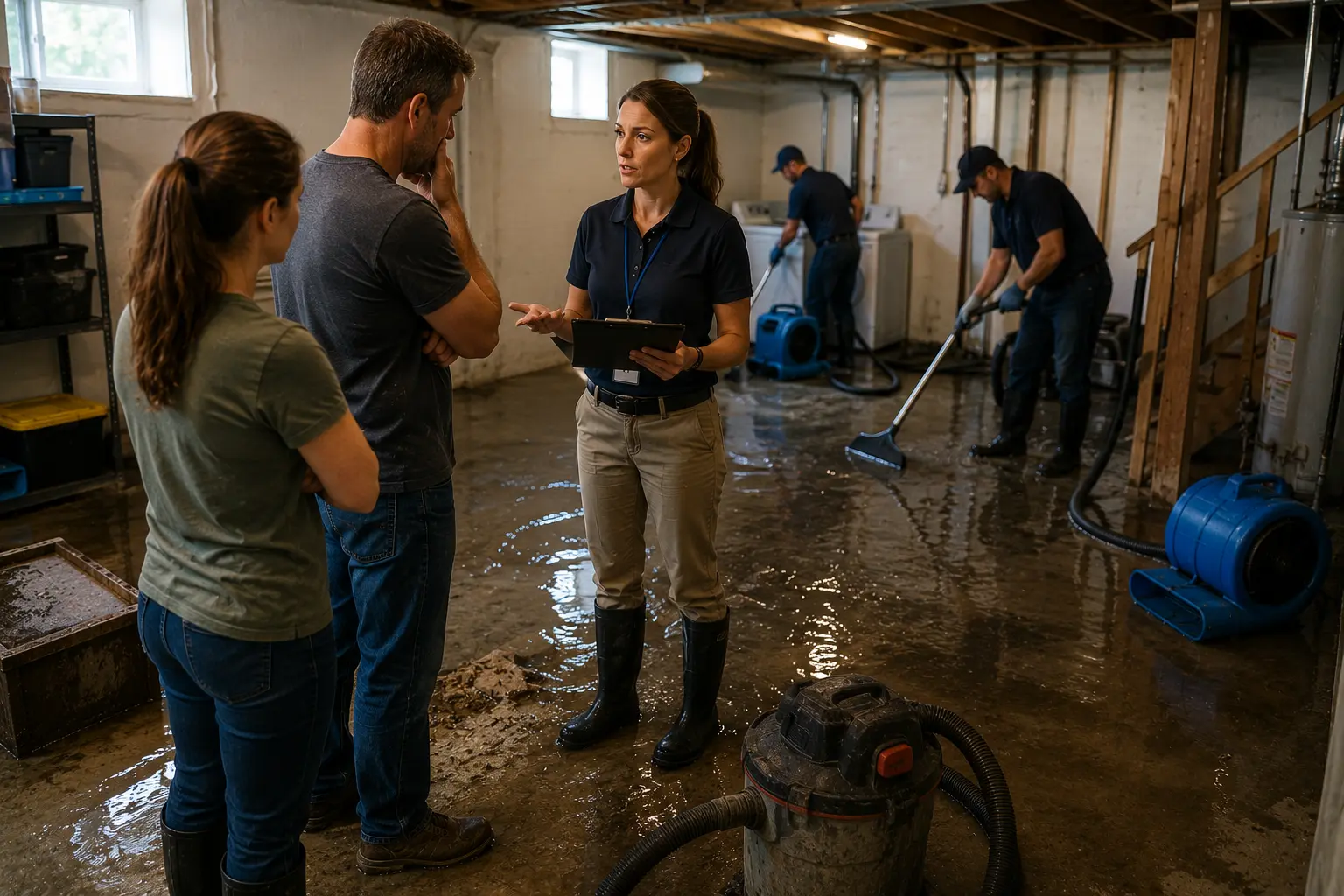
Sewer backup cleanup can be urgent, expensive, and emotionally overwhelming. When sewage enters a basement, bathroom, laundry area, or lower level, homeowners are not just dealing with water damage. They may also be dealing with contamination, odor, damaged belongings, flooring removal, drywall repairs, and professional sanitizing.
Insurance may cover sewer backup cleanup, but usually only if the homeowner has the right coverage in place before the backup occurs. Many standard homeowners insurance policies exclude sewer and drain backups unless a sewer backup endorsement, water backup endorsement, or similar rider has been added to the policy.
For Chicago homeowners, sewer backup cleanup coverage is especially important to understand because older homes, basement living areas, combined sewer pressures, heavy rainfall, and aging sewer laterals can all increase the risk of wastewater entering the home. For more guidance on sewer insurance, endorsements, claims, and financial protection, visit the Insurance & Financial Protection hub.
Key Takeaways
- Sewer backup cleanup is often not covered by standard homeowners insurance unless a sewer backup or water backup endorsement has been added.
- Coverage may help pay for professional cleanup, disinfection, drying, damaged flooring, drywall, and personal property.
- Coverage limits and deductibles vary by policy and may be lower than the full cleanup cost.
- Sewer backup cleanup coverage usually does not automatically pay to repair or replace the underground sewer line.
- Chicago homeowners with basements, older sewer laterals, or finished lower levels should review endorsement limits carefully.
- Photos, videos, cleanup invoices, moisture reports, and damaged property lists can help support a claim.
- Delaying cleanup after sewage enters the home can create health risks and complicate the claim process.
Will Insurance Pay for Sewer Backup Cleanup?
Insurance may pay for sewer backup cleanup if the homeowner has sewer backup coverage, water backup coverage, or a similar endorsement that applies to the loss. Without that endorsement, standard homeowners insurance often excludes sewage or water backing up through drains, toilets, tubs, showers, floor drains, or sump systems.
Even when coverage applies, the policy may have a separate limit, deductible, and exclusions. Cleanup coverage may pay for contaminated material removal, sanitizing, drying, damaged finishes, and personal property, but it may not pay to repair the sewer line that caused the backup.
What Counts as Sewer Backup Cleanup?
Sewer backup cleanup refers to the work needed after sewage or wastewater enters the home through the plumbing system. This is different from ordinary clean water damage because sewage can contain bacteria, waste, chemicals, and other contaminants.
Cleanup may involve:
- Removing standing sewage or wastewater
- Extracting contaminated water
- Removing damaged carpet, padding, flooring, or baseboards
- Cutting out contaminated drywall or insulation
- Cleaning and disinfecting affected surfaces
- Drying the area with fans or dehumidifiers
- Removing odor
- Disposing of unsalvageable belongings
- Documenting damage for the insurance claim
Because sewer backup water is contaminated, cleanup usually requires more care than a minor plumbing leak. Homeowners should avoid direct contact with sewage and should not assume that simply mopping the floor is enough.
Why Standard Homeowners Insurance Often Does Not Cover Cleanup
Many homeowners assume that any water damage inside the home is covered by homeowners insurance. In reality, insurance policies often separate water damage into different categories.
A sudden burst pipe inside the home may be treated differently than wastewater backing up through a floor drain. Many standard policies exclude sewer or drain backup unless the homeowner has purchased additional protection.
Common excluded backup sources may include:
- Sewage backing up through basement floor drains
- Wastewater backing up through toilets
- Water backing up through tubs or showers
- Drain backup from clogged sewer lines
- Sump overflow, depending on policy language
- Municipal sewer backup events
For a broader explanation of this coverage type, see Sewer Backup Insurance Coverage Explained.
What Sewer Backup Cleanup Insurance May Cover
When a sewer backup endorsement applies, it may help pay for several cleanup and restoration costs. The exact items covered depend on the policy, the endorsement, the deductible, and the coverage limit.
| Potential Covered Item | How It May Apply |
|---|---|
| Emergency extraction | Removal of sewage or wastewater from affected areas. |
| Cleaning and sanitizing | Disinfection of contaminated surfaces and materials. |
| Drying equipment | Fans, air movers, and dehumidifiers used to reduce moisture. |
| Damaged flooring | Removal and replacement may be covered if materials are contaminated or damaged. |
| Drywall and trim | Contaminated drywall, baseboards, and insulation may need removal and repair. |
| Personal property | Furniture, storage items, rugs, and belongings may be covered subject to limits. |
| Odor treatment | May be included when needed as part of covered cleanup. |
| Temporary living costs | May apply only if the policy includes this and the home is not safely usable. |
Coverage can be helpful, but homeowners should not assume the full cost will be paid. Sewer backup endorsements often have specific dollar limits that may be lower than the actual cleanup and restoration expense.
What Cleanup Coverage Usually Does Not Cover
Sewer backup cleanup coverage is not the same as full sewer system protection. It usually focuses on damage inside the home after sewage backs up.
Common items that may not be covered include:
- Replacement of the underground sewer line
- Excavation outside the home
- Long-term pipe deterioration
- Tree root removal from the sewer line
- Collapsed sewer pipe replacement
- Known or pre-existing drainage problems
- Costs above the endorsement limit
- Unrelated mold or long-delayed cleanup damage
Important distinction: Sewer backup cleanup coverage may help pay for contaminated damage inside the home. It does not necessarily pay to fix the sewer line that caused the backup.
If the main concern is replacing the sewer pipe itself, review Does Homeowners Insurance Cover Sewer Line Replacement? and Service Line Coverage for Sewer Lines: Is It Worth It?.
Sewer Backup Coverage vs. Service Line Coverage
Homeowners often confuse sewer backup cleanup coverage with service line coverage. They are related but separate protections.
| Coverage Type | Primary Purpose | Example Sewer Situation |
|---|---|---|
| Sewer backup coverage | Covers certain damage inside the home from sewage or drain backup. | Sewage enters a finished basement and damages flooring and drywall. |
| Service line coverage | Covers certain underground utility line failures. | A private sewer lateral collapses and needs excavation and replacement. |
| Sewer line warranty plan | Service contract that may cover certain sewer line repairs. | A covered sewer pipe section needs repair under the warranty terms. |
A serious sewer event may involve more than one coverage question. For example, a collapsed line may cause a backup. The backup endorsement may address cleanup, while service line coverage may address the underground pipe if the endorsement applies.
Homeowners comparing options may also want to read Sewer Line Warranty Plans: What Homeowners Should Know.
Chicago-Specific Sewer Backup Cleanup Concerns
Chicago homeowners should think about sewer backup cleanup coverage in the context of local housing and infrastructure conditions.
Basements Are Common
Many Chicago homes have basements used for laundry, utilities, storage, workshops, home offices, recreation space, or finished living areas. A sewer backup in a finished basement can create significant cleanup and restoration costs.
Older Sewer Laterals
Older private sewer lines may be more vulnerable to cracks, offsets, tree roots, deterioration, and blockages. These issues can increase the chance of wastewater backing up into the home.
Heavy Rainfall and System Pressure
During intense storms, drainage systems may face added pressure. Homes with vulnerable sewer connections, poor drainage, or missing backflow protection may be more exposed to backup events.
Finished Lower Levels Increase Potential Loss
The more finished and furnished a lower level is, the more expensive a sewer backup may become. Flooring, drywall, cabinets, electronics, furniture, and stored belongings can all be affected.
Cleanup Timing Matters
Sewer contamination should be addressed quickly. Delayed cleanup can increase odor, material damage, moisture issues, and potential mold concerns.
How Much Coverage Is Enough?
There is no single coverage amount that fits every home. A homeowner with an unfinished basement and limited storage may have different needs than a homeowner with a finished basement, expensive flooring, furniture, and electronics below grade.
Coverage needs may depend on:
- Whether the basement is finished
- How much personal property is stored below grade
- Whether appliances are located in the basement
- Whether drywall, carpet, or luxury flooring is present
- Whether the space is used as living space
- The deductible and endorsement limit
- The homeowner’s ability to pay uncovered costs
When reviewing coverage, homeowners should ask whether the endorsement limit is enough to cover cleanup, demolition, drying, repairs, and damaged contents after a serious backup.
For homeowners deciding whether the endorsement is worth adding, see Is a Sewer Backup Endorsement Worth It?.
What to Do Immediately After a Sewer Backup
After a sewer backup, homeowners should focus on safety, documentation, and limiting further damage.
- Avoid direct contact with sewage or contaminated materials.
- Stop using water if drains are actively backing up.
- Keep children and pets away from affected areas.
- Take photos and videos before cleanup if it is safe.
- Contact the insurance carrier to report the loss if coverage may apply.
- Arrange professional cleanup when contamination is significant.
- Keep damaged materials available for inspection when practical.
- Save invoices, reports, estimates, and communication records.
Homeowners should not wait too long to begin mitigation. Insurance policies often require reasonable steps to prevent additional damage.
How the Insurance Claim Process Works
A sewer backup cleanup claim usually involves reporting the loss, documenting the affected areas, confirming coverage, and working with an adjuster.
The insurance company may ask for:
- Date and time the backup was discovered
- Photos and videos of affected areas
- Cleanup invoices
- Damaged property inventory
- Cause of the backup if known
- Plumbing or sewer inspection reports
- Moisture readings or remediation documentation
The adjuster may evaluate whether the sewer backup endorsement applies, what damages are covered, whether the deductible applies, and whether the claim is subject to a separate limit.
For a broader step-by-step claim overview, read The Sewer Repair Insurance Claim Process Step by Step.
Why Sewer Backup Cleanup Claims Get Denied or Limited
Even when a homeowner files a claim, coverage is not guaranteed. Some claims are denied because the homeowner does not have sewer backup coverage. Others are limited because the loss exceeds the endorsement cap.
Common denial or limitation reasons include:
- No sewer backup endorsement on the policy
- The loss falls under a policy exclusion
- The claim was reported too late
- Damage occurred over time rather than from a sudden backup
- Cleanup was delayed and worsened the damage
- Damaged items were discarded before documentation
- The total loss exceeds the endorsement limit
- The cause relates to an uncovered pipe condition
For more detail on claim problems, see Why Sewer Line Insurance Claims Get Denied.
Common Mistakes and Warning Signs
Common sewer backup cleanup mistakes include:
- Assuming sewer backup cleanup is automatically covered
- Not knowing the endorsement limit before a backup occurs
- Waiting too long to document the damage
- Throwing away damaged belongings without photos
- Cleaning contaminated areas without proper protection
- Ignoring recurring slow drains or floor drain backups
- Assuming cleanup coverage will also replace the sewer line
- Failing to keep invoices and cleanup reports
Warning signs such as repeated basement drain backups, sewage odors, gurgling toilets, slow drains throughout the home, or recurring clogs should be taken seriously. These symptoms can indicate an underlying sewer problem that may eventually lead to a larger backup.
Frequently Asked Questions
Does homeowners insurance cover sewer backup cleanup?
It may, but usually only if the homeowner has a sewer backup, water backup, or similar endorsement. Standard homeowners insurance often excludes sewer and drain backups.
Does sewer backup cleanup coverage pay for the sewer line repair?
Usually not. Cleanup coverage generally applies to damage inside the home. Repair or replacement of the sewer line itself may require service line coverage or another protection plan.
What does sewer backup cleanup insurance usually cover?
It may cover extraction, cleaning, sanitizing, drying, damaged flooring, drywall, trim, personal property, and related restoration costs, subject to limits and policy terms.
How do I prove sewer backup cleanup damage?
Photos, videos, cleanup invoices, damaged property lists, plumber reports, sewer camera footage, and remediation documentation can help support the claim.
Is sewer backup cleanup different from flood damage?
Yes. Sewer backup, drain backup, surface water, and flood damage may be treated differently by insurance policies. Homeowners should review the exact policy language and endorsements.
Should I clean up sewage myself?
Minor situations may be manageable for some homeowners, but sewage is contaminated and can create health risks. Significant backups usually require professional cleanup and proper disposal.
Are Chicago basements at higher risk for sewer backup cleanup claims?
Many Chicago homes have basements and older sewer systems, which can increase the potential impact of sewer backups. Finished or heavily used basements may need higher coverage limits.
Conclusion
Insurance coverage for sewer backup cleanup can be valuable, but it is usually not automatic. Many standard homeowners insurance policies exclude sewer and drain backups unless a specific endorsement has been added before the loss occurs.
For Chicago homeowners, the stakes can be significant because basements, older sewer laterals, mature trees, and heavy rainfall can all contribute to backup risk. Cleanup coverage may help pay for contaminated material removal, sanitizing, drying, repairs, and damaged belongings, but it may not cover the sewer line itself.
The best time to understand sewer backup cleanup coverage is before a backup happens. Homeowners should review endorsement limits, deductibles, exclusions, and how cleanup coverage works alongside service line coverage or warranty plans.