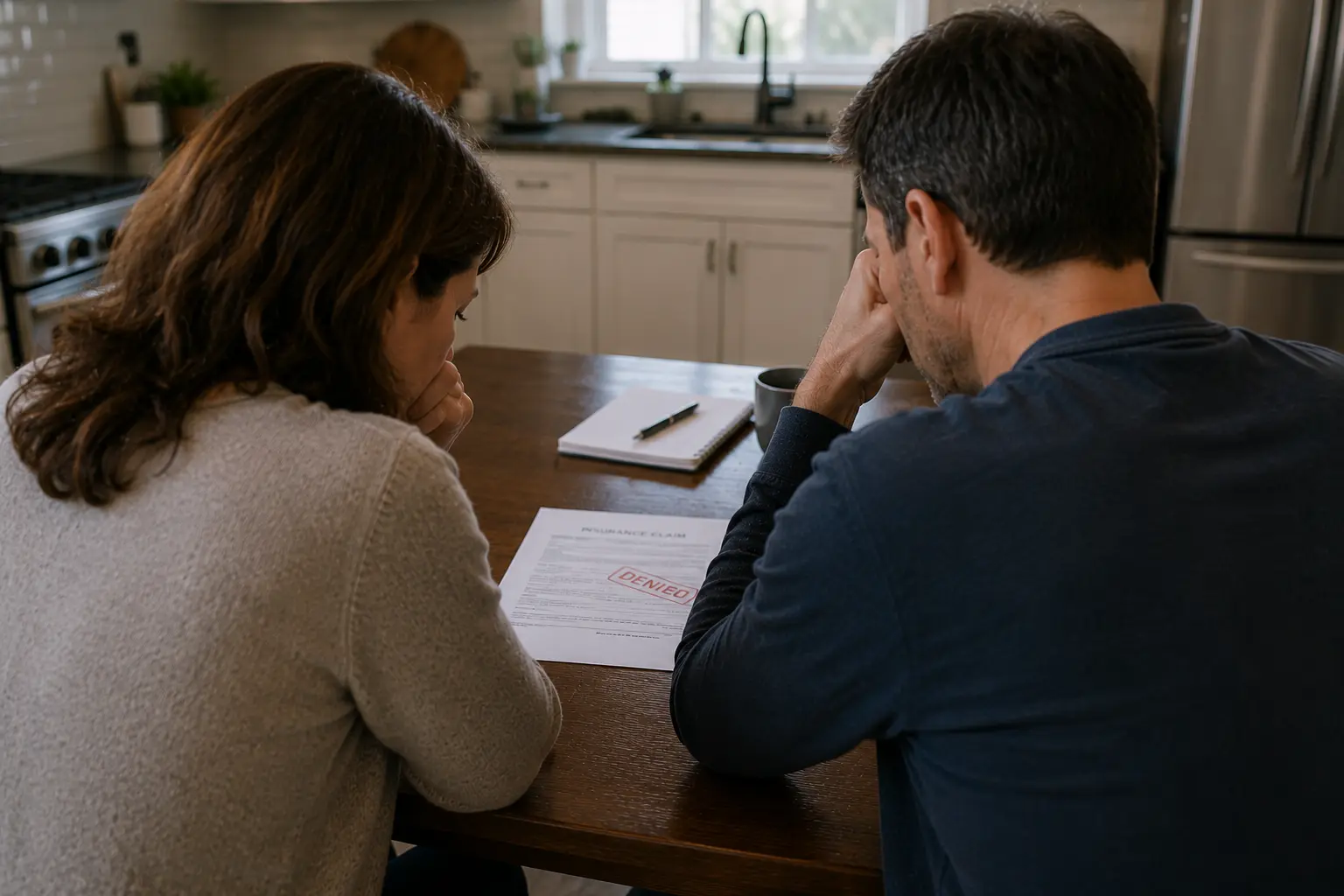
Sewer line insurance claims often get denied because the damage falls outside the policy’s coverage. A homeowner may have a serious sewer problem, an expensive repair estimate, and a real need for help, but that does not automatically mean the insurance company is required to pay.
Most sewer line claim denials come down to one of several issues: the damage was gradual, the pipe was old or deteriorated, the problem existed before coverage began, the homeowner did not have the right endorsement, or the policy excludes the specific cause of loss. In Chicago, where many homes have older sewer laterals, clay pipes, mature trees, and basement drainage risks, these disputes can be especially frustrating.
This guide explains the most common reasons sewer line insurance claims get denied, what homeowners can do before filing, and how to respond if a denial occurs. For broader guidance on sewer insurance, endorsements, warranties, claims, and payment options, visit the Insurance & Financial Protection hub.
Key Takeaways
- Sewer line claims are often denied because standard homeowners insurance usually excludes wear and tear, deterioration, corrosion, and maintenance-related damage.
- Tree root damage, collapsed pipes, and recurring backups may be covered or denied depending on the policy language and cause of loss.
- Having sewer backup coverage does not necessarily mean the underground sewer pipe itself is covered.
- Service line coverage may help with certain underground sewer line failures, but it also has limits and exclusions.
- Inspections, photos, videos, maintenance records, and repair estimates can affect claim outcomes.
- If a claim is denied, homeowners should ask for the exact policy language supporting the denial.
Why Are Sewer Line Claims Denied?
Sewer line insurance claims are commonly denied because the damage is considered gradual, maintenance-related, pre-existing, or excluded by the policy. Standard homeowners insurance often does not cover sewer line replacement caused by aging pipes, corrosion, normal wear, root intrusion over time, or deterioration.
Some claims are also denied because the homeowner has sewer backup coverage but not service line coverage, or because the loss involves the pipe itself rather than damage inside the home. The exact answer depends on the policy, endorsements, cause of damage, inspection findings, and claim documentation.
Reason 1: The Damage Is Considered Wear and Tear
Insurance is generally designed for sudden and accidental losses, not predictable maintenance problems. If a sewer pipe fails because it has aged over decades, the insurer may classify the damage as wear and tear.
Common wear-and-tear findings may include:
- Cracked clay pipe
- Corroded cast iron
- Long-term pipe deterioration
- Repeated clogging from aging infrastructure
- Gradual pipe separation
- Old joints allowing root entry
This is one of the most common reasons standard homeowners insurance does not pay for sewer line replacement. Homeowners who are unsure what their base policy includes should review Does Homeowners Insurance Cover Sewer Line Replacement?.
Reason 2: The Policy Does Not Include Service Line Coverage
Many homeowners assume underground sewer lines are automatically covered by homeowners insurance. In many cases, they are not.
Service line coverage is an optional endorsement that may help pay for certain underground utility line failures, including sewer lines. Without this endorsement, the homeowner may have little or no coverage for the pipe itself.
| Coverage Type | What It Usually Addresses | Common Limitation |
|---|---|---|
| Standard homeowners insurance | Sudden covered property losses | Often excludes aging underground sewer lines |
| Service line coverage | Certain underground utility line failures | Subject to limits, deductibles, and exclusions |
| Sewer backup coverage | Damage inside the home from sewage backing up | Often does not cover sewer pipe replacement |
For homeowners comparing protection options, Service Line Coverage for Sewer Lines: Is It Worth It? explains how this endorsement works.
Reason 3: Sewer Backup Coverage Was Misunderstood
Sewer backup coverage can be valuable, but it is often misunderstood. It may help pay for cleanup and interior damage after sewage enters the home, but it may not pay to replace the underground sewer line that caused the backup.
For example, a homeowner may have coverage for contaminated flooring, drywall, and cleanup, but still receive a denial for excavation and pipe replacement.
This can feel unfair, but insurance policies often separate interior backup damage from underground service line damage.
Homeowners dealing with backup-related damage should review Sewer Backup Insurance Coverage Explained and Insurance Coverage for Sewer Backup Cleanup.
Reason 4: The Damage Was Pre-Existing
Insurance companies and warranty providers often exclude damage that existed before coverage began. This can become an issue when a sewer inspection shows old cracks, long-standing root intrusion, corrosion, or pipe settlement.
A claim may be denied as pre-existing if:
- The homeowner had prior sewer backups
- Previous inspections showed the same defect
- Drain cleaning records mention recurring problems
- The pipe had visible long-term deterioration
- The homeowner purchased coverage after symptoms began
Important: Buying coverage after a sewer problem is already known usually does not protect against that existing issue. Insurance and warranty plans are generally designed for future covered losses, not known failures.
Reason 5: Tree Root Damage Is Treated as Gradual
Tree roots are a major sewer concern in many Chicago neighborhoods. Roots can enter pipe joints, cracks, and weakened sections, eventually causing blockages or structural damage.
However, insurers often view root intrusion as a gradual condition rather than a sudden accidental event. If roots entered the sewer line over time, the claim may be denied under wear-and-tear, deterioration, or maintenance exclusions.
Some service line endorsements or warranty plans may provide root-related coverage, but homeowners should not assume roots are covered without checking the policy or contract.
For more detail, read Insurance Coverage for Tree Root Sewer Damage.
Reason 6: The Pipe Collapse Was Caused by Deterioration
A collapsed sewer line sounds sudden, but insurance companies look at why the pipe collapsed. If the collapse resulted from old materials, corrosion, root intrusion, ground movement over time, or long-term deterioration, the claim may be denied.
Coverage is more possible when a collapse is caused by a covered event, but the homeowner usually needs evidence supporting that cause.
| Cause of Collapse | Claim Risk |
|---|---|
| Old clay pipe deteriorated over time | High denial risk |
| Long-term root intrusion weakened pipe | High denial risk unless covered by endorsement |
| Corrosion caused pipe failure | High denial risk |
| Sudden accidental covered event damaged line | Potentially stronger claim |
| Cause cannot be documented | Higher dispute risk |
For homeowners facing this issue, see Does Insurance Cover a Collapsed Sewer Line?.
Reason 7: The Damaged Section Is Not the Homeowner’s Covered Responsibility
Coverage may depend on whether the damaged sewer line section is privately owned, publicly owned, shared, or outside the policy’s defined service line area.
In Chicago, homeowners should be careful to understand where their private sewer responsibility begins and ends. A plan may cover the sewer lateral on the homeowner’s property but exclude portions beyond a boundary, under public property, or outside the covered service line definition.
Before assuming coverage applies, homeowners should confirm:
- Where the damage is located
- Who owns or maintains that section
- Whether the policy covers that location
- Whether excavation requires public-way considerations
- Whether the repair area falls outside the plan’s covered boundary
Reason 8: The Claim Was Reported Too Late
Most insurance policies require prompt notice of a loss. Delayed reporting can create problems when the insurer cannot inspect the original damage, verify the cause, or determine whether additional damage occurred after the homeowner knew about the issue.
Late reporting may weaken a claim if:
- Cleanup happened before documentation
- Damaged materials were discarded
- The pipe was repaired before inspection
- The cause of loss became harder to determine
- Additional damage occurred after the homeowner delayed action
Prompt reporting does not guarantee approval, but it can help avoid unnecessary claim disputes.
Reason 9: There Is Not Enough Documentation
Sewer claims often require evidence. A homeowner’s description of the problem may not be enough, especially when the insurer must decide whether the damage was sudden, gradual, covered, or excluded.
Helpful documentation may include:
- Sewer camera footage
- Written plumbing reports
- Photos and videos of damage
- Drain cleaning history
- Cleanup invoices
- Repair estimates
- Maintenance records
- Adjuster notes and correspondence
For a step-by-step explanation of how to organize a claim, read The Sewer Repair Insurance Claim Process Step by Step.
Reason 10: The Claim Exceeds Policy Limits
Not every disappointing claim result is a full denial. Sometimes the insurer agrees coverage applies but pays only up to the policy limit.
This is common with endorsements that have separate limits for sewer backup, service line coverage, excavation, restoration, or personal property.
For example, a policy may cover a sewer backup but have a lower endorsement limit than the total cleanup and restoration cost. A service line endorsement may cover pipe repair but limit landscaping or hardscape restoration.
Homeowner reminder: Coverage limits matter as much as coverage type. A policy can technically cover a sewer-related loss while still leaving the homeowner responsible for costs above the limit.
Chicago-Specific Reasons Sewer Claims Become Complicated
Chicago sewer claims can be more complicated than homeowners expect because local property conditions often make the cause, responsibility, and repair scope harder to evaluate.
Older Housing Stock
Many Chicago homes have older sewer materials that may be vulnerable to cracking, deterioration, corrosion, and settlement. Insurers often examine whether the problem developed over time.
Mature Trees
Root intrusion is a recurring issue in tree-lined neighborhoods. Coverage depends on whether the policy treats root damage as covered damage or gradual maintenance-related damage.
Basements and Lower Levels
Chicago homes often have basements used for storage, utilities, laundry, or living space. This can create separate claims for cleanup, contents, and structural restoration after a backup.
Urban Excavation Conditions
Repair work may involve tight lots, alleys, sidewalks, driveways, buried utilities, and limited access. Some policies or warranty plans may limit restoration costs or exclude certain access complications.
Public and Private Sewer Boundaries
Disputes can arise when damage occurs near the point where private responsibility meets public infrastructure. Homeowners should document the location of the defect clearly.
What to Do After a Sewer Claim Is Denied
A denial is not always the end of the discussion. Homeowners should review the denial carefully and determine whether the insurer had all relevant information.
- Request the denial in writing.
- Identify the specific policy exclusion or limitation cited.
- Compare the denial language to the policy and endorsements.
- Review inspection reports for accuracy.
- Submit missing photos, invoices, or camera footage if available.
- Ask whether a supplemental review is possible.
- Consider professional claim guidance for large disputes.
Homeowners should remain factual and organized. The goal is to determine whether the denial was based on complete and accurate information.
How to Reduce the Risk of Future Claim Denials
Homeowners cannot control every insurance decision, but they can reduce avoidable problems.
Useful steps include:
- Reviewing homeowners insurance before a sewer emergency
- Adding sewer backup coverage if appropriate
- Considering service line coverage
- Keeping sewer inspection and maintenance records
- Addressing recurring backups promptly
- Documenting damage before cleanup
- Reporting losses promptly
- Understanding policy limits and deductibles
For homeowners comparing protection options, Is a Sewer Backup Endorsement Worth It? and Sewer Line Warranty Plans: What Homeowners Should Know may help clarify the tradeoffs.
Common Mistakes and Warning Signs
Common mistakes that can lead to sewer claim problems include:
- Assuming all sewer damage is covered
- Confusing sewer backup coverage with sewer line replacement coverage
- Waiting until a known problem exists before buying coverage
- Not getting a sewer camera inspection
- Throwing away damaged items before documenting them
- Ignoring repeated backups or slow drains
- Failing to ask for written denial reasons
- Not reading endorsement limits before a loss occurs
Warning signs such as recurring backups, gurgling drains, sewage odors, or repeated root cleanouts should not be ignored. If a problem is allowed to continue for months or years, an insurer may be more likely to view the eventual failure as gradual or maintenance-related.
Frequently Asked Questions
Why did my insurance deny my sewer line claim?
The most common reasons are wear and tear, deterioration, corrosion, tree root intrusion over time, pre-existing damage, lack of service line coverage, or a policy exclusion for the specific cause of loss.
Can a sewer claim be denied even if I have sewer backup coverage?
Yes. Sewer backup coverage may apply to cleanup and damage inside the home, but it may not cover replacement of the underground sewer line itself.
Can service line coverage still deny a sewer claim?
Yes. Service line coverage has limits and exclusions. Claims may be denied for pre-existing damage, excluded causes, uncovered pipe sections, or conditions outside the endorsement terms.
Does insurance cover tree roots in a sewer line?
It depends on the policy. Many insurers treat root intrusion as gradual damage, but some endorsements or warranty plans may offer limited protection for root-related sewer problems.
Can I dispute a sewer insurance denial?
Homeowners can ask for the denial in writing, review the cited policy language, provide additional evidence, and request further review if important information was missing or misunderstood.
Will a sewer camera inspection help after a denial?
It can. Camera footage may help clarify the location, cause, and severity of the damage. However, if it confirms long-term deterioration, it may also support the insurer’s denial.
Are sewer claims harder for older Chicago homes?
They can be more complicated because older sewer materials, mature trees, and recurring maintenance issues may lead insurers to examine whether the damage developed gradually over time.
Conclusion
Sewer line insurance claims are often denied because the damage does not fit the policy’s definition of a covered loss. Aging pipes, deterioration, corrosion, tree root intrusion, pre-existing conditions, missing endorsements, and poor documentation can all lead to denied or limited claims.
For Chicago homeowners, the best protection is understanding coverage before a sewer emergency occurs. That means reviewing homeowners insurance, sewer backup endorsements, service line coverage, warranty plans, limits, deductibles, and exclusions in advance.
If a claim is denied, homeowners should request the reason in writing, review the policy language carefully, and provide any missing evidence that could affect the decision. A clear, documented approach can help homeowners avoid preventable mistakes and make better decisions about repair, cleanup, and financial recovery.