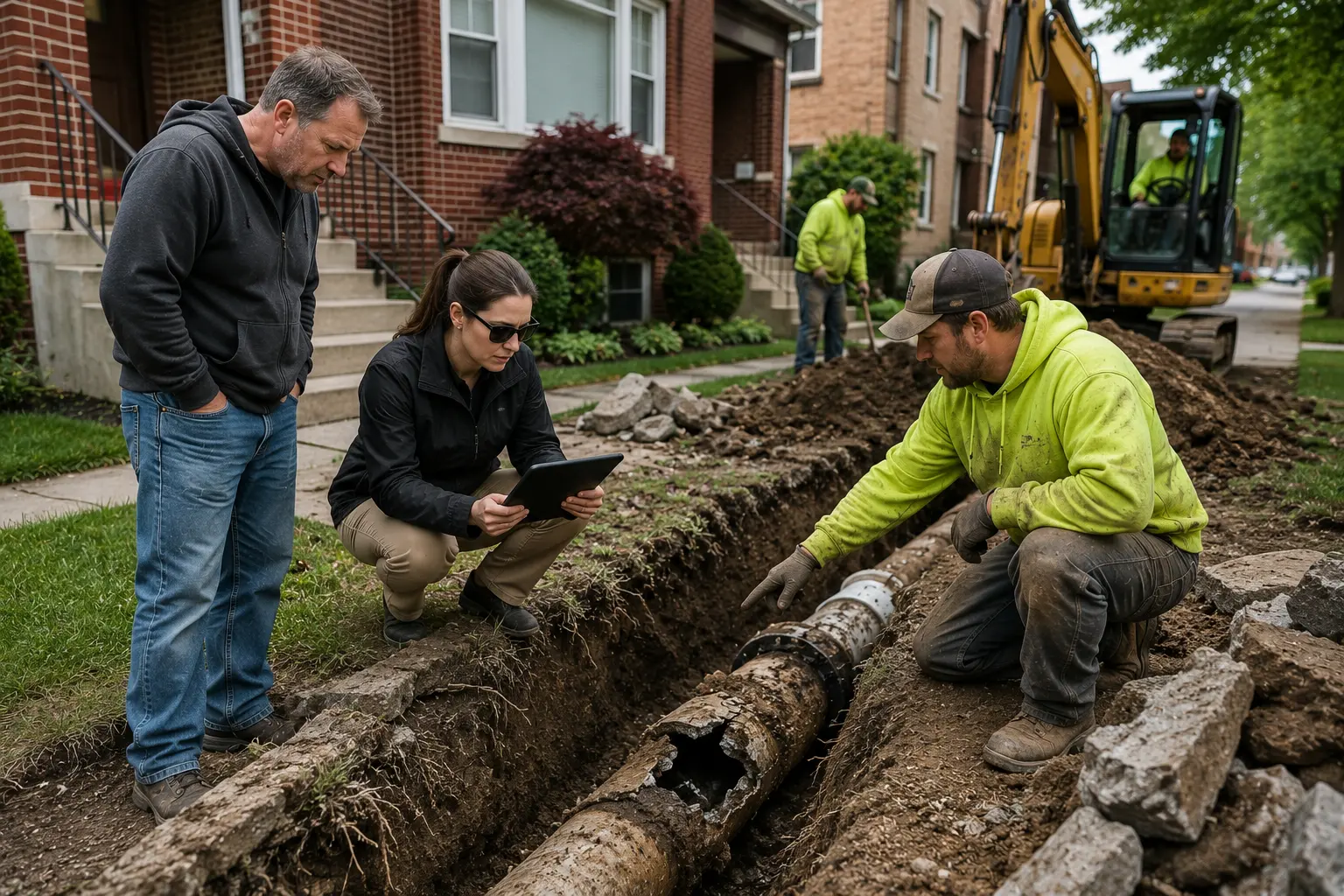
Many Chicago homeowners assume their homeowners insurance policy will automatically pay for a damaged sewer line. In reality, sewer line coverage depends heavily on what caused the damage, where the damage occurred, and what types of endorsements or optional coverages are included in the policy.
While some sudden and accidental sewer line failures may be covered, most standard homeowners insurance policies do not cover sewer line replacement caused by age, wear and tear, deterioration, corrosion, or long-term maintenance issues. Understanding the difference can help homeowners avoid expensive surprises when facing a major sewer repair.
For a broader look at insurance-related sewer risks, coverage options, claims, and financial planning, visit the Insurance & Financial Protection hub.
Key Takeaways
- Standard homeowners insurance typically does not cover sewer line replacement caused by aging pipes or normal deterioration.
- Coverage may exist when damage results from a sudden covered event, such as a fire, vehicle impact, or certain types of accidental damage.
- Many policies exclude underground service lines unless additional coverage has been purchased.
- Service line endorsements can provide protection for sewer pipes located between the home and the municipal connection.
- Documentation, inspections, and maintenance records can affect claim outcomes.
- Chicago homeowners with older sewer systems should carefully review policy language before a sewer emergency occurs.
When Does Homeowners Insurance Cover Sewer Line Replacement?
In most cases, standard homeowners insurance does not cover sewer line replacement caused by age, deterioration, corrosion, tree root intrusion, or lack of maintenance. However, coverage may apply if a sewer line is damaged by a sudden, accidental event that is specifically covered under the policy.
Many homeowners discover that the pipe itself is excluded while interior water damage from a sewer backup may be covered only if they purchased additional protection. Coverage varies significantly between insurers, making it essential to review your policy details before assuming a claim will be approved.
Why Sewer Line Coverage Creates So Much Confusion
Sewer systems involve several different types of potential losses, and insurance companies often treat each one differently.
A homeowner may face:
- Damage to the sewer pipe itself
- Excavation costs
- Sewer backup cleanup inside the home
- Structural damage from backups
- Landscape restoration
- Temporary housing expenses
Each of these losses may have different coverage rules. This is one reason many homeowners become confused after reading their policy or speaking with an adjuster.
For example, a policy may deny pipe replacement while still covering certain interior damages. This distinction is discussed further in Sewer Backup Insurance Coverage Explained.
What Standard Homeowners Insurance Usually Covers
Most homeowners insurance policies are designed to protect against sudden and accidental losses rather than predictable maintenance problems.
Coverage may potentially apply when a sewer line is damaged by:
- Fire
- Explosion
- Vehicle impact
- Certain forms of vandalism
- Falling objects
- Other covered perils specifically listed in the policy
If one of these covered events directly damages the sewer system, the insurer may pay for repairs or replacement subject to policy limits, deductibles, and exclusions.
The exact outcome depends on the policy language and the evidence available to support the claim.
What Standard Policies Usually Exclude
The most common causes of sewer line failure are also the most common reasons insurance claims are denied.
Commonly Excluded Causes of Sewer Line Damage:
- Normal aging
- Wear and tear
- Pipe deterioration
- Corrosion
- Gradual leaks
- Lack of maintenance
- Ground settlement over time
- Root intrusion developing over many years
- Pre-existing damage
Insurance companies generally consider these issues homeowner maintenance responsibilities rather than sudden accidental losses.
This is particularly important in Chicago, where many neighborhoods still contain aging clay, cast iron, and Orangeburg sewer systems that may be decades old.
Does Insurance Cover Tree Root Damage?
Tree roots are among the leading causes of sewer line problems throughout Chicago.
Unfortunately, root intrusion often develops gradually over many years. Because insurers frequently classify root damage as a maintenance-related issue rather than a sudden event, coverage is often limited or denied.
However, every claim depends on its facts and policy language. Homeowners facing root-related sewer problems should review Insurance Coverage for Tree Root Sewer Damage to understand how insurers commonly evaluate these situations.
What About a Collapsed Sewer Line?
A collapsed sewer line can create major repair expenses, particularly when excavation is required beneath landscaping, sidewalks, alleys, or driveways.
Coverage depends heavily on why the collapse occurred.
| Cause of Collapse | Potential Coverage Likelihood |
|---|---|
| Sudden covered event | May be covered |
| Pipe deterioration | Often excluded |
| Corrosion | Often excluded |
| Aging clay pipe failure | Often excluded |
| Long-term root intrusion | Often excluded |
| Maintenance neglect | Typically excluded |
Homeowners dealing with structural pipe failures should also review Does Insurance Cover a Collapsed Sewer Line?.
Service Line Coverage: The Protection Many Homeowners Overlook
Many insurance companies now offer optional service line endorsements.
These endorsements are specifically designed to cover underground utility lines serving the home, including sewer lines, water lines, electrical lines, and communication lines.
Coverage often applies to:
- Excavation costs
- Pipe repair
- Pipe replacement
- Restoration of damaged areas
- Certain related expenses
Because sewer replacement can be extremely expensive, many homeowners view this endorsement as one of the most valuable optional coverages available.
Learn more in Service Line Coverage for Sewer Lines: Is It Worth It?.
How Sewer Backup Coverage Differs From Sewer Line Coverage
One of the most common misconceptions is assuming sewer backup coverage automatically covers sewer pipe replacement.
These are usually separate issues.
Sewer backup endorsements generally help cover damage caused when sewage enters the home. They may help pay for:
- Cleanup
- Sanitization
- Damaged flooring
- Damaged drywall
- Damaged personal belongings
However, they often do not pay to replace the underlying sewer line itself.
Homeowners comparing these coverages should read Is a Sewer Backup Endorsement Worth It? and Insurance Coverage for Sewer Backup Cleanup.
Chicago-Specific Considerations
Chicago presents several unique challenges that can affect both sewer failures and insurance claims.
Older Housing Stock
Many Chicago homes were built long before modern sewer materials became standard. Older clay and cast iron systems are more susceptible to cracking, offsets, root intrusion, and deterioration.
Tree-Lined Neighborhoods
Mature trees throughout many Chicago neighborhoods increase the likelihood of root-related sewer problems.
Freeze-Thaw Cycles
Repeated freezing and thawing can contribute to soil movement and pipe stress over time.
Expensive Excavation Conditions
Urban lots, alley access, sidewalks, and buried infrastructure can increase repair costs significantly when excavation becomes necessary.
Because many of these factors are associated with gradual deterioration rather than sudden events, insurance disputes can occur when homeowners attempt to file claims.
How to Improve Your Chances of a Successful Claim
If a sewer line problem occurs, documentation can become extremely important.
- Document the damage immediately.
- Take photographs and videos.
- Obtain sewer camera inspection footage if available.
- Keep maintenance and cleaning records.
- Review policy language before filing.
- Request written explanations for claim decisions.
- Maintain copies of contractor reports.
Homeowners preparing for the claims process can learn more from The Sewer Repair Insurance Claim Process Step by Step.
Common Reasons Sewer Line Claims Get Denied
Claim denials are not always the result of homeowner mistakes. Sometimes policy language simply excludes the loss.
However, several factors frequently contribute to denied claims:
- Pre-existing damage
- Lack of maintenance documentation
- Long-term deterioration
- Root intrusion over time
- Corrosion or rust
- Delayed reporting
- Insufficient evidence supporting a covered cause
Warning Sign: If a sewer line has shown repeated warning signs for years before failure, an insurer may argue that the issue resulted from gradual deterioration rather than a sudden covered event.
For additional details, see Why Sewer Line Insurance Claims Get Denied.
Alternatives When Insurance Does Not Cover Replacement
Many homeowners eventually discover that sewer replacement costs must be paid out of pocket.
When that happens, potential options may include:
- Contractor financing programs
- Personal loans
- Home equity financing
- Municipal assistance programs where available
- Payment plans
- Future service line coverage purchases
Homeowners concerned about affordability may find useful information in Financing Sewer Replacement With Bad Credit and Sewer Repair Payment Plans Explained.
Frequently Asked Questions
Will homeowners insurance pay for a sewer line replacement in Chicago?
Sometimes, but only if the damage resulted from a covered peril under the policy. Most sewer replacements caused by age, deterioration, roots, or maintenance issues are typically excluded.
Does homeowners insurance cover sewer backups?
Usually only if a sewer backup endorsement has been added to the policy. Standard policies often exclude sewer backup damage unless optional coverage has been purchased.
What is service line coverage?
Service line coverage is an optional endorsement that may help pay for repairs or replacement of underground utility lines serving the home, including sewer lines.
Can insurance cover sewer line damage caused by tree roots?
Coverage varies by policy and circumstances. Because root intrusion is often considered a gradual maintenance issue, many claims face challenges or denials.
Will a sewer camera inspection help with an insurance claim?
Yes. Camera inspections can provide valuable evidence regarding the location, cause, and extent of sewer damage, which may support claim documentation.
Should Chicago homeowners add sewer-related endorsements to their policy?
Homeowners with older sewer systems often consider endorsements such as service line coverage or sewer backup coverage because standard policies may provide limited protection for common sewer problems.
Conclusion
Homeowners insurance can sometimes cover sewer line replacement, but only under specific circumstances. Most standard policies are designed to protect against sudden accidental losses rather than aging infrastructure, gradual deterioration, or maintenance-related failures.
For Chicago homeowners, understanding the distinction between covered events, sewer backup endorsements, and service line coverage is critical. Reviewing policy details before a problem occurs can help homeowners make informed decisions, avoid claim surprises, and better prepare for the financial realities of major sewer repairs.