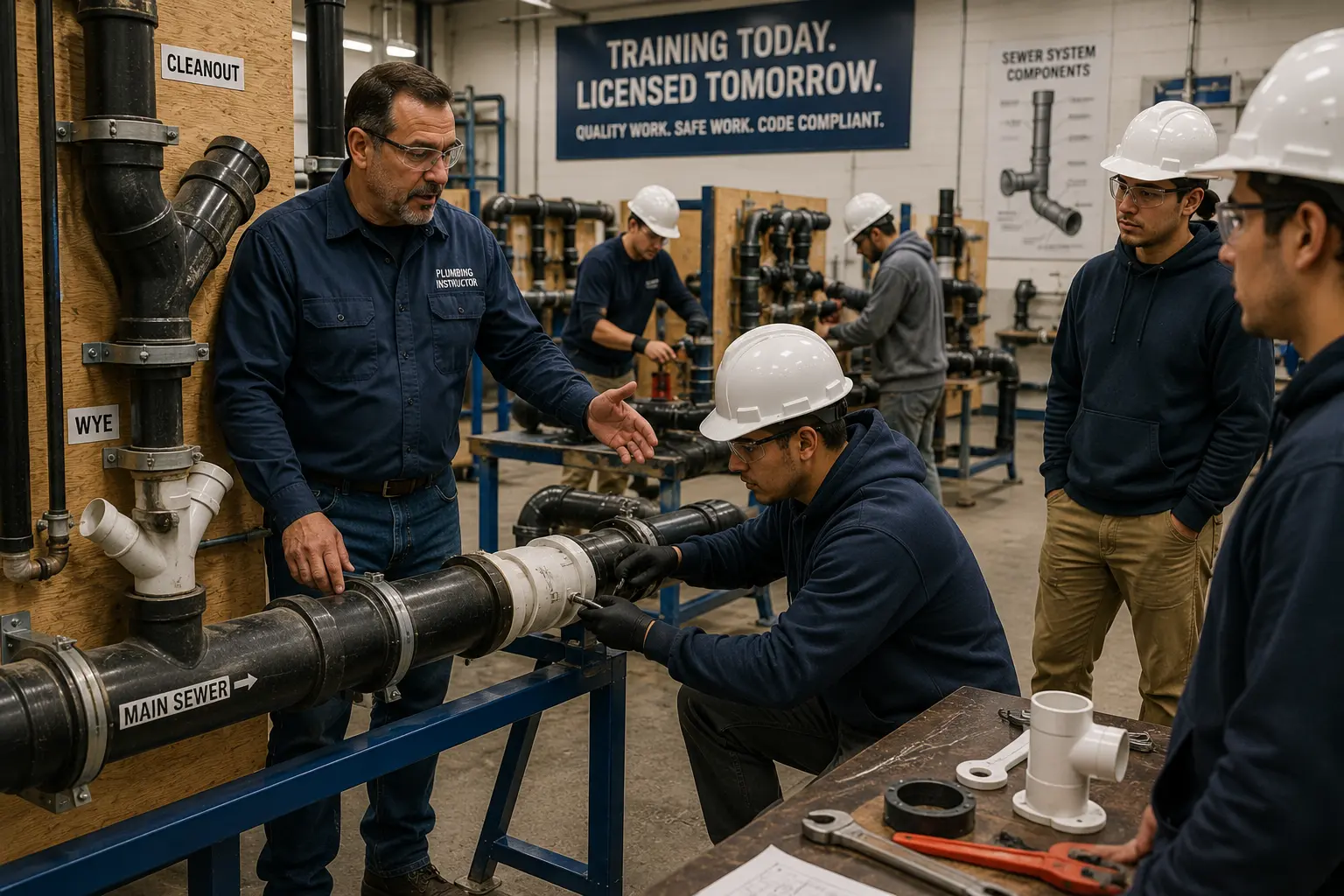
Sewer work in Chicago often involves more than clearing a drain or replacing a damaged pipe. Many sewer repairs, replacements, inspections, and permit-related projects must be handled by properly licensed professionals because the work affects the building drainage system, public health, and sometimes public infrastructure.
For homeowners, the most important point is that major sewer work should not be treated as a casual handyman project. If the work involves excavation, pipe replacement, new connections, code compliance, inspections, or public-way impacts, a licensed plumber or qualified sewer contractor may be required. Verifying licensing before work begins can help avoid failed inspections, unpermitted repairs, insurance complications, and expensive rework.
Key Takeaways
- Many types of sewer work in Chicago require properly licensed plumbing professionals.
- Licensing matters most when work involves permits, excavation, sewer replacement, new connections, or code-regulated repairs.
- Basic drain cleaning may differ from permitted sewer repair or replacement work.
- Homeowners should verify who is pulling permits and who is legally responsible for the work.
- Licensed professionals are usually better positioned to handle inspections, code requirements, and city coordination.
- Unlicensed or improperly documented work can create problems during inspections, insurance claims, and home sales.
- The lowest estimate may not be the best choice if it excludes permits, inspections, or licensed supervision.
Do You Need a Licensed Plumber for Sewer Work in Chicago?
For many sewer repair and replacement projects in Chicago, yes. Work that involves permits, excavation, pipe replacement, sewer connections, code compliance, or inspections generally should be performed by a properly licensed plumber or qualified sewer professional. Minor maintenance may not always require the same level of permitting, but major sewer work should be handled by someone who can legally perform and document the job.
The difference matters because sewer work is part of the larger plumbing and drainage system serving the property. A mistake underground can cause backups, leaks, contamination, structural damage, failed inspections, or problems with public infrastructure.
For broader context on how licensing fits into local requirements, see Chicago Permits, Codes & Local Rules.
Why Licensing Matters for Sewer Repairs
A licensed professional is not just someone with tools and sewer equipment. Licensing helps establish that the person or company performing the work is qualified to handle regulated plumbing systems, follow applicable code requirements, obtain permits when required, and coordinate inspections.
This is especially important because sewer work is often buried after completion. Once the trench is filled, homeowners may not be able to see whether the slope, bedding, pipe material, connection, or cleanout placement was completed correctly.
Licensing can affect:
- Whether permits can be obtained properly
- Whether inspections can be scheduled and passed
- Whether the work complies with Chicago code requirements
- Whether the contractor is accountable for defects or failed inspections
- Whether documentation is available for future home sales
- Whether insurance or warranty disputes become harder to resolve
Homeowners do not need to become licensing experts, but they should ask enough questions to confirm the work is being handled legally and professionally.
Drain Cleaning vs. Sewer Repair vs. Sewer Replacement
Not every sewer-related service is the same. A homeowner may call a company for a clogged drain, but the situation may later turn into a permitted sewer repair or replacement project.
| Type of Work | Typical Scope | Why Licensing Matters |
|---|---|---|
| Drain cleaning or rodding | Clearing a blockage from an existing line | May be maintenance, but repeated blockages can reveal a larger repair issue. |
| Camera inspection | Viewing the inside of the sewer line | Helps document defects, but repair decisions require qualified interpretation. |
| Spot sewer repair | Replacing or repairing a damaged section | May require permits, excavation, proper materials, and inspection. |
| Full sewer replacement | Replacing a major portion or entire line | Usually involves code, permits, inspections, and licensed professionals. |
| Work near public property | Repair near sidewalks, streets, alleys, or city connections | May involve additional city coordination, restoration, and permit requirements. |
Homeowners should be cautious when a simple service call turns into a major repair estimate. At that point, licensing, permits, and inspection responsibilities become much more important.
What Sewer Work Commonly Requires Licensed Professionals?
Licensing requirements depend on the project, but homeowners should expect licensed involvement for substantial sewer work.
Examples commonly requiring licensed expertise include:
- Excavation to access a buried sewer line
- Partial sewer line replacement
- Full sewer line replacement
- Installation of new cleanouts
- Repair of collapsed or broken sewer sections
- Work near the city sewer connection
- Work requiring permits or inspections
- Sewer repairs near sidewalks, streets, alleys, or public-way areas
- Drainage work in two-flats or multi-unit buildings
If the repair requires a permit, the contractor should be able to explain who is legally allowed to pull that permit and who will be responsible for inspection approval. For related permit guidance, review Chicago Sewer Repair Permits: What Homeowners Need to Know.
How Licensing Connects to Permits and Inspections
Licensing, permits, and inspections are closely connected. A licensed professional may be needed to obtain the permit, perform the work, schedule required inspections, and correct any issues if the work does not pass.
A typical permitted sewer project may involve:
- Diagnosing the sewer issue
- Determining whether repair or replacement is needed
- Confirming permit requirements
- Submitting permit paperwork
- Completing the sewer work
- Keeping the work exposed if inspection is required
- Passing inspection
- Completing backfill and restoration
- Providing final documentation to the homeowner
Inspection requirements are especially important because sewer work may need to be reviewed before it is covered. Homeowners can learn more in Sewer Repair Inspection Requirements in Chicago.
Questions to Ask Before Hiring a Sewer Contractor
Before hiring anyone for sewer work, homeowners should ask clear questions about licensing, permits, inspections, and responsibility.
Important questions include:
- Are you licensed to perform this type of sewer work in Chicago?
- Will the work require a permit?
- Who will pull the permit?
- Are permit and inspection costs included in the estimate?
- Will the work be inspected before it is covered?
- Who is responsible if the inspection fails?
- Will you provide final permit and inspection documentation?
- Does the estimate include excavation, backfill, and restoration?
- Are subcontractors involved, and are they properly qualified?
A reputable contractor should be able to answer these questions directly. Vague answers are a reason to slow down before signing.
Chicago Building Code and Licensed Sewer Work
Sewer work must comply with applicable plumbing and building code requirements. That can include pipe material, slope, connections, cleanouts, excavation, backfill, and restoration standards.
Licensed professionals are generally better prepared to handle those requirements because they work with code-regulated systems regularly.
Common code-related details include:
- Using approved materials
- Maintaining proper pipe slope
- Connecting old and new pipe correctly
- Providing required access points
- Protecting public infrastructure
- Coordinating required inspections
- Restoring affected surfaces properly
For a broader explanation of how local code affects sewer projects, see Sewer Work and Chicago Building Code Explained.
Chicago-Specific Contractor Considerations
Older Sewer Materials
Many Chicago homes have older clay, cast iron, or previously repaired sewer lines. Connecting modern materials to older pipe requires experience and careful installation.
Public-Way Work
Sewer lines often run toward sidewalks, streets, alleys, or parkways. Work in these areas may involve city coordination, public access concerns, and restoration rules.
Homeowners dealing with public-way work should review Sewer Repair Near Sidewalks in Chicago and Sewer Repair Near Streets and Alleys in Chicago.
Private Drain Program Issues
If a sewer defect may be under the public way, contractor documentation can affect whether the issue is reviewed properly. Camera footage, line locating, and correct diagnosis may matter before excavation begins.
For that situation, see Understanding Chicago’s Private Drain Program.
Two-Flats and Multi-Unit Properties
Multi-unit properties may involve shared lines, multiple occupants, tenant disruption, and more complex repair planning. Qualified sewer professionals are especially important when several households depend on the same drainage system.
Cost Factors Related to Licensed Sewer Work
Hiring a properly licensed contractor may cost more than hiring unqualified labor, but the comparison should include permits, inspections, code compliance, restoration, and risk reduction.
| Cost Factor | Why It Matters |
|---|---|
| Licensing and qualification | Qualified professionals may charge more but can legally handle regulated work. |
| Permit fees | May be required for excavation, repair, replacement, or public-way work. |
| Inspection coordination | Scheduling and passing inspections can affect project timing. |
| Code-compliant materials | Approved materials may cost more than shortcuts but reduce future failure risk. |
| Excavation safety | Proper excavation, bedding, and backfill require labor and equipment. |
| Surface restoration | Concrete, asphalt, landscaping, sidewalks, streets, or alleys may need repair. |
| Corrective work | Unlicensed or non-compliant work can require expensive rework later. |
The lowest bid is not always the lowest final cost if it excludes required permits, inspections, restoration, or licensed supervision.
Risks of Hiring Unlicensed or Unqualified Sewer Workers
Unlicensed or poorly qualified sewer work can create serious problems, especially when the project involves excavation or replacement.
Potential risks include:
- Improper pipe slope
- Leaks or weak connections
- Repeat backups
- Failed inspections
- Permit violations
- Required removal and rework
- Damage to public property or neighboring property
- Insurance claim complications
- Problems during a future home sale
Sewer repairs are often expensive because the work is difficult to access. Paying twice because the first repair was not compliant can be far more costly than hiring properly from the beginning.
How to Compare Sewer Contractor Estimates
When reviewing estimates, homeowners should compare more than the total price. The scope and documentation matter.
A useful sewer repair estimate should clarify:
- The diagnosed problem
- The repair location
- The proposed repair method
- Whether permits are included
- Whether inspections are included
- Who performs the work
- Whether public-way work is involved
- What restoration is included
- What is excluded
- What documentation will be provided
If one contractor includes permits, inspections, concrete restoration, and final documentation while another does not, the estimates are not directly comparable.
Common Mistakes Homeowners Make
Assuming Any Drain Company Can Perform Major Sewer Work
Clearing a clog is different from replacing a permitted sewer line. Homeowners should confirm qualifications before major work begins.
Not Asking Who Pulls the Permit
If the contractor cannot explain the permit process, that is a warning sign for regulated sewer work.
Choosing Based Only on Price
A low estimate may exclude permits, inspections, restoration, or code-required work.
Letting Work Be Covered Without Inspection
If inspection is required before backfill, covering the pipe too early can cause delays and rework.
Failing to Keep Documentation
Homeowners should keep permits, inspection approvals, invoices, photos, and camera footage with other property records.
Warning Signs Before Hiring a Sewer Contractor
Use caution if a contractor:
- Says permits are never needed for major sewer work.
- Cannot explain licensing or qualifications.
- Refuses to provide written scope details.
- Wants to begin excavation before locating the defect.
- Discourages inspections without a clear reason.
- Cannot say who is responsible if the work fails inspection.
- Provides a much lower estimate without explaining exclusions.
- Will not provide final documentation after completion.
These signs do not always prove misconduct, but they should prompt homeowners to ask more questions before moving forward.
Frequently Asked Questions
Do I need a licensed plumber for sewer repair in Chicago?
For many major sewer repairs, yes. Work involving permits, excavation, replacement, code compliance, or inspections generally should be handled by properly licensed professionals.
Is sewer rodding the same as sewer repair?
No. Rodding is typically a maintenance service used to clear a blockage. Sewer repair involves fixing or replacing damaged pipe, which may trigger permits, inspections, and licensing requirements.
Who should pull the permit for sewer work?
The qualified contractor performing the work usually handles permit applications. Homeowners should confirm this before work begins and request final documentation afterward.
Can unlicensed sewer work affect a home sale?
Yes. Unpermitted or undocumented sewer work can raise concerns during inspections, buyer negotiations, lender review, or future repairs.
Will insurance require a licensed contractor?
Insurance requirements vary by policy and claim. Many insurers may request documentation, invoices, cause-of-loss details, or proof that repairs were completed properly.
How do I verify whether a contractor is qualified?
Ask for license information, permit process details, references for similar work, proof of insurance, and written confirmation of who will perform and supervise the project.
Does trenchless sewer repair require a licensed professional?
Often, yes. Trenchless work can still involve regulated sewer repair, pipe replacement, permits, inspections, and code compliance depending on the project.
Conclusion
Licensed plumber requirements for sewer work in Chicago matter because sewer repairs are not just underground construction. They can involve code compliance, public health, city permits, inspections, public-way impacts, and long-term property documentation.
Homeowners should verify licensing, ask who pulls permits, confirm inspection requirements, compare full project scopes, and keep final records after the work is complete. Taking those steps before excavation begins can help reduce risk, avoid shortcuts, and make the repair easier to document in the future.