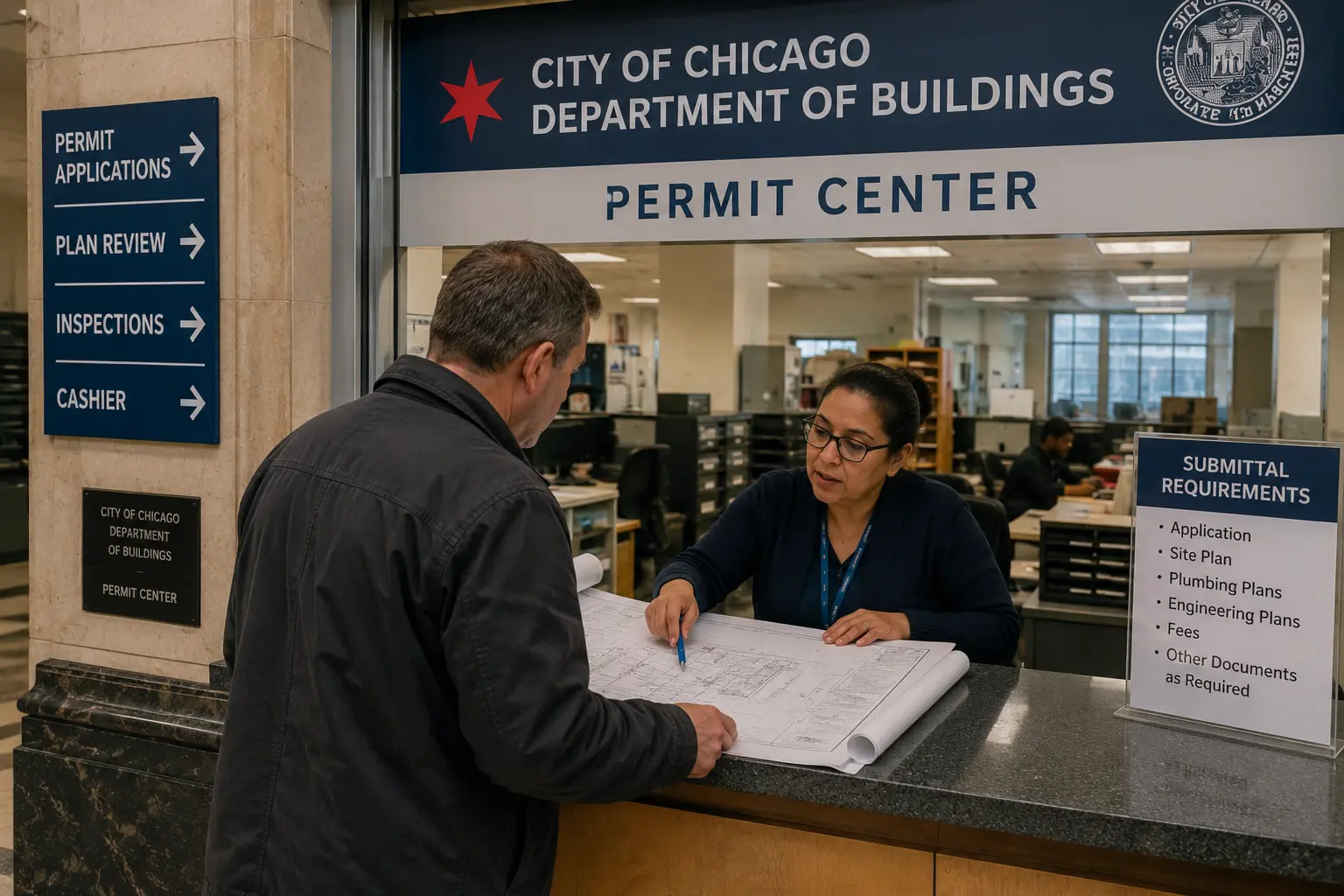
Replacing a sewer line in Chicago is a major project that often involves excavation, inspections, city regulations, and significant costs. One of the most important steps that homeowners frequently overlook is understanding permit requirements before work begins.
In most cases, sewer line replacement projects require permits in Chicago. These permits help ensure that work complies with local building and plumbing codes, protects public infrastructure, and is completed by qualified professionals. Understanding how the permit process works can help homeowners avoid delays, code violations, failed inspections, and unexpected expenses.
Key Takeaways
- Most sewer line replacement projects in Chicago require permits before work begins.
- Permit requirements vary depending on the location and scope of the replacement.
- Licensed plumbing contractors typically obtain permits on behalf of homeowners.
- Projects affecting sidewalks, alleys, streets, or public infrastructure may require additional approvals.
- Inspections are commonly required before permits can be finalized.
- Permit costs are usually a small portion of the overall replacement budget.
- Skipping required permits can create legal, financial, and property-sale complications later.
When Is a Permit Required for Sewer Line Replacement?
Generally, sewer line replacement in Chicago requires a permit. Because replacement involves removing and installing portions of a sewer system, city regulations typically require permits, inspections, and compliance with applicable plumbing and building codes. Additional permits may be necessary when work affects public property, sidewalks, alleys, streets, or city sewer connections.
Unlike simple maintenance services such as drain cleaning or sewer rodding, sewer replacement changes or rebuilds part of the wastewater system serving the property. As a result, it falls into a category of work that receives greater regulatory oversight.
Homeowners seeking a broader understanding of local sewer regulations can also explore Chicago Permits, Codes & Local Rules, which covers how permits, inspections, and code requirements apply to sewer-related projects throughout the city.
Why Chicago Requires Sewer Replacement Permits
Sewer systems are critical infrastructure that affect public health, environmental protection, and property safety. Improper installation can create serious problems that extend far beyond a single property.
Permit requirements help ensure:
- New sewer pipes meet current code standards.
- Proper materials are used.
- Connections are installed correctly.
- Excavation is performed safely.
- Public infrastructure is protected.
- Required inspections verify compliance.
- Accurate records exist for future property owners.
Chicago’s permitting process is designed to reduce long-term risks and ensure sewer systems function properly for decades after installation.
Who Obtains the Sewer Replacement Permit?
In most situations, the contractor performing the replacement obtains the permit.
Because sewer replacement is specialized work, homeowners should expect qualified contractors to handle the application process, schedule inspections, and coordinate with city agencies when necessary.
Before signing a contract, homeowners should ask:
- Are permits required for this project?
- Who will pull the permit?
- Are permit fees included in the estimate?
- Will inspections be scheduled by the contractor?
- Will final approval documentation be provided?
Chicago has specific requirements regarding who may legally perform sewer work. Homeowners can learn more in Licensed Plumber Requirements for Sewer Work in Chicago.
What Sewer Replacement Projects Typically Require Permits?
Most replacement projects require permits because they involve installing new sewer piping or replacing substantial sections of an existing line.
Common examples include:
- Full sewer line replacement from the house to the city connection
- Replacement of collapsed sewer lines
- Replacement of aging clay sewer pipes
- Pipe bursting sewer replacement projects
- Major excavation and reconstruction work
- Replacement involving new cleanouts
- Relocation of sewer lines
- Repairs that effectively become full replacements
Even if only part of a line is being replaced, permits are often required because the work alters the structure of the sewer system.
Additional Permits for Work on Public Property
Sewer replacement becomes more complicated when work extends beyond private property.
Many Chicago homes have sewer lines that pass beneath sidewalks, parkways, alleys, or portions of public right-of-way before connecting to the municipal system.
Projects involving these areas may require additional approvals and restoration requirements.
Sidewalk Projects
Replacement work beneath or adjacent to public sidewalks often requires coordination with city departments and compliance with restoration standards. More information is available in Sewer Repair Near Sidewalks in Chicago.
Street and Alley Projects
If excavation impacts a public alley or street, homeowners should expect additional permitting requirements and potentially longer project timelines. These situations are discussed in Sewer Repair Near Streets and Alleys in Chicago.
How Permit Requirements Affect Project Costs
Permit costs are typically only one part of the overall sewer replacement budget.
| Cost Component | Potential Impact |
|---|---|
| Permit fees | Administrative cost required before work begins |
| Inspections | Verification that work meets code requirements |
| Public right-of-way approvals | Additional fees and paperwork |
| Traffic or safety requirements | May increase project complexity |
| Restoration requirements | Repairs to sidewalks, pavement, or landscaping |
Although permit-related expenses can add to the project budget, they often help avoid much larger costs associated with non-compliant installations or future legal issues.
Inspections Required for Sewer Replacement
Obtaining a permit is only part of the process. Most sewer replacement projects require one or more inspections before the permit can be closed.
Inspectors may review:
- Pipe materials
- Installation methods
- Slope and alignment
- Connection points
- Excavation safety requirements
- Compliance with approved plans
- Restoration work
The exact inspection requirements vary by project. Homeowners can learn more about the process in Sewer Repair Inspection Requirements in Chicago.
Chicago-Specific Considerations for Sewer Replacements
Older Housing Stock
Many Chicago neighborhoods contain homes built decades ago with clay, cast iron, or other aging sewer materials. Replacements often uncover conditions that require additional code compliance measures.
Shared Infrastructure Concerns
Some properties, especially older multi-unit buildings, may have sewer configurations that require special consideration during replacement projects.
Owners of two-flats and larger residential buildings should review Sewer Repair for Two-Flats and Multi-Unit Homes when planning major sewer work.
Easements and Access Issues
Not all sewer lines are located entirely within straightforward property boundaries. Easements can affect replacement methods, access rights, and permit requirements.
Homeowners facing these situations may benefit from understanding Understanding Sewer Line Easements in Chicago.
Determining Responsibility Before Replacing a Sewer Line
Before beginning a replacement project, homeowners should determine who is responsible for the damaged portion of the sewer system.
In many situations, homeowners are responsible for the private sewer lateral serving their property. However, the city is generally responsible for public sewer mains.
Understanding the distinction can help prevent unnecessary expenses and confusion.
For more information, see Who Is Responsible for Sewer Lines in Chicago? and City Sewer Main vs Private Sewer Line: Who Pays?.
What Happens If You Replace a Sewer Line Without a Permit?
Attempting to bypass permit requirements can create significant risks.
Potential consequences include:
- Failed inspections
- Code enforcement actions
- Required corrective work
- Difficulty selling the property
- Problems with lenders or buyers
- Complications during insurance claims
- Liability issues if public infrastructure is affected
Even if the replacement appears successful initially, undocumented work can create problems years later when ownership changes or additional repairs become necessary.
Common Homeowner Mistakes During Sewer Replacement Projects
Assuming the Contractor Will Handle Everything
While contractors often manage permits, homeowners should still verify that permits have been obtained and inspections completed.
Choosing the Lowest Bid Without Verifying Licensing
Low bids sometimes exclude permits, inspections, or restoration requirements that other estimates include.
Failing to Confirm Property Ownership Boundaries
Understanding where private responsibility ends and public responsibility begins is critical before authorizing a replacement project.
Ignoring Easement Restrictions
Replacement work may be affected by utility easements or shared access areas that require additional approvals.
Waiting Too Long After a Failure Is Confirmed
Once a sewer line has collapsed or failed structurally, delays often increase repair complexity and potential property damage.
Frequently Asked Questions
Do all sewer line replacements require permits in Chicago?
Most sewer replacement projects require permits because they involve substantial modifications to the property’s wastewater system. Specific requirements depend on the scope and location of the work.
Can a homeowner replace a sewer line without hiring a licensed plumber?
Many sewer replacement projects must be performed by appropriately licensed professionals. Local regulations and permit requirements often restrict who may perform the work.
How long does it take to obtain a sewer replacement permit?
Approval timelines vary depending on project complexity, location, required documentation, and whether public infrastructure is affected.
Are inspections required after sewer replacement?
In most cases, yes. Inspections help verify compliance with applicable codes and permit requirements before the project is finalized.
Will homeowner’s insurance cover permit costs?
Insurance coverage varies by policy and claim circumstances. Some covered losses may include related permit expenses, while others may not.
What if the sewer replacement crosses a sidewalk or alley?
Additional permits, inspections, and restoration requirements are commonly required when public property is affected.
Can unpermitted sewer replacement affect a future home sale?
Yes. Buyers, lenders, inspectors, and title companies may request documentation showing that major sewer work was completed legally and properly permitted.
Conclusion
Chicago sewer replacement projects almost always involve more than simply replacing a damaged pipe. Permit requirements, inspections, licensing rules, and public infrastructure considerations all play important roles in ensuring the work is completed safely and legally.
Homeowners who understand permit requirements before a project begins are better positioned to avoid delays, unexpected costs, and future complications. Verifying permits, inspections, and contractor qualifications can help ensure that a sewer replacement project proceeds as smoothly as possible while remaining compliant with Chicago regulations.