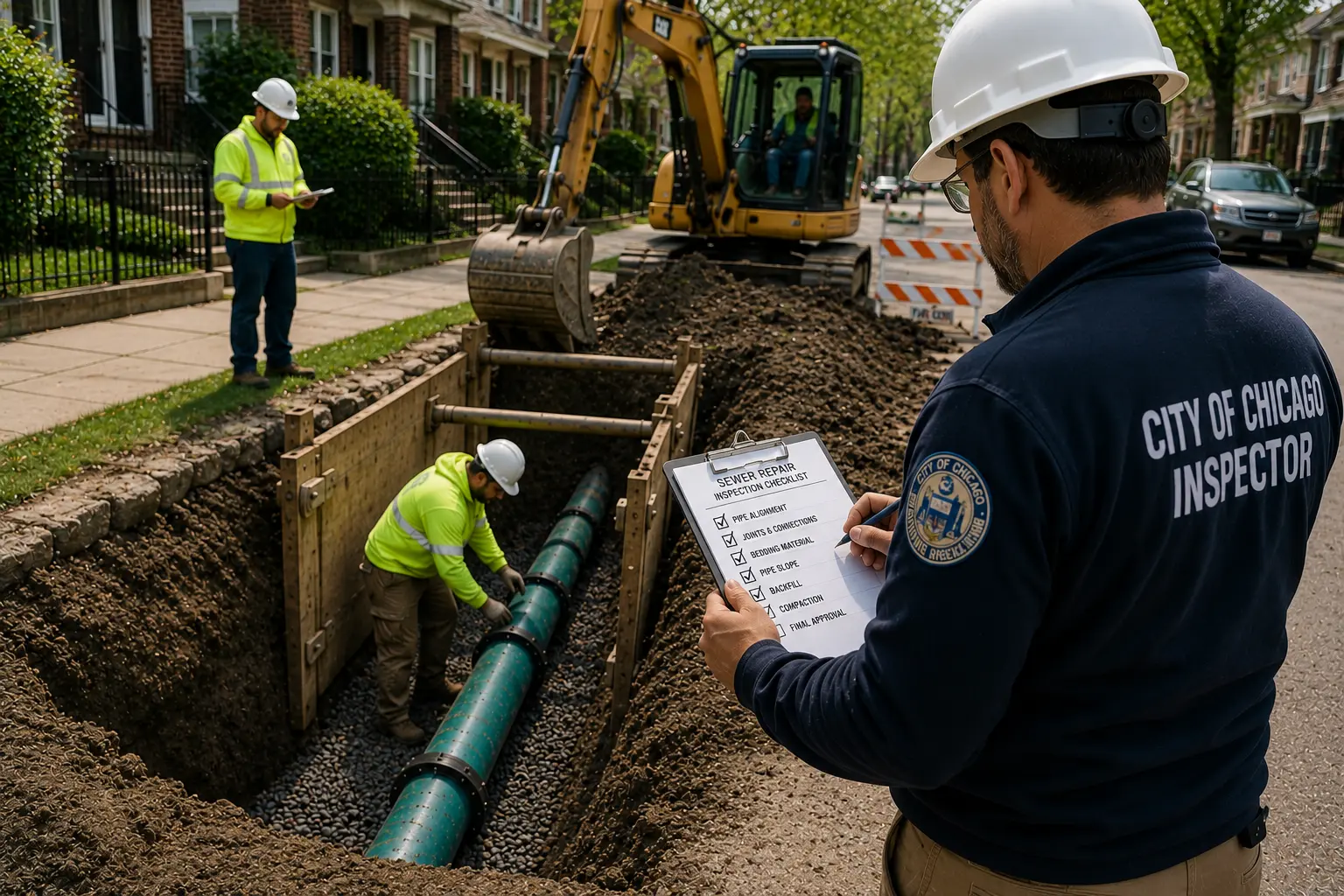
Sewer repair inspections in Chicago are an important part of making sure underground work is completed safely, legally, and in compliance with local code requirements. For homeowners, inspections can feel like an extra step during an already stressful sewer problem, but they often protect the property owner from improper installation, failed repairs, and future documentation issues.
In many cases, sewer repair work that requires a permit will also require inspection. This is especially true when the project involves excavation, pipe replacement, new connections, work near public property, or repairs that affect the building drainage system. Homeowners should understand when inspections may be required, who schedules them, what inspectors look for, and what can go wrong if the process is skipped.
Key Takeaways
- Sewer repair inspections are commonly required when sewer work involves permits, excavation, replacement, or major repair.
- Inspections help confirm that the repair meets Chicago code, permit, and plumbing requirements.
- The contractor usually schedules inspections, but homeowners should verify that inspections are completed.
- Work should not be covered too early if inspection is required before backfill.
- Repairs near sidewalks, streets, alleys, easements, or public sewer connections may involve additional inspection concerns.
- Failed inspections can cause delays, added costs, or required corrective work.
- Final inspection documentation should be kept with other home records.
When Are Sewer Repair Inspections Required in Chicago?
Sewer repair inspections are often required when the work involves a permit, excavation, pipe replacement, new sewer connections, public-way impacts, or significant changes to the private sewer line. Minor maintenance, such as basic drain cleaning or rodding, may not require inspection, but major sewer repairs usually should be reviewed before they are covered and finalized.
Inspection requirements are closely tied to permits. If the sewer repair requires a permit, there is a strong chance that at least one inspection will be required before the permit can be closed.
Homeowners looking at the broader local process can review Chicago Permits, Codes & Local Rules for more context on how sewer permits, code rules, inspections, and public-way issues connect.
Why Sewer Repair Inspections Matter
Sewer work is buried after completion, which means mistakes may not be visible once the trench is filled. Inspections help verify important details while the work can still be seen, corrected, or documented.
A proper inspection can help reduce the risk of:
- Improper pipe slope
- Unsupported or poorly bedded pipe
- Incorrect materials
- Weak connections between old and new pipe
- Leaks or future root intrusion
- Code violations
- Problems during a future sale or insurance claim
- Damage to public property or neighboring areas
For homeowners, the inspection process provides an additional layer of accountability. It does not guarantee the sewer line will never fail, but it helps confirm that the permitted work was completed according to required standards at the time of repair.
What Types of Sewer Work Commonly Need Inspection?
Inspection requirements depend on the scope and location of the repair. The more the work affects the structure, function, or connection of the sewer system, the more likely inspection becomes.
| Type of Sewer Work | Why Inspection May Be Required |
|---|---|
| Partial sewer line replacement | New pipe sections, connections, and slope may need verification before backfill. |
| Full sewer line replacement | Major work usually requires permit review and inspection before completion. |
| Collapsed pipe repair | Inspectors may need to verify replacement method, bedding, and alignment. |
| New cleanout installation | Placement and installation may need to comply with code requirements. |
| Work near a city sewer connection | Connection details can affect public infrastructure and drainage performance. |
| Sidewalk, street, or alley work | Public-way restoration and excavation requirements may be involved. |
| Multi-unit building sewer work | Shared drainage and multiple occupants can increase code and inspection concerns. |
Homeowners who are unsure whether their project needs a permit should start with Chicago Sewer Repair Permits: What Homeowners Need to Know.
What Inspectors May Look For
Sewer repair inspections are not just a formality. The inspector may review several technical and code-related parts of the project before the work is approved.
Inspection items may include:
- Approved pipe materials
- Pipe size and suitability for the project
- Proper slope and drainage direction
- Pipe alignment
- Connection quality between old and new pipe
- Cleanout location and installation
- Excavation conditions
- Pipe bedding and support
- Backfill requirements
- Compliance with the permitted scope of work
- Public-way restoration when applicable
The exact inspection focus depends on the project. A simple private-yard repair may be reviewed differently than a replacement near a street, alley, sidewalk, or city connection.
Who Schedules the Sewer Inspection?
The contractor typically schedules required sewer inspections because they are managing the work, permit process, and repair timeline. However, homeowners should not assume that everything has been completed correctly without asking.
Before work begins, homeowners should ask:
- Will this project require inspection?
- When will inspection happen?
- Can the pipe be covered before inspection?
- Who schedules the inspector?
- What happens if the inspection fails?
- Will final inspection approval be provided?
Chicago sewer work often requires properly qualified professionals. Homeowners can learn more about contractor qualifications in Licensed Plumber Requirements for Sewer Work in Chicago.
Why Timing Matters Before the Trench Is Filled
One of the most important inspection issues is timing. If the repair must be inspected before backfill, the contractor should not cover the work too early.
If a required inspection is missed, the consequences can include:
- Delays in closing the permit
- Requirement to reopen the trench
- Additional labor costs
- Disputes between homeowner and contractor
- Difficulty proving the repair was compliant
- Problems with future property records
Practical homeowner step: Ask the contractor to confirm when inspection will occur and whether the repair must remain exposed until approval is granted.
Chicago-Specific Inspection Considerations
Older Sewer Materials
Many Chicago homes have older sewer materials, including clay and cast iron. Repairs may involve connecting new pipe to older materials, which makes connection quality and alignment especially important.
Public Right-of-Way Work
Sewer work near sidewalks, streets, alleys, or parkways may involve more than the pipe itself. Inspectors or city reviewers may also care about excavation safety, access, restoration, and whether public infrastructure is affected.
For location-specific concerns, see Sewer Repair Near Sidewalks in Chicago and Sewer Repair Near Streets and Alleys in Chicago.
City Sewer Connection Areas
When work approaches the public sewer main or city connection, inspection and responsibility questions can become more important. The repair may involve private responsibility, public infrastructure, or additional review depending on the exact defect location.
Two-Flats and Multi-Unit Homes
Multi-unit buildings may have more complex drainage systems and more occupants affected by sewer disruption. Inspection scheduling and documentation can be especially important when several households depend on the same drainage system.
How Inspections Affect Project Cost and Timing
Inspections are not usually the largest cost in a sewer repair project, but they can affect the schedule and overall budget. The biggest cost impact often comes from delays, failed inspections, or incomplete planning.
| Inspection-Related Factor | Potential Homeowner Impact |
|---|---|
| Permit and inspection fees | May be included in the contractor estimate or listed separately. |
| Scheduling delays | Can extend the project timeline if inspection availability is limited. |
| Failed inspection | May require corrective work before the project can continue. |
| Premature backfill | Can require reopening the repair area if inspection was missed. |
| Public-way review | May add coordination time for sidewalk, street, alley, or parkway work. |
| Restoration requirements | May affect final approval when public or shared areas are disturbed. |
When comparing estimates, homeowners should ask whether permits, inspections, and any required reinspection costs are included. A lower estimate may not be less expensive if it leaves inspection responsibilities unclear.
Inspections, Building Code, and Repair Quality
Inspections exist because sewer repairs must comply with applicable code and plumbing standards. The inspection process helps verify that the contractor’s work matches the approved repair scope and meets requirements before it disappears underground.
Important code-related issues may include:
- Pipe material
- Pipe diameter
- Slope
- Connection method
- Cleanout access
- Excavation support
- Public-way restoration
For a broader explanation of how local code affects sewer projects, see Sewer Work and Chicago Building Code Explained.
What Happens If a Sewer Repair Fails Inspection?
A failed inspection does not always mean the entire project is ruined. It usually means something must be corrected before the repair can be approved.
Common reasons for inspection problems may include:
- Improper pipe slope
- Incorrect materials
- Unapproved changes from the permitted scope
- Poor connections
- Incomplete cleanout installation
- Insufficient pipe support or bedding
- Work covered before inspection
- Unfinished restoration
The contractor should explain what failed, how it will be corrected, whether additional costs apply, and when reinspection will occur. Homeowners should keep copies of all inspection results and related communications.
Inspections for Sewer Replacement Projects
Sewer replacement projects commonly require inspection because they involve more extensive work than a small repair. Full or partial replacement may affect pipe alignment, slope, connections, access points, and public-way areas.
Before approving replacement, homeowners should confirm:
- Whether a permit is required
- What inspections will be needed
- Whether the work must remain open for inspection
- Whether public-way restoration is included
- Who provides final approval documentation
Homeowners considering major replacement should also read Chicago Sewer Replacement Permit Requirements.
Common Mistakes Homeowners Make
Assuming the Contractor Completed the Inspection
Homeowners should ask directly for confirmation that required inspections were completed and approved.
Allowing Work to Be Covered Too Soon
If inspection is required before backfill, covering the pipe too early can cause expensive delays.
Not Asking Whether Inspection Fees Are Included
Estimates should clarify whether permit and inspection costs are included or separate.
Ignoring Public-Way Restoration
Sidewalk, street, alley, or parkway restoration may affect final approval and total cost.
Failing to Keep Final Documentation
Inspection approvals, permits, invoices, photos, and camera footage should be kept with home records.
Warning Signs That Inspection Issues May Become a Problem
Homeowners should ask more questions if:
- The contractor says no inspection is needed for major excavation.
- The estimate does not mention permits or inspections.
- The trench is being filled before inspection is discussed.
- The repair is near a sidewalk, street, alley, or city connection.
- The contractor cannot explain who schedules inspection.
- The project involves sewer replacement but no permit documentation.
- The contractor is unwilling to provide final approval records.
These warning signs do not automatically mean the contractor is wrong, but they do justify clarification before the project moves forward.
Frequently Asked Questions
Do sewer repairs in Chicago always require inspection?
No. Minor maintenance may not require inspection, but permitted sewer repairs, excavation, replacement, new connections, and major work commonly do.
Who schedules the sewer repair inspection?
The contractor usually schedules required inspections, but homeowners should verify that inspections are completed and approved.
Can the contractor cover the sewer line before inspection?
Not if the repair must remain visible for inspection. Covering work too early can create delays, rework, or permit closeout problems.
What happens if the repair fails inspection?
The contractor typically must correct the issue and schedule reinspection. Homeowners should ask what failed, who pays for correction, and when the project can proceed.
Will insurance pay for inspection-related costs?
Coverage depends on the policy and claim circumstances. Insurance may cover certain covered repair expenses or resulting damage, but permit and inspection costs are not guaranteed.
Do inspections apply to sewer repairs near sidewalks or alleys?
Often, yes. Repairs near public-way areas can involve additional permit, inspection, and restoration concerns.
Should I keep inspection records after the repair?
Yes. Inspection approvals and permit records can be useful for future repairs, insurance issues, and home sales.
Conclusion
Sewer repair inspections in Chicago are a key part of making sure permitted sewer work is completed properly and documented. They help verify materials, installation, slope, connections, and restoration before the repair is buried and forgotten.
Homeowners do not need to manage every inspection detail themselves, but they should ask the right questions before work begins. Confirm whether inspection is required, who schedules it, whether the pipe must remain exposed, and how final approval will be documented. That extra attention can help prevent delays, disputes, and costly problems later.