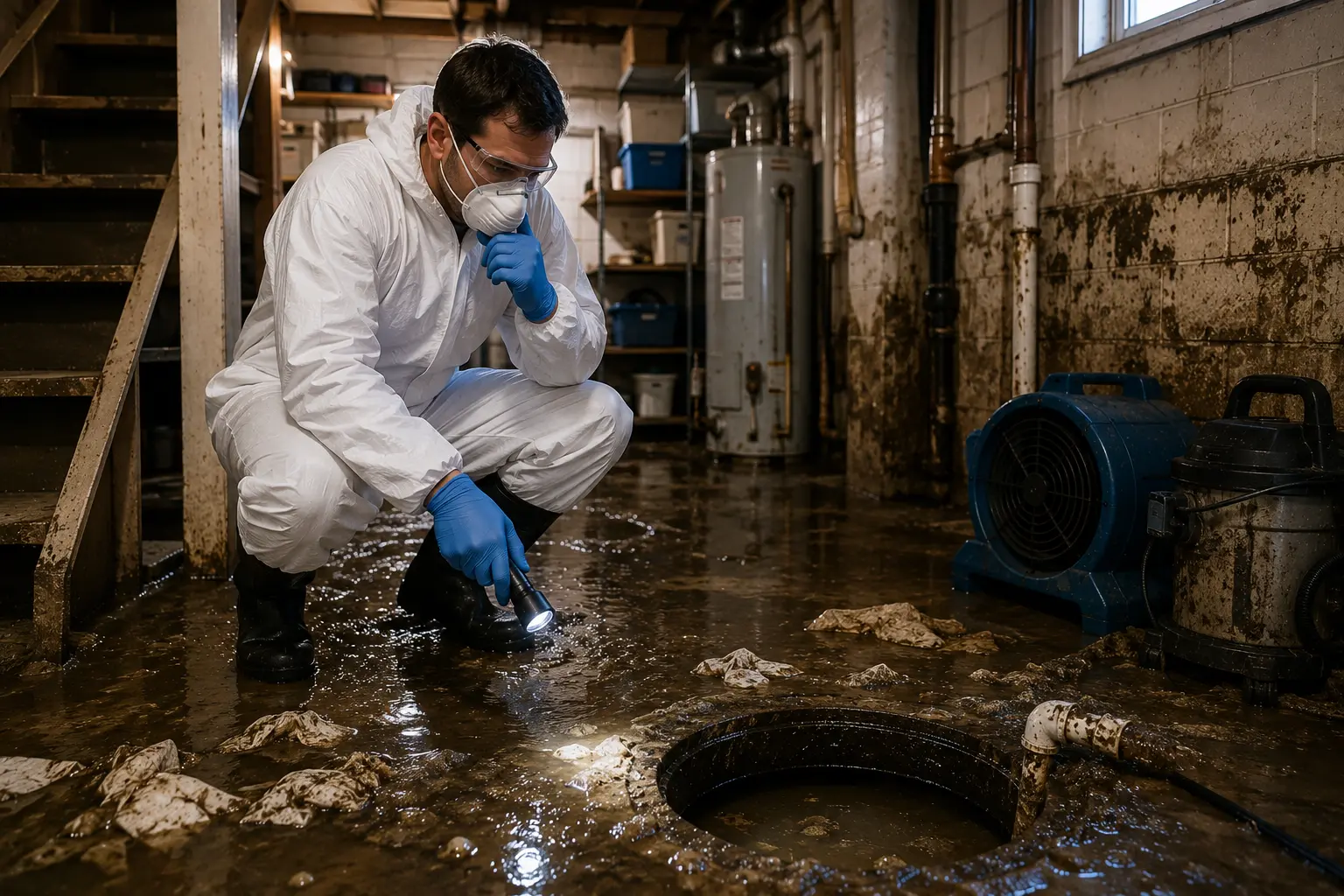
A sewer backup is more than a messy plumbing problem. When wastewater enters a basement, bathroom, laundry area, or living space, it can expose people to contaminants that should be treated seriously. Even if the water looks diluted, a sewer backup may contain bacteria, viruses, parasites, organic waste, chemicals, and other materials from the sewer system.
For Chicago homeowners, sewer backups often appear in basements because floor drains, utility sinks, laundry connections, and basement bathrooms are usually the lowest points in the home’s plumbing system. When the main sewer line backs up or sewer pressure reverses during heavy rain, contaminated water can enter the home quickly.
This article explains the health risks of a sewer backup, who may be most vulnerable, what symptoms and warning signs to take seriously, how cleanup decisions affect safety, and why the underlying sewer problem still needs to be identified after the immediate mess is controlled.
Key Takeaways
- Sewer backup water should be treated as contaminated, even if it looks mostly clear.
- Exposure can happen through skin contact, inhalation of contaminated particles or odors, accidental ingestion, or contact with contaminated belongings.
- Children, older adults, pregnant people, and immune-compromised individuals may face higher risk from sewage exposure.
- Porous materials such as carpet, padding, drywall, insulation, and upholstered furniture can hold contamination and moisture.
- Cleanup and sewer repair are separate issues; both may be needed after a backup.
- Chicago basements can be especially vulnerable because backups often enter through floor drains, laundry areas, or below-grade bathrooms.
- Insurance coverage for cleanup depends on the policy and whether sewer backup coverage applies.
How Dangerous Is a Sewer Backup?
A sewer backup can be hazardous because wastewater may contain disease-causing microorganisms, human waste, chemicals, and contaminated debris. Homeowners should avoid direct contact, keep children and pets away, stop using plumbing fixtures, and treat affected areas as contaminated until they are properly cleaned, disinfected, dried, and evaluated for damaged materials.
What Health Risks Can a Sewer Backup Create?
The health risks from a sewer backup depend on the amount of sewage, how long it sits, where it spreads, what materials are affected, and who is exposed. A small backup limited to a hard floor is different from a basement filled with wastewater that reaches drywall, carpet, furniture, and stored belongings.
Potential health concerns include:
- Gastrointestinal illness from contact with contaminated water
- Skin irritation or infection after direct exposure
- Respiratory irritation from odors, damp materials, or airborne particles
- Mold growth after moisture remains in building materials
- Exposure to bacteria, viruses, parasites, and organic waste
- Contamination of personal belongings, toys, furniture, and stored items
- Odor and indoor air quality problems after incomplete cleanup
If sewage is actively entering the home, the first priority is to reduce exposure and stop making the backup worse. For immediate steps, see What to Do After a Sewer Backup.
How People Can Be Exposed to Sewage
Sewage exposure does not only happen when someone steps directly into wastewater. Contamination can spread through the home in several ways.
| Exposure Path | How It Happens | Why It Matters |
|---|---|---|
| Skin contact | Walking through sewage, touching wet materials, or handling contaminated belongings | May cause irritation, infection risk, or spread contamination to clean areas |
| Accidental ingestion | Touching the face, eating, or drinking after contact with contaminated surfaces | Can increase risk of gastrointestinal illness |
| Inhalation | Breathing odors, damp air, or particles from contaminated materials | May irritate the lungs, especially for sensitive individuals |
| Cross-contamination | Tracking wastewater on shoes, tools, pets, or clothing | Can spread contamination beyond the original backup area |
| Mold exposure | Moisture remains in drywall, carpet, wood, or insulation after cleanup | Can contribute to respiratory symptoms and indoor air quality concerns |
Who Is Most Vulnerable After a Sewer Backup?
Anyone can be affected by sewage exposure, but certain people should be protected with extra caution. Vulnerability can depend on age, health status, immune function, and the amount of exposure.
Higher-risk groups may include:
- Infants and young children
- Older adults
- Pregnant people
- People with asthma or respiratory conditions
- People with weakened immune systems
- People with open cuts, wounds, or skin conditions
- Pets that may walk through or lick contaminated surfaces
Children and pets should be kept completely away from affected areas. They are more likely to touch contaminated surfaces, track contamination through the home, or accidentally ingest harmful material.
Symptoms Homeowners Should Take Seriously
This article is not medical advice, but homeowners should pay attention to symptoms after possible sewage exposure. If someone becomes ill after contact with sewage or contaminated materials, contacting a medical professional is a sensible step.
Symptoms that may warrant concern include:
- Nausea, vomiting, or diarrhea
- Fever or chills
- Skin redness, rash, swelling, or infection signs
- Eye irritation
- Headache or dizziness from strong odors
- Coughing, wheezing, or shortness of breath
- Worsening asthma or allergy symptoms
- Fatigue or flu-like symptoms after exposure
Symptoms can have many causes, but sewage exposure is worth mentioning if medical advice is needed.
Why Sewage-Contaminated Materials Are a Problem
One of the biggest health concerns after a sewer backup is not only the standing water. It is what the water touches. Some materials can be cleaned more easily, while others absorb wastewater and hold contamination.
Materials That May Be Easier to Clean
- Concrete floors
- Tile
- Metal shelving
- Plastic storage bins
- Some sealed surfaces
Materials That Often Require Removal or Careful Evaluation
- Carpet and padding
- Drywall near the floor
- Insulation
- Cardboard boxes
- Upholstered furniture
- Mattresses
- Books and paper documents
- Laminate flooring
- Wood materials that absorbed wastewater
Cleanup is not only about making the area look clean. It is about removing contamination and moisture from the home. For more detailed cleanup guidance, see Sewage Cleanup After a Sewer Backup.
Mold Risk After a Sewer Backup
Mold can become a secondary concern after a sewer backup because sewage adds moisture to building materials. If drying is incomplete, mold can develop behind walls, under flooring, in baseboards, or inside stored belongings.
Mold risk is higher when:
- Water sits for an extended period
- Carpet or padding remains wet
- Drywall or insulation absorbs moisture
- The basement has poor ventilation
- Cleanup focuses only on surface disinfection
- Humidity remains high after the backup
Disinfecting surfaces does not solve moisture problems. Drying and material removal may be just as important as cleaning.
Chicago-Specific Health and Safety Concerns
Chicago homes can present unique sewer backup risks because of basement-heavy layouts, older sewer laterals, dense neighborhoods, and weather-driven sewer pressure.
Basement Backups Are Commonly More Disruptive
Many Chicago basements contain laundry rooms, storage, utilities, finished living areas, or additional bathrooms. A backup can therefore affect more than unfinished concrete.
Older Sewer Lines May Cause Repeated Exposure
If a sewer line is cracked, rooted, offset, or collapsed, backups may recur. Repeated small backups can still create ongoing exposure and moisture concerns.
Heavy Rain Can Complicate the Source
A backup during a storm may involve public sewer pressure, private lateral restrictions, drainage issues, or a combination of causes. Repeated rain-related backups should be investigated rather than treated as unavoidable.
Cold Weather Can Slow Drying
Chicago winter conditions may make ventilation and drying more difficult. Moisture trapped in a basement can contribute to odor, mold, and material deterioration.
For broader guidance on urgent sewer problems in the city, visit the Emergency Sewer Repair hub.
Health Risk vs. Repair Decision: Why Both Matter
After a sewer backup, homeowners often focus on either cleanup or repair, but both sides matter. Cleanup reduces exposure inside the home. Repair reduces the chance of another backup.
The repair decision usually depends on what caused the backup:
- A temporary blockage may require cleaning and monitoring.
- Tree roots may require removal and possible pipe repair.
- A cracked pipe may require spot repair or replacement.
- A collapsed line may require excavation or replacement.
- Storm-related reverse flow may require prevention measures and drainage review.
Basement-related backups can involve several possible solutions. Homeowners can compare options in Basement Sewer Backup Repair: Common Solutions.
Why a Sewer Camera Inspection Helps Reduce Future Risk
A sewer camera inspection does not clean the basement, but it can help identify why the backup happened. That matters because the health risk can return if the sewer line backs up again.
A camera inspection may reveal:
- Root intrusion
- Broken pipe
- Collapsed pipe
- Offset joints
- Pipe bellies holding waste
- Debris or grease buildup
- Areas where flow is restricted
For urgent or repeated backups, Emergency Sewer Camera Inspections explains why inspection is often a key part of the response.
Insurance and Health-Related Cleanup Costs
Insurance may help with some cleanup or restoration costs after a sewer backup, but coverage depends on the policy. Many homeowners need sewer backup or water backup coverage for this type of event.
Insurance may potentially apply to:
- Cleanup and disinfection
- Drying and mitigation
- Removal of damaged flooring or drywall
- Replacement of damaged personal property
- Restoration after covered damage
Insurance may not automatically cover:
- The sewer line repair itself
- Preventive upgrades
- Damage from long-term deterioration
- Items discarded without documentation
- Costs above policy limits
If you plan to file an insurance claim, document the affected areas with photos and videos before removing materials when it is safe. Keep cleanup invoices, sewer inspection results, and repair documentation.
Common Mistakes That Increase Health Risks
Walking Through Sewage Without Protection
Foot traffic can spread contamination to stairs, hallways, clean flooring, vehicles, and other parts of the home.
Letting Children or Pets Near the Area
Children and pets are more likely to touch contaminated surfaces or spread waste to other rooms.
Keeping Contaminated Carpet or Padding
Soft materials can hold sewage and moisture even after the surface looks cleaner.
Using Bleach Without Removing Contaminated Materials
Disinfectant cannot solve every problem if sewage has soaked into porous materials or hidden spaces.
Ignoring Lingering Odors
Persistent sewer or musty smells may indicate remaining contamination, trapped moisture, or an unresolved sewer issue.
Cleaning the Basement but Not Inspecting the Sewer Line
If the cause is not addressed, another backup may create the same exposure risk again.
Warning Signs the Home May Still Be Unsafe
After cleanup, homeowners should watch for signs that more work may be needed.
- Persistent sewage odor
- Musty smell that returns after drying
- Visible mold growth
- Soft or swollen drywall near the floor
- Warped flooring
- Stained baseboards
- Basement drain odors
- Repeated drain gurgling
- Another backup after laundry, showers, or rain
These signs may point to lingering contamination, moisture, or an unresolved sewer line problem.
Frequently Asked Questions
Can a sewer backup make you sick?
Yes. Sewage may contain harmful microorganisms and contaminants that can cause illness, skin irritation, or respiratory symptoms. Risk depends on the amount of exposure, the materials affected, and the health of the person exposed.
Is it safe to stay in a house after a sewer backup?
It depends on the severity and location of the backup. A small, contained incident may be easier to isolate, while widespread contamination in living areas may make parts of the home unsafe until cleanup is complete.
What should I do if my child or pet touched sewage?
Wash exposed skin thoroughly and prevent further contact. If symptoms develop or exposure was significant, contact a medical professional or veterinarian for guidance.
Can sewer gas from a backup be dangerous?
Sewer odors can cause discomfort and may signal contamination or drainage problems. Strong or persistent odors should not be ignored, especially if they continue after cleanup.
Does disinfecting the floor remove the health risk?
Not always. Disinfection may help on hard surfaces, but porous materials, hidden moisture, and contaminated belongings may still need removal or further drying.
Do I need professional cleanup after a sewer backup?
Professional cleanup may be appropriate when sewage affects finished areas, carpet, drywall, insulation, large spaces, or vulnerable household members. The decision depends on contamination level and affected materials.
Will homeowners insurance cover health-related cleanup?
Insurance may cover cleanup and restoration if the policy includes applicable sewer backup or water backup coverage. Coverage limits, deductibles, and exclusions vary.
How can I reduce the chance of another sewer backup?
Start by identifying the cause. A sewer camera inspection can reveal roots, cracks, collapse, or restrictions. Depending on the findings, cleaning, repair, replacement, or backwater prevention may be considered.
Conclusion
The health risks of a sewer backup should not be underestimated. Sewage-contaminated water can affect surfaces, belongings, building materials, air quality, and vulnerable people in the household. The safest response is to avoid contact, keep people and pets away, document the damage, remove contaminated materials when necessary, clean and disinfect properly, and dry the area thoroughly.
For Chicago homeowners, the cleanup should also be paired with a serious look at the cause of the backup. If the sewer line is blocked, damaged, rooted, collapsed, or repeatedly overwhelmed, the health risk can return. Addressing both the contaminated area and the underlying sewer problem is the most practical way to protect the home after a backup.