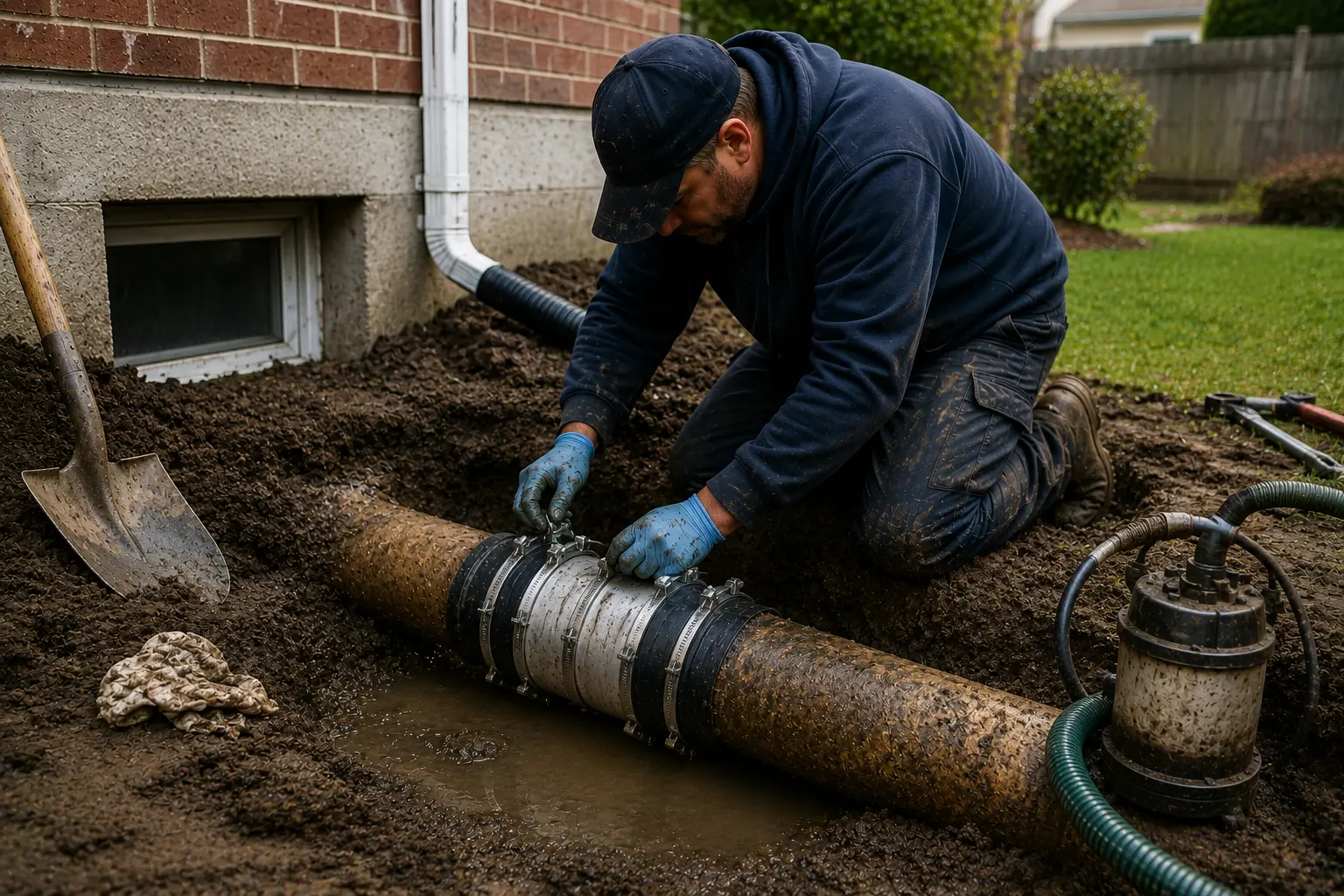
Temporary sewer line repair options are sometimes used when a sewer problem needs immediate attention but a permanent repair cannot be completed right away. This can happen during a sewer backup, after-hours emergency, heavy rain event, winter excavation delay, permit issue, or when a camera inspection shows damage that requires more planning before final repair.
For Chicago homeowners, temporary sewer repairs can be useful in specific situations, but they should be understood clearly. A temporary fix may reduce damage, restore limited drainage, or stabilize the problem until permanent sewer repair or replacement is possible. It does not always solve the underlying cause of the failure.
This guide explains common temporary sewer line repair options, when they may make sense, what their limitations are, and how homeowners should decide whether a temporary repair is enough or only a short-term step toward a larger repair.
Key Takeaways
- Temporary sewer line repairs are short-term measures used to control damage, restore limited function, or buy time before permanent work.
- They may be appropriate when permits, weather, access, emergency timing, or inspection findings delay permanent repair.
- Temporary repair does not always mean the sewer line is safe for normal use.
- A sewer camera inspection is often needed to understand whether a temporary fix is reasonable.
- Chicago homes may face added challenges from older pipes, basement drains, heavy rain, and tight urban access.
- Homeowners should ask whether a proposed fix is temporary or permanent before approving work.
When a Temporary Sewer Repair Makes Sense
A temporary sewer line repair may make sense when the immediate goal is to stop a backup, reduce damage, restore limited drainage, or stabilize a sewer problem until permanent repair can be completed. Temporary options may include drain clearing, partial flow restoration, short-term access repairs, controlled water-use restrictions, bypass planning, or emergency stabilization. They should not be confused with a long-term repair when the sewer line is cracked, collapsed, rooted, or failing structurally.
What Is a Temporary Sewer Line Repair?
A temporary sewer line repair is any short-term action intended to manage a sewer problem before a permanent solution is completed. It may restore some function, reduce immediate risk, or prevent the situation from worsening, but it usually does not address every underlying condition.
Temporary repairs are most common when a sewer issue happens suddenly and the permanent solution requires additional time. For example, a basement backup may occur on a weekend, but excavation, permits, utility marking, or full pipe replacement may need to happen later.
Temporary sewer repair may be considered when:
- A sewer backup needs immediate control
- The damaged pipe cannot be accessed right away
- Permanent repair requires a permit
- Weather conditions make excavation difficult
- The pipe needs further inspection before final repair
- The home needs limited plumbing use restored
- Cleanup must begin before full sewer replacement
If sewage is actively entering the home, start with immediate safety steps. See What to Do After a Sewer Backup for the first actions homeowners should take.
Common Temporary Sewer Line Repair Options
The right temporary approach depends on the condition of the sewer line and the risk of continued use. Some options are simple damage-control measures, while others are more involved emergency stabilization steps.
| Temporary Option | When It May Help | Important Limitation |
|---|---|---|
| Sewer rodding or drain clearing | Restores flow when the line is blocked by roots, debris, grease, or buildup | May not fix cracks, collapse, bellies, or major structural defects |
| Hydro jetting | May clear heavy buildup or restore partial flow | May not be safe for fragile or severely damaged pipes |
| Restricted water use | Reduces pressure on a compromised sewer line | Does not repair the pipe and may be inconvenient |
| Temporary access or cleanout work | Improves access for inspection, clearing, or follow-up repair | May only support diagnosis or short-term maintenance |
| Emergency spot stabilization | May reduce leakage or prevent immediate worsening in an accessible section | Not always possible depending on pipe location and damage |
| Temporary bypass or pumping plan | May help in severe situations where flow must be managed during repair planning | Typically more complex and situation-specific |
| Cleanup and containment | Protects the home after sewage enters living areas | Does not correct the sewer failure itself |
Drain Clearing as a Temporary Fix
Drain clearing is one of the most common short-term responses to a sewer backup. If the line is blocked by roots, grease, wipes, debris, or buildup, clearing the obstruction may restore flow quickly.
Drain clearing may be a reasonable temporary step when:
- The home has an active backup
- The sewer line is not draining
- The blockage can be reached through an existing cleanout
- The line needs to be opened before camera inspection
- The homeowner needs limited plumbing use restored
However, clearing the line does not necessarily mean the sewer problem is fixed. Roots can grow back, cracked pipes can worsen, and bellied lines can continue holding waste. If the backup returns after clearing, a structural issue may be present.
A cleared sewer line should not automatically be treated as a repaired sewer line. If the cause is unknown or the backup has happened before, inspection is usually the next important step.
Camera Inspection Before Choosing a Temporary Repair
A sewer camera inspection helps determine whether a temporary repair is reasonable or risky. Without seeing the inside of the line, it can be difficult to know whether the issue is a simple blockage, root intrusion, broken pipe, offset joint, belly, or collapse.
A camera inspection can help identify:
- Where the problem is located
- Whether the pipe is structurally damaged
- Whether cleaning is likely to provide temporary relief
- Whether hydro jetting could damage fragile pipe
- Whether excavation is needed
- Whether the problem is isolated or widespread
- Whether sewer replacement may be more appropriate than repair
For urgent situations, Emergency Sewer Camera Inspections explains how inspection fits into emergency sewer repair decisions.
Temporary Repairs During Same-Day or Weekend Emergencies
Temporary repairs are often discussed during same-day or weekend sewer emergencies because permanent work may not be immediately available. A contractor may be able to clear the line, reduce the backup, and identify the damaged section, but full excavation or replacement may need to wait.
Same-day emergency work may focus on:
- Stopping the active backup
- Restoring limited drainage
- Locating the obstruction or damaged pipe
- Determining whether the home can safely use water
- Scheduling permanent repair after permits or planning
To understand the difference between emergency response and permanent repair timing, see Same-Day Sewer Line Repair: What to Expect.
Weekend timing can also affect the cost and availability of temporary measures. See Weekend Sewer Repair Costs Explained for more on after-hours repair considerations.
When Temporary Repair Is Not Enough
A temporary repair is not appropriate as a long-term solution when the sewer line has serious structural problems. In these situations, temporary measures may reduce immediate damage but leave the home at risk of another backup.
Temporary repair may not be enough if:
- The sewer line has collapsed
- There are multiple damaged pipe sections
- Roots keep returning after cleaning
- The pipe has severe cracks or offsets
- The line has a belly that holds wastewater
- Backups happen repeatedly
- Sewage returns shortly after drain clearing
- The home cannot safely use normal plumbing
If replacement becomes likely, timing depends on site access, permits, pipe depth, weather, and repair scope. Homeowners can learn more from How Quickly Can a Sewer Line Be Replaced?.
Chicago-Specific Considerations for Temporary Sewer Repairs
Temporary sewer repairs in Chicago can be affected by local housing conditions, weather, and municipal requirements.
Older Sewer Laterals
Many Chicago homes have older private sewer laterals made from materials that may be more vulnerable to roots, cracks, offsets, and collapse. Temporary clearing may help briefly, but old pipe defects often require follow-up repair.
Basement Backups
Basements are common in Chicago, and backups often appear through floor drains, laundry areas, utility sinks, or basement bathrooms. If wastewater has entered the basement, cleanup and repair decisions must be handled separately. See Basement Sewer Backup Repair: Common Solutions for basement-specific repair options.
Heavy Rain and Sewer Pressure
Backups during storms may involve private sewer problems, sewer surcharge, or drainage issues around the property. A temporary fix may help restore flow, but repeated rain-related backups should be investigated.
Winter and Excavation Delays
Cold weather, frozen ground, snow, and limited daylight can complicate emergency excavation. Temporary stabilization may be used until conditions allow safer permanent work.
Permit Requirements
Major sewer work may require permits, especially when excavation, replacement, or work near public areas is involved. For more detail, see Emergency Sewer Repair Permits in Chicago.
The broader Emergency Sewer Repair hub includes additional guidance on urgent sewer problems, backup response, inspections, costs, and repair timelines.
Temporary Repair Costs and Tradeoffs
Temporary sewer repairs may cost less than full replacement in the short term, but they can become expensive if the underlying problem keeps returning. The value of a temporary repair depends on whether it buys useful time or simply delays an unavoidable repair.
Factors that affect temporary repair costs include:
- Whether the issue happens during normal hours or after hours
- Whether drain clearing is enough to restore flow
- Whether camera inspection is needed
- Whether the pipe can be accessed through a cleanout
- Whether the backup caused interior contamination
- Whether cleanup is needed
- Whether temporary work requires return visits
- Whether permanent repair is already known to be necessary
| Decision | Possible Benefit | Possible Risk |
|---|---|---|
| Use a temporary fix | May reduce immediate damage and restore limited use | Problem may return if the pipe is structurally failing |
| Wait for permanent repair | May avoid paying for short-term work | Backup may worsen if the line remains blocked or damaged |
| Proceed directly to major repair | May address the root cause sooner | May be costly if diagnosis is incomplete |
Cleanup and Safety During a Temporary Sewer Fix
If sewage has entered the home, temporary sewer work does not eliminate the need for cleanup. Standing wastewater, wet flooring, contaminated drywall, and affected belongings may still require attention even if the sewer line is temporarily flowing again.
Cleanup may include:
- Removing standing wastewater
- Disinfecting hard surfaces
- Removing contaminated porous materials
- Drying affected areas
- Documenting damage for insurance
- Monitoring for odor or mold concerns
Because sewage may create health risks, homeowners should avoid treating cleanup as ordinary mopping. See Sewage Cleanup After a Sewer Backup for more detail on contamination and drying decisions.
Questions to Ask Before Accepting a Temporary Sewer Repair
Temporary repairs can be useful, but homeowners should understand exactly what is being proposed. The most important question is whether the temporary work is expected to solve the problem or only manage it for a short time.
- Is this a temporary repair or a permanent repair?
- What caused the sewer problem?
- Was a camera inspection completed?
- Can I see the inspection findings?
- How long is this temporary solution expected to last?
- Can the home use normal water fixtures after this work?
- What signs mean the problem is returning?
- What permanent repair may still be needed?
- Will permits be required for the final repair?
- Does the estimate include cleanup or only sewer work?
Clear wording matters. “Restoring flow” is not the same as “repairing the sewer line.” Homeowners should ask whether the pipe itself has been fixed or only cleared temporarily.
Common Mistakes With Temporary Sewer Repairs
Treating Temporary Flow as a Permanent Fix
If the sewer line starts draining again, it may feel like the problem is solved. But roots, cracks, collapse, and bellies can cause another backup later.
Skipping the Follow-Up Inspection
Without inspection, the homeowner may not know whether the temporary repair addressed the real cause.
Using Normal Water Too Soon
Even after temporary clearing, water use may need to be limited if the pipe remains damaged or partially restricted.
Ignoring Basement Contamination
A temporary sewer fix does not clean sewage from flooring, walls, belongings, or storage areas.
Waiting Too Long to Schedule Permanent Repair
If the line is known to be damaged, delaying permanent work can increase the risk of repeat backups.
Approving Major Work Without Understanding the Temporary Step
Temporary measures should fit into a clear repair plan, not create confusion about what has actually been completed.
Warning Signs a Temporary Repair Is Failing
After a temporary sewer repair, homeowners should watch for signs that the line is backing up again or still not functioning properly.
- Slow drains throughout the house
- Gurgling toilets or tubs
- Sewer odor near basement drains
- Water appearing during laundry use
- Backups during heavy rain
- Recurring need for sewer rodding
- Standing water seen on camera inspection
- Sewage returning after normal water use resumes
If these signs appear, the temporary repair may no longer be controlling the problem.
Frequently Asked Questions
Can a sewer line be temporarily repaired?
Yes, in some situations. Temporary measures may restore flow, reduce damage, or stabilize the situation until permanent repair is possible. Whether this is safe depends on the condition of the sewer line.
How long does a temporary sewer repair last?
There is no reliable universal timeline. A temporary fix may last long enough to schedule permanent work, or the problem may return quickly if the line is badly damaged or still restricted.
Is drain clearing considered a temporary sewer repair?
It can be. If the backup was caused by a simple blockage and the pipe is sound, clearing may resolve the issue. If roots, cracks, or collapse remain, clearing is usually temporary.
Can I use water after a temporary sewer repair?
Only if the line has been confirmed to be flowing and the repair provider advises that limited or normal use is safe. If the pipe remains compromised, water use may need to be restricted.
Do temporary sewer repairs require permits in Chicago?
Simple clearing or inspection may not require the same permit process as major excavation or replacement. Larger repairs, replacement, or work near public areas may require permits.
Will insurance cover a temporary sewer repair?
Insurance depends on the policy and the cause of the damage. Some policies may help with backup-related cleanup or property damage, but may not cover the sewer line repair itself.
Should I choose temporary repair or full replacement?
The decision depends on inspection findings, severity of damage, repeat backup history, cost, access, permits, and the likelihood of another failure. Temporary repair may make sense when permanent work cannot happen immediately.
What if sewage entered my basement before the temporary repair?
The affected area still needs cleanup and drying. Repairing or clearing the sewer line does not automatically remove contamination from floors, walls, belongings, or stored materials.
Conclusion
Temporary sewer line repair options can be useful when a sewer emergency needs immediate control but permanent repair cannot happen right away. They may restore limited drainage, reduce property damage, or give homeowners time to arrange permits, excavation, replacement, cleanup, or insurance documentation.
However, temporary repair should be understood for what it is: a short-term measure. If the sewer line is cracked, rooted, offset, collapsed, or repeatedly backing up, the underlying problem may still need a permanent solution. For Chicago homeowners, the safest approach is to stop the immediate damage, inspect the line, understand the limits of the temporary fix, and plan the next repair step before the problem returns.