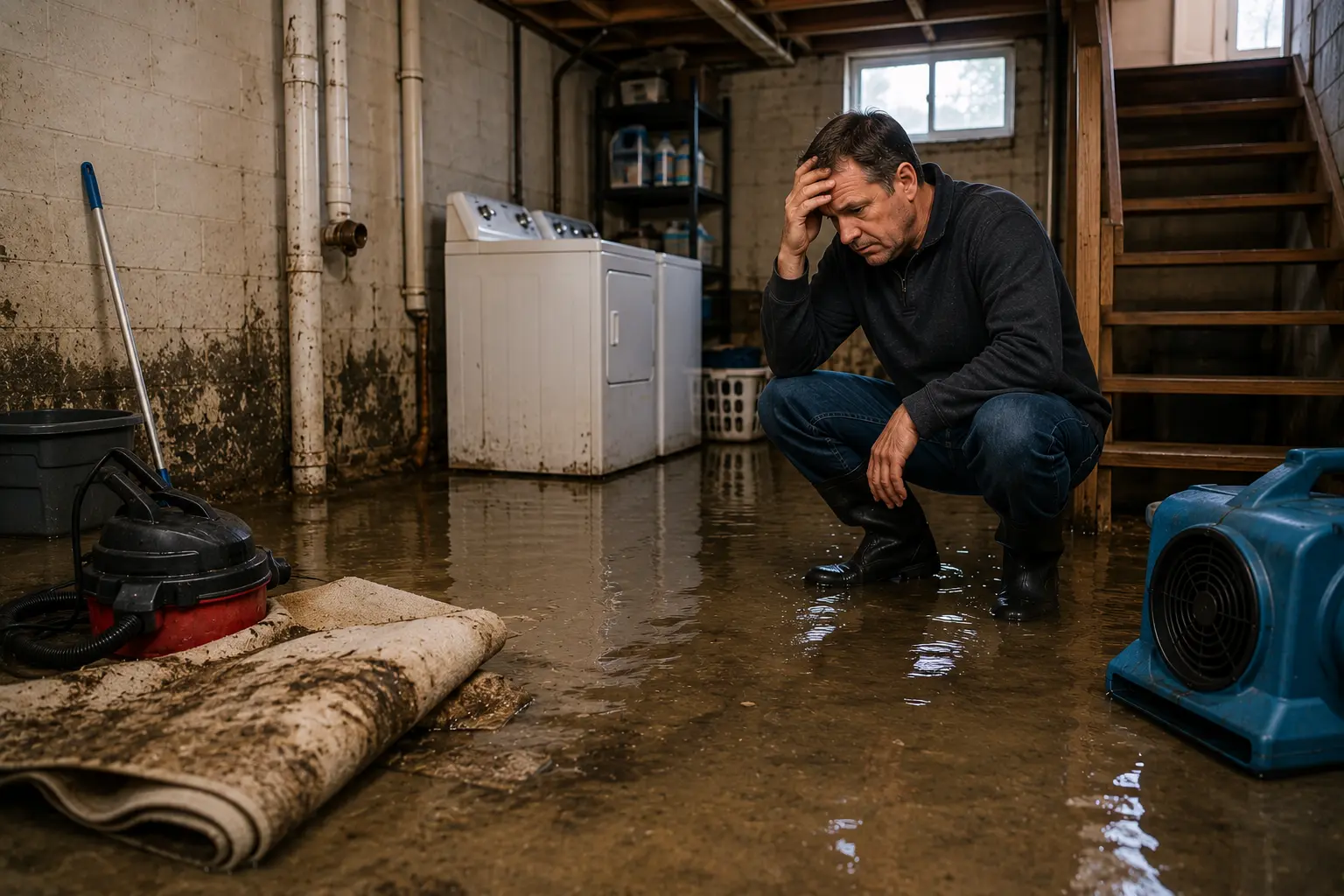
A sewer backup can turn from an unpleasant plumbing problem into a serious health and property issue very quickly. When sewage comes up through a basement floor drain, shower, toilet, utility sink, or laundry drain, the first priority is not finding the permanent repair right away. The first priority is to stop making the backup worse, protect people and pets, document the damage, and arrange the right inspection.
For Chicago homeowners, sewer backups are especially stressful because many homes have basements, older sewer laterals, shared urban drainage challenges, and weather patterns that can overwhelm already vulnerable sewer systems. Heavy rain, tree roots, deteriorated clay pipe, and blockages can all contribute to sudden wastewater backups.
This guide explains what to do after a sewer backup, what not to do, when the situation becomes an emergency, how cleanup and inspection decisions work, and what homeowners should consider before approving repairs.
Key Takeaways
- Stop using water immediately if sewage is backing up into the home.
- Keep people and pets away from contaminated areas until cleanup is complete.
- Document damage before removing materials, especially if you may file an insurance claim.
- A sewer camera inspection is often needed to determine whether the cause is a blockage, roots, pipe damage, or a collapse.
- Cleanup and sewer repair are separate issues; both may be necessary.
- Chicago homes with basements, older pipes, and combined sewer exposure may face higher backup risks during heavy rain.
- Do not assume insurance will cover the backup unless your policy includes applicable coverage.
What Should You Do Immediately After a Sewer Backup?
After a sewer backup, stop using all plumbing fixtures, keep people and pets out of the affected area, avoid direct contact with sewage, document the damage, contact your insurance company if property damage occurred, and arrange for cleanup and sewer inspection. Do not run sinks, flush toilets, use the washing machine, or try to clean contaminated areas without proper protection.
Step 1: Stop Using Water in the Home
The most important first step is to stop sending more water into the drainage system. If the main sewer line is blocked or damaged, every toilet flush, shower, dishwasher cycle, or laundry load can push more wastewater back into the home.
Avoid using:
- Toilets
- Sinks
- Showers and tubs
- Washing machines
- Dishwashers
- Utility sinks
- Floor drains
If the backup is active and water is still rising, do not try to solve the problem by repeatedly flushing toilets or running more water to “clear” the drain. That can make the damage worse.
If the backup appears severe, review Emergency Sewer Repair in Chicago: What Homeowners Should Know to better understand when the situation may require urgent repair evaluation.
Step 2: Keep People and Pets Away From the Area
Sewage should be treated as contaminated. Even if the water looks mostly clear, it may contain bacteria, viruses, waste, chemicals, and other contaminants from the sewer system.
Keep children, pets, older adults, and anyone with respiratory or immune system concerns away from the affected area. If sewage is present in a finished basement, laundry room, bathroom, or storage area, avoid walking through it unless absolutely necessary.
If you must enter the area briefly, wear protective footwear and gloves. Avoid touching contaminated water, wet carpet, drywall, furniture, boxes, or personal belongings with bare skin.
For a deeper look at contamination concerns, see Health Risks of a Sewer Backup.
Step 3: Do Not Start Major Cleanup Too Quickly
It is natural to want to remove everything immediately. However, before throwing away damaged items or tearing out materials, take photos and videos if it is safe to do so. Documentation may be important for insurance, repair planning, and cleanup decisions.
Try to document:
- Where sewage entered the home
- How high the water reached
- Affected rooms
- Damaged flooring, drywall, baseboards, and furniture
- Personal property that contacted wastewater
- Any visible drain backups or standing sewage
Do not delay urgent safety measures just to take photos. But when it is safe, documentation can help create a clearer record of the event.
Step 4: Decide Whether the Backup Requires Emergency Help
Some sewer backups are small and stop quickly. Others indicate an active main sewer failure that needs prompt attention. The more fixtures involved, the more likely the problem is in the main sewer line rather than a single drain.
| Situation | Possible Meaning | Recommended Urgency |
|---|---|---|
| One slow sink or tub | Localized drain issue | Monitor or schedule service |
| Multiple drains backing up | Main sewer restriction | Prompt evaluation |
| Sewage coming through basement floor drain | Main sewer backup or surcharge | Urgent attention |
| Backup during heavy rain | Possible storm-related sewer overload or lateral issue | Inspect after immediate risk is controlled |
| Repeated backups after cleaning | Structural sewer problem possible | Camera inspection recommended |
| Standing sewage in living space | Health and property damage risk | Emergency cleanup and inspection |
If the backup affects a basement, the repair path may depend on whether the issue is a blocked line, damaged lateral, failed check valve, or other drainage problem. For more detail, see Basement Sewer Backup Repair: Common Solutions.
Step 5: Separate Cleanup From Sewer Repair
After a sewer backup, homeowners often face two related but separate problems. The first is cleaning and disinfecting the affected area. The second is finding and fixing the cause of the backup.
Cleaning the basement does not repair the sewer line. Clearing the sewer line does not disinfect contaminated flooring, walls, and belongings.
Cleanup May Include
- Removing standing wastewater
- Discarding contaminated porous materials
- Cleaning and disinfecting hard surfaces
- Drying affected areas
- Removing damaged drywall, insulation, carpet, or flooring
- Addressing odor and moisture concerns
Sewer Evaluation May Include
- Drain clearing
- Sewer rodding
- Hydro jetting
- Camera inspection
- Locating damaged sections
- Determining whether repair or replacement is needed
For cleanup-specific guidance, visit Sewage Cleanup After a Sewer Backup.
Step 6: Arrange a Sewer Camera Inspection
A sewer backup may be caused by a temporary blockage, but it can also be a sign of a larger pipe problem. A camera inspection helps identify what is happening inside the sewer line.
A camera inspection may reveal:
- Tree roots inside the pipe
- Grease buildup
- Collapsed pipe sections
- Offset joints
- Cracked clay pipe
- Bellied pipe sections holding water
- Obstructions or foreign objects
Without inspection, homeowners may only know that the line backed up, not why it happened. That makes it harder to decide whether a simple cleaning is enough or whether repair work is needed.
To understand when camera inspection is especially important, see Emergency Sewer Camera Inspections.
Chicago-Specific Considerations After a Sewer Backup
Chicago sewer backups can be influenced by local housing patterns, weather, and infrastructure conditions. Older homes may have aging sewer laterals that were never designed for modern usage levels or current stormwater demands.
Basements Are Common
Many Chicago homes rely heavily on basement space for laundry, utilities, storage, finished rooms, or rental living areas. That makes a backup more damaging than it might be in a home without below-grade living space.
Heavy Rain Can Expose Weaknesses
Backups during storms may involve a combination of municipal sewer pressure, private lateral issues, and drainage limitations around the property. A single storm-related backup does not always mean the entire sewer line has failed, but repeated backups should be investigated.
Older Pipes May Be More Vulnerable
Clay pipe, cast iron, and older sewer connections may be more likely to crack, shift, or allow root intrusion.
Permits May Matter for Major Work
If the backup leads to excavation, sewer replacement, or work near the public way, permit requirements may apply. Homeowners can learn more from Emergency Sewer Repair Permits in Chicago.
The broader Emergency Sewer Repair hub provides additional guidance for homeowners dealing with urgent sewer problems in Chicago.
Who Should You Contact After a Sewer Backup?
The right contact depends on the severity of the event and what has been damaged. In many cases, more than one type of professional may be involved.
| Need | Who May Be Involved | Why It Matters |
|---|---|---|
| Active sewage backup | Licensed plumbing or sewer professional | To stop the backup and identify the sewer issue |
| Contaminated basement or flooring | Cleanup or restoration company | To remove sewage and dry affected materials |
| Possible insurance claim | Insurance carrier or adjuster | To determine policy coverage and documentation needs |
| Major excavation or replacement | Licensed contractor familiar with local requirements | To handle repair planning and permits |
| Repeated neighborhood backups | City or municipal reporting channel | To report possible public sewer concerns |
If you are unsure where to start, Who Should You Call for a Sewer Backup? explains the different roles involved after a backup.
What About Insurance?
Insurance coverage for sewer backups depends on the policy. Standard homeowners insurance does not always cover sewer backup damage unless the homeowner has added specific coverage. Even when coverage exists, limits and exclusions may apply.
Insurance questions to ask include:
- Do I have sewer backup or water backup coverage?
- What is the coverage limit?
- Does the policy cover cleanup and restoration?
- Does it cover damage to personal property?
- Does it cover the sewer line repair itself?
- Do I need approval before removing damaged materials?
Before discarding damaged belongings or authorizing major demolition, contact your insurer if you plan to file a claim. Policies and documentation requirements vary.
Cost Factors After a Sewer Backup
The cost of a sewer backup can involve more than one category. Homeowners may face cleanup costs, inspection costs, repair costs, replacement costs, and restoration costs after damaged materials are removed.
Common cost factors include:
- Size of the affected area
- Amount of standing sewage or wastewater
- Type of flooring and wall materials affected
- Whether personal property was damaged
- Cause of the backup
- Whether the sewer line can be cleared or must be repaired
- Pipe depth and accessibility
- Whether work occurs after hours or on a weekend
- Permit and restoration requirements
After-hours timing can affect repair expenses. Homeowners dealing with urgent service outside normal business hours may want to review Weekend Sewer Repair Costs Explained.
Repair Options After the Backup Is Controlled
Once the immediate backup is stopped, the next decision is whether the sewer line needs cleaning, repair, temporary stabilization, or replacement.
Drain Cleaning
If the backup was caused by a blockage, cleaning may restore flow. However, repeated blockages may indicate a deeper structural issue.
Spot Repair
If one section of pipe is cracked, offset, or damaged, a targeted repair may be enough.
Temporary Repair
Temporary measures may help stabilize the situation when permanent repair cannot happen immediately due to weather, permits, access, or scheduling.
Full Replacement
If the sewer line is badly deteriorated, collapsed, or failing in multiple locations, replacement may be more practical than repeated repairs.
When permanent repairs cannot happen right away, Temporary Sewer Line Repair Options can help homeowners understand short-term possibilities and limitations.
Common Mistakes to Avoid After a Sewer Backup
Using More Water
Continuing to flush toilets, run showers, or use laundry equipment can worsen the backup.
Walking Through Contaminated Water
This can spread contamination to clean areas of the home.
Using Household Cleaning Products Alone
Surface cleaning may not address contamination inside porous materials such as carpet, drywall, insulation, and wood.
Skipping Inspection After the Line Is Cleared
A sewer line can drain normally after cleaning while still having roots, cracks, or structural defects that may cause another backup.
Assuming the City Is Responsible
Responsibility depends on where the problem is located and whether the issue involves the private sewer lateral or public sewer infrastructure.
Waiting Too Long to Dry the Area
Moisture left behind after a backup can contribute to mold and material deterioration.
Warning Signs Another Backup May Happen
After a backup, homeowners should watch for signs that the problem has not been fully resolved.
- Gurgling toilets or drains
- Slow drains throughout the house
- Recurring basement floor drain backups
- Persistent sewer odors
- Water appearing around floor drains during laundry use
- Backups after heavy rain
- Frequent need for drain cleaning
If these symptoms continue, the backup may not have been an isolated event.
Frequently Asked Questions
What is the first thing I should do after a sewer backup?
Stop using water immediately. Do not flush toilets, run sinks, shower, use laundry equipment, or operate the dishwasher until the backup is controlled and the sewer line has been evaluated.
Is a sewer backup dangerous?
Yes, sewage can contain harmful bacteria, viruses, and contaminants. Avoid direct contact and keep children and pets away from affected areas until cleanup is complete.
Do I need a sewer camera inspection after a backup?
A camera inspection is often recommended, especially if the backup involved multiple fixtures, a basement floor drain, recurring problems, or no obvious isolated cause. It helps determine whether the line has roots, cracks, blockages, or collapse.
Can I clean up a sewer backup myself?
Small incidents on hard surfaces may be more manageable than large backups, but sewage contamination should be taken seriously. Porous materials such as carpet, drywall, insulation, and upholstered items may require removal or professional cleanup.
Will insurance cover sewer backup cleanup?
It depends on your policy. Many homeowners need separate sewer backup or water backup coverage. Contact your insurance carrier and document the damage before removing materials when possible.
What if the backup happened during heavy rain in Chicago?
Storm-related backups may involve sewer surcharge, private lateral problems, drainage issues, or a combination of factors. If it happens more than once, a sewer inspection is a practical next step.
How do I know whether I need repair or replacement?
The decision usually depends on the inspection results. A simple blockage may only require cleaning, while collapsed pipe, severe root intrusion, or widespread deterioration may require repair or replacement.
Should I call the city after a sewer backup?
If multiple nearby properties are affected or the backup appears related to public sewer conditions, reporting it may be appropriate. However, many backups originate in the private sewer lateral, which is typically the homeowner’s responsibility to investigate.
Conclusion
After a sewer backup, the right sequence matters. Stop using water, protect people and pets, document the damage, address contamination, and arrange for a proper sewer evaluation. Cleanup protects the home from health and moisture risks, while inspection helps identify why the backup happened and whether repair work is needed.
For Chicago homeowners, sewer backups can be especially disruptive because of basement living space, older sewer lines, dense urban infrastructure, and storm-related drainage pressure. Acting quickly and making careful decisions can reduce damage, prevent repeat backups, and help clarify whether the issue is a one-time blockage or a larger sewer repair problem.