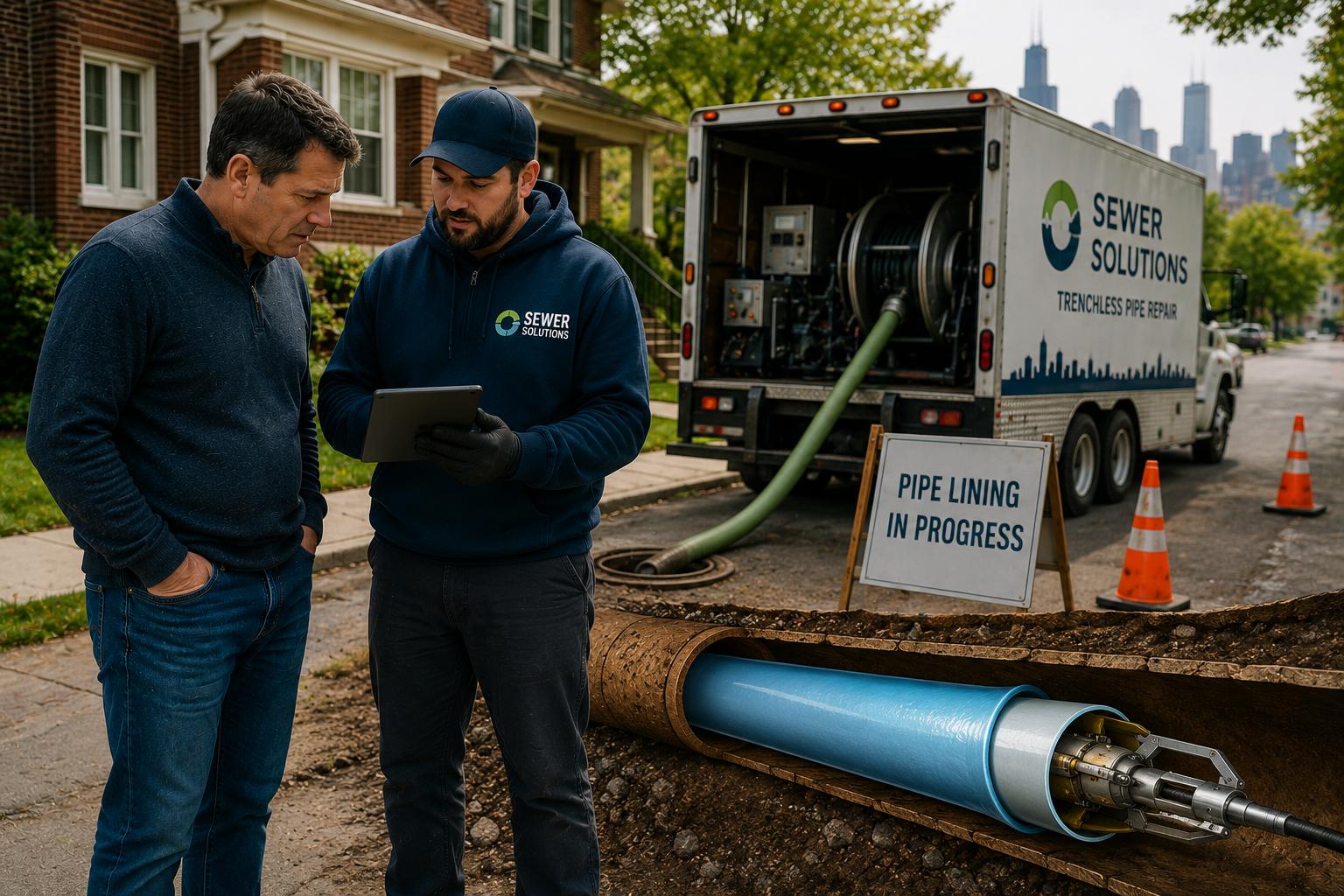
Sewer pipe lining can be an attractive option for Chicago homeowners because it may repair certain sewer line problems without digging up the entire pipe. Instead of removing the old sewer line through a long trench, lining creates a new interior surface inside the existing pipe when the pipe is still a suitable candidate.
The cost of sewer pipe lining in Chicago depends on the length of pipe being lined, the condition of the existing line, cleaning and preparation needs, access points, pipe diameter, inspection findings, and whether any excavation is still required. It may be worth the investment when it avoids major digging, protects concrete or landscaping, and addresses the actual pipe defect.
Pipe lining is not the right solution for every sewer problem. It can help with certain cracks, joints, leaks, and root entry points, but it may not solve collapsed pipe, severe bellies, major offsets, or poor slope. This guide explains how sewer pipe lining cost works, when lining makes sense, and what Chicago homeowners should ask before approving the work.
Key Takeaways
- Sewer pipe lining cost in Chicago depends on pipe length, access, cleaning needs, pipe condition, inspection findings, and whether excavation is still required.
- Pipe lining may reduce digging, but it does not mean the project is simple or automatically cheaper.
- Lining can be useful for certain cracks, root entry points, leaking joints, and aging pipe sections when the existing pipe shape and slope are acceptable.
- Pipe lining is usually not a good fit for collapsed sewer lines, severe bellies, major offsets, or lines with poor slope.
- A sewer camera inspection is essential before deciding whether lining is worth the investment.
- Chicago homes may have older clay pipe, cast iron sections, tree roots, basements, sidewalks, alleys, parkways, and tight lots that affect the decision.
How Much Does Sewer Pipe Lining Cost in Chicago?
Sewer pipe lining cost in Chicago is usually based on the length of pipe being lined, the condition of the existing sewer line, the amount of cleaning required, the available access points, and whether the project avoids or still requires excavation. Because every line is different, a simple per-foot number is less useful than a complete written scope.
Pipe lining may be worth the investment when the existing pipe is structurally suitable and traditional excavation would disturb expensive or difficult-to-replace surfaces such as concrete, landscaping, sidewalks, driveways, or basement slabs. It may be less appropriate when the pipe is collapsed, badly sagging, severely offset, or no longer has proper slope.
For a broader overview of sewer project pricing, see the main Chicago sewer replacement cost guide.
Main Cost Sections for Sewer Pipe Lining
Length of Pipe Being Lined
The length of sewer pipe being lined is one of the most obvious cost factors. Longer lining projects require more liner material, more preparation, more installation time, and more post-installation verification.
However, short lining projects can still have significant fixed costs. A contractor may still need to inspect the pipe, clean it thoroughly, prepare access, bring specialized equipment, install the liner, allow it to cure, and verify the work afterward.
That is why homeowners should compare the full project scope, not only the length of pipe or a per-foot figure.
Pipe Condition
The existing sewer line must be suitable for lining. Pipe lining works best when the pipe has defects but still maintains enough shape, slope, and continuity to support a liner.
Common lining candidates may include pipes with cracks, small gaps, root entry points, or aging joints. Poor candidates may include pipes with severe collapse, major offsets, heavy deformation, large missing sections, or a belly that holds standing water.
Cleaning and Preparation
Pipe lining usually requires significant preparation. Roots, grease, scale, debris, and buildup may need to be removed before the liner can be installed properly. If the pipe is not cleaned well, the lining process may be less effective.
Heavy root intrusion or old cast iron scale can increase preparation time. In some cases, cleaning may reveal that the pipe is in worse condition than expected, which can change the recommended repair method.
Access Points
Pipe lining may reduce digging, but it still requires access to the sewer line. Some homes have usable cleanouts or access points. Others may require limited excavation, cleanout installation, or interior access through a basement area.
If access is difficult, the project cost can rise. Homeowners should ask where the liner will be inserted, whether any digging is required, and whether access point restoration is included.
Liner Material and Installation Method
Not all lining projects are identical. The liner material, curing method, pipe diameter, installation setup, and job conditions can all affect pricing. A short residential sewer lateral may have a different cost structure than a longer, deeper, or more difficult line.
Homeowners do not need to become technical experts, but they should understand what method is being proposed and why it fits the inspection findings.
Post-Repair Inspection
A post-repair camera inspection can help confirm that the liner was installed correctly and that the pipe is open and functioning. This is especially important when the lining work is being used instead of excavation.
Ask whether post-installation camera verification is included in the estimate or treated as a separate charge.
Sewer Pipe Lining Cost Drivers
| Cost Driver | Why It Matters | What Homeowners Should Ask |
|---|---|---|
| Pipe length | Longer lining sections usually require more material, labor, and installation time. | How many feet are included in the lining estimate? |
| Pipe condition | Collapse, bellies, offsets, and poor slope may prevent lining from working properly. | What did the camera inspection show? |
| Cleaning needs | Roots, grease, scale, and debris must often be removed before lining. | Is cleaning included in the quoted price? |
| Access points | Limited access can require cleanouts, pits, or interior work. | Where will the liner be inserted? |
| Pipe material | Clay, cast iron, and mixed-material lines may require different preparation. | What type of existing pipe is being lined? |
| Surface avoidance | Lining may save money by avoiding concrete, driveway, yard, or sidewalk excavation. | What excavation and restoration would lining avoid? |
| Verification | Post-lining inspection helps confirm the repair result. | Is final camera inspection included? |
Chicago-Specific Considerations
Older Clay Sewer Pipe
Many Chicago homes may have older clay sewer lines. Clay pipe can crack, separate at joints, or allow roots to enter. Pipe lining may be considered when the clay pipe is still generally intact but has defects that can be sealed from the inside.
If the clay pipe has collapsed, shifted badly, or lost proper slope, lining may not be enough. In those cases, excavation or replacement may need to be considered.
Cast Iron Sections and Scale
Some older homes may have cast iron sections connected to the sewer line. Cast iron can develop internal scale, corrosion, and narrowing over time. Cleaning and preparation may be more involved when cast iron buildup is present.
A camera inspection can help show whether cast iron sections are only rough or whether they are deteriorated enough to require another solution.
Tree Roots and Parkway Trees
Mature trees are common on Chicago streets, parkways, and residential lots. Roots often enter sewer lines through cracks, open joints, or separated pipe sections. Lining may help seal certain root entry points when the pipe is otherwise a good candidate.
If roots are entering through multiple areas or the pipe has major structural failure, lining may not be the most reliable option.
Basements and Interior Access
Chicago homes often have basements, and sewer access may be located inside the home. Some lining projects may require working from a basement cleanout or other interior access point.
Homeowners should ask whether interior access is needed, whether any fixtures must be removed, and how finished basement areas will be protected during the work.
Sidewalks, Driveways, Alleys, and Tight Lots
Pipe lining can be especially appealing when traditional excavation would disturb concrete, driveways, sidewalks, patios, alleys, parkways, or narrow side yards. Avoiding those surfaces may make lining more practical even when the lining work itself is not cheap.
Still, limited access can complicate equipment setup. The estimate should explain where equipment will be staged and whether any small access pits are needed.
Pipe Lining vs Excavation and Replacement
Pipe lining is often discussed as a trenchless repair option, but it should be compared against excavation and replacement based on the actual pipe condition. The least disruptive option is not always the best option if it does not correct the sewer problem.
Traditional excavation allows direct removal and replacement of damaged pipe. Lining rehabilitates the inside of the existing pipe. Replacement may be better when the pipe has collapsed, lost slope, or deteriorated beyond what lining can address.
| Option | When It May Make Sense | Potential Limitation |
|---|---|---|
| Pipe lining | Cracks, root entry points, or leaking joints in a structurally suitable pipe. | May not correct collapse, major bellies, severe offsets, or poor slope. |
| Spot excavation | One localized defect that needs direct access. | May leave older pipe in place elsewhere. |
| Partial replacement | A defined section is damaged and should be removed. | May not address deterioration beyond the replaced section. |
| Full replacement | Widespread failure, repeated backups, collapse, or multiple pipe defects. | Usually more disruptive and more expensive upfront. |
Important Homeowner Note
Pipe lining is most valuable when it solves the actual defect while avoiding unnecessary digging. It is less valuable if the pipe needs direct correction for slope, collapse, or major alignment problems.
Repair vs Replacement Considerations
Pipe lining is often considered when a homeowner wants a more permanent solution than repeated cleaning but wants to avoid full excavation if possible. Whether it makes sense depends on what the camera inspection shows.
Pipe Lining May Be Worth Considering When
- The pipe has cracks, open joints, or root entry points but has not collapsed.
- The sewer line still has acceptable shape and slope.
- The damaged section runs under concrete, landscaping, sidewalk, driveway, or a basement slab.
- The line can be cleaned and prepared properly.
- Access points are available or can be created without major disruption.
- The homeowner wants to reduce digging while addressing a structural defect.
Replacement May Make More Sense When
- The pipe has collapsed or lost its shape.
- The line has a severe belly that holds standing water.
- There are major offsets, separated sections, or poor slope.
- The pipe is deteriorated throughout and cannot support lining.
- Several previous repairs have already failed.
- The camera inspection shows multiple problems that lining cannot correct.
If digging is part of the alternative estimate, review why sewer replacement quotes in Chicago can vary by thousands so you can compare assumptions about excavation, restoration, and scope.
What Should Be Included in a Pipe Lining Estimate?
A pipe lining estimate should explain the full process, not just the final price. Homeowners should understand what preparation is included, what section is being lined, and what limitations exist.
Before approving pipe lining, ask whether the estimate includes:
- The camera inspection findings supporting lining
- The exact section or footage being lined
- The existing pipe material and diameter
- Cleaning, root removal, or scale removal
- Access point requirements
- Any limited excavation or cleanout work
- Liner material and installation method
- Curing or installation time
- Post-installation camera inspection
- Permit or inspection requirements
- Cleanup and restoration for any access points
- Conditions that could make lining unsuitable
If the project cost is a concern, compare ways to pay for sewer line replacement without draining your savings and review sewer replacement financing options for Chicago homeowners before making a rushed decision.
Common Mistakes and Warning Signs
Mistake: Assuming Lining Works for Every Sewer Problem
Pipe lining cannot fix every issue. It may not solve severe collapse, major bellies, poor slope, or badly shifted pipe. The camera inspection should support the recommendation.
Mistake: Comparing Lining to Excavation Without Restoration Costs
Excavation may look cheaper if the estimate does not include concrete, driveway, landscaping, sidewalk, or basement slab restoration. Compare the finished project cost, not just the pipe work.
Mistake: Skipping Cleaning and Preparation Details
Proper cleaning is essential. Roots, scale, grease, and debris can affect whether lining is possible and whether the liner can be installed correctly.
Mistake: Not Asking for Post-Lining Inspection
A final camera inspection can help confirm that the liner is installed and the pipe is open. Homeowners should ask whether this is included.
Mistake: Treating Repeated Rodding as a Long-Term Strategy
Rodding may clear roots temporarily, but roots usually return if cracks or open joints remain. Lining may be one option when the pipe is suitable, but the underlying defect should be evaluated.
Warning Signs That May Justify a Lining Evaluation
- Recurring root intrusion at pipe joints
- Repeated backups after cleaning
- Camera inspection showing cracks or open joints
- Sewer line under concrete, driveway, sidewalk, or landscaping
- Older clay pipe that is still mostly intact
- Sewage odors or slow drainage tied to sewer defects
- Multiple drains backing up from a main line issue
- A contractor recommending excavation without explaining trenchless alternatives
Decision Point
Pipe lining may be worth the investment when it addresses a confirmed defect and avoids costly excavation. It may not be worth it if the sewer line needs direct correction for collapse, slope, or major alignment problems.
FAQ About Sewer Pipe Lining Cost in Chicago
Is sewer pipe lining cheaper than replacement?
Sometimes, but not always. Pipe lining may reduce excavation and restoration costs, especially when the sewer line runs under concrete, landscaping, sidewalks, or driveways. However, lining requires inspection, cleaning, preparation, specialized materials, and proper installation.
What affects sewer pipe lining cost the most?
The biggest factors include pipe length, pipe condition, access points, cleaning needs, root removal, pipe diameter, liner method, inspection requirements, and whether any excavation or restoration is still needed.
Can pipe lining fix tree root problems?
Pipe lining may help seal certain root entry points if the pipe is otherwise suitable. However, if the pipe is collapsed, severely separated, or damaged in multiple areas, lining may not be enough.
Do I need a sewer camera inspection before pipe lining?
Yes. A camera inspection helps determine whether the pipe is a good candidate for lining. It can show cracks, roots, offsets, standing water, bellies, collapse, and slope problems that affect the decision.
Will homeowners insurance cover sewer pipe lining?
Coverage depends on the policy and the cause of damage. Many policies exclude wear and tear, deterioration, and long-term root intrusion. Some homeowners may have service line coverage, but details should be confirmed directly with the insurer.
What Chicago-specific issues affect pipe lining?
Older clay pipe, cast iron sections, mature tree roots, basements, narrow lots, sidewalks, alleys, parkways, driveways, and previous repairs can all affect whether lining is practical and how much preparation is required.
When is pipe lining not worth it?
Pipe lining may not be worth it when the sewer line is collapsed, badly bellied, severely offset, improperly sloped, or too deteriorated to support a liner. In those cases, excavation or replacement may be more reliable.
Conclusion
Sewer pipe lining cost in Chicago depends on the condition of the existing pipe, the length being lined, access, cleaning requirements, inspection findings, and whether excavation is avoided or still needed. It can be a smart investment when it solves a confirmed pipe defect and reduces disruption to concrete, landscaping, sidewalks, driveways, or basement areas.
However, pipe lining is not a universal fix. It works best when the pipe is damaged but still structurally suitable. Collapse, severe sagging, major offsets, and poor slope may require excavation or replacement instead.
For Chicago homeowners, the best decision starts with a camera inspection and a clear written estimate. The goal is to understand whether lining fits the pipe’s actual condition, what work is included, and whether the investment is likely to solve the problem long term.