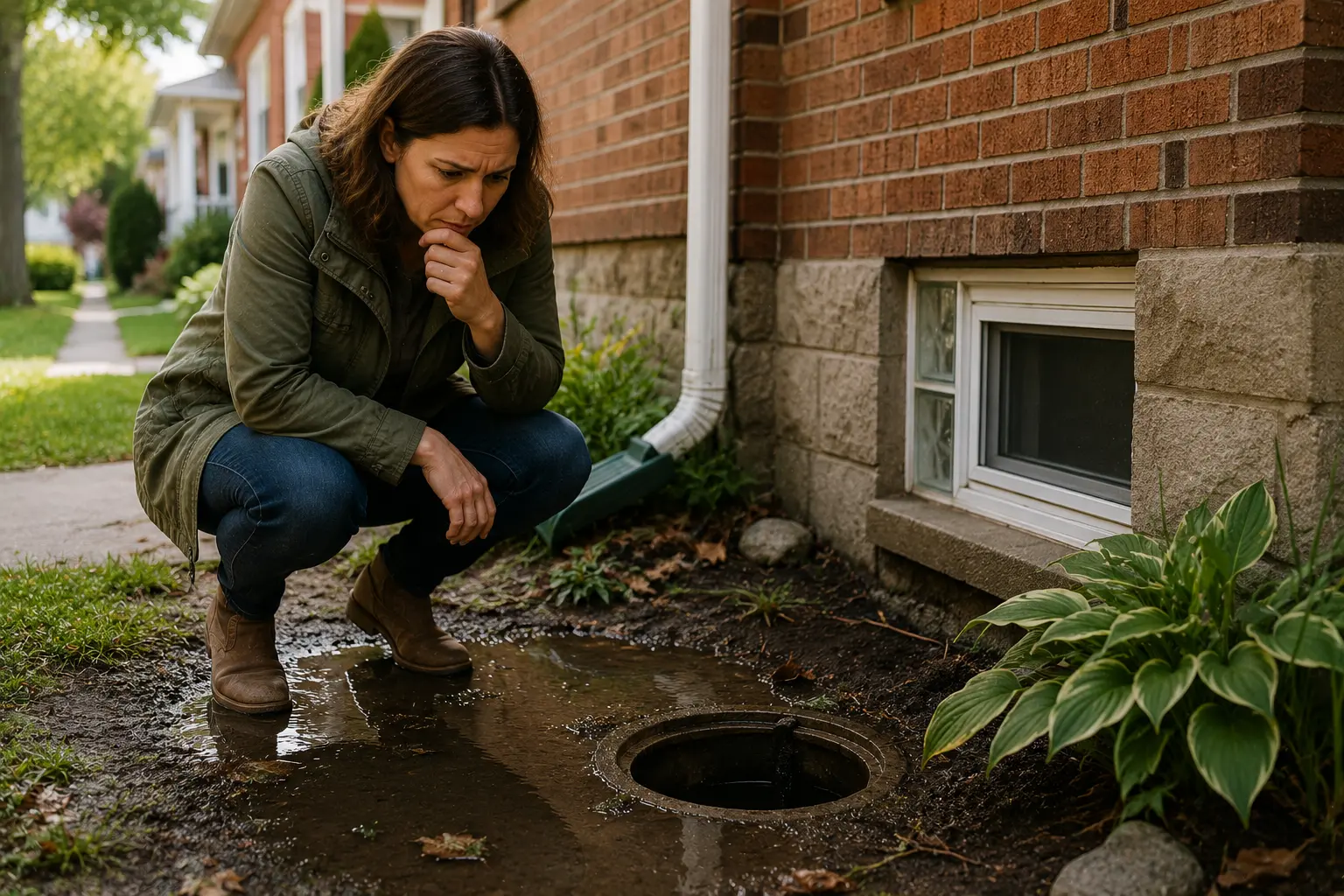
A sewer line may need replacement when problems become frequent, widespread, or structural. Common warning signs include repeated sewer backups, slow drains throughout the house, sewage odors, gurgling toilets, recurring tree root intrusion, water pooling in the yard, and camera inspection findings that show a collapsed, cracked, bellied, or badly offset sewer pipe.
One clog does not automatically mean a sewer line has failed. Many sewer problems can be cleaned, repaired, or monitored depending on the cause. Replacement becomes more likely when the pipe itself is damaged, deteriorated, or no longer able to move wastewater reliably from the home to the city sewer connection.
For Chicago homeowners, this question matters because many homes have older sewer laterals, clay pipe sections, mature tree roots nearby, basements with floor drains, and limited exterior access. Recognizing the warning signs early can help homeowners avoid rushed decisions, repeated temporary fixes, and preventable sewage damage.
Key Takeaways
- Repeated sewer backups are one of the strongest signs that a main sewer line problem may be serious.
- Multiple slow drains at the same time usually point to a main line issue, not a single fixture clog.
- Sewage odors, gurgling drains, yard pooling, and recurring root problems should not be ignored.
- A sewer camera inspection is usually needed before deciding whether replacement is necessary.
- Replacement is more likely when the sewer line is collapsed, severely cracked, badly bellied, offset, or deteriorated in multiple areas.
- Chicago homes with older clay sewer pipes may face higher risk of root intrusion, cracking, and joint separation.
- Homeowners should compare the cost of continued repairs against the risk and disruption of another sewer failure.
When Sewer Replacement Starts to Make Sense
Sewer replacement may be needed when the problem is not just a clog, but a failing pipe. The most important warning signs are repeated backups, slow drains throughout the home, sewage smells, gurgling toilets or drains, tree roots that keep returning, water pooling in the yard, and inspection results showing major pipe damage.
The clearest way to confirm the problem is a sewer camera inspection. Symptoms can suggest a sewer line issue, but the camera footage helps show whether the line can be cleaned, repaired in one section, lined, or replaced.
Major Signs Your Sewer Line May Need Replacement
Repeated Sewer Backups
A sewer backup is one of the most obvious warning signs of a main line problem. If wastewater backs up into a basement floor drain, toilet, tub, or shower, the home’s drainage system may not be able to send waste out properly.
One backup can happen from a blockage, grease buildup, wipes, or roots. Repeated backups are more concerning. If the line is cleaned and the same problem returns, the underlying cause may be structural.
Chicago homeowners with basement backups should take this especially seriously. Basement fixtures are often the lowest drain openings in the home, so they may show the first visible signs of a main sewer restriction. For a deeper look at this specific issue, see Sewer Backup in Basement: Causes and Warning Signs.
Slow Drains Throughout the House
A slow sink or tub is usually a local drain issue. Slow drains throughout the house are different. If toilets, showers, tubs, laundry drains, and basement drains all begin moving slowly, the problem may be in the main sewer line.
This is especially true when one fixture affects another. For example, flushing a toilet may cause a tub drain to gurgle, or running the washing machine may cause water to rise near a basement floor drain.
When symptoms affect the whole plumbing system, homeowners should consider whether the issue is beyond ordinary drain cleaning. The related guide What Slow Drains Throughout the House Can Mean explains how to separate fixture-level clogs from main line problems.
Sewage Smells Inside the Home
A house that smells like sewage may have a dry drain trap, damaged wax ring, venting issue, or sewer line problem. The location, timing, and strength of the smell matter.
Sewer odors near basement drains, utility rooms, crawl spaces, or lower-level bathrooms can be a sign that wastewater or sewer gas is escaping where it should not. If the smell appears along with backups, gurgling drains, or slow drainage, the main sewer line should be evaluated.
Because sewer smells can come from several sources, homeowners should avoid jumping straight to replacement without diagnosis. The article Why Your House Smells Like Sewage covers common causes and what they may indicate.
Gurgling Toilets and Drains
Gurgling happens when air is trapped or displaced in the drain system. It may sound minor, but it can be an early sign that wastewater is struggling to move through the main line.
A single gurgling sink is not always serious. Multiple gurgling fixtures, especially when paired with slow drains or backups, deserve attention. Toilets that bubble when another fixture drains may point to a main line restriction.
Homeowners noticing this pattern can learn more in What Causes Gurgling Toilets and Drains?.
Tree Roots Keep Coming Back
Tree roots are a common problem in older sewer lines. Roots enter through cracks, gaps, loose joints, and weakened pipe sections. Once inside, they can catch waste, paper, grease, and debris until the line clogs again.
Rodding or cutting roots may restore flow temporarily, but it does not fix the opening where roots entered. If root problems keep returning, the line may need a targeted repair or replacement.
Replacement becomes more likely when roots have entered multiple joints, the pipe is cracked in several places, or the line has become too deteriorated to stay clear for long. For more detail, see Tree Roots in Sewer Lines: Signs and Solutions.
Water Pooling or Soggy Areas in the Yard
Water pooling in the yard can come from grading, drainage, downspouts, or heavy rain. But when pooling appears near the sewer route, has a sewage odor, or occurs during normal household water use, a leaking sewer line may be involved.
A damaged sewer line can release wastewater into the surrounding soil. Over time, this may create soft spots, unusually green patches of grass, sinking soil, or unpleasant odors outside the home.
In Chicago, this may be harder to spot on smaller city lots, gangways, parkways, or areas with concrete surfaces. The warning signs may be subtle at first.
Camera Inspection Shows Serious Pipe Damage
The most reliable evidence usually comes from a sewer camera inspection. Replacement may become a serious option if the inspection shows severe cracking, collapse, major root intrusion, a large belly, offset joints, or pipe sections that have separated.
Not every defect requires full replacement. A single damaged section may be repairable. The key question is whether the sewer line is mostly functional with one problem area, or whether the pipe is failing in a way that makes future backups likely.
Pipe Conditions That Often Lead to Replacement
Symptoms tell homeowners something is wrong. Pipe condition explains why it is happening. A sewer line may need replacement when the pipe can no longer provide a reliable path for wastewater.
| Pipe Condition | What It Means | Why Replacement May Be Considered |
|---|---|---|
| Collapsed sewer line | A section of pipe has failed and blocked normal flow. | Cleaning cannot restore a pipe that has physically collapsed. |
| Severe cracking | The pipe wall is broken, weakened, or allowing roots and soil into the line. | Cracks may spread or allow repeated intrusion. |
| Offset joints | Pipe sections have shifted out of alignment. | Waste can catch at the offset and cause recurring clogs. |
| Sewer line belly | A low section holds water and waste instead of draining fully. | Standing waste can cause repeated blockages and odor problems. |
| Heavy root intrusion | Roots have entered through openings in the pipe. | Repeated cleaning may not solve the damaged entry points. |
| Deteriorated clay pipe | Older clay sections may crack, separate, or shift over time. | Widespread deterioration may make spot repairs less practical. |
If a camera inspection shows a collapsed section, the guide Warning Signs of a Collapsed Sewer Line may help homeowners understand why this condition is more serious than an ordinary clog.
Chicago-Specific Considerations
Older Clay Sewer Lines
Many older Chicago homes may have clay sewer pipe sections or older sewer materials that become more vulnerable with age. Clay pipe can perform for a long time, but it is also prone to cracking, root entry, joint separation, and shifting soil conditions.
A cracked clay pipe does not always mean the full line must be replaced. The location and extent of the damage matter. However, if several clay sections are cracked, offset, or root-filled, replacement may become more practical than repeated repairs.
Basements Increase the Risk of Visible Damage
Because many Chicago homes have basements, sewer issues can quickly become interior damage issues. A main line backup may affect finished floors, drywall, storage areas, laundry rooms, mechanical spaces, and personal belongings.
This does not mean every basement backup requires replacement. It does mean homeowners should treat recurring backups as a serious warning sign rather than a normal inconvenience.
Mature Trees and Tight Lots
Chicago neighborhoods often have mature trees, compact lots, sidewalks, parkways, alleys, and narrow side yards. These conditions can affect both the cause of sewer problems and the complexity of repair or replacement.
Tree roots may increase the likelihood of recurring sewer clogs. Tight access may also affect excavation, equipment choices, restoration, and project timing.
Permits, Public Way, and Restoration
Depending on where the sewer problem is located, replacement work may involve private property, the parkway, sidewalk, alley, or street area. That can influence permits, inspections, restoration requirements, and the final scope of work.
This is one reason homeowners should compare more than just the price. A lower quote may exclude concrete restoration, permit handling, backfill, landscaping, or other details that matter after the pipe work is complete.
Repair, Cleaning, or Replacement: How to Think Through the Options
The right solution depends on what is actually wrong with the line. Homeowners should separate temporary symptoms from long-term pipe condition.
Cleaning May Be Enough When
- The clog is isolated.
- The pipe is structurally sound.
- The line clears fully after service.
- There is no history of repeated backups.
- The camera does not show major cracking, collapse, or separation.
Repair May Be Enough When
- Damage is limited to one section.
- The rest of the sewer line is in usable condition.
- The pipe has one root entry point or one offset joint.
- The repair addresses the actual cause of the problem.
- The cost is reasonable compared with full replacement.
Replacement May Be the Better Long-Term Option When
- The pipe is collapsed.
- Several sections are cracked or separated.
- Roots keep returning after repeated cleaning.
- A belly causes waste to sit in the line.
- Multiple repairs would be needed along the same run.
- The sewer line has a long history of backups and service calls.
Practical Homeowner Tip
Before approving replacement, ask what specific evidence supports it. A useful explanation should identify the location of the damage, the pipe condition, whether the problem is isolated or widespread, and why cleaning or spot repair may not be enough.
Cost Factors When Sewer Replacement Is Possible
Sewer replacement costs can vary widely because the work depends on property conditions, pipe depth, access, permits, restoration, and the replacement method. A homeowner should be cautious with any exact price given before inspection.
Important cost factors include:
- Depth of the sewer line: Deeper pipes usually require more labor, equipment, safety planning, and excavation time.
- Length of replacement: Replacing one section is different from replacing a long run toward the city connection.
- Access: Narrow gangways, fences, garages, patios, landscaping, and concrete can complicate the work.
- Surface restoration: Sidewalks, driveways, basement floors, yards, and parkways may need repair after the sewer work.
- Pipe condition: A collapsed or badly offset line may require a different approach than a pipe with one damaged joint.
- Timing: Emergency work can limit the homeowner’s ability to compare options.
- Permits and inspections: Local requirements can affect scheduling and scope.
The cheapest short-term option is not always the lowest-risk choice. However, replacement is also too significant to approve without clear evidence. Homeowners should compare the cost of replacement against the likelihood of continued backups, cleanup, temporary repairs, and disruption.
Questions to Ask Before Approving Sewer Replacement
A replacement recommendation should be clear enough for a homeowner to understand. The contractor does not need to overwhelm the homeowner with technical language, but the reasoning should be specific.
- What did the camera inspection show?
- Where is the damage located?
- Is the problem isolated or spread across the line?
- Is the pipe collapsed, cracked, offset, bellied, or root-filled?
- Can the issue be repaired in one section?
- What happens if the line is cleaned instead of replaced?
- What parts of the property will be disturbed?
- Are permits, inspections, and restoration included?
- What is excluded from the quote?
- How will the sewer line be tested after the work?
Homeowners who are still early in the research process can review the broader Sewer Problems & Warning Signs hub for related symptoms and next-step guides.
Common Mistakes and Warning Signs Homeowners Miss
Assuming Repeated Clogs Are Normal
If the sewer line keeps clogging, there is usually a reason. Repeated clogs may point to roots, a belly, pipe damage, poor slope, or an obstruction that was never fully resolved.
Ignoring Early Gurgling or Odors
Gurgling and sewer smells can appear before a major backup. These signs do not always mean replacement is needed, but they are worth investigating when they happen repeatedly or alongside slow drainage.
Replacing Too Quickly Without a Camera Inspection
A sewer replacement decision should usually be based on evidence. Without camera footage or a clear diagnosis, homeowners may not know whether the problem is a simple clog, a repairable defect, or a failing line.
Comparing Quotes Without Comparing Scope
Two sewer quotes may include different assumptions. One may include permits and restoration while another may not. One may replace a longer section. Another may only address the visible failure point. Scope matters as much as price.
Waiting Until the Line Fully Fails
Waiting may seem cheaper in the short term, but a complete sewer failure can create a more expensive emergency. If signs are becoming more frequent, earlier diagnosis usually gives homeowners more control.
FAQ
What is the most obvious sign that a sewer line may need replacement?
Repeated sewer backups are one of the strongest warning signs, especially when they affect basement drains, tubs, toilets, or multiple fixtures. However, replacement should usually be confirmed with a sewer camera inspection rather than based on symptoms alone.
Can slow drains throughout the house mean the sewer line is failing?
Yes. Slow drains throughout the house can indicate a main sewer line restriction. If several fixtures drain slowly at the same time, the problem is more likely to be in the main line than in one sink, tub, or toilet.
Do tree roots mean my sewer line has to be replaced?
Not always. A single root entry point may be repairable. Replacement becomes more likely when roots enter through multiple joints, return soon after cleaning, or appear alongside cracks, offsets, or deterioration.
How do Chicago homeowners know if old clay sewer pipe is the problem?
A camera inspection can usually identify clay pipe sections and show whether they are cracked, offset, root-intruded, or collapsed. Age alone does not prove failure, but older clay pipe can be more vulnerable to structural issues.
Is sewer replacement always more expensive than repair?
Usually replacement costs more upfront than a limited repair or cleaning. However, repeated temporary fixes can become expensive over time. The better comparison is the cost of replacement versus the likely cost, risk, and disruption of continued sewer problems.
Will homeowners insurance cover sewer line replacement?
It depends on the policy, cause of damage, endorsements, and whether the claim involves backup damage, service line coverage, or gradual deterioration. Many policies limit or exclude wear-and-tear issues. Homeowners should review their policy before assuming replacement is covered.
Should I get more than one quote for sewer replacement?
When the situation is not an active emergency, getting more than one quote can help homeowners compare scope, diagnosis, restoration, permits, and repair alternatives. The lowest price is not always the best choice if key work is excluded.
Can a sewer line be partially replaced?
Yes. If damage is limited to one area and the rest of the line is in acceptable condition, partial replacement or targeted repair may be possible. Full replacement becomes more likely when the line has widespread damage or repeated failures in multiple areas.
Conclusion
The main signs your sewer line may need replacement are repeated backups, slow drains throughout the house, sewage odors, gurgling fixtures, recurring root intrusion, yard pooling, and inspection results showing serious pipe damage. The more frequent and widespread the symptoms become, the more important it is to move beyond temporary fixes and confirm the condition of the pipe.
For Chicago homeowners, sewer replacement is not a decision to make casually. Older homes, clay sewer pipes, mature trees, basements, tight lots, and local restoration requirements can all affect the best path forward. The goal is to understand whether the problem is a simple clog, a repairable defect, or a failing sewer line that is likely to keep causing damage.
A clear camera inspection, a detailed scope of work, and careful comparison of repair versus replacement options can help homeowners make a more informed decision before the next backup turns into an emergency.