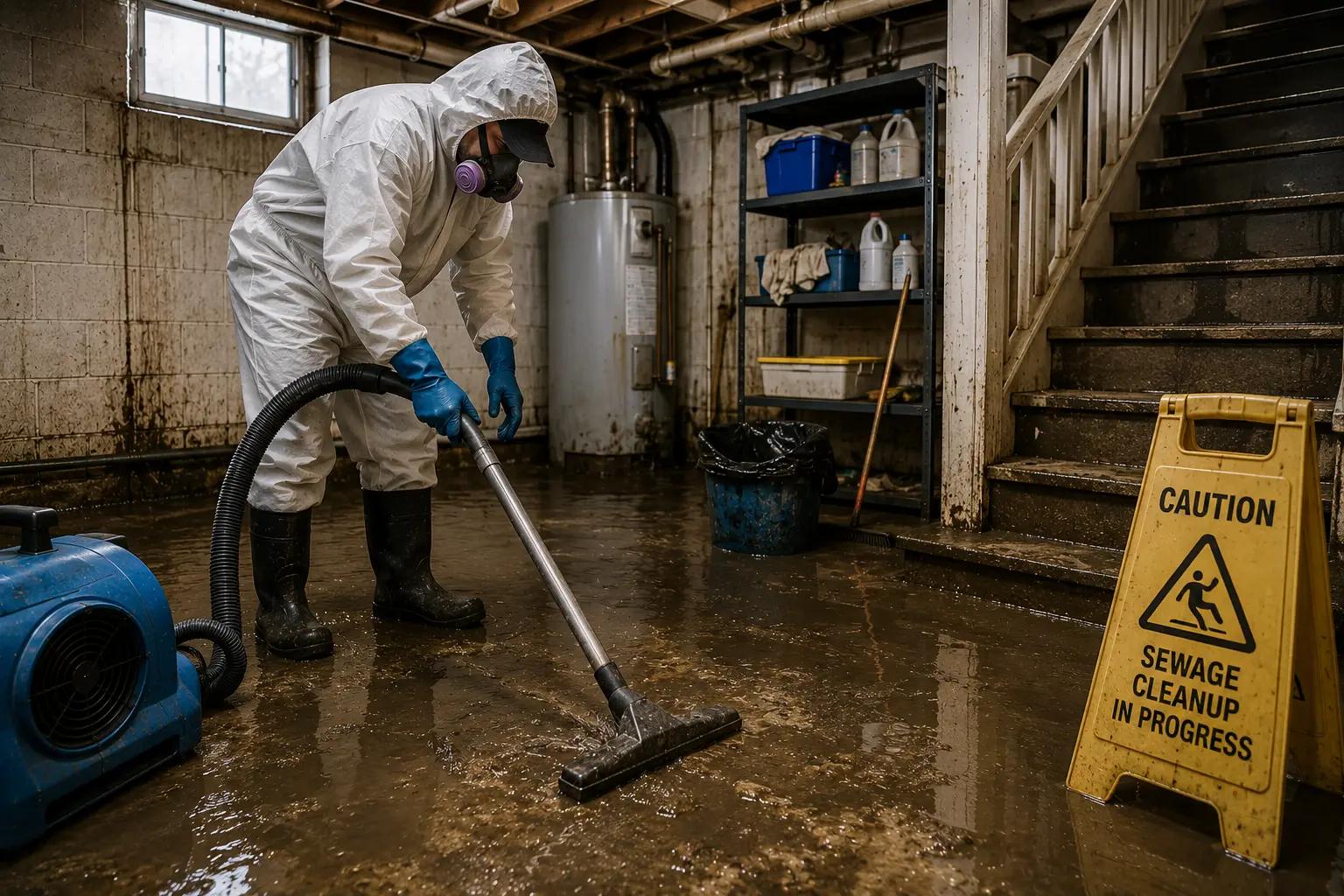
Sewage cleanup after a sewer backup is not the same as ordinary water cleanup. When wastewater enters a basement, bathroom, laundry area, or living space, the affected area should be treated as contaminated until it has been properly cleaned, disinfected, dried, and evaluated for damaged materials.
For Chicago homeowners, sewage backups often happen in basements because floor drains, laundry drains, utility sinks, and basement bathrooms are usually among the lowest plumbing fixtures in the home. A backup may be caused by a blocked sewer lateral, tree roots, damaged pipe, heavy rain, or pressure from the sewer system. Whatever the cause, cleanup should begin with safety, documentation, and stopping additional wastewater from entering the home.
This guide explains what sewage cleanup involves, what homeowners should do first, which materials may need to be removed, how cleanup relates to sewer repair, and what Chicago-specific issues can affect the recovery process.
Key Takeaways
- Sewage cleanup should be treated as contamination cleanup, not simple water removal.
- Stop using plumbing fixtures immediately if sewage is backing up into the home.
- Keep people and pets away from affected areas until cleanup is complete.
- Document damage with photos and videos before removing materials when it is safe to do so.
- Porous materials such as carpet, padding, drywall, insulation, and upholstered items may not be safely salvageable after sewage contact.
- Cleanup and sewer repair are separate tasks; both may be necessary to fully resolve the problem.
- Insurance coverage depends on the policy and whether sewer backup or water backup coverage applies.
What Should You Do First After Sewage Backs Up?
After a sewage backup, stop using all water fixtures, keep people and pets away from the affected area, avoid direct contact with wastewater, document visible damage, contact your insurance company if you plan to file a claim, and arrange for cleanup and sewer inspection. Do not treat sewage-contaminated water like clean rainwater or a minor spill.
Why Sewage Cleanup Requires Extra Caution
Sewage can contain bacteria, viruses, parasites, chemicals, organic waste, and other contaminants. Even if the water looks diluted or partially clear, it may still pose health risks. The danger is not limited to standing water. Contamination can spread to flooring, walls, baseboards, furniture, stored items, and HVAC-adjacent areas if the backup is significant.
Common areas affected by sewer backups include:
- Basement floor drains
- Laundry rooms
- Utility rooms
- Basement bathrooms
- Finished basement living areas
- Storage rooms
- Carpeted areas
- Drywall and baseboards near the floor
Homeowners concerned about exposure should also review Health Risks of a Sewer Backup, especially if children, older adults, pets, or immune-compromised people live in the home.
Immediate Safety Steps Before Cleanup Begins
Before removing items or cleaning surfaces, take steps to reduce risk and prevent the backup from getting worse.
- Stop using toilets, sinks, showers, tubs, dishwashers, and washing machines.
- Keep people and pets out of the contaminated area.
- Avoid touching sewage or wet materials with bare skin.
- Do not walk through affected areas unless necessary.
- Shut off electricity to affected areas if water is near outlets, appliances, or electrical panels and it is safe to do so.
- Ventilate when possible, but avoid spreading contaminated air or moisture into clean areas.
- Take photos and videos before moving or discarding materials if it is safe.
If the backup is still active, cleanup should not be the only priority. The sewer line problem must also be controlled, or more wastewater may enter the home after cleanup begins.
For a broader step-by-step response after a backup, see What to Do After a Sewer Backup.
What Sewage Cleanup Usually Includes
Sewage cleanup is a multi-step process. The exact scope depends on how much wastewater entered the home, where it spread, how long it sat, and what materials were affected.
| Cleanup Step | Purpose | Why It Matters |
|---|---|---|
| Water removal | Remove standing wastewater | Reduces spread of contamination and moisture damage |
| Debris removal | Remove solids, damaged belongings, and contaminated materials | Prevents contaminated items from remaining in the home |
| Material evaluation | Decide what can be cleaned and what should be removed | Porous materials may absorb sewage and moisture |
| Cleaning and disinfection | Clean hard surfaces and apply appropriate disinfecting methods | Reduces contamination on salvageable surfaces |
| Drying | Remove moisture from the structure | Helps reduce mold and odor risks |
| Odor control | Address lingering sewer smells | May indicate remaining contamination or moisture |
| Restoration planning | Replace removed materials after cleanup and drying | Returns the space to usable condition |
Which Materials Can Usually Be Cleaned?
Hard, non-porous surfaces are generally more likely to be cleaned and disinfected successfully than porous materials. However, the condition of the surface, the length of exposure, and the amount of contamination all matter.
Materials That May Be More Cleanable
- Concrete floors
- Tile floors
- Metal shelving
- Plastic storage bins
- Some sealed surfaces
- Appliances with limited exterior contact
Materials That May Need Removal
- Carpet and carpet padding
- Drywall exposed near the floor
- Insulation
- Upholstered furniture
- Mattresses
- Cardboard boxes
- Books, papers, and absorbent belongings
- Laminate or wood flooring exposed to sewage
The decision is not always obvious. A finished basement may require selective demolition, drying, and restoration after contaminated materials are removed.
Cleanup Is Not the Same as Sewer Repair
One common mistake is assuming that cleanup fixes the sewer problem. Cleanup addresses the contaminated area inside the home. Sewer repair addresses the reason wastewater entered the home in the first place.
A complete response may involve both:
- Removing sewage and contaminated materials
- Drying and disinfecting the affected area
- Clearing the sewer line
- Inspecting the pipe with a camera
- Repairing or replacing damaged sewer sections
- Considering prevention measures if backups recur
If sewage entered through a basement drain, the underlying cause may require a separate repair decision. Homeowners can learn more from Basement Sewer Backup Repair: Common Solutions.
Why a Sewer Camera Inspection May Be Needed After Cleanup
After the immediate mess is controlled, it is important to understand why the backup happened. A sewer camera inspection can help determine whether the backup was caused by a simple blockage or by a more serious structural sewer issue.
A camera inspection may reveal:
- Tree roots inside the sewer line
- Collapsed pipe sections
- Cracked or broken pipe
- Offset pipe joints
- Pipe bellies holding standing water
- Grease buildup or debris
- Obstructions that may cause another backup
Without inspection, homeowners may clean the basement only to experience another backup days, weeks, or months later. For urgent situations, see Emergency Sewer Camera Inspections.
Chicago-Specific Sewage Cleanup Considerations
Chicago homeowners face several local factors that can affect cleanup decisions after a sewer backup.
Basement Use Is Common
Many Chicago homes use basements for laundry, utilities, storage, recreation rooms, finished living space, or rental areas. This can increase the amount of property affected by a backup.
Older Sewer Laterals
Older sewer pipes may be more vulnerable to roots, cracking, offset joints, and collapse. If an older sewer lateral caused the backup, cleanup alone will not prevent the problem from returning.
Heavy Rain and Sewer Pressure
Backups during storms may involve sewer surcharge, private lateral restrictions, drainage problems, or a combination of factors. Repeated rain-related backups should be investigated.
Cold Weather Complications
Winter conditions can complicate drying, ventilation, excavation, and repair scheduling. Moisture trapped in enclosed basement areas can increase restoration concerns.
Permit and Repair Timing
If the backup leads to major sewer work, permits may affect how quickly permanent repair can happen. More information is available in Emergency Sewer Repair Permits in Chicago.
The Emergency Sewer Repair hub includes related guidance on urgent sewer problems, backup response, repair timing, and homeowner decision-making.
Cost Factors for Sewage Cleanup
Sewage cleanup costs vary because every backup is different. The cost depends on the amount of contamination, how far wastewater spread, what materials were affected, and whether structural drying or restoration is needed.
Common cost factors include:
- Size of the affected area
- Depth and amount of wastewater
- Whether the basement is finished or unfinished
- Type of flooring affected
- Whether drywall or insulation must be removed
- How long sewage remained before cleanup began
- Amount of personal property affected
- Odor control needs
- Drying equipment and monitoring
- Whether cleanup happens after hours or on a weekend
If the backup happens outside normal business hours, overall costs may be affected by emergency timing. Homeowners can review Weekend Sewer Repair Costs Explained for related emergency cost considerations.
Insurance Considerations After Sewage Cleanup
Insurance coverage for sewage cleanup depends on the policy. Some homeowners have sewer backup or water backup coverage, while others may not. Even when coverage applies, there may be limits, deductibles, exclusions, and documentation requirements.
Before cleanup begins, homeowners should consider:
- Taking photos and videos of affected areas
- Documenting where the wastewater entered
- Listing damaged belongings
- Keeping invoices and inspection reports
- Contacting the insurer before discarding major items when possible
- Asking whether sewer backup coverage applies
Insurance may cover some cleanup or property damage in certain situations, but it may not cover the sewer line repair itself. Policy language matters, so homeowners should confirm coverage directly with their insurer.
When Professional Cleanup May Be Needed
Some small incidents may be limited enough for a homeowner to handle carefully, especially if the affected area is hard, non-porous, and the contamination is minimal. However, many sewer backups involve conditions where professional cleanup is worth serious consideration.
Professional cleanup may be appropriate when:
- Sewage entered a finished basement
- Carpet, drywall, insulation, or wood materials were affected
- The backup covered a large area
- Wastewater sat for an extended period
- There are strong lingering odors
- Children, older adults, or vulnerable individuals live in the home
- Mold risk is a concern
- An insurance claim requires documentation
The decision often comes down to contamination level, affected materials, and the homeowner’s ability to safely remove, disinfect, and dry the area.
Common Mistakes After a Sewage Backup
Using More Water Before the Sewer Line Is Clear
Running fixtures can push more wastewater into the home if the main sewer line is blocked.
Cleaning Only What Is Visible
Sewage can spread under flooring, behind baseboards, into drywall, and into stored items.
Keeping Contaminated Porous Materials
Carpet, padding, cardboard, insulation, and upholstered materials may hold contamination and moisture.
Skipping Drying After Disinfection
Disinfection does not remove moisture. Without proper drying, mold and odor problems can continue.
Throwing Everything Away Before Documentation
Removing damaged materials before taking photos or contacting insurance may make claims more difficult.
Ignoring the Cause of the Backup
Cleanup solves the immediate contamination problem, but the sewer line still needs to be evaluated if the cause is unclear.
Warning Signs Cleanup Was Not Enough
After sewage cleanup, homeowners should watch for signs that contamination, moisture, or sewer problems remain.
- Persistent sewer odor
- Musty smell after drying
- Staining on walls or baseboards
- Warped flooring
- Soft drywall near the floor
- Recurring basement drain odors
- New mold growth
- Drains slowing down again
- Another backup after laundry, showers, or heavy rain
If these signs appear, the area may need further cleanup, drying, inspection, or sewer repair.
Frequently Asked Questions
Can I clean up sewage myself after a small backup?
Small, limited backups on hard, non-porous surfaces may be more manageable than large contaminated areas. However, sewage should always be treated as hazardous, and porous materials may need removal rather than simple cleaning.
What should I do before cleaning sewage?
Stop using water, keep people and pets away, avoid direct contact, document the damage, and make sure the backup is no longer actively worsening. If electrical hazards are present, avoid entering the area.
Does sewage-contaminated carpet need to be removed?
In many cases, carpet and padding that contact sewage are difficult to clean safely because they absorb contaminated water. Removal is often considered, especially when exposure is significant.
How long does sewage cleanup take?
The cleanup timeline depends on the size of the affected area, the materials involved, and how much drying is needed. Removing wastewater may be quick, but drying, demolition, odor control, and restoration can take longer.
Will insurance cover sewage cleanup after a backup?
Coverage depends on your policy and whether you have sewer backup or water backup coverage. Homeowners should contact their insurer, document the damage, and ask what cleanup and restoration expenses may apply.
Do I still need sewer repair after cleanup?
Possibly. If the cause of the backup was a blocked, cracked, rooted, or collapsed sewer line, cleanup alone will not prevent another backup. Inspection is often needed to determine the cause.
Why does my basement still smell after sewage cleanup?
Lingering odor may indicate remaining contamination, hidden moisture, affected porous materials, or an unresolved sewer issue. Further cleaning, drying, or inspection may be needed.
What if the sewage backup happened during heavy rain in Chicago?
Rain-related backups may involve sewer surcharge, private sewer lateral issues, or drainage problems around the property. Repeated storm-related backups should be investigated rather than treated as unavoidable.
Conclusion
Sewage cleanup after a sewer backup should be handled carefully because the issue involves contamination, not just water. The safest response is to stop using plumbing fixtures, keep people away from affected areas, document the damage, remove contaminated materials when necessary, disinfect cleanable surfaces, and dry the space thoroughly.
For Chicago homeowners, cleanup is only one part of the recovery process. A backup may also require sewer inspection, drain clearing, pipe repair, or prevention measures to reduce the chance of another event. The best outcome usually comes from addressing both sides of the problem: the contaminated space inside the home and the sewer issue that caused the backup in the first place.