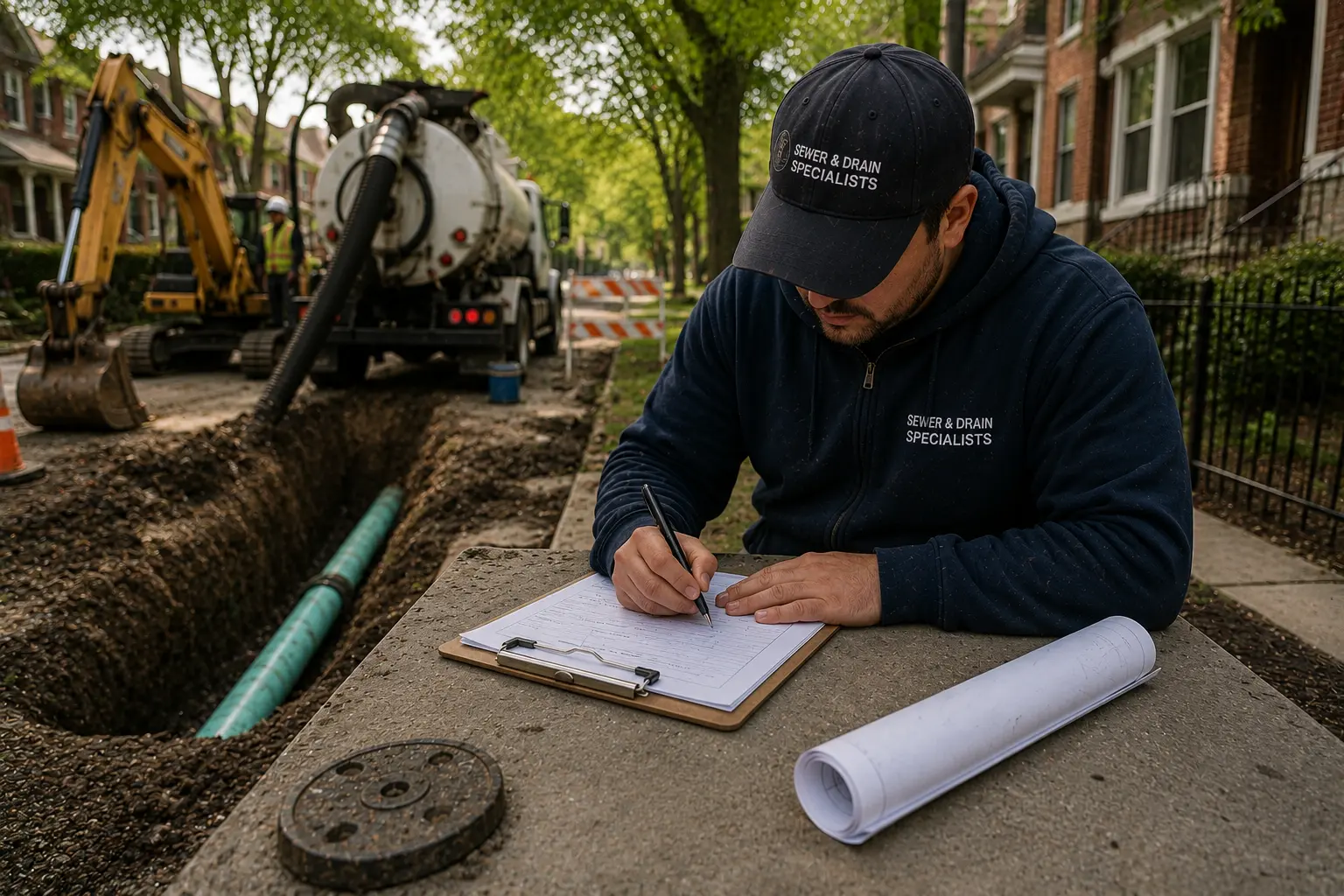
Emergency sewer repair permits in Chicago can be confusing because homeowners are often dealing with a problem that feels urgent, messy, and disruptive. If sewage is backing up into the basement or the sewer line has collapsed, it is natural to want the work started immediately. However, some sewer repairs may still require permits, inspections, utility coordination, or other approval steps before permanent work can be completed.
In general, minor diagnostic work or drain clearing may not involve the same permit process as excavation, replacement, or work affecting the public way. But when emergency sewer repair involves digging, replacing a private sewer lateral, connecting to public infrastructure, opening concrete, or working near sidewalks, streets, or alleys, permit requirements may become part of the timeline.
This guide explains when permits may matter, how emergency timing affects sewer repair decisions, what Chicago homeowners should ask before approving work, and why temporary stabilization may sometimes be needed while permanent repair requirements are handled.
Key Takeaways
- Emergency sewer problems do not automatically remove permit requirements for major repair work.
- Drain clearing, camera inspection, and temporary stabilization are different from excavation or sewer replacement.
- Permits are more likely when work involves excavation, replacement, public way access, sidewalks, streets, alleys, or sewer connections.
- Permit timing can affect how quickly permanent sewer repair begins, even when the backup is urgent.
- Chicago homes may face added complexity due to older sewer laterals, basement backups, tight lots, and urban infrastructure.
- Homeowners should ask whether proposed work is temporary, permanent, permitted, and subject to inspection.
Do Emergency Sewer Repairs Require Permits in Chicago?
Some emergency sewer repairs in Chicago may require permits, especially when the work involves excavation, sewer line replacement, connection work, or disruption near sidewalks, streets, alleys, or public infrastructure. Emergency drain clearing, camera inspections, or temporary steps may be handled faster, but permanent sewer repair may still need proper authorization depending on the scope of work.
Why Permits Matter During Sewer Emergencies
Permits are not just paperwork. For major sewer work, they help confirm that repairs are performed under applicable requirements, inspected when necessary, and coordinated with nearby infrastructure. Sewer lines connect private homes to larger drainage systems, so improper work can create problems beyond one property.
Permit requirements may help address:
- Proper sewer line materials and installation methods
- Safe excavation practices
- Protection of underground utilities
- Connections to public sewer infrastructure
- Work affecting sidewalks, alleys, streets, or parkways
- Required inspections before backfill
- Long-term compliance and documentation
During an emergency, homeowners may feel pressure to approve fast work. That makes it even more important to understand whether the proposed work is a short-term emergency measure or a permanent permitted repair.
Emergency Work vs. Permitted Permanent Repair
Not every action taken during a sewer emergency is the final repair. In many cases, the first visit focuses on stabilizing the home, reducing damage, and identifying the cause. Permanent work may follow after inspection, utility marking, permits, and scheduling.
| Type of Work | Purpose | Permit Consideration |
|---|---|---|
| Sewer rodding or drain clearing | Restore flow through a blocked line | Often handled as service work, but does not repair damaged pipe |
| Camera inspection | Identify the cause and location of the problem | Diagnostic step, usually separate from repair permitting |
| Temporary stabilization | Reduce immediate risk until permanent work can happen | May depend on scope and whether excavation is involved |
| Spot repair | Repair a localized damaged section | More likely to require permits if excavation or replacement is involved |
| Full sewer replacement | Replace a failed sewer line or major section | Often involves permits, inspections, utility coordination, and restoration planning |
| Work near public areas | Repair lines affecting sidewalks, streets, alleys, or parkways | May require additional coordination or approvals |
If the emergency starts with sewage inside the home, homeowners should also review What to Do After a Sewer Backup for immediate safety and damage-control steps.
When Sewer Repair Permits Are More Likely
Permit requirements depend on the scope and location of the work. A homeowner does not need to know every technical rule before making a call, but it helps to recognize when permit questions should be asked.
Permits are more likely to matter when the repair involves:
- Excavating a sewer line
- Replacing part or all of a private sewer lateral
- Repairing a collapsed sewer pipe
- Changing pipe materials or connections
- Working near a sidewalk, alley, street, or parkway
- Cutting concrete or pavement
- Connecting to or working near public sewer infrastructure
- Inspection before backfill
- Large-scale emergency repair or replacement
When a sewer line must be replaced quickly, the timeline may depend partly on permit and inspection steps. See How Quickly Can a Sewer Line Be Replaced? for more on replacement timing.
When Permits May Not Be the Main Issue
Some sewer emergency steps are focused on diagnosis or short-term service rather than permanent construction. These may move faster because they do not involve the same scope as excavation or replacement.
Permits may be less central when the work is limited to:
- Basic sewer rodding
- Drain clearing through an existing cleanout
- Initial troubleshooting
- Sewer camera inspection
- Locating a blockage
- Providing an estimate for future repair
- Cleanup of sewage inside the home
However, even if the first step does not require a major permit process, the follow-up repair might. For example, a camera inspection may reveal a collapsed line that requires excavation.
The Role of Sewer Camera Inspections Before Permitted Work
A sewer camera inspection can help determine whether permitted repair work is actually needed. Without inspection, homeowners may only know that a backup occurred, not whether the pipe is blocked, cracked, offset, rooted, bellied, or collapsed.
A camera inspection may help clarify:
- Where the damaged section is located
- Whether the issue is temporary or structural
- Whether a spot repair may be enough
- Whether full replacement is more practical
- Whether excavation is likely
- Whether the problem is near public infrastructure
- What information may support a repair estimate
For urgent situations, Emergency Sewer Camera Inspections explains why inspection is often useful before approving major repair work.
Chicago-Specific Permit and Repair Considerations
Chicago sewer repair can involve conditions that make permitting, excavation, and scheduling more complex than homeowners expect.
Older Sewer Laterals
Many Chicago homes have older private sewer laterals that may be vulnerable to root intrusion, cracks, offsets, and collapse. Older pipe problems can sometimes turn an emergency clearing into a larger repair discussion.
Basement Backups
Basement sewer backups are common because many homes have below-grade drains, laundry areas, utility rooms, and bathrooms. If sewage enters the basement, homeowners may need both sewer work and cleanup. Basement repair options are discussed in Basement Sewer Backup Repair: Common Solutions.
Dense Urban Lots
Chicago properties may have narrow side yards, rear garages, fences, alleys, sidewalks, patios, mature trees, and limited equipment access. These conditions can affect repair methods and timing.
Work Near Public Areas
Repairs near streets, alleys, sidewalks, parkways, or public sewer connections may involve additional coordination. This can affect how quickly permanent work begins.
Weather and Emergency Timing
Heavy rain, snow, freezing temperatures, and saturated soil can complicate excavation. In some emergencies, temporary stabilization may be used until permanent permitted work can proceed.
The Emergency Sewer Repair hub includes related resources on urgent sewer problems, inspections, temporary repair, cleanup, and replacement timing.
Temporary Repairs While Waiting on Permits
When permanent sewer repair requires permits or inspection scheduling, temporary measures may be used to reduce immediate damage. These measures are not always permanent fixes, but they can help manage the situation until final work is approved and scheduled.
Temporary options may include:
- Clearing the line enough to restore limited flow
- Restricting water use
- Locating the damaged section
- Marking the repair area
- Scheduling excavation after approvals
- Beginning sewage cleanup inside the home
- Planning for replacement or spot repair
Temporary work should be clearly explained. Homeowners should know whether normal water use is safe, whether the line is still damaged, and what permanent repair is expected next. For more detail, see Temporary Sewer Line Repair Options.
How Permits Can Affect Emergency Sewer Repair Costs
Permit-related issues can affect cost because they may influence labor, scheduling, inspection timing, restoration, and project complexity. The permit itself is only one part of the picture. The bigger cost impact often comes from the type of work that requires permitting.
Cost factors may include:
- Whether excavation is required
- Depth and location of the sewer line
- Whether work affects concrete, sidewalks, alleys, or streets
- Whether inspections are required before backfill
- Whether utility conflicts are present
- Whether temporary measures are needed first
- Whether cleanup and restoration are separate expenses
- Whether the work happens during emergency, weekend, or after-hours conditions
If the emergency happens over a weekend, costs and timing may be affected by limited availability and what can legally or practically be completed right away. See Weekend Sewer Repair Costs Explained for related guidance.
Questions to Ask About Permits Before Approving Sewer Work
Homeowners do not need to manage every permit detail themselves, but they should ask direct questions before approving major sewer repairs. This is especially important during an emergency when decisions are happening quickly.
- Does this repair require a permit?
- Is this work temporary or permanent?
- Who is responsible for obtaining permits?
- Will the repair require inspection before backfill?
- Does the work affect the sidewalk, alley, street, or public way?
- Are underground utilities being marked before excavation?
- What part of the work can be done immediately?
- What part must wait for approval or inspection?
- Does the estimate include restoration after excavation?
- What happens if additional damage is found during permitted work?
During an emergency, a clear scope of work matters. Ask whether the immediate work is only stabilizing the problem or completing the permanent permitted repair.
Insurance and Permit Documentation
If the sewer emergency caused property damage, insurance may become part of the process. Permit documents, inspection findings, camera footage, cleanup invoices, and repair estimates may help support the timeline and scope of the claim.
Useful documentation may include:
- Photos and videos of the backup
- Sewer camera inspection findings
- Written repair estimates
- Permit information when applicable
- Cleanup invoices
- Repair invoices
- Notes about when the backup occurred
- Documentation of damaged materials and belongings
Insurance coverage depends on the policy. Some policies may cover cleanup or property damage if sewer backup coverage applies, but the sewer line repair itself may not be covered.
Common Mistakes With Emergency Sewer Permits
Assuming Emergency Means No Permit Is Needed
An emergency may justify fast response, but it does not automatically eliminate permit or inspection requirements for major sewer work.
Confusing Drain Clearing With Sewer Repair
Clearing a blockage may restore flow temporarily, but it is not the same as replacing or repairing a damaged pipe.
Approving Excavation Without Asking About Permits
Excavation and replacement often involve more formal requirements than basic service work.
Ignoring Public Way Issues
Work near sidewalks, alleys, streets, or public sewer connections may require additional coordination.
Failing to Document the Emergency
Photos, videos, inspection records, and written estimates may be important for insurance and future repairs.
Waiting Too Long After a Temporary Fix
If the sewer line is known to be damaged, temporary relief should not replace permanent repair planning.
Warning Signs Permit-Based Repair May Be Needed
Some sewer problems are more likely to require major repair work rather than simple clearing. If these warning signs are present, permit questions become more important.
- Camera inspection shows a collapsed pipe
- The sewer line has multiple damaged sections
- Backups return shortly after cleaning
- The damaged section is under concrete, sidewalk, alley, or driveway
- Excavation is required to access the line
- The repair affects public areas or utility corridors
- The sewer line needs partial or full replacement
- Temporary repairs are failing
- The home cannot safely use plumbing without repeat backups
When these signs appear, homeowners should ask about permits, inspections, timing, and what can be done to prevent further damage while permanent work is arranged.
Frequently Asked Questions
Do emergency sewer repairs in Chicago always require permits?
No. Diagnostic work, drain clearing, and some temporary steps may not involve the same permit process as excavation or replacement. Permits are more likely when work involves major sewer repair, replacement, public way impacts, or excavation.
Can a sewer line be repaired before a permit is issued?
It depends on the type of work and the situation. Emergency stabilization may happen quickly, but permanent excavation or replacement may still need proper authorization and inspection.
Who is responsible for getting the sewer repair permit?
For major sewer work, the contractor handling the repair often manages permit-related steps, but homeowners should ask directly who is responsible and whether permit costs are included.
Does a sewer camera inspection require a permit?
A camera inspection is generally diagnostic and is not the same as excavation or replacement. If inspection reveals damage requiring major work, permits may become relevant for the repair phase.
Do permits slow down emergency sewer repairs?
They can affect the timeline for permanent work, especially when excavation, public way access, or inspection is involved. Temporary measures may be used to manage the problem while requirements are handled.
What if sewage is actively backing up while permits are pending?
The immediate priority is to stop using water, reduce exposure, and stabilize the problem. Drain clearing, temporary repair, cleanup, or restricted water use may be needed until permanent work can proceed.
Will homeowners insurance cover permit-related sewer repair costs?
Coverage depends on the policy and cause of damage. Some policies may cover certain backup-related cleanup or property damage, but they may not cover the sewer line repair, permits, or replacement itself.
What should I ask before approving emergency excavation?
Ask whether the work requires a permit, whether utilities have been marked, what inspection is required, whether restoration is included, and what evidence shows excavation is necessary.
Conclusion
Emergency sewer repair permits in Chicago matter most when the repair moves beyond clearing or inspection into excavation, replacement, connection work, or areas near public infrastructure. A sewer backup may require immediate action, but permanent work still needs to be handled correctly so the repair is safe, documented, and properly completed.
For homeowners, the practical goal is to separate emergency stabilization from permanent repair. Stop the backup, protect the home, document damage, inspect the sewer line, and ask clear questions about permits, inspections, timing, and responsibility before approving major work. That approach helps reduce confusion and supports better decisions during an urgent sewer problem.