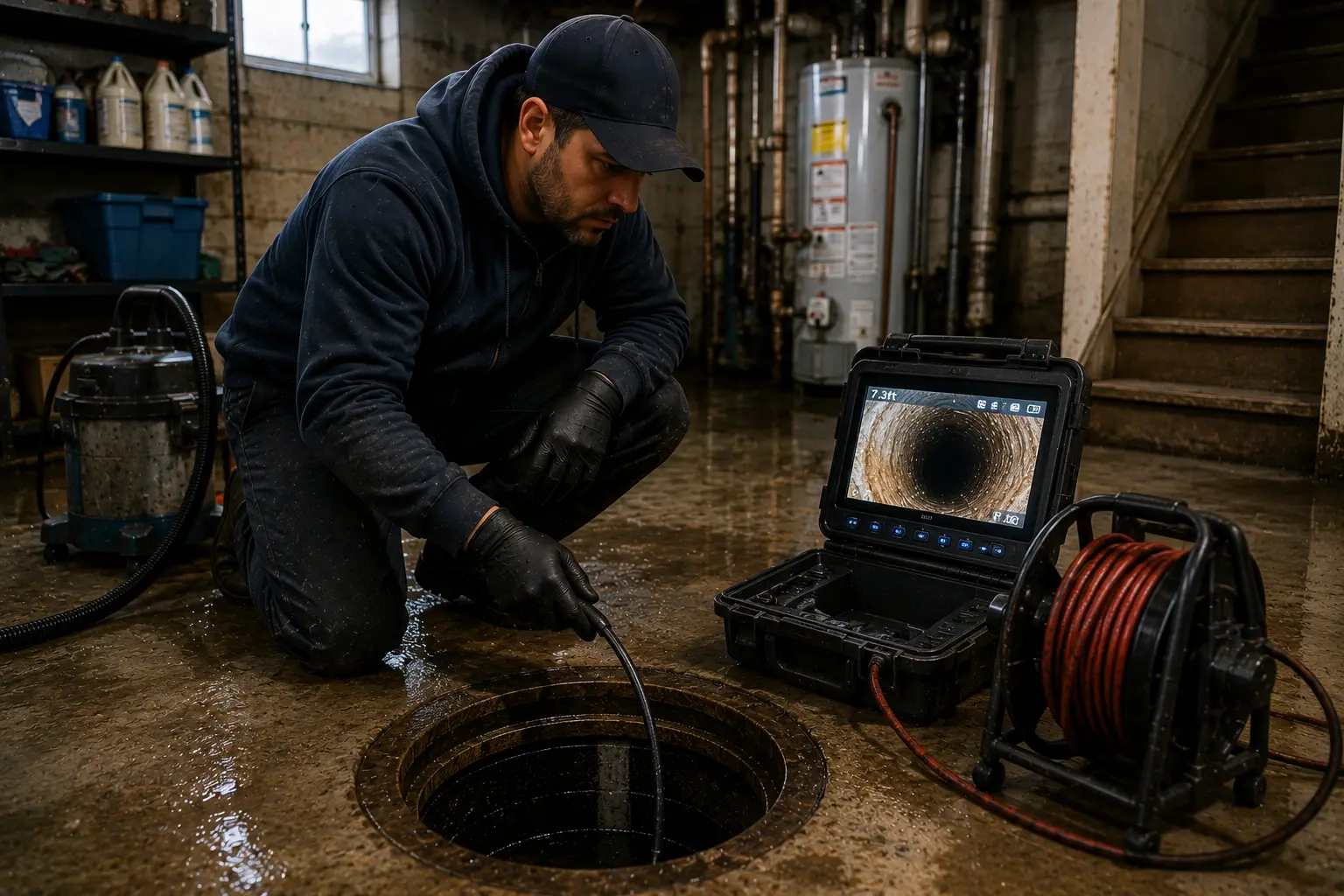
An emergency sewer camera inspection is often the fastest way to understand what is happening inside a sewer line during a backup, major clog, or sudden drainage failure. When sewage is entering a basement, multiple drains stop working, or a sewer line keeps backing up after clearing, a camera inspection can help identify whether the problem is a blockage, tree roots, cracked pipe, offset joint, pipe belly, or collapse.
For Chicago homeowners, emergency inspections can be especially useful because many homes have older sewer laterals, basement floor drains, mature trees, dense urban lots, and weather-related sewer pressure during heavy rain. Without seeing the inside of the pipe, it can be difficult to know whether the issue is temporary or a sign of a larger repair problem.
This guide explains what an emergency sewer camera inspection can show, when one is worth considering, how it fits into urgent sewer repair decisions, what its limitations are, and what homeowners should ask before approving repairs based on inspection findings.
Key Takeaways
- An emergency sewer camera inspection helps identify the cause and location of a sewer backup or main line failure.
- Camera inspections can reveal roots, cracks, collapsed pipe, offset joints, standing water, grease buildup, and other defects.
- The inspection is diagnostic; it does not clean, repair, or replace the sewer line by itself.
- In many emergencies, the line may need to be partially cleared before a camera can pass through.
- Chicago homes with older sewer laterals and basement backups often benefit from inspection before major repair decisions.
- Homeowners should ask to see the findings and understand whether the recommended repair is temporary or permanent.
What Is an Emergency Sewer Camera Inspection?
An emergency sewer camera inspection uses a waterproof camera inserted into the sewer line to visually identify the cause and location of an urgent sewer problem. It is commonly used after a backup, recurring clog, basement drain overflow, or suspected pipe failure. The inspection can help determine whether the issue is a simple blockage or a structural sewer problem that may require repair or replacement.
When Is a Sewer Camera Inspection Needed Quickly?
A camera inspection is not always necessary for every slow drain. It becomes more important when the symptoms suggest a main sewer line problem or when repair decisions need to be made quickly.
An emergency sewer camera inspection may be appropriate when:
- Sewage is backing up into the basement
- Multiple drains or toilets are backing up at once
- The sewer line was recently cleared but backed up again
- There is a strong sewer odor with drainage problems
- Water appears around a basement floor drain during laundry use
- A contractor suspects roots, collapse, or broken pipe
- The homeowner is being asked to approve major repair work
- Backups happen during or after heavy rain
If sewage is actively entering the home, the inspection should be part of a broader emergency response. Homeowners should first stop using water and review What to Do After a Sewer Backup for immediate safety and damage-control steps.
What a Sewer Camera Inspection Can Find
A sewer camera inspection helps show the condition of the pipe from the inside. It can often reveal why wastewater is not flowing properly and whether the problem is likely to return.
| Finding | What It Means | Possible Next Step |
|---|---|---|
| Tree roots | Roots have entered through cracks, joints, or openings | Root removal, cleaning, spot repair, or replacement |
| Grease or debris buildup | Material is restricting flow inside the pipe | Drain clearing, hydro jetting, or maintenance changes |
| Cracked pipe | The pipe wall is damaged but may still be partially open | Spot repair, lining, or replacement depending on severity |
| Offset joint | Pipe sections have shifted out of alignment | Repair or replacement of the affected section |
| Pipe belly | A sagging section holds standing water and waste | Repair or replacement if backups recur |
| Collapsed pipe | The sewer line is partially or fully caved in | Excavation and replacement are often considered |
| Standing water | Flow is restricted or the pipe has poor slope | Further diagnosis and repair planning |
How Emergency Camera Inspections Fit Into Sewer Repair
A camera inspection is usually one step in the decision-making process. It helps determine whether the sewer line needs cleaning, temporary repair, spot repair, replacement, or further investigation.
In many cases, the process looks like this:
- The homeowner notices a backup, odor, or drainage failure.
- Water use is stopped to avoid worsening the backup.
- The line is accessed through a cleanout, floor drain, or other entry point.
- If the pipe is blocked, it may need to be cleared enough for the camera to pass.
- The camera is pushed through the line to inspect pipe condition.
- The location and type of defect are identified when possible.
- Repair options are discussed based on the findings.
For homeowners dealing with urgent timing, Same-Day Sewer Line Repair: What to Expect explains how inspection, clearing, temporary fixes, and repair planning may happen during an emergency visit.
What a Camera Inspection Cannot Do
Camera inspections are useful, but they have limits. Understanding those limits can prevent confusion during an emergency.
A sewer camera inspection cannot:
- Repair a broken or collapsed pipe
- Remove sewage from a basement
- Clean contaminated flooring or walls
- Guarantee that every hidden issue has been found
- Always pass through a fully blocked or collapsed line
- Determine insurance coverage
- Replace the need for permits when major repair is required
A camera inspection shows conditions inside the accessible part of the sewer line. If the pipe is completely blocked or collapsed, clearing or excavation may be needed before the entire line can be evaluated.
Does the Sewer Line Need to Be Cleared First?
Sometimes. If the sewer line is filled with standing water, roots, grease, debris, or sewage, the camera may not provide a clear view. In other cases, the camera may not be able to pass through the blockage at all.
Clearing may be needed before inspection when:
- The pipe is fully blocked
- The camera cannot move past the obstruction
- The view is obscured by heavy debris or grease
- Standing water prevents useful visibility
- The line needs enough flow restored to evaluate the pipe
However, cleaning should be done carefully if the pipe may be fragile or collapsed. Aggressive clearing methods may not be appropriate for every sewer condition.
Chicago-Specific Reasons Camera Inspections Matter
Chicago sewer problems often involve local property and infrastructure conditions that make inspection especially helpful before major decisions are made.
Older Sewer Laterals
Many Chicago homes have older private sewer laterals that may include clay or other aging pipe materials. These lines can be vulnerable to root intrusion, cracks, offsets, and collapse.
Basement Floor Drain Backups
When sewage appears in a basement, the source may be a main sewer blockage, damaged lateral, sewer surcharge, or a combination of issues. Basement-specific repair options are discussed in Basement Sewer Backup Repair: Common Solutions.
Mature Trees and Root Intrusion
Tree roots can enter older pipe joints and damaged sections, causing recurring backups even after the line is cleared.
Heavy Rain Events
Storm-related backups can be complicated. A camera inspection may help determine whether the private sewer line has defects that make rain-related backups worse.
Permit and Excavation Decisions
If inspection findings point toward major sewer repair or replacement, permits may become part of the timeline. Homeowners can learn more from Emergency Sewer Repair Permits in Chicago.
The broader Emergency Sewer Repair hub includes related resources on urgent repairs, cleanup, temporary fixes, and repair timing.
How Inspection Findings Affect Repair Decisions
The same symptoms can lead to very different repair decisions depending on what the camera shows. A basement backup caused by a soft blockage is not the same as one caused by a collapsed lateral.
| Inspection Result | Possible Interpretation | Repair Decision Point |
|---|---|---|
| Line clears and pipe looks sound | Temporary obstruction may have caused the backup | Monitor and reduce clog risks |
| Roots are present at one joint | Root intrusion may recur | Consider cleaning, monitoring, or spot repair |
| Multiple root entries | Pipe may be deteriorated in several places | Repair versus replacement discussion |
| Standing water in a sagging section | Pipe belly may collect waste | Evaluate severity and repeat backup history |
| Collapsed pipe | Flow is physically obstructed by structural failure | Replacement or excavation may be necessary |
| Offset joints | Pipe sections are misaligned | Localized repair or replacement may be considered |
If the inspection suggests temporary stabilization rather than immediate permanent work, Temporary Sewer Line Repair Options can help homeowners understand what temporary measures can and cannot solve.
Cost Factors for Emergency Sewer Camera Inspections
The cost of an emergency sewer camera inspection can vary depending on timing, access, and whether the line must be cleared first. The inspection may be a separate charge, included with other diagnostic work, or part of a larger emergency repair visit depending on the provider and situation.
Common cost factors include:
- Whether the inspection happens during normal hours or after hours
- Whether the sewer line is accessible through an existing cleanout
- Whether drain clearing is required before inspection
- How far the camera must travel
- Whether locating equipment is used to mark the problem area
- Whether video or images are provided
- Whether the inspection is part of a larger emergency repair call
- Whether the backup caused cleanup or restoration needs
Weekend or after-hours timing can affect the overall emergency cost. Homeowners can review Weekend Sewer Repair Costs Explained for related pricing considerations.
What Homeowners Should Ask During the Inspection
During an emergency, it is easy to feel rushed. Asking clear questions can help make the inspection more useful and reduce the chance of misunderstanding the findings.
- Can the full sewer line be inspected, or only part of it?
- Was the line cleared before the camera inspection?
- What exactly is visible on the camera?
- Where is the problem located?
- Is the issue a blockage, root intrusion, crack, offset, belly, or collapse?
- Can I see the video or still images?
- Is the recommended repair temporary or permanent?
- Does the finding require excavation?
- Will permits be needed?
- What happens if the backup returns?
Inspection findings should be explained in plain language. Homeowners should not feel pressured to approve major work without understanding what the camera showed and why the repair is being recommended.
Camera Inspection After Sewage Enters the Home
If sewage has entered the basement or another living area, a camera inspection can help identify the cause, but cleanup is still a separate issue. Contaminated water, wet building materials, and affected belongings may need attention even after the sewer problem is diagnosed.
After a sewage backup, homeowners may need to address:
- Standing wastewater
- Contaminated flooring or walls
- Damaged personal property
- Moisture and drying
- Odor concerns
- Insurance documentation
- Sewer repair or replacement
For cleanup-specific guidance, see Sewage Cleanup After a Sewer Backup.
Common Mistakes With Emergency Sewer Camera Inspections
Assuming the Camera Repairs the Problem
A camera inspection is diagnostic. It identifies conditions but does not clear, repair, or replace the sewer line.
Approving Major Work Without Seeing the Findings
If excavation or replacement is recommended, homeowners should ask what the inspection showed and where the defect is located.
Skipping Inspection After Repeated Backups
Repeated sewer backups often indicate a problem that cleaning alone may not solve.
Ignoring Cleanup After Diagnosis
If sewage entered the home, inspection does not remove contamination from floors, walls, or belongings.
Not Asking Whether the Full Line Was Viewed
A blocked or collapsed pipe may prevent the camera from seeing beyond the obstruction.
Confusing Storm Backup With a Simple Clog
Backups during heavy rain can involve multiple causes. Inspection may help clarify whether the private sewer lateral has defects.
Warning Signs You May Need Another Inspection or Follow-Up
After an emergency inspection or repair, homeowners should watch for signs that the sewer issue may still be unresolved.
- Drains slow down again after clearing
- Basement floor drain odors return
- Toilets gurgle when other fixtures drain
- Water appears during laundry use
- Backups happen again during heavy rain
- The camera could not pass through the full line
- Inspection showed roots, cracks, standing water, or collapse
- The repair recommendation was unclear or undocumented
If these signs appear, further evaluation or repair planning may be needed.
Frequently Asked Questions
What is an emergency sewer camera inspection?
It is a diagnostic inspection that uses a camera to look inside the sewer line during an urgent problem such as a backup, blockage, or suspected pipe failure.
Can a sewer camera inspection find the exact problem?
Often, yes. It can identify many common problems, including roots, cracks, offset joints, pipe bellies, debris, and collapse. However, visibility may be limited if the line is fully blocked or filled with standing water.
Does the sewer line need to be cleaned before inspection?
Sometimes. If the camera cannot pass through the blockage or visibility is poor, the line may need to be partially cleared before a useful inspection can be completed.
Is a camera inspection worth it after one sewer backup?
It can be, especially if the backup involved multiple fixtures, a basement floor drain, sewage entering the home, or no obvious isolated cause. Inspection is even more important after repeated backups.
Can a camera inspection show whether I need sewer replacement?
It can provide important evidence. If the camera shows collapse, severe deterioration, multiple defects, or serious standing water, replacement may be discussed. The decision should also consider access, cost, history, and repair alternatives.
Will insurance pay for an emergency sewer camera inspection?
Coverage depends on the policy and reason for the inspection. Some insurance claims may consider diagnostic documentation, but homeowners should confirm coverage directly with their insurer.
Do Chicago sewer camera inspections require permits?
A camera inspection by itself generally does not involve the same permitting concerns as excavation or sewer replacement. If inspection leads to major repair work, permits may become relevant.
What should I ask for after the inspection?
Ask for a clear explanation of the findings, the location of the problem, whether video or images are available, and whether the recommended repair is temporary or permanent.
Conclusion
Emergency sewer camera inspections help homeowners move from guesswork to evidence during a stressful sewer problem. When sewage backs up, multiple drains fail, or a sewer line repeatedly clogs, inspection can identify whether the issue is a simple obstruction or a more serious pipe defect.
For Chicago homeowners, camera inspections are especially useful when older sewer laterals, basement drains, tree roots, heavy rain, or tight repair conditions are involved. The inspection does not solve the problem by itself, but it can guide the next decision: clearing, temporary repair, spot repair, replacement, cleanup, or permit-based follow-up work.