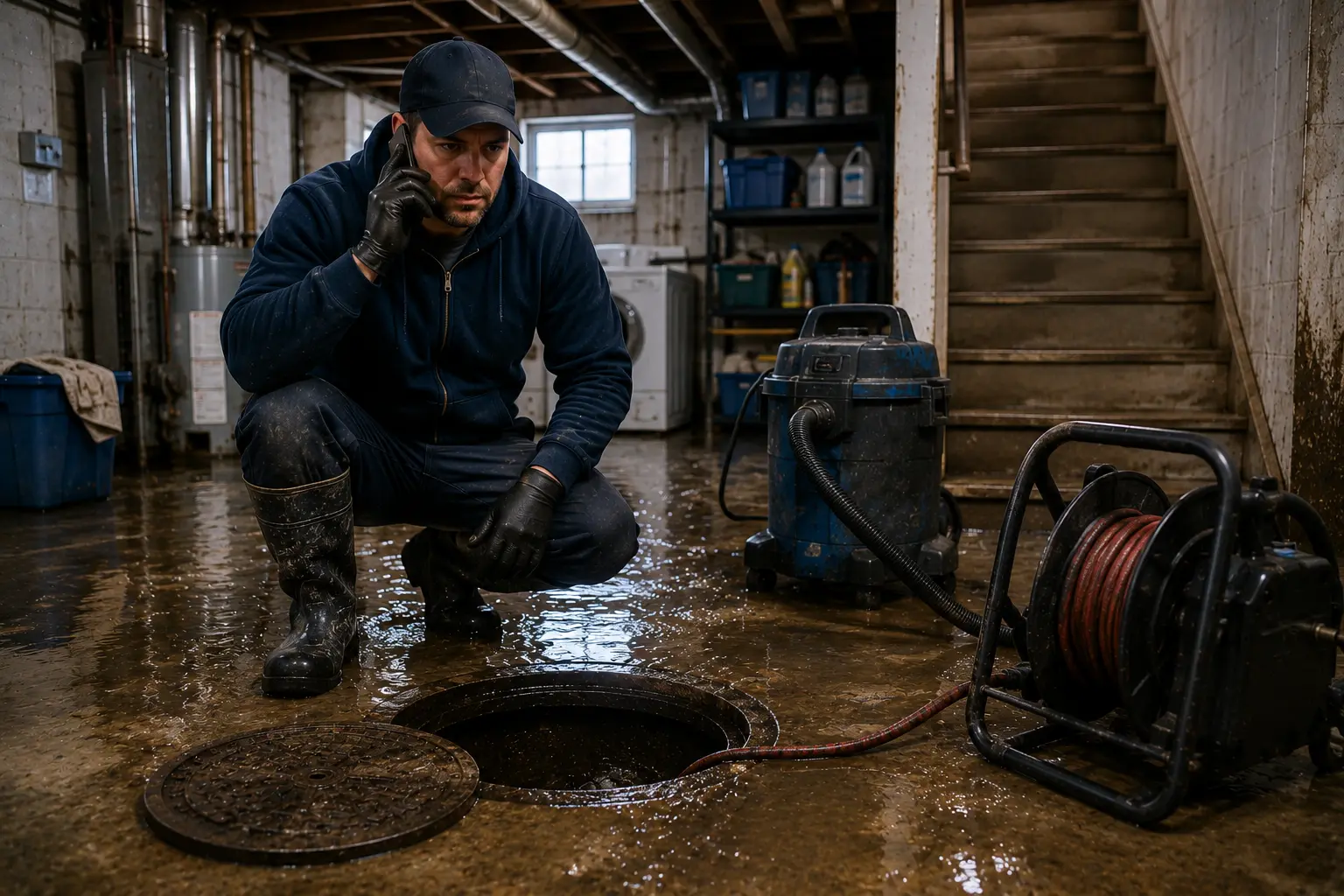
When sewage backs up into a basement, bathroom, laundry area, or floor drain, homeowners often do not know who to call first. The situation may involve a sewer line problem, a contaminated cleanup issue, an insurance claim, and sometimes a city sewer concern. Calling the wrong person first can delay the response or create confusion about what actually needs to be fixed.
In most cases, the first call for an active sewer backup should be to a qualified plumbing or sewer professional who can determine whether the main sewer line is blocked, damaged, or failing. If sewage has entered the home, a cleanup or restoration company may also be needed. If property damage occurred, the insurance company should usually be contacted early for documentation and coverage guidance.
For Chicago homeowners, the answer can be more complicated because basement backups, older private sewer laterals, heavy rain, and public sewer conditions can all play a role. This guide explains who to call, in what order, and what each person or organization actually does after a sewer backup.
Key Takeaways
- For an active sewer backup, a licensed plumbing or sewer professional is usually the first practical call.
- If sewage entered the home, cleanup and restoration may be a separate call from sewer repair.
- If property damage occurred, contact your insurance company early to understand documentation requirements.
- If multiple homes are affected or the backup appears connected to a public sewer issue, reporting the problem to the city may be appropriate.
- A sewer camera inspection can help determine whether the cause is a blockage, roots, pipe damage, or collapse.
- Chicago basement backups often require both immediate damage control and careful diagnosis of the sewer line.
Who Should You Call First for a Sewer Backup?
If sewage is actively backing up into your home, call a qualified plumbing or sewer professional first to evaluate the sewer line and stop the immediate problem. If sewage has touched floors, walls, belongings, or finished basement space, you may also need a sewage cleanup or restoration company. If damage occurred, contact your insurance company early and document the affected areas before removing materials when it is safe.
Step 1: Stop Using Water Before You Make Calls
Before calling anyone, stop using water in the home. If the main sewer line is blocked or overloaded, every toilet flush, shower, laundry cycle, or sink use can push more wastewater into the backup area.
Avoid using:
- Toilets
- Sinks
- Showers and tubs
- Dishwashers
- Washing machines
- Utility sinks
- Basement floor drains
Keep people and pets away from the affected area and avoid direct contact with sewage. If the backup is active, reviewing What to Do After a Sewer Backup can help you prioritize the first safety and damage-control steps.
Who to Call Depending on the Situation
A sewer backup may require more than one type of help. The right first call depends on whether the backup is active, whether sewage entered the home, whether damage occurred, and whether the issue appears isolated to your property or widespread.
| Situation | Who to Call | Why They Matter |
|---|---|---|
| Sewage is actively backing up | Plumbing or sewer professional | To stop the backup, evaluate the sewer line, and restore drainage if possible |
| Sewage entered the basement or living space | Cleanup or restoration company | To remove contamination, dry materials, and reduce health risks |
| Property damage occurred | Insurance company | To confirm coverage, claim steps, documentation needs, and policy limits |
| Multiple neighbors are affected | City reporting channel or local utility contact | To report a possible public sewer issue or neighborhood-wide backup |
| Cause is unclear or backups repeat | Sewer camera inspection provider | To identify roots, cracks, blockage, collapse, or other pipe defects |
| Major repair or excavation is likely | Licensed sewer contractor familiar with permits | To evaluate repair scope, access, replacement needs, and permit requirements |
Call a Sewer or Plumbing Professional When the Backup Is Active
If wastewater is coming up through drains or the home cannot use plumbing normally, a sewer or plumbing professional is usually the most important first call. The goal is to determine whether the main sewer line is blocked, damaged, or unable to carry wastewater away from the home.
This call may involve:
- Identifying affected fixtures
- Checking access points such as cleanouts
- Clearing the sewer line if appropriate
- Determining whether the issue involves the main sewer line
- Recommending a sewer camera inspection
- Explaining whether the situation appears urgent
- Advising whether water use should remain restricted
If the situation requires fast action, Same-Day Sewer Line Repair: What to Expect explains how urgent diagnosis, clearing, inspection, and repair planning may work.
Call a Cleanup or Restoration Company if Sewage Entered the Home
Repairing or clearing the sewer line does not automatically make the affected area safe. If sewage touched floors, drywall, carpet, insulation, furniture, storage boxes, or personal belongings, cleanup may be a separate and important part of the response.
Cleanup may involve:
- Removing standing wastewater
- Disinfecting hard surfaces
- Removing contaminated porous materials
- Drying the affected area
- Controlling odor
- Documenting damage
- Preparing the space for restoration
Sewage should be treated as contaminated, not as ordinary water. For a deeper explanation of cleanup decisions, see Sewage Cleanup After a Sewer Backup.
Call Your Insurance Company if There Is Damage
If the backup damaged flooring, drywall, furniture, stored belongings, or finished basement space, contacting your insurance company early can help clarify what documentation is needed. Coverage depends on the policy and whether sewer backup or water backup coverage applies.
Before removing major materials, document the damage when it is safe. Useful records may include:
- Photos and videos of the affected area
- Where wastewater entered the home
- Damaged flooring, drywall, furniture, and belongings
- Invoices for emergency service or cleanup
- Inspection findings
- Repair estimates
- Dates and times of the backup
Insurance may cover cleanup or property damage in some situations, but it may not cover the sewer line repair itself. Policy language, endorsements, limits, and exclusions matter.
Should You Call the City of Chicago?
Sometimes. A sewer backup may be related to a private sewer lateral, which is typically a homeowner responsibility. In other cases, especially when multiple nearby properties are affected, a public sewer issue may be involved.
Calling or reporting to the city may be appropriate when:
- Several neighbors have sewer backups at the same time
- The backup occurs during heavy rain and appears widespread
- Water is coming from a public sewer structure or street condition
- There is visible street flooding affecting sewer drainage
- You suspect a public sewer blockage or neighborhood issue
However, even if the backup happens during a storm, the private sewer line may still need inspection. A city-related issue and a private lateral problem can sometimes overlap.
Call for a Sewer Camera Inspection When the Cause Is Unclear
A sewer camera inspection is often the step that turns guesswork into a clearer repair decision. If the line backs up repeatedly, affects multiple fixtures, or shows no obvious isolated cause, a camera inspection can help identify what is happening inside the pipe.
A camera inspection may reveal:
- Tree root intrusion
- Cracked pipe
- Collapsed sewer line
- Offset joints
- Pipe bellies holding wastewater
- Grease, wipes, or debris buildup
- Obstructions that may cause repeat backups
For urgent situations, Emergency Sewer Camera Inspections explains when inspection is especially useful before approving repairs.
Chicago-Specific Considerations When Deciding Who to Call
Chicago sewer backups can involve several local factors that affect who should be involved and how quickly the issue should be handled.
Basement Backups Are Common
Many Chicago homes have basement floor drains, laundry areas, utility rooms, and finished basement spaces. Because these areas are below grade, they are often the first places sewage appears during a backup. Basement-specific repair options are explained in Basement Sewer Backup Repair: Common Solutions.
Older Sewer Laterals Can Fail Repeatedly
Older clay, cast-iron, or deteriorated sewer laterals may develop root intrusion, cracks, offsets, and collapses. Repeated cleaning without inspection may not solve the underlying issue.
Heavy Rain Can Make the Source Harder to Identify
Storm-related backups may involve private sewer restrictions, public sewer pressure, foundation drainage issues, or a combination of factors. A backup during rain does not automatically prove the city is responsible.
Permits May Matter for Major Repairs
If excavation, replacement, or work near the public way is required, permits may affect timing and scope. Homeowners can learn more from Emergency Sewer Repair Permits in Chicago.
The Emergency Sewer Repair hub organizes related guidance on urgent sewer issues, cleanup, inspections, repair timing, and homeowner decision-making.
Who Not to Call First
Some calls may be useful later, but they are not always the best first step during an active sewer backup.
A General Handyman
A handyman may help with repairs after cleanup, but active sewer backups usually require sewer-specific diagnosis and equipment.
A Flooring or Remodeling Contractor
Restoration and rebuilding should generally wait until contamination is removed, drying is complete, and the sewer problem has been addressed.
Insurance Only, Without Stopping the Backup
Insurance guidance matters, but if sewage is actively entering the home, the sewer problem still needs immediate attention.
Cleanup Only, Without Sewer Diagnosis
Cleanup can make the affected area safer, but the backup may return if the sewer line remains blocked or damaged.
What to Tell the Person You Call
Clear information can help the right professional understand the urgency. Before calling, note what is happening and where.
Be ready to explain:
- Where sewage is appearing
- Whether the backup is still active
- Which fixtures are affected
- Whether the problem happened during heavy rain
- Whether this has happened before
- Whether the basement is finished or unfinished
- Whether children, pets, or vulnerable people are in the home
- Whether you have photos or videos of the damage
- Whether any sewer work was recently performed
The more specific the information, the easier it is to decide whether the situation needs emergency service, cleanup, inspection, or repair planning.
Cost Factors Based on Who You Call
The total cost after a sewer backup may involve several separate categories. Homeowners should avoid assuming one call covers everything.
| Service Type | What It May Cover | Cost Factors |
|---|---|---|
| Sewer clearing | Opening a blocked sewer line | Access, blockage severity, timing, equipment needed |
| Camera inspection | Diagnosing pipe condition and problem location | Access, line condition, whether clearing is needed first |
| Sewer repair | Fixing damaged pipe sections | Depth, location, pipe condition, excavation, permits |
| Sewage cleanup | Removing contamination and drying affected areas | Area size, materials affected, water volume, drying needs |
| Restoration | Replacing damaged flooring, drywall, or finishes | Material choices, extent of demolition, finished basement conditions |
| Emergency or weekend service | After-hours response | Timing, urgency, crew availability, repair scope |
If the backup happens outside normal business hours, see Weekend Sewer Repair Costs Explained for related pricing considerations.
Common Mistakes When Deciding Who to Call
Calling Cleanup Before Stopping the Sewer Problem
If the sewer line is still backing up, cleanup may be interrupted by additional wastewater entering the home.
Calling Only a Drain Cleaner After Repeated Backups
Repeated backups may require camera inspection and repair planning, not just another clearing.
Assuming the City Is Responsible
Some backups involve public sewer conditions, but many originate in the private sewer lateral. The location of the problem matters.
Waiting Too Long to Notify Insurance
If damage occurred, delayed documentation can make the claim process harder.
Letting Restoration Begin Too Soon
Rebuilding should wait until contaminated materials are removed, drying is complete, and the sewer issue is understood.
Approving Major Repair Without Clear Findings
If excavation or replacement is recommended, ask what evidence supports that decision.
Warning Signs You Need More Than One Call
Many sewer backups require more than one type of response. Watch for signs that the situation involves repair, cleanup, and documentation needs.
- Sewage entered finished basement space
- Carpet, drywall, or insulation was affected
- Multiple drains backed up at once
- The backup happened more than once
- There is a strong sewer odor after water recedes
- Drain clearing temporarily helped but the problem returned
- Neighbors experienced backups during the same storm
- Insurance may be involved because property was damaged
When these signs are present, one phone call may not be enough to fully resolve the problem.
Frequently Asked Questions
Who is the first person I should call for a sewer backup?
If sewage is actively backing up, call a qualified plumbing or sewer professional first to evaluate and control the sewer problem. If sewage entered the home, cleanup may also be needed.
Should I call a plumber or a restoration company first?
If the backup is still active, sewer evaluation usually comes first. If the backup has stopped but contamination remains, cleanup and restoration may become the priority. In many cases, both are needed.
Should I call my insurance company right away?
If property damage occurred, contacting your insurance company early is wise. Ask what documentation is needed before removing materials or discarding damaged belongings.
Should I call the city after a sewer backup in Chicago?
It may be appropriate if multiple nearby homes are affected, street flooding is involved, or a public sewer issue is suspected. However, the private sewer lateral may still need inspection.
Can a drain cleaner fix a sewer backup?
Sometimes, especially if the issue is a blockage. But if the backup is caused by roots, cracks, offsets, a pipe belly, or collapse, cleaning may only provide temporary relief.
Do I need a sewer camera inspection?
A camera inspection is often useful after a major backup, repeated backup, basement floor drain backup, or unclear cause. It helps identify whether the pipe needs repair or replacement.
Who handles sewage-contaminated carpet and drywall?
Cleanup or restoration professionals typically handle contaminated materials, drying, and restoration planning. Sewer professionals address the pipe or drainage problem that caused the backup.
What if I call the wrong person first?
The most important thing is to stop using water and prevent additional exposure. If the first call cannot address the full situation, ask what type of professional should be contacted next.
Conclusion
After a sewer backup, the right call depends on what is happening. If sewage is actively backing up, start with a plumbing or sewer professional who can evaluate the line and help stop the problem. If sewage has entered the home, cleanup and restoration may be needed. If property damage occurred, insurance should be contacted early. If the problem appears widespread or public sewer-related, reporting it to the city may also make sense.
For Chicago homeowners, sewer backups often involve more than one issue: the immediate backup, the contaminated area, the pipe condition, and the possibility of rain or public sewer pressure. Calling the right people in the right order can help reduce damage, clarify responsibility, and prevent the same backup from happening again.