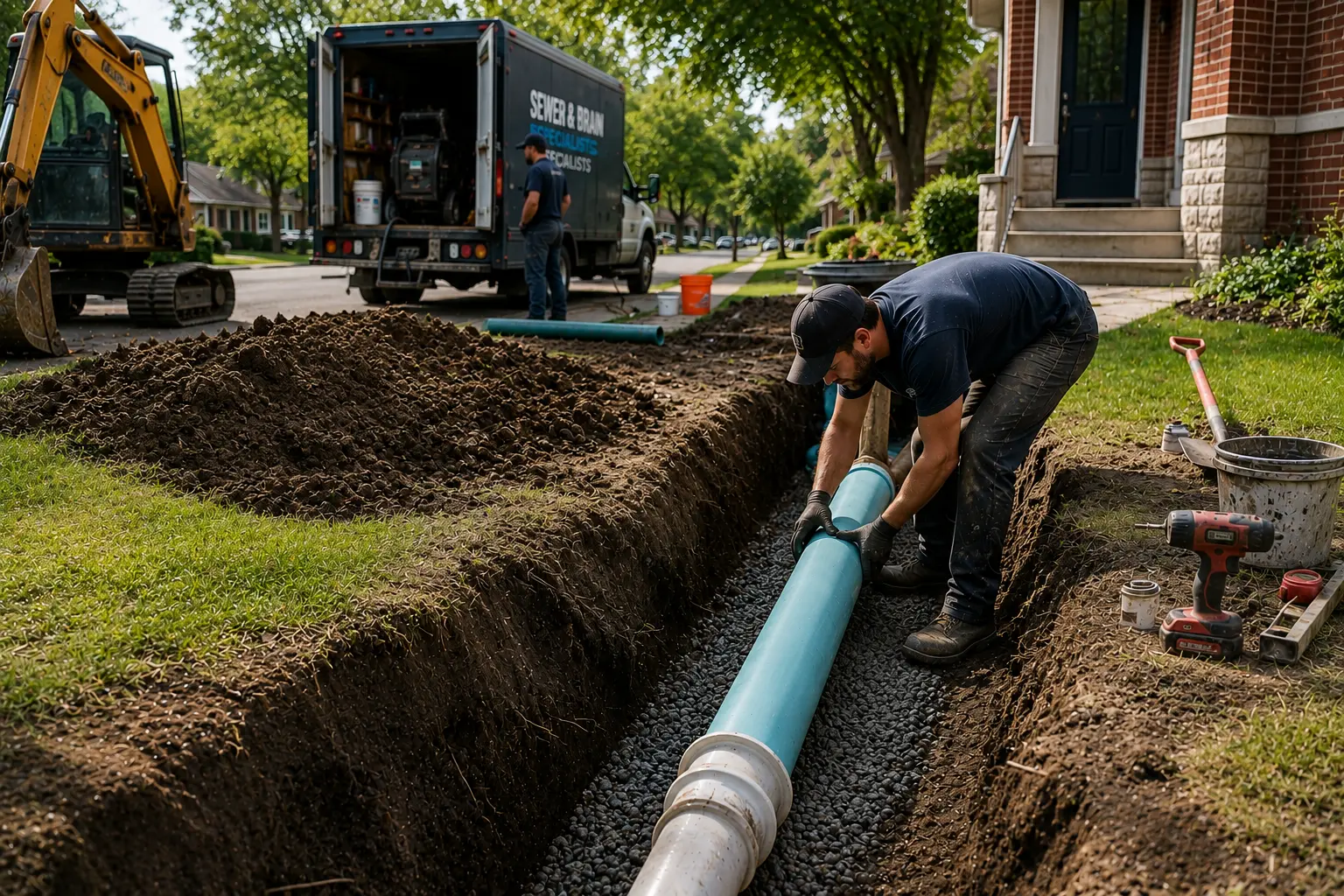
A sewer line replacement can sometimes begin quickly during an emergency, but the full timeline depends on more than how urgently the homeowner needs the work done. The speed of replacement depends on the cause of the failure, pipe depth, access, weather, permit requirements, utility marking, excavation conditions, inspection needs, and whether temporary measures are needed first.
For Chicago homeowners, timing can feel especially urgent when sewage is backing up into a basement or the home cannot safely use toilets, showers, laundry, or sinks. In those cases, the immediate goal may be to stop the backup and restore limited drainage. Full sewer line replacement may still take additional time if excavation, permits, or complex site conditions are involved.
This guide explains how quickly a sewer line can realistically be replaced, what can speed up or delay the process, what homeowners should expect during an emergency, and how to make decisions when a temporary repair may be needed before permanent replacement.
Key Takeaways
- Some sewer replacement projects may be completed in a few days, but complex replacements can take longer.
- Emergency response and full sewer line replacement are not always the same thing.
- Camera inspection, utility marking, permits, excavation, and inspections can all affect timing.
- Chicago homes may face added delays from older sewer laterals, tight lots, alleys, sidewalks, weather, and public way concerns.
- Temporary sewer repairs may help stabilize the home when replacement cannot happen immediately.
- Homeowners should ask what can be done right away and what must wait for permits, inspection, or excavation planning.
How Fast Can a Sewer Line Be Replaced?
A sewer line replacement may be completed within a few days in straightforward situations, but emergency cases can take longer if permits, utility marking, excavation challenges, weather, or public infrastructure issues are involved. In some cases, same-day work may only include inspection, clearing, temporary stabilization, and replacement planning rather than complete permanent replacement.
Emergency Response vs. Full Sewer Replacement
One of the most important distinctions is the difference between emergency response and complete replacement. A homeowner may need help immediately, but the permanent replacement may require steps that cannot be skipped.
Emergency response may include:
- Stopping or reducing an active backup
- Clearing a blockage enough to restore flow
- Performing a sewer camera inspection
- Locating the damaged section
- Restricting water use temporarily
- Planning excavation or replacement
- Arranging cleanup if sewage entered the home
Full sewer line replacement may require:
- Confirming the damaged area
- Marking underground utilities
- Obtaining required permits
- Excavating safely
- Removing failed pipe
- Installing new pipe
- Completing inspections
- Backfilling and restoring affected areas
If the sewer issue is happening right now, Same-Day Sewer Line Repair: What to Expect explains what may realistically happen during the first urgent visit.
Typical Sewer Replacement Timeline
The exact timeline varies by property, but most sewer line replacement projects move through a similar sequence. Some steps may happen quickly, while others depend on outside scheduling, site conditions, or municipal requirements.
| Step | What Happens | Timing Impact |
|---|---|---|
| Initial evaluation | Symptoms are reviewed and the sewer issue is assessed | Can often happen quickly during an emergency |
| Camera inspection | The inside of the pipe is inspected when access allows | May happen same day, but blocked lines may need clearing first |
| Utility marking | Underground utilities are identified before digging | Can affect how soon excavation begins |
| Permit review | Required approvals are addressed for major sewer work | Can delay permanent replacement if required |
| Excavation | The damaged sewer line is accessed | Depends on depth, access, soil, weather, and obstructions |
| Pipe replacement | Failed pipe is removed and new pipe is installed | May be straightforward or complex depending on the site |
| Inspection | Work may need to be inspected before backfill | Can affect completion timing |
| Backfill and restoration | The area is filled and surfaces are repaired or prepared for restoration | Restoration may occur after sewer work is complete |
What Can Speed Up Sewer Line Replacement?
Some conditions make replacement easier to schedule and complete. The more straightforward the job, the faster the work may move.
Replacement may move faster when:
- The damaged section is clearly identified
- A sewer camera inspection provides useful findings
- The pipe is accessible from the yard or an existing cleanout
- Excavation does not involve major concrete, sidewalks, or structures
- Underground utilities are clearly marked
- Permits are simple or already addressed
- The weather is cooperative
- The repair does not involve public way complications
- The homeowner can make quick decisions about scope and access
A clear diagnosis is one of the biggest timeline advantages. For urgent diagnosis, Emergency Sewer Camera Inspections explains how camera inspection can guide repair and replacement decisions.
What Can Delay Sewer Line Replacement?
Sewer replacement can be delayed by conditions that make excavation, approval, or inspection more complicated. Some delays are practical. Others are safety-related or required by local rules.
Common delays include:
- Unclear cause of the backup
- Blocked pipe that prevents full camera inspection
- Deep sewer line location
- Concrete, patios, garages, fences, or landscaping in the way
- Work near sidewalks, streets, alleys, or public areas
- Utility conflicts
- Permit requirements
- Weather conditions such as heavy rain, snow, freezing temperatures, or saturated soil
- Need for cleanup before work can safely continue
- Limited emergency crew or equipment availability
When a sewer line replacement cannot begin immediately, the first priority is usually stabilizing the situation so the home is not continuing to suffer damage while permanent work is arranged.
Can Sewer Replacement Be Done the Same Day?
Complete same-day sewer replacement is possible only in limited, straightforward situations. More often, same-day service involves emergency evaluation, line clearing, inspection, temporary stabilization, and planning for permanent replacement.
Same-day complete replacement is less likely when:
- The pipe is deep or difficult to access
- Excavation requires heavy equipment
- The work needs permits
- Utility marking has not been completed
- The damage is near public infrastructure
- Weather makes digging unsafe or impractical
- Cleanup is needed because sewage entered the home
If a same-day visit results in a recommendation for full replacement, homeowners should ask what work can happen immediately, what must wait, and whether temporary measures are needed in the meantime.
Temporary Repair While Waiting for Replacement
If the sewer line has failed but replacement cannot happen immediately, a temporary repair or stabilization plan may be considered. This is common when the home needs limited use restored or when permanent repair is delayed by permits, access, weather, or scheduling.
Temporary measures may include:
- Clearing enough of the blockage to restore partial flow
- Restricting water use
- Locating and marking the damaged section
- Using short-term measures to reduce repeat backups
- Arranging cleanup so contaminated areas do not worsen
- Scheduling replacement once required steps are complete
Temporary repair is not the same as replacement. Homeowners should understand its limits before relying on it. For more detail, see Temporary Sewer Line Repair Options.
Chicago-Specific Timing Considerations
Chicago sewer replacement timelines can be affected by the city’s housing patterns, weather, infrastructure, and property layouts.
Older Sewer Laterals
Many Chicago homes have older sewer laterals that may be vulnerable to roots, cracks, offsets, and collapse. Older pipe conditions can make replacement more likely and inspection more important.
Basement Backups
When sewage enters a basement, the homeowner may need both sewer work and cleanup. Replacement timing may be affected by how severe the backup is and whether the area is safe to access. Basement-specific repair options are discussed in Basement Sewer Backup Repair: Common Solutions.
Alleys, Sidewalks, and Tight Lots
Dense urban properties may have limited space for excavation equipment. Work near sidewalks, alleys, streets, or neighboring structures may require extra planning.
Weather and Soil Conditions
Heavy rain, freezing temperatures, snow, and saturated ground can delay excavation or make temporary stabilization more practical in the short term.
Permits and Inspections
Major sewer replacement may require permits and inspections, especially if excavation or work near public areas is involved. Homeowners can learn more from Emergency Sewer Repair Permits in Chicago.
The Emergency Sewer Repair hub includes related guidance on urgent sewer problems, cleanup, inspections, temporary fixes, and repair timing.
How Sewer Backup Cleanup Affects the Timeline
If the sewer failure caused sewage to enter the home, replacement is only one part of the timeline. Cleanup, drying, and documentation may also be needed.
Cleanup may involve:
- Removing standing wastewater
- Disinfecting hard surfaces
- Removing contaminated carpet, drywall, insulation, or belongings
- Drying affected areas
- Managing odors
- Documenting damage for insurance
Depending on severity, cleanup may begin before, during, or after sewer repair planning. For more information, see Sewage Cleanup After a Sewer Backup.
Cost and Timing Tradeoffs
Speed can affect cost, but faster is not always better if the diagnosis is incomplete or the repair scope is unclear. Homeowners should balance urgency with accuracy.
| Decision | Potential Benefit | Potential Tradeoff |
|---|---|---|
| Emergency same-day response | May stop active backup and reduce damage | May cost more and may not complete permanent replacement |
| Temporary repair before replacement | May restore limited use while planning continues | May not prevent another backup if pipe failure is severe |
| Immediate replacement approval | May address the root problem faster | Can be risky if inspection findings and scope are unclear |
| Waiting for normal scheduling | May allow more planning and comparison | May increase damage if the sewer line remains unusable |
Weekend or after-hours timing can also affect cost and availability. See Weekend Sewer Repair Costs Explained for related guidance.
Questions to Ask About Replacement Timing
When a sewer line replacement is recommended, homeowners should ask direct questions about timing and what can be done immediately.
- What inspection findings show that replacement is needed?
- Can I see the camera footage or images?
- Is the entire line being replaced or only one section?
- What has to happen before excavation can begin?
- Are permits required?
- Does work involve the sidewalk, alley, street, or public way?
- Can the home use water before replacement?
- Is a temporary repair needed?
- How will sewage cleanup be handled if the home was affected?
- What restoration is included after the replacement?
A clear timeline should separate emergency response, diagnostic work, replacement work, inspection, cleanup, and restoration. These are related, but they are not always completed at the same time.
Common Mistakes When Trying to Replace a Sewer Line Quickly
Assuming Emergency Service Means Same-Day Replacement
An emergency visit may restore flow or identify the problem, but complete replacement may still require permits, utility marking, excavation, and inspection.
Approving Replacement Without Clear Diagnosis
Major replacement should be supported by inspection findings when possible, especially if a camera can identify the cause and location of failure.
Ignoring Temporary Water Restrictions
If the sewer line remains damaged, normal water use may trigger another backup before replacement is complete.
Forgetting About Cleanup
If sewage entered the home, pipe replacement does not automatically clean contaminated flooring, walls, or belongings.
Underestimating Permit Timing
Permits and inspections can affect when work begins and when it can be completed.
Waiting Too Long After a Known Collapse
If the pipe has collapsed or the home cannot use plumbing, delaying action may increase property damage and disruption.
Warning Signs Replacement Should Not Be Delayed
Some sewer conditions may make replacement or major repair more urgent. Homeowners should take repeated or severe symptoms seriously.
- Sewage repeatedly backs up into the basement
- Multiple drains fail at once
- The sewer line cannot be cleared reliably
- Camera inspection shows collapse
- The pipe has multiple serious defects
- Roots return quickly after clearing
- The home cannot safely use toilets or showers
- Temporary repairs fail
- Backups occur after normal water use resumes
If these symptoms are present, replacement timing becomes a practical household issue, not just a plumbing preference.
Frequently Asked Questions
Can a sewer line be replaced in one day?
Sometimes, but only in straightforward cases with clear access, limited scope, and no major permit or excavation complications. Many replacements take longer because of utility marking, permits, inspections, weather, or site constraints.
What happens if my sewer line collapses on a weekend?
The immediate response may involve stopping the backup, clearing the line if possible, camera inspection, temporary stabilization, and planning for replacement. Full replacement may need to wait for permits, crews, equipment, or safe excavation conditions.
Do I need a sewer camera inspection before replacement?
A camera inspection is often useful because it helps identify the location and severity of the problem. If the line is fully collapsed or blocked, inspection may be limited until access is restored.
Can I use water while waiting for sewer replacement?
It depends on whether the sewer line can still carry wastewater. If the line is blocked, collapsed, or only temporarily cleared, water use may need to be restricted to avoid another backup.
Do sewer replacements in Chicago require permits?
Major sewer work may require permits, especially if excavation, replacement, or work near public areas is involved. Permit requirements can affect the replacement timeline.
Will insurance pay for fast sewer replacement?
Insurance depends on the policy and cause of damage. Some policies may cover certain backup-related cleanup or property damage, but the sewer line replacement itself may not be covered.
What delays emergency sewer replacement the most?
Common delays include unclear diagnosis, utility marking, permit requirements, deep pipe location, difficult excavation access, weather, public way involvement, and the need for cleanup or temporary stabilization.
What if replacement cannot happen immediately?
A temporary repair or restricted water-use plan may be used to reduce damage until permanent work can be completed. The limits of any temporary measure should be clearly explained.
Conclusion
A sewer line can sometimes be replaced quickly, but emergency urgency does not remove the practical steps involved in doing the work safely and correctly. Inspection, access, utility marking, permits, excavation, pipe installation, inspections, cleanup, and restoration can all affect the final timeline.
For Chicago homeowners, the most realistic approach is to separate immediate response from permanent replacement. The first priority is controlling backups and protecting the home. The next step is confirming the cause, understanding whether replacement is truly needed, and identifying what must happen before permanent work can begin. A fast response is important, but a clear diagnosis and realistic timeline are just as important when a sewer line needs to be replaced.