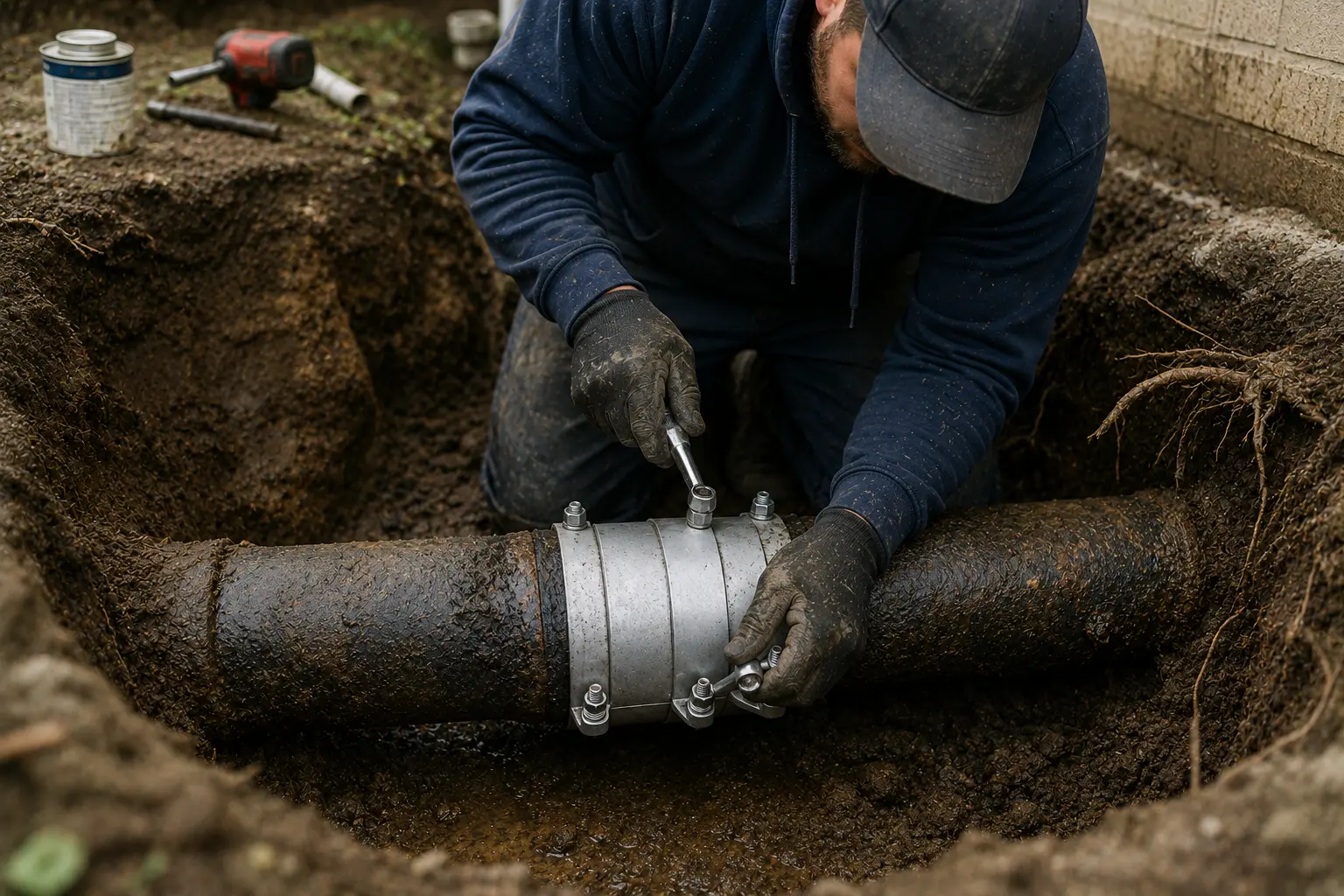
Cast iron sewer pipes are common in many older homes, including properties throughout Chicago. Cast iron can be strong and long-lasting, but it does not last forever. Over time, it may corrode, scale, crack, develop rough interior walls, or weaken enough that cleaning alone no longer solves the problem.
For homeowners, the challenge is knowing whether cast iron sewer pipe can be repaired, lined, partially replaced, or whether a larger replacement project makes more sense. The right option depends on the pipe’s age, condition, location, access, and whether the damage is isolated or widespread.
This guide explains the main cast iron sewer pipe repair options, how they compare, what Chicago homeowners should consider, and when replacement may be more practical than repeated short-term fixes. For a broader overview of repair methods, visit the Sewer Repair Methods hub.
Key Takeaways
- Cast iron sewer pipes can often be repaired if the damage is isolated and the pipe remains structurally stable.
- Common issues include corrosion, scaling, cracks, leaks, root intrusion, rough pipe interiors, and recurring blockages.
- A camera inspection is usually needed before choosing a repair method.
- Repair options may include cleaning, spot repair, pipe lining, partial replacement, or full replacement.
- Pipe lining may work when the pipe is damaged but still stable enough to support a liner.
- Severely deteriorated cast iron may require excavation, pipe bursting, or full sewer line replacement.
Can Cast Iron Sewer Pipe Be Repaired?
Yes, cast iron sewer pipe can often be repaired when the damage is limited and the pipe still has enough structural integrity. Options may include sewer cleaning, localized spot repair, pipe lining, or partial replacement.
However, if the cast iron is severely corroded, collapsing, leaking in multiple places, heavily scaled, or failing throughout the line, full replacement may be the better long-term solution. The decision should be based on inspection findings rather than age alone.
Why Cast Iron Sewer Pipes Fail Over Time
Cast iron was widely used because it is durable and strong. But underground sewer lines are exposed to moisture, soil conditions, wastewater, minerals, and long-term corrosion. Over decades, the pipe can weaken from both the inside and outside.
Common cast iron sewer pipe problems include:
- Internal corrosion
- Scale buildup
- Rough pipe walls that catch debris
- Small cracks or fractures
- Leaks at joints or weak points
- Root intrusion near damaged sections
- Partial collapse or thinning pipe walls
- Recurring blockages caused by reduced pipe diameter
Some issues can be managed with cleaning or repair. Others suggest the pipe is near the end of its useful life.
How Cast Iron Pipe Problems Are Diagnosed
A sewer camera inspection is typically the most useful starting point. Symptoms alone cannot reliably show whether a cast iron pipe needs cleaning, repair, lining, or replacement.
A camera inspection may reveal:
- Interior corrosion
- Heavy scale buildup
- Standing water
- Cracks or holes
- Root intrusion
- Offset joints
- Pipe bellies
- Partial collapse
- Transitions between cast iron, clay, PVC, or other materials
Once the pipe is inspected, homeowners can compare the severity of the visible defects with the available repair methods.
Option 1: Cleaning and Maintenance
If the cast iron pipe is structurally sound but narrowed by buildup, cleaning may improve flow. This may involve rodding, mechanical cleaning, or hydro jetting depending on the condition of the pipe.
Cleaning may be appropriate when:
- The pipe is clogged but not broken
- Scale or debris is causing slow drainage
- The pipe still appears structurally stable
- Backups are caused by buildup rather than collapse
- A camera inspection does not show major defects
Cleaning is not a permanent repair for a deteriorating pipe. If backups keep returning, the underlying cast iron condition should be reevaluated. Homeowners comparing cleaning with larger solutions may find Hydro Jetting vs Sewer Line Replacement helpful.
Option 2: Spot Repair
A spot repair fixes one specific damaged section of pipe. This may be useful when most of the cast iron line remains in acceptable condition but one area has cracked, leaked, separated, or failed.
Spot repair may make sense when:
- Only one section is damaged
- The rest of the cast iron appears stable
- The defect is easy enough to locate
- The damaged section can be accessed safely
- The repair is unlikely to be followed by several more failures
Spot repair becomes less attractive when the pipe has multiple weak points or widespread corrosion. For more detail, see Spot Repair for Sewer Lines: When Is It Enough?.
Option 3: Pipe Lining
Pipe lining may be an option when the cast iron pipe is damaged internally but still structurally stable enough to support a liner. This trenchless method creates a new interior surface inside the existing pipe.
Pipe lining may help address:
- Minor cracks
- Small leaks
- Rough interior surfaces
- Root entry points
- Interior wear
- Older pipe that still holds its shape
Before lining, the pipe usually needs to be cleaned and inspected. If the cast iron is too thin, severely collapsed, badly misshapen, or heavily deteriorated, lining may not be appropriate.
For a more complete explanation of this method, see Pipe Lining for Sewer Repair: How It Works.
Option 4: Partial Replacement
Partial replacement may be used when a longer section of cast iron has failed but the entire sewer line does not need to be replaced. This can be a middle-ground option between spot repair and full replacement.
Partial replacement may be considered when:
- A section of cast iron is severely corroded
- Several nearby defects are present
- The damaged section is accessible
- The remaining pipe is in better condition
- Full replacement would be more disruptive than necessary
This option may require excavation, especially if the damaged section cannot be repaired from inside the pipe.
Option 5: Full Sewer Line Replacement
Full replacement may be the best long-term option when cast iron pipe is deteriorating throughout the line. If the pipe has widespread corrosion, multiple leaks, repeated backups, or severe structural weakness, repairing one section may only postpone another failure.
Replacement may be appropriate when:
- The pipe is severely corroded throughout
- Cleaning no longer restores reliable flow
- The sewer line has repeated backups
- Multiple cracks, leaks, or failures are visible
- The pipe is collapsing or badly deformed
- Several repairs have already been made
- The cost of repeated repairs is approaching replacement cost
Homeowners considering a larger project can review Full Sewer Line Replacement: What Homeowners Should Know.
Cast Iron Repair Options Compared
| Option | Best For | Limitations |
|---|---|---|
| Cleaning | Buildup, scale, debris, and clogs in a stable pipe | Does not repair corrosion, cracks, leaks, or collapse |
| Spot Repair | One isolated damaged section | May not help if the pipe is failing throughout |
| Pipe Lining | Stable pipe with cracks, wear, leaks, or root entry points | Not ideal for collapse, severe deformation, or major slope issues |
| Partial Replacement | A longer failing section with otherwise usable pipe nearby | May still require excavation and future repairs elsewhere |
| Full Replacement | Widespread deterioration, repeated failures, or major corrosion | Larger project scope and higher upfront cost |
Cast Iron Pipe Lining vs Replacement
The biggest decision is often whether the cast iron pipe can be rehabilitated or whether it should be replaced. Pipe lining can be useful when the pipe still has enough strength and shape. Replacement becomes more practical when the pipe has lost too much structural integrity.
Pipe lining may make sense when the pipe has interior damage but remains stable. Replacement may make sense when the pipe is brittle, deeply corroded, collapsing, severely leaking, or failing in multiple locations.
For homeowners weighing repair against replacement, Sewer Line Repair vs Replacement: Which Option Makes Sense? provides a broader decision framework.
Cost Factors for Cast Iron Sewer Pipe Repair
The cost of cast iron sewer pipe repair depends on the condition of the line and the repair method selected. A cleaning service is very different from excavation, pipe lining, or full replacement.
Major cost factors include:
- Length of damaged pipe
- Depth of the sewer line
- Indoor versus outdoor pipe location
- Whether the pipe is under a slab, driveway, sidewalk, or yard
- Severity of corrosion or scaling
- Amount of cleaning needed before repair
- Access for equipment
- Whether a cleanout exists
- Permit and inspection requirements
- Restoration after excavation or access work
Homeowners should compare not only the repair price, but also the likelihood of future failures. A lower upfront repair can become expensive if another section fails soon afterward.
Chicago-Specific Considerations
Older Housing Stock
Many Chicago homes have older plumbing systems, and cast iron sewer piping may still be present in parts of the home or building sewer line. The age of the pipe matters, but condition matters more. Some cast iron may remain serviceable, while other sections may be heavily deteriorated.
Basement and Slab Conditions
Cast iron sewer pipe may run beneath basement floors or concrete slabs. Repairing pipe under concrete can affect cost, access, and restoration planning.
When a sewer line is under concrete, homeowners may want to review Sewer Repair Under a Concrete Slab.
Driveways, Sidewalks, and Urban Lots
Exterior cast iron sewer sections may pass beneath driveways, sidewalks, patios, parkways, or narrow side yards. These conditions can make excavation more disruptive and may increase interest in trenchless options.
For related challenges, see Sewer Repair Under a Driveway: Methods and Challenges and Sewer Repair Under a Sidewalk: What Homeowners Need to Know.
Mixed Pipe Materials
Some older homes have a mix of cast iron, clay, PVC, or previously repaired sections. Transitions between materials can be problem areas, especially if joints have shifted or repairs were made at different times.
Weather and Soil Conditions
Freeze-thaw cycles, soil movement, moisture, and long-term settlement can affect underground sewer lines. These factors may contribute to offsets, cracks, or stress on older pipe materials.
Warning Signs Cast Iron Sewer Pipe May Be Failing
Some symptoms suggest that a cast iron sewer pipe may need more than routine cleaning.
Warning signs include:
- Recurring main sewer backups
- Frequent need for rodding or hydro jetting
- Slow drains throughout the home
- Sewer odors
- Gurgling drains or toilets
- Camera footage showing heavy corrosion or scale
- Repeated clogs in the same area
- Water damage or sewage leakage near lower-level plumbing
- Visible rust, cracks, or leaks where pipe is exposed
These signs do not automatically mean full replacement is required, but they should prompt a closer inspection.
Questions to Ask Before Choosing a Repair Option
Before approving cast iron sewer pipe repair, homeowners should ask practical questions about the pipe condition and repair scope.
- What did the camera inspection show?
- Is the cast iron pipe structurally stable?
- Is the damage isolated or widespread?
- Is cleaning enough, or is pipe repair needed?
- Can the pipe be lined?
- Would spot repair solve the problem?
- Is full replacement more practical long term?
- Is the pipe under a slab, driveway, sidewalk, or finished area?
- Does the estimate include access, permits, inspection, and restoration?
- What happens if additional corrosion is found during the work?
Common Mistakes Homeowners Make
- Assuming repeated clogs are only a cleaning issue
- Approving repairs without a camera inspection
- Trying to line pipe that is too deteriorated to support a liner
- Repairing one section when the entire cast iron line is failing
- Ignoring corrosion visible in inspection footage
- Comparing estimates without checking restoration costs
- Assuming homeowners insurance will cover age-related deterioration
- Waiting until a partial collapse creates an emergency
The most important mistake is focusing only on the immediate blockage instead of the pipe’s overall condition. Cast iron problems often develop gradually, and repeated symptoms may point to a larger deterioration issue.
Frequently Asked Questions
Can cast iron sewer pipe be repaired without replacing it?
Yes, if the damage is limited and the pipe remains structurally stable. Cleaning, spot repair, and pipe lining may all be possible depending on inspection findings.
Can cast iron pipe be lined?
Often, yes. Pipe lining may be an option when the cast iron pipe is cracked, worn, or leaking but still has enough shape and strength to support a liner.
When should cast iron sewer pipe be replaced?
Replacement should be considered when the pipe has widespread corrosion, repeated failures, collapse, severe scaling, multiple leaks, or recurring backups that cleaning and repair do not solve.
Is hydro jetting safe for cast iron sewer pipes?
It depends on the pipe condition. Hydro jetting may be useful for buildup in stable pipe, but severely weakened or brittle cast iron should be evaluated carefully before aggressive cleaning.
Does homeowners insurance cover cast iron sewer pipe repair?
Coverage depends on the policy and cause of damage. Many policies exclude wear and tear, corrosion, deterioration, and age-related failure unless special coverage applies.
How do I know if my cast iron pipe is corroded?
A sewer camera inspection can show interior corrosion, scaling, rough pipe walls, cracks, and areas where the pipe may be thinning or failing.
Is pipe lining better than replacing cast iron pipe?
It depends on the condition of the pipe. Lining may be less disruptive when the pipe is stable. Replacement may be better when the pipe is severely deteriorated, collapsing, or failing in multiple places.
Conclusion
Cast iron sewer pipe repair depends on the difference between a pipe that is damaged and a pipe that is failing. Cleaning, spot repair, and pipe lining may all be reasonable options when the pipe remains structurally sound. But when cast iron has widespread corrosion, severe scaling, collapse, or repeated failures, replacement may offer better long-term reliability.
For Chicago homeowners, the best decision starts with a thorough inspection and a clear explanation of the pipe’s condition. Once the extent of corrosion, damage, and access challenges is understood, homeowners can compare repair methods realistically and avoid short-term fixes that do not address the underlying problem.