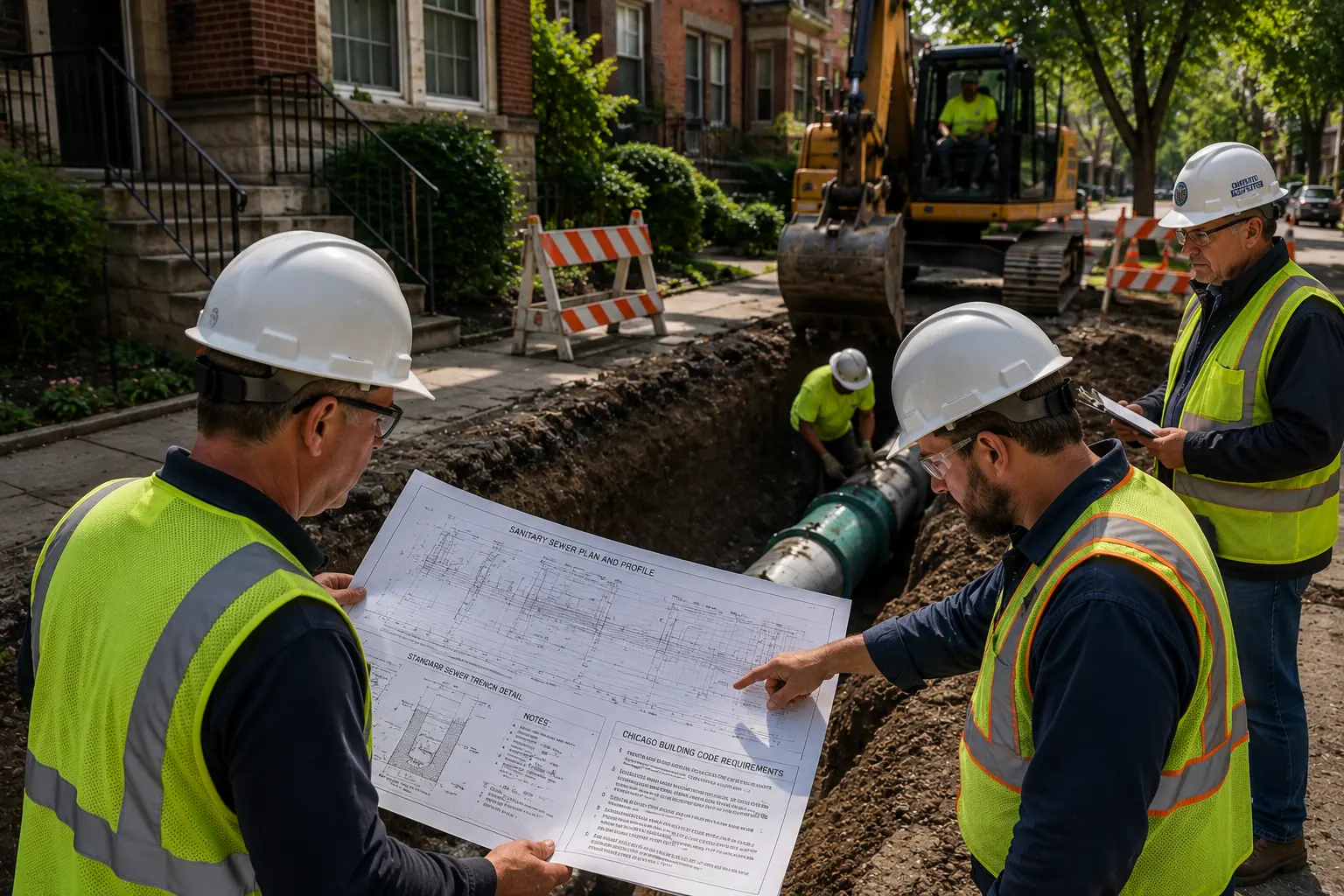
Sewer work in Chicago is not just a matter of digging up a pipe and replacing what is broken. Many sewer repairs, replacements, connections, and drainage changes must comply with Chicago building code requirements, plumbing rules, permit procedures, and inspection standards.
For homeowners, the most important point is simple: if sewer work changes, replaces, extends, reconnects, or exposes part of the building drainage system, it may need to be permitted and inspected. The contractor should understand the code requirements, but the homeowner should still know what questions to ask before approving the work.
Key Takeaways
- Chicago sewer work must generally comply with applicable building, plumbing, and drainage code requirements.
- Major sewer repairs and replacements often require permits and inspections.
- Licensed professionals are usually required for permitted sewer work.
- Code compliance affects pipe materials, slope, connections, cleanouts, excavation, and restoration.
- Work near sidewalks, streets, alleys, easements, or city sewer infrastructure may involve additional rules.
- Skipping permits or ignoring code requirements can create expensive problems later.
- Homeowners should ask for permit, inspection, and final approval documentation before the project is considered complete.
How Chicago Building Code Applies to Sewer Work
Chicago building code requirements affect many sewer projects because sewer lines are part of the property’s plumbing and drainage system. When sewer work involves replacement, reconstruction, excavation, new connections, or significant repair, the work often must meet current code standards, be completed by qualified professionals, and pass required inspections.
For homeowners, this means a sewer project should be evaluated as more than a plumbing repair. It may involve city rules governing how the pipe is installed, what materials are allowed, how the system connects to public infrastructure, and whether permits are required before the work begins.
For a broader overview of this topic, homeowners can review Chicago Permits, Codes & Local Rules, which explains how sewer-related regulations fit together across the city.
Why Code Compliance Matters for Sewer Work
Sewer lines carry wastewater away from the property. If they are installed incorrectly, the consequences can include backups, leaks, soil contamination, foundation problems, sinkholes, odor issues, and damage to nearby public infrastructure.
Chicago’s code requirements are intended to reduce those risks by creating standards for sewer installation and repair.
Code compliance helps protect:
- The home and its foundation
- Neighboring properties
- Public sewer infrastructure
- Sidewalks, alleys, and streets
- Indoor sanitation and public health
- Future buyers and property owners
A sewer repair may seem like a buried, invisible project once completed. But if it is done incorrectly, the problems may not appear until months or years later.
What Types of Sewer Work Are Most Likely to Involve Code Requirements?
Nearly all sewer work should be performed with code compliance in mind. However, some projects are more likely to trigger permits, inspections, and formal city review.
| Type of Sewer Work | Why Code Requirements Matter |
|---|---|
| Full sewer line replacement | New pipe installation must meet applicable material, slope, connection, and inspection standards. |
| Partial sewer line replacement | Even limited replacement can affect drainage performance and connection integrity. |
| New cleanout installation | Cleanouts must be placed and installed properly for future maintenance access. |
| Work near the city connection | Improper connections can affect public infrastructure and downstream flow. |
| Excavation near sidewalks or streets | Public right-of-way rules, restoration standards, and safety requirements may apply. |
| Multi-unit building sewer work | Shared drainage systems can involve more complex code and occupancy concerns. |
Homeowners comparing repair scope and permit needs may also want to read Chicago Sewer Repair Permits: What Homeowners Need to Know.
Common Code Issues in Residential Sewer Projects
Pipe Materials
Replacement sewer pipe must generally be suitable for the application, location, and connection type. Older Chicago homes may have existing clay, cast iron, or other legacy materials that need to be connected properly to modern replacement pipe.
Pipe Slope and Drainage
Sewer lines rely on gravity. If the slope is too flat, waste may not move properly. If it is too steep, solids and liquids may separate, increasing the chance of clogs. Proper slope is one of the most important technical details in code-compliant sewer work.
Connections and Transitions
Transitions between old and new pipe must be secure and appropriate for the materials involved. Poor connections can cause leaks, root intrusion, soil movement, and repeat failures.
Cleanout Access
Cleanouts allow the sewer line to be inspected, cleared, and maintained. Improper cleanout placement can make future service more difficult and expensive.
Excavation and Backfill
Code-compliant sewer work is not limited to the pipe itself. Excavation, bedding, backfill, and restoration can affect whether the repair remains stable over time.
Permits and Building Code Are Closely Connected
Permits are one of the ways Chicago enforces code compliance. A permit does not simply give permission to start work. It also creates a process for review, inspection, and documentation.
For sewer replacement projects, permit requirements can be especially important because replacement usually involves significant changes to the property’s drainage system. Homeowners can learn more in Chicago Sewer Replacement Permit Requirements.
In a typical permitted project, the process may include:
- Diagnosing the sewer problem
- Defining the repair or replacement scope
- Confirming whether permits are required
- Submitting permit paperwork
- Completing the sewer work
- Passing required inspections
- Restoring affected areas
- Closing out the permit
The homeowner should not assume the project is complete simply because the trench has been filled or the drains are working again. Final permit and inspection status matters.
Inspection Requirements for Code Compliance
Inspections help verify that sewer work meets applicable code requirements before the work is concealed, covered, or finalized.
Depending on the project, inspectors may look at:
- Pipe type and condition
- Depth and alignment
- Slope and flow direction
- Connection points
- Cleanout placement
- Excavation and bedding
- Public right-of-way restoration
- Compliance with approved permit scope
For homeowners, inspection scheduling is a key contractor question. If work is covered before inspection when inspection was required, it can create expensive delays or rework.
More detail is available in Sewer Repair Inspection Requirements in Chicago.
Licensed Plumber and Contractor Requirements
Chicago sewer work is not a good place for informal labor or unqualified contractors. Permitted sewer work often must be performed or supervised by properly licensed professionals.
This matters because sewer work involves code interpretation, permit procedures, trench safety, drainage performance, and public infrastructure risk.
Before hiring a contractor, homeowners should ask:
- Are you licensed for this type of sewer work in Chicago?
- Will you obtain the required permits?
- Will the work be inspected before it is covered?
- Are permit and inspection costs included in the estimate?
- Will you provide documentation after final approval?
For more detail on this issue, see Licensed Plumber Requirements for Sewer Work in Chicago.
Chicago-Specific Considerations for Sewer Code Issues
Older Homes and Legacy Sewer Materials
Many Chicago homes were built with older sewer materials and configurations. When repairs are made, contractors may need to connect modern materials to older pipe, correct improper past work, or bring portions of the system closer to current standards.
Public Sidewalks, Streets, and Alleys
Chicago sewer lines may pass beneath parkways, sidewalks, alleys, or streets before reaching the public sewer main. Work in these areas can involve additional rules because public property and transportation access may be affected.
Homeowners dealing with those locations should review Sewer Repair Near Sidewalks in Chicago and Sewer Repair Near Streets and Alleys in Chicago.
Private Sewer Lines Versus City Sewer Mains
Code and permit questions often depend on where the problem is located. A private sewer lateral serving one property is different from a public sewer main serving multiple properties.
Understanding responsibility is critical before approving major work. Homeowners can compare the difference in City Sewer Main vs Private Sewer Line: Who Pays?.
Two-Flats and Multi-Unit Buildings
Two-flats and multi-unit homes can involve shared drainage lines, multiple occupants, and added coordination. A sewer problem may affect more than one household, which can make code compliance and repair planning more important.
Cost Factors Related to Building Code Compliance
Code compliance can affect the total cost of sewer work, but it is usually not something homeowners should view as optional. The purpose is to make sure the repair is safe, durable, and legally documented.
| Code-Related Factor | How It Can Affect Cost |
|---|---|
| Permit requirements | Adds administrative cost but creates official review and documentation. |
| Inspection scheduling | May affect timeline and contractor coordination. |
| Approved materials | Proper materials may cost more than shortcuts but reduce failure risk. |
| Public right-of-way work | Can add restoration, safety, and access requirements. |
| Correcting prior improper work | May increase scope if older repairs were not code-compliant. |
| Multi-unit complexity | May require more planning and coordination than a single-family project. |
When comparing estimates, homeowners should look beyond the bottom-line price. A lower bid may exclude permits, inspections, restoration, or code-required work that another contractor included.
Risks of Ignoring Chicago Building Code Requirements
Ignoring code requirements can create short-term savings but long-term risk.
Possible consequences include:
- Failed inspections
- Required rework
- Fines or code enforcement issues
- Repeat sewer backups
- Improper drainage performance
- Damage to sidewalks, streets, alleys, or neighboring property
- Problems during a future home sale
- Insurance claim complications
Unpermitted or non-compliant sewer work can become especially problematic when a buyer, inspector, lender, or insurance company asks for documentation.
Common Mistakes Homeowners Make
Assuming All Sewer Contractors Follow the Same Standards
Contractors may vary in how they handle permits, inspections, restoration, and documentation. Homeowners should ask direct questions before approving work.
Approving Work Without Understanding the Scope
A vague quote can hide important details. The estimate should explain what is being repaired, where the work starts and ends, whether excavation is involved, and whether permits are included.
Allowing Work to Be Covered Before Inspection
If an inspection is required, covering the pipe too early can create delays or require reopening the trench.
Ignoring Public Property Impacts
Sidewalks, alleys, streets, and parkways may trigger additional requirements. These should be discussed before work begins.
Failing to Keep Final Documentation
Permit records, inspection approvals, paid invoices, photos, and warranties should be stored with other home records.
Frequently Asked Questions
Does Chicago building code apply to private sewer lines?
Yes. Private sewer work can still be subject to applicable building, plumbing, and drainage requirements, especially when the work involves repair, replacement, excavation, or connection to the city system.
Do sewer repairs always require permits?
No. Some maintenance work may not require permits, but many repairs involving replacement, excavation, reconstruction, or new connections do. The scope of work determines the requirement.
Who is responsible for making sure sewer work meets code?
The contractor performing the work is responsible for completing it properly, but homeowners should still verify licensing, permits, inspections, and final documentation.
Can a sewer line pass inspection but still fail later?
Yes. An inspection helps verify compliance at the time of work, but future performance can still be affected by soil conditions, tree roots, aging connected pipe, improper use, or unrelated downstream problems.
Does insurance cover code-required upgrades?
Coverage depends on the policy and the cause of damage. Some policies may limit or exclude certain code upgrade costs unless specific coverage applies. Homeowners should review their policy and ask the insurer before assuming coverage.
What happens if old sewer work was never permitted?
Unpermitted past work may create issues during future repairs, inspections, or home sales. A qualified contractor may need to evaluate whether the existing work can remain or must be corrected.
Are code requirements different for two-flats and multi-unit buildings?
They can be. Multi-unit properties may involve shared drainage, more occupants, and additional complexity. Owners should confirm requirements before approving major sewer work.
Conclusion
Sewer work and Chicago building code are closely connected. Any project that repairs, replaces, reconnects, or significantly modifies a sewer line should be approached with permitting, inspections, licensing, and code compliance in mind.
For homeowners, the goal is not to become a code expert. The goal is to ask better questions, avoid unsafe shortcuts, verify that the contractor is qualified, and keep documentation after the work is complete. That extra attention can help prevent costly problems long after the sewer line is buried again.