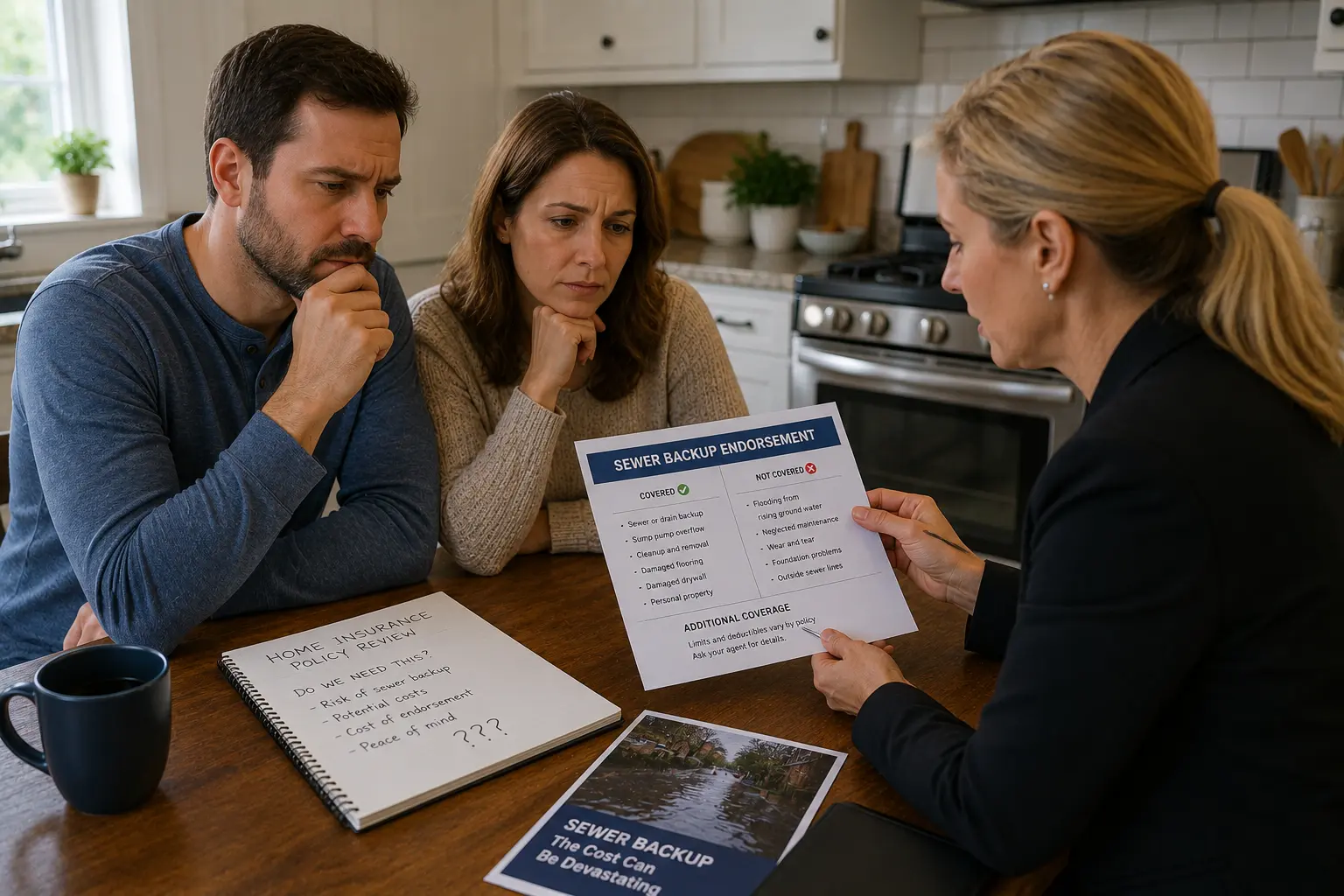
A sewer backup endorsement can be one of the most practical insurance add-ons for homeowners who have a basement, older sewer lateral, finished lower level, or property in an area vulnerable to heavy rainfall and drainage problems. A single sewer backup can damage flooring, drywall, furniture, appliances, stored belongings, and finished basement space while creating cleanup and sanitation concerns.
For many Chicago homeowners, a sewer backup endorsement is worth considering because standard homeowners insurance often excludes sewage or water backing up through drains, toilets, tubs, showers, floor drains, or sump systems. Without the endorsement, the homeowner may be responsible for cleanup, restoration, and damaged belongings after a backup.
The endorsement is not a complete sewer protection plan. It usually helps with damage inside the home after a covered backup, but it may not pay to repair or replace the underground sewer line that caused the backup. Understanding that difference is essential before deciding whether the coverage is worth the cost. For more sewer insurance and financial protection topics, visit the Insurance & Financial Protection hub.
Key Takeaways
- A sewer backup endorsement may help cover cleanup, sanitizing, restoration, and damaged personal property after sewage backs up into the home.
- Standard homeowners insurance often excludes sewer and drain backup damage unless an endorsement has been added.
- The endorsement is especially worth reviewing for Chicago homes with basements, finished lower levels, older sewer laterals, or prior backup concerns.
- Sewer backup coverage is different from service line coverage, which may apply to the underground sewer pipe itself.
- Coverage limits, deductibles, exclusions, and covered backup sources vary by insurer.
- The endorsement may not cover pipe replacement, tree root removal, collapsed sewer repair, or long-term maintenance problems.
- Homeowners should compare the endorsement cost against the potential cleanup and restoration expense of a serious backup.
Should Chicago Homeowners Add a Sewer Backup Endorsement?
A sewer backup endorsement is often worth considering for Chicago homeowners with basements, finished lower levels, older sewer systems, mature trees, or limited ability to absorb a major cleanup bill. The endorsement can help cover damage inside the home after a covered sewer or drain backup, which standard homeowners insurance may otherwise exclude.
However, it is only worth the cost if the coverage limit, deductible, exclusions, and backup sources match the homeowner’s actual risk. Homeowners should not assume the endorsement covers the underground sewer line itself; that usually requires separate service line coverage or another protection option.
What Is a Sewer Backup Endorsement?
A sewer backup endorsement is an optional add-on to a homeowners insurance policy. It is sometimes called water backup coverage, sewer and drain backup coverage, or sump overflow coverage, depending on the insurer.
The endorsement is designed to cover certain damage caused when water or sewage backs up into the home through plumbing or drainage systems.
Common entry points may include:
- Basement floor drains
- Toilets
- Bathtubs
- Showers
- Sinks
- Laundry drains
- Sump systems, depending on policy language
The exact wording matters. Some endorsements cover water backup from sewers and drains, while others also address sump overflow. Homeowners should review the policy carefully rather than relying on the name of the endorsement alone.
What a Sewer Backup Endorsement May Cover
When a covered backup occurs, a sewer backup endorsement may help pay for cleanup and restoration inside the home.
| Potential Covered Expense | How It May Apply |
|---|---|
| Emergency cleanup | Removal of sewage, wastewater, and contaminated materials. |
| Sanitizing and disinfection | Cleaning affected areas after contaminated water enters the home. |
| Drying and moisture control | Use of fans, dehumidifiers, and drying equipment after cleanup. |
| Flooring damage | Replacement of contaminated carpet, padding, laminate, or other damaged flooring. |
| Drywall and trim | Removal and repair of contaminated drywall, baseboards, and related materials. |
| Personal property | Furniture, stored belongings, rugs, and other contents damaged by the backup. |
| Odor treatment | May be included when needed as part of covered remediation. |
| Temporary living expenses | May apply in limited situations if the home is not safely usable and the policy allows it. |
For a closer look at cleanup-specific coverage, see Insurance Coverage for Sewer Backup Cleanup.
What a Sewer Backup Endorsement Usually Does Not Cover
A sewer backup endorsement is not the same as full sewer line insurance. It often focuses on the damage that occurs after wastewater enters the home, not the underlying pipe failure outside the home.
Common exclusions or limitations may include:
- Replacement of the underground sewer lateral
- Excavation to access a damaged pipe
- Tree root removal from the sewer line
- Repair of a collapsed sewer pipe
- Long-term deterioration or corrosion
- Known or pre-existing sewer problems
- Flooding or surface water events excluded by the policy
- Costs above the endorsement limit
- Mold damage outside the endorsement terms
Important distinction: A sewer backup endorsement may help with contaminated cleanup inside the home. It may not pay to repair the sewer pipe that caused the backup.
If the main concern is the cost of repairing or replacing the sewer line itself, review Does Homeowners Insurance Cover Sewer Line Replacement? and Service Line Coverage for Sewer Lines: Is It Worth It?.
Why This Coverage Can Be Valuable in Chicago
Chicago homeowners often have several risk factors that make sewer backup coverage worth reviewing.
Basements Are Common
Many Chicago homes have basements used for laundry, storage, utilities, recreation rooms, home offices, or additional living space. A sewer backup into a basement can damage both building materials and personal belongings.
Older Sewer Laterals
Older homes may have clay, cast iron, or other older sewer materials. These lines can become more vulnerable to cracks, offsets, roots, and blockages over time.
Mature Trees
Tree-lined neighborhoods are common across Chicago. Roots can enter weakened sewer lines and contribute to recurring clogs or backups.
Heavy Rainfall and Drainage Pressure
During intense storms, sewer and drainage systems may face added pressure. Vulnerable homes may experience backups when drainage systems are overloaded or when private sewer defects restrict flow.
Finished Lower Levels Increase the Stakes
The more finished and furnished a basement is, the more expensive a backup can become. Carpet, drywall, cabinets, furniture, electronics, appliances, and stored belongings can all increase the potential loss.
Sewer Backup Endorsement vs. Service Line Coverage
Homeowners often compare sewer backup endorsements with service line coverage, but they solve different problems.
| Coverage Type | Main Purpose | Example |
|---|---|---|
| Sewer backup endorsement | Helps cover damage inside the home from sewage or water backing up. | Sewage enters a basement and damages flooring, drywall, and stored belongings. |
| Service line coverage | May help cover repair or replacement of underground utility lines. | A private sewer lateral collapses and requires excavation and pipe replacement. |
| Sewer line warranty plan | May provide service-contract protection for certain sewer line repairs. | A covered section of sewer pipe needs repair under the warranty terms. |
A homeowner may want one, both, or neither depending on the home’s risk. For many sewer events, the backup damage and the pipe repair are separate financial problems.
For more background on backup coverage, read Sewer Backup Insurance Coverage Explained. Homeowners comparing warranty-style protection can also review Sewer Line Warranty Plans: What Homeowners Should Know.
How Much Sewer Backup Coverage Is Enough?
The right coverage amount depends on what could be damaged if sewage enters the home. A homeowner with an unfinished basement and minimal stored property may need less coverage than a homeowner with a finished basement used as living space.
Consider the value of:
- Flooring
- Drywall and insulation
- Baseboards and trim
- Furniture
- Electronics
- Appliances
- Stored personal property
- Home office equipment
- Cleanup and sanitizing costs
Homeowners should also compare the endorsement limit with the deductible. A low coverage limit may still leave significant out-of-pocket costs after a serious backup.
When a Sewer Backup Endorsement Is More Likely Worth It
A sewer backup endorsement may be especially worth considering when the home has meaningful exposure to lower-level water or sewage damage.
It may make sense if:
- The home has a basement
- The basement is finished or partially finished
- Valuable belongings are stored below grade
- The home has older sewer plumbing
- The property has mature trees nearby
- The area has experienced drainage or backup concerns
- The homeowner does not have enough emergency savings for cleanup and restoration
- The endorsement has a reasonable cost compared with the potential loss
For Chicago homeowners, the basement factor alone can make the endorsement worth reviewing closely.
When It May Be Less Valuable
A sewer backup endorsement may be less valuable if the home has little exposure to sewer backup damage or if the coverage limit is too low to be meaningful.
It may be less useful if:
- The home has no basement or lower-level plumbing exposure
- The covered limit is very low
- The deductible is high compared with the likely claim
- The basement is unfinished and contains little personal property
- The policy excludes the backup sources most likely at the home
- The homeowner already has other overlapping protection
Even then, homeowners should not dismiss the endorsement without reviewing the policy terms. Sewer backups can still occur in homes without finished basements, and cleanup can be costly even when structural damage is limited.
Questions to Ask Before Adding the Endorsement
Before purchasing sewer backup coverage, homeowners should ask clear, practical questions.
- Does the endorsement cover sewer and drain backups?
- Does it include sump overflow?
- What is the coverage limit?
- What deductible applies?
- Does the limit apply per claim or per policy period?
- Are personal belongings included?
- Are cleanup and sanitizing included?
- Are mold-related costs limited or excluded?
- Are backups caused by municipal sewer overload included?
- Are backups caused by tree roots or private sewer blockages treated differently?
- Does the endorsement cover temporary living expenses if the home is unsafe?
- What documentation is required when filing a claim?
These questions help homeowners understand whether the endorsement is a meaningful safeguard or only limited protection.
How Claims Work After a Sewer Backup
If a sewer backup occurs, homeowners should prioritize safety, documentation, and prompt reporting.
- Avoid direct contact with sewage or contaminated materials.
- Stop using water if drains are actively backing up.
- Take photos and videos before cleanup if it is safe.
- Contact the insurance carrier if coverage may apply.
- Arrange appropriate cleanup and mitigation.
- Keep damaged items available for documentation when practical.
- Save invoices, cleanup reports, inspection reports, and estimates.
- Track communication with the adjuster.
For a detailed claim walkthrough, see The Sewer Repair Insurance Claim Process Step by Step.
Why Sewer Backup Claims Get Denied or Limited
Even with an endorsement, claims can still be denied or limited if the loss falls outside the policy terms.
Common issues include:
- No sewer backup endorsement was active when the loss occurred
- The damage exceeded the endorsement limit
- The cause was excluded by the policy
- The claim was reported too late
- Cleanup was delayed and worsened the damage
- Damaged belongings were discarded before documentation
- The homeowner expected pipe replacement coverage from a cleanup endorsement
- The insurer classified some damage as unrelated or pre-existing
If a claim is denied or limited, homeowners should request the explanation in writing and compare it with the endorsement language. For more on common denial issues, read Why Sewer Line Insurance Claims Get Denied.
Common Mistakes and Warning Signs
Common sewer backup endorsement mistakes include:
- Assuming standard homeowners insurance already includes sewer backup coverage
- Choosing a coverage limit without considering basement contents
- Confusing sewer backup coverage with service line coverage
- Not asking whether sump overflow is included
- Ignoring repeated sewer warning signs
- Waiting until after a backup to look for coverage
- Throwing away damaged belongings before documenting them
- Assuming the endorsement will repair the underlying sewer lateral
Warning signs such as recurring basement drain backups, sewage odors, gurgling toilets, slow drains throughout the home, or repeated sewer cleaning visits should be taken seriously. These symptoms may indicate an underlying sewer issue that could eventually lead to a larger backup.
Frequently Asked Questions
Is a sewer backup endorsement worth it for Chicago homeowners?
It can be worth it, especially for homes with basements, finished lower levels, older sewer laterals, mature trees, or valuable belongings stored below grade. The value depends on coverage limits, deductible, exclusions, and the homeowner’s risk tolerance.
Does a sewer backup endorsement cover sewer line replacement?
Usually not. Sewer backup endorsements generally apply to damage inside the home after sewage backs up. Sewer line replacement may require service line coverage or another protection option.
What does sewer backup coverage usually pay for?
It may pay for cleanup, sanitizing, drying, damaged flooring, drywall, trim, furniture, and personal property, depending on policy terms and coverage limits.
Is sewer backup coverage the same as water backup coverage?
Some insurers use the term water backup coverage to include sewer and drain backup, while others define it differently. Homeowners should read the endorsement language carefully.
Does the endorsement cover basement floor drain backups?
It may, if the endorsement covers backups through sewers or drains and the claim meets policy requirements. The exact answer depends on the policy wording.
Does sewer backup coverage apply during heavy rain?
It may apply if the loss qualifies as a covered sewer or drain backup. However, surface water, flooding, or excluded water events may be treated differently by the policy.
Can I add sewer backup coverage after a backup happens?
You may be able to add coverage for future losses, but it generally will not cover a backup that already occurred before the endorsement was active.
Conclusion
A sewer backup endorsement is often worth considering for Chicago homeowners, especially those with basements, finished lower levels, older sewer systems, mature trees, or limited emergency savings. The endorsement can help cover cleanup and restoration costs that standard homeowners insurance may exclude.
However, homeowners should understand exactly what the endorsement does and does not do. It may help with damage inside the home after a covered backup, but it usually does not replace the underground sewer line, remove tree roots, or pay for excavation unless another coverage applies.
The best decision comes from reviewing the coverage limit, deductible, exclusions, backup sources, and how the endorsement fits alongside service line coverage, warranty plans, and the home’s actual sewer risk.