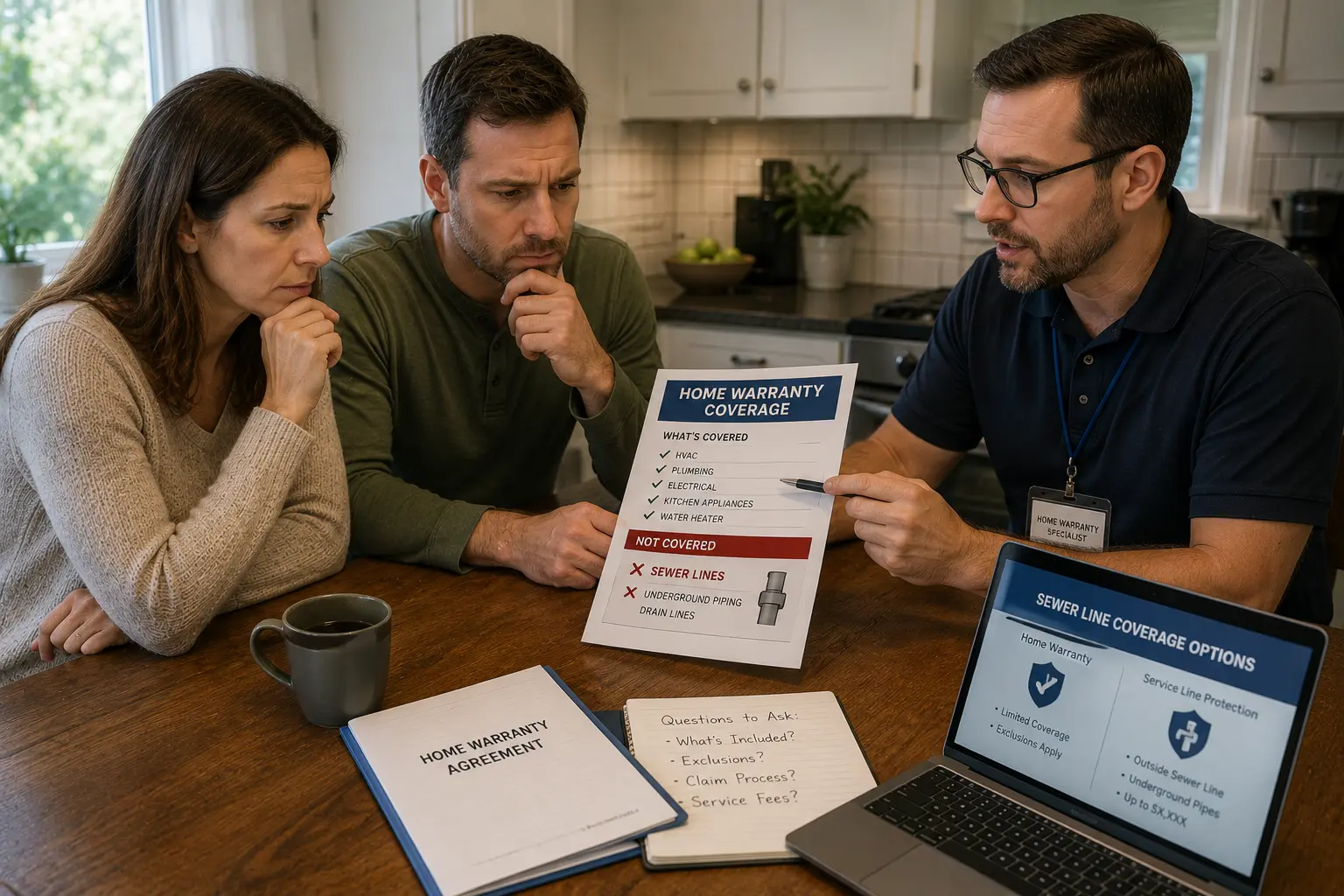
Home warranties are often marketed as protection against expensive home system repairs, so it is reasonable for homeowners to ask whether a home warranty covers sewer lines. The answer depends on the contract, the covered plumbing system, optional add-ons, exclusions, and where the sewer problem is located.
In many cases, a basic home warranty may cover certain interior plumbing stoppages or drain line issues inside the home, but it may provide limited or no coverage for the underground sewer lateral outside the foundation. Some home warranty companies offer optional sewer line or exterior plumbing add-ons, but those add-ons often include coverage caps, contractor rules, access limitations, and exclusions for pre-existing conditions.
For Chicago homeowners, this distinction matters because older sewer laterals, mature trees, basement backups, and urban excavation conditions can make sewer repairs expensive. A home warranty may help in narrow situations, but it should not be assumed to replace homeowners insurance, service line coverage, or a dedicated sewer line warranty plan. For more sewer insurance and financial protection guidance, visit the Insurance & Financial Protection hub.
Key Takeaways
- A basic home warranty may cover some interior plumbing stoppages, but underground sewer lines are often limited or excluded.
- Exterior sewer lateral coverage may require a specific add-on or separate sewer line plan.
- Home warranties are service contracts, not homeowners insurance policies.
- Coverage may be limited by caps, exclusions, contractor networks, access rules, and pre-existing condition language.
- Tree roots, collapsed pipes, excavation, concrete removal, and sewer replacement may not be fully covered unless the contract clearly includes them.
- Chicago homeowners should compare home warranty coverage with service line coverage and sewer line warranty plans.
- Reading the contract is more important than relying on marketing phrases like “plumbing coverage.”
Does a Home Warranty Pay for Sewer Line Repairs?
A home warranty may cover certain sewer or drain problems, but many standard plans do not fully cover underground sewer line repair or replacement. Basic plumbing coverage often focuses on interior plumbing systems, while the private sewer lateral outside the home may be excluded unless the homeowner purchased a specific exterior sewer line add-on.
Even when sewer line coverage is available, it may have strict limits. Homeowners should check whether the plan covers excavation, roots, collapsed lines, pipe replacement, camera inspections, access through concrete, and restoration after repair.
What a Home Warranty Usually Covers
A home warranty is a service contract that may help pay for repairs or replacements of covered home systems and appliances. It is different from homeowners insurance, which generally addresses covered property losses.
Typical home warranty plumbing coverage may include some combination of:
- Interior plumbing leaks
- Drain line stoppages
- Toilet repairs
- Water heater issues
- Faucets and valves
- Garbage disposal issues
- Interior drain clearing within contract limits
However, plumbing coverage does not automatically mean the underground sewer lateral is covered. Many homeowners only discover this distinction after a major sewer problem occurs.
Where Sewer Line Coverage Gets Complicated
Sewer line coverage depends heavily on where the problem is located. A home warranty company may treat an interior drain stoppage differently from an exterior underground sewer lateral failure.
| Sewer or Drain Issue | Home Warranty Coverage Possibility | Key Concern |
|---|---|---|
| Clogged sink, tub, or toilet drain | May be covered under plumbing stoppage coverage | Access and cause limitations may apply. |
| Main drain stoppage inside the home | May be covered in some plans | Coverage may stop at the foundation or cleanout. |
| Exterior sewer lateral clog | Often limited unless an add-on exists | May be excluded from basic plumbing coverage. |
| Tree roots in sewer line | Varies widely | Often excluded or capped unless specifically included. |
| Collapsed underground sewer pipe | Often limited or excluded | May require separate sewer line coverage. |
| Full sewer line replacement | Often not fully covered | Coverage caps and exclusions may leave major out-of-pocket costs. |
Home Warranty vs. Sewer Line Warranty Plan
A home warranty and a sewer line warranty plan are not the same thing. A home warranty usually covers several systems or appliances in the home, while a sewer line warranty plan is more specifically focused on the sewer lateral or exterior service line.
A sewer line warranty plan may be more relevant if the homeowner’s main concern is underground sewer repair. However, these plans also have limits, exclusions, and contractor requirements.
For a deeper comparison, read Sewer Line Warranty Plans: What Homeowners Should Know.
Home Warranty vs. Service Line Coverage
Service line coverage is usually an endorsement added to a homeowners insurance policy. It may help pay for certain underground utility line failures, including sewer lines, if the endorsement applies.
A home warranty is usually a separate service contract. It may send an approved contractor, charge a service fee, and repair only what the contract covers.
| Protection Type | How It Works | Best Fit |
|---|---|---|
| Home warranty | Service contract covering selected systems and appliances | Interior plumbing and general home system repairs, depending on contract |
| Service line coverage | Insurance endorsement for underground service lines | Potential protection for sewer lateral repair or replacement |
| Sewer line warranty plan | Service contract focused on sewer line repair | Homeowners seeking sewer-specific contract protection |
| Sewer backup endorsement | Insurance endorsement for backup damage inside the home | Cleanup and restoration after sewage enters the home |
Homeowners comparing underground pipe protection should review Service Line Coverage for Sewer Lines: Is It Worth It?.
What Home Warranties Often Exclude
Home warranty exclusions vary, but sewer-related limitations are common. The contract may sound broad at first, but coverage can narrow quickly once the details are reviewed.
Common exclusions or restrictions may include:
- Exterior sewer laterals
- Lines outside the foundation
- Tree root intrusion
- Collapsed pipes
- Pre-existing conditions
- Improper installation
- Code upgrades
- Access through concrete, flooring, or walls
- Excavation
- Restoration after repair
- Commercial or multi-unit use
- Repairs above the contract limit
Important: A home warranty may cover clearing a stoppage but still exclude the structural sewer pipe problem that caused the stoppage. Always separate drain cleaning coverage from sewer line repair coverage.
Does a Home Warranty Cover Tree Roots?
Tree root coverage is one of the most important questions for Chicago homeowners. Many older sewer lines have joints, cracks, offsets, or weakened sections that allow roots to enter.
Some home warranty plans may cover limited drain stoppage clearing, but root intrusion in an exterior sewer lateral may be excluded unless the contract specifically includes it. Even then, the plan may only cover certain work up to a stated cap.
If roots are the main concern, homeowners should compare the home warranty language against sewer-specific options. For more detail, see Insurance Coverage for Tree Root Sewer Damage.
Does a Home Warranty Cover a Collapsed Sewer Line?
A collapsed sewer line is often more serious than a basic clog. It may require a camera inspection, locating equipment, excavation, pipe replacement, backfill, and restoration of affected surfaces.
Many home warranties do not fully cover collapsed underground sewer lines, especially when the collapse is outside the home or caused by age, deterioration, roots, or soil movement. Some plans may offer add-ons, but the contract must clearly include collapse, exterior sewer lines, excavation, and replacement work to be meaningful.
For more on collapsed sewer line coverage issues, read Does Insurance Cover a Collapsed Sewer Line?.
Chicago-Specific Considerations
Chicago homeowners should be especially careful when reviewing home warranty sewer coverage because local property conditions can make sewer repairs more complex.
Older Sewer Laterals
Many Chicago homes have older clay, cast iron, or other legacy sewer materials. These pipes may be more likely to crack, shift, corrode, or allow roots to enter.
Mature Trees
Tree-lined streets are common throughout Chicago neighborhoods. Mature roots can worsen sewer line problems over time, especially where older pipe joints have separated.
Basements and Lower Levels
Many homes have basements used for storage, utilities, laundry, or finished living space. A sewer problem can create both pipe repair costs and interior backup damage.
Urban Excavation Conditions
Sewer repair may involve sidewalks, driveways, alleys, fences, narrow gangways, or buried utilities. If a home warranty excludes excavation or restoration, the homeowner may still face significant expenses.
Private vs. Public Responsibility
A warranty may only cover certain portions of the private line. Homeowners should understand whether the damaged section is their responsibility and whether it falls within the contract’s covered area.
Questions to Ask Before Relying on a Home Warranty
Before assuming a home warranty covers sewer lines, homeowners should ask specific questions and request clear contract references.
- Does the plan cover sewer lines or only interior plumbing?
- Does coverage extend outside the foundation?
- Is the private sewer lateral covered?
- Are tree roots covered?
- Are collapsed pipes covered?
- Is excavation included?
- Are camera inspections included?
- Does the plan cover pipe replacement or only drain clearing?
- What is the service fee?
- What is the payout cap?
- Can the homeowner choose the contractor?
- Are pre-existing conditions excluded?
- Are concrete, landscaping, or driveway restoration included?
If the answer is unclear, homeowners should not rely on verbal summaries alone. The written contract controls what is covered.
How Sewer Camera Inspections Affect Home Warranty Claims
A sewer camera inspection can help identify the cause and location of a sewer problem. It may show roots, cracks, offsets, bellies, corrosion, collapse, or blockages.
This information can be useful, but it can also affect claim approval. If the camera shows a pre-existing condition, long-term deterioration, or a problem outside the covered area, the warranty provider may deny the claim.
Homeowners should keep copies of inspection reports, footage, invoices, and written contractor findings. These records can be useful when comparing the warranty provider’s decision against the contract language.
What Happens If a Home Warranty Denies Sewer Coverage?
If a home warranty claim is denied, homeowners should ask for the reason in writing and compare it to the contract.
Common denial reasons include:
- The damaged line is outside the covered area
- The issue is considered pre-existing
- The problem involves roots or collapse excluded by the contract
- The repair requires excavation not included in the plan
- The homeowner used an unauthorized contractor
- The repair exceeds the contract cap
- The issue is considered improper installation or maintenance-related
For insurance-related claim denials, homeowners may also find Why Sewer Line Insurance Claims Get Denied helpful, even though warranty plans and insurance policies are different products.
Alternatives If a Home Warranty Does Not Cover the Sewer Line
If a home warranty does not cover the sewer line repair, homeowners may need to consider other financial options.
Possible alternatives include:
- Service line coverage through homeowners insurance
- Sewer line warranty plans
- Sewer backup endorsement for interior damage
- Contractor payment plans
- Personal loans
- Home equity financing
- Emergency savings
If the repair is already needed and coverage does not apply, Sewer Repair Payment Plans Explained may be a useful next step.
Common Mistakes and Warning Signs
Common home warranty sewer coverage mistakes include:
- Assuming “plumbing coverage” includes the underground sewer lateral
- Not checking whether coverage extends outside the foundation
- Ignoring coverage caps
- Confusing a home warranty with homeowners insurance
- Assuming roots or collapse are covered
- Using an outside contractor before getting warranty approval
- Waiting until a sewer problem already exists before buying coverage
- Not reading exclusions for access, excavation, and restoration
Warning signs such as recurring clogs, sewage odors, gurgling drains, basement floor drain backups, or repeated sewer cleaning visits should be investigated before they become larger failures. A warranty may not cover known or long-standing problems.
Frequently Asked Questions
Does a basic home warranty cover sewer lines?
Sometimes it may cover limited interior drain stoppages, but many basic home warranties do not fully cover underground sewer lines outside the home. Exterior sewer coverage often requires a specific add-on.
Does a home warranty cover sewer line replacement?
Often not fully. Some plans may cover limited repairs, but full replacement, excavation, and restoration are frequently capped or excluded unless clearly included in the contract.
Will a home warranty cover tree roots in the sewer line?
It depends on the plan. Many contracts limit or exclude root intrusion, especially outside the foundation. Homeowners should confirm root coverage in writing.
Is a home warranty better than service line coverage?
Not necessarily. A home warranty is a service contract, while service line coverage is usually an insurance endorsement. Service line coverage may be more directly relevant to underground sewer lateral failures.
Does a home warranty cover sewer backup cleanup?
Usually not in the same way insurance does. Sewer backup cleanup is more commonly addressed through a sewer backup endorsement on a homeowners insurance policy.
Can I buy a home warranty after my sewer line is already damaged?
You may be able to buy a warranty, but known or pre-existing sewer damage is often excluded. Coverage generally applies to future covered failures, not existing problems.
Are home warranties useful for older Chicago homes?
They can be useful for some interior systems, but older Chicago homes may have sewer risks that require more specific protection. Homeowners should closely review whether exterior sewer laterals, roots, collapse, excavation, and replacement are included.
Conclusion
A home warranty may cover certain plumbing or drain issues, but homeowners should not assume it fully covers sewer lines. Many basic plans focus on interior plumbing and may exclude exterior sewer laterals, tree roots, collapsed pipes, excavation, and full replacement.
For Chicago homeowners, the safest approach is to read the contract carefully, ask specific sewer-related questions, and compare home warranty coverage with service line coverage, sewer line warranty plans, and sewer backup endorsements.
The key decision is whether the plan actually covers the sewer problem most likely to occur at the property. If the contract does not clearly include underground sewer lateral repair, roots, collapse, excavation, and replacement, the homeowner may still face significant out-of-pocket costs.