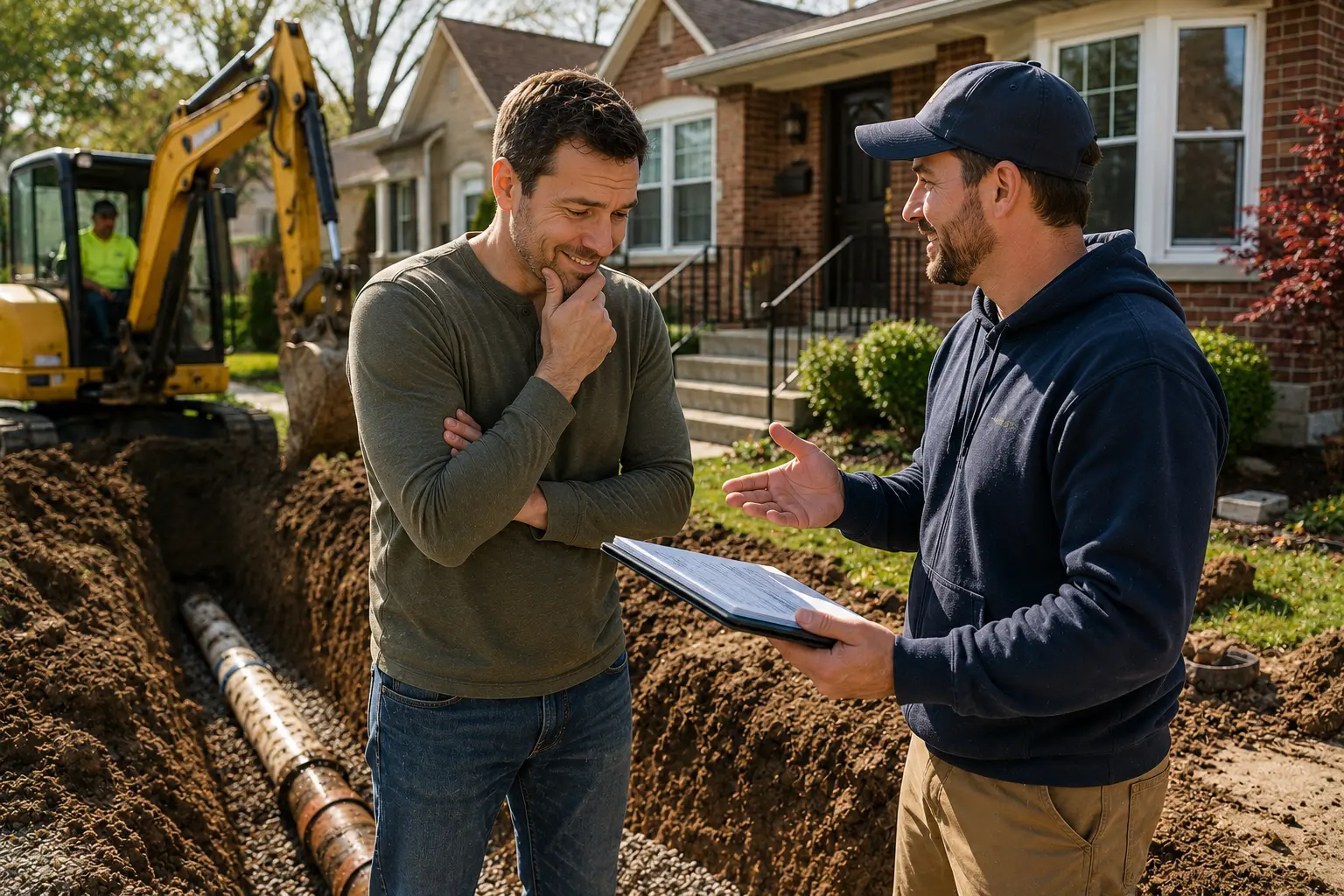
Sewer repair payment plans can help homeowners handle an urgent sewer problem without paying the full repair cost upfront. When a sewer line backs up, collapses, develops severe root intrusion, or stops draining properly, waiting months to save money may not be realistic. A payment plan can turn a large immediate expense into scheduled payments.
That does not mean every payment plan is a good deal. Some are reasonable financing tools, while others may include high interest, short promotional periods, large fees, strict lender rules, or monthly payments that become difficult to manage. The safest approach is to understand the repair scope, compare financing terms, and review insurance or coverage options before signing.
For Chicago homeowners, payment planning can be especially important because sewer repairs may involve older sewer laterals, mature trees, excavation, sidewalks, alleys, driveways, finished basements, and restoration work. This guide explains how sewer repair payment plans work, what to compare, what risks to avoid, and how to make a more informed decision. For more sewer insurance and financial protection topics, visit the Insurance & Financial Protection hub.
Key Takeaways
- Sewer repair payment plans allow homeowners to spread repair costs over time instead of paying the full amount upfront.
- Payment plans may be offered directly by a contractor or through a third-party lender.
- Homeowners should compare interest rates, fees, repayment terms, monthly payments, prepayment rules, and total repayment cost.
- A low monthly payment can still be expensive if the loan term is long or the interest rate is high.
- Insurance, service line coverage, sewer backup endorsements, home warranties, and sewer line warranty plans should be reviewed before financing the full repair.
- Chicago homeowners should confirm whether estimates include excavation, permits, backfill, concrete, landscaping, and interior cleanup where applicable.
- Payment plans should not be signed under pressure without a written repair scope and clear financing terms.
How Do Sewer Repair Payment Plans Work?
Sewer repair payment plans allow homeowners to pay for sewer repair or replacement over time, usually through contractor-arranged financing, a third-party lender, or a structured payment schedule. The homeowner may make monthly payments instead of paying the full repair cost at once.
The important question is not only whether monthly payments are available. Homeowners should review the total repayment cost, interest rate, fees, term length, approval requirements, and whether the financing amount covers the full repair scope. A payment plan can be useful, but it should be compared carefully before committing.
What Is a Sewer Repair Payment Plan?
A sewer repair payment plan is any arrangement that allows a homeowner to pay for sewer repair work over time. This may be offered directly by the contractor, through a financing company, through a bank or credit union, or through another lending source.
Payment plans may be used for:
- Sewer line spot repairs
- Main sewer line replacement
- Excavation work
- Tree root damage repairs
- Collapsed sewer line repair
- Sewer backup restoration costs
- Trenchless repair or pipe lining, where appropriate
- Emergency sewer repairs
The plan may cover the entire project or only part of it. Homeowners should confirm whether the financing includes labor, materials, permits, excavation, backfill, restoration, and any interior cleanup connected to the sewer problem.
Common Types of Sewer Repair Payment Plans
Sewer repair payment plans are not all structured the same way. Some are formal loans, while others are shorter-term payment arrangements.
| Payment Option | How It Usually Works | What to Watch For |
|---|---|---|
| Contractor-arranged financing | The contractor connects the homeowner with a third-party lender. | Interest rate, fees, promotional terms, and lender conditions. |
| Direct contractor payment schedule | The contractor allows staged payments based on project milestones. | Deposit requirements, due dates, and what happens if costs change. |
| Personal loan | The homeowner borrows from a bank, credit union, or online lender. | APR, term length, credit requirements, and total repayment cost. |
| Home equity loan or HELOC | The homeowner borrows against home equity. | Collateral risk, closing timeline, rates, and fees. |
| Credit card | The homeowner charges the repair cost to a card. | High interest, available credit, and repayment difficulty. |
| Assistance or repair program | Program-based help may reduce or defer repair costs. | Eligibility, application timing, funding availability, and restrictions. |
Contractor Financing: Convenient but Not Always Simple
Contractor financing can be convenient because the application may happen during the estimate process. In urgent sewer situations, quick access to financing can help homeowners move forward when the plumbing system is not usable.
However, the contractor is often not the lender. The financing may come from a separate finance company, and the homeowner is responsible for understanding the loan terms.
Before using contractor-arranged financing, ask:
- Who is the actual lender?
- What is the annual percentage rate?
- Is the interest rate fixed?
- Is there a promotional period?
- What happens when the promotional period ends?
- Are there origination, processing, or account fees?
- Is there a prepayment penalty?
- What is the monthly payment?
- What is the total repayment cost?
- Does approval affect the repair price?
Homeowner caution: A monthly payment can look affordable while the total repayment cost is much higher than expected. Always compare the full cost, not just the payment amount.
Payment Plans vs. Insurance Coverage
Before financing a sewer repair, homeowners should review whether any insurance coverage, endorsement, warranty, or service contract may apply. Financing may still be necessary, but coverage can reduce the amount that must be borrowed.
Possible sources to review include:
- Standard homeowners insurance
- Service line coverage
- Sewer backup coverage
- Sewer line warranty plans
- Home warranty add-ons
Standard homeowners insurance often does not cover sewer line replacement caused by age, deterioration, corrosion, or long-term root intrusion. However, optional service line coverage may apply to certain underground sewer line failures.
For a clearer understanding of these differences, read Does Homeowners Insurance Cover Sewer Line Replacement? and Service Line Coverage for Sewer Lines: Is It Worth It?.
Payment Plans vs. Sewer Backup Cleanup Coverage
If the sewer problem caused sewage to enter the home, the homeowner may be dealing with two separate costs: the sewer repair and the interior cleanup.
A payment plan may be needed for the pipe repair, but sewer backup coverage may help with cleanup if the homeowner has the right endorsement. This can include contaminated material removal, sanitizing, drying, flooring replacement, drywall repair, and damaged belongings, depending on the policy.
Because cleanup and pipe replacement are often treated separately, homeowners should avoid assuming one payment plan or one insurance claim covers everything.
For more detail, review Sewer Backup Insurance Coverage Explained and Insurance Coverage for Sewer Backup Cleanup.
Chicago-Specific Payment Plan Considerations
Chicago sewer repair projects can include cost factors that are easy to overlook when reviewing a payment plan.
Older Sewer Laterals
Many Chicago homes have older private sewer laterals made from clay, cast iron, or other legacy materials. If deterioration is widespread, a small repair may not solve the full problem.
Tree Root Intrusion
Mature trees are common in Chicago neighborhoods. If roots are entering the sewer line, homeowners should understand whether the payment plan is financing a temporary clearing, a spot repair, or a more permanent correction.
Urban Excavation Challenges
Sewer work may involve sidewalks, alleys, driveways, patios, fences, landscaping, or tight access. Payment plans should be based on estimates that include expected excavation and restoration costs.
Finished Basements
If a sewer backup damaged a finished basement, the homeowner may need to budget for both plumbing repairs and interior restoration.
Permits and Restoration
Homeowners should ask whether the estimate includes required permits, inspections, backfill, concrete replacement, landscaping, and cleanup after the sewer work is completed.
What to Review Before Signing a Payment Plan
Before agreeing to a sewer repair payment plan, homeowners should compare both the repair details and the financing details.
| Review Item | Why It Matters |
|---|---|
| Written repair scope | Confirms what work is actually being financed. |
| Total project cost | Shows the amount before financing charges. |
| Amount financed | May differ from the full project cost if a deposit is required. |
| Interest rate or APR | Determines the true cost of borrowing. |
| Loan term | Affects both monthly payment and total interest. |
| Fees | Origination, processing, late, or administrative fees can increase cost. |
| Prepayment rules | Determines whether the homeowner can pay off early without penalty. |
| Change order rules | Explains what happens if additional sewer damage is discovered. |
| Warranty or workmanship terms | Clarifies what happens if the repair fails or needs follow-up. |
When a Payment Plan May Make Sense
A payment plan may be practical when the sewer problem is urgent, the repair scope is clear, and the repayment terms are manageable.
It may make sense if:
- The sewer system is not usable without repair
- The homeowner has a clear written estimate
- The financing terms are understandable
- The monthly payment fits the household budget
- The total repayment cost is reasonable
- Insurance or warranty options have already been reviewed
- The repair addresses the actual cause of the problem
- Waiting would risk more damage or health concerns
Payment plans can be especially useful when a sewer issue cannot safely be delayed but the homeowner does not have enough cash available for the full project.
When a Payment Plan May Be Risky
A payment plan may create problems if the homeowner signs before understanding the repair, the financing, or the long-term cost.
Be cautious if:
- The contractor cannot clearly explain the repair scope
- No camera inspection or diagnostic evidence supports the repair
- The financing terms are vague
- The interest rate is high
- The monthly payment is barely affordable
- The loan has large fees or penalties
- The estimate excludes restoration work
- The homeowner feels pressured to sign immediately
- The plan finances a temporary repair that may fail soon
If credit is a concern, homeowners may also want to review Financing Sewer Replacement With Bad Credit.
How to Reduce the Amount You Need to Finance
Homeowners may be able to reduce the financed amount by reviewing coverage, comparing repair options, and separating urgent work from optional restoration.
Possible ways to reduce borrowing include:
- Checking insurance coverage before signing financing
- Reviewing service line coverage or warranty plans
- Getting a second estimate when time allows
- Asking whether spot repair is reasonable
- Confirming whether full replacement is necessary
- Using savings for part of the cost
- Separating interior restoration from sewer line repair if appropriate
- Exploring assistance programs
Homeowners should not choose the cheapest option automatically. The goal is to avoid financing unnecessary work while also avoiding short-term repairs that leave the main problem unresolved.
For possible assistance and relief options, see Tax Credits and Assistance Programs for Sewer Repairs.
Common Mistakes and Warning Signs
Common sewer repair payment plan mistakes include:
- Comparing only monthly payments instead of total repayment cost
- Signing before seeing the written financing terms
- Not confirming whether the contractor or a third-party lender controls the loan
- Financing work without a camera inspection or clear diagnosis
- Ignoring insurance, service line coverage, or warranty options
- Assuming the estimate includes excavation and restoration
- Using high-interest credit without a payoff plan
- Accepting pressure to sign immediately without reviewing alternatives
Warning signs include unclear paperwork, verbal-only financing promises, pressure to approve financing before receiving an itemized estimate, unusually large upfront deposits, or a repair recommendation that does not match the inspection findings.
Frequently Asked Questions
Do sewer repair companies offer payment plans?
Some do, either directly or through third-party financing companies. Homeowners should confirm who the lender is, what the interest rate is, and what the total repayment cost will be.
Can I get a payment plan with bad credit?
Possibly. Some lenders work with lower credit scores, but terms may be more expensive. Homeowners should compare options carefully and avoid unaffordable payments.
Are sewer repair payment plans interest-free?
Some plans may advertise promotional financing, but homeowners should read the terms carefully. Interest may apply after a promotional period, and fees or deferred interest rules may increase the cost.
Should I finance sewer repair before filing an insurance claim?
If the repair is urgent, homeowners may need to act quickly, but they should still review coverage and document damage before work begins when possible. Insurance may not reimburse costs that are undocumented or outside policy terms.
Can a payment plan cover both sewer repair and cleanup?
Sometimes, but it depends on the contractor, lender, and project scope. Sewer pipe repair and interior cleanup may involve different contractors and separate costs.
What should be included in a sewer repair estimate before financing?
The estimate should explain the problem, repair method, pipe location, excavation needs, materials, labor, permits, backfill, restoration, and any exclusions or potential change orders.
Are payment plans better than home equity financing?
Not always. Payment plans may be faster and more convenient, while home equity financing may offer different terms but uses the home as collateral. The better option depends on cost, urgency, credit, equity, and risk tolerance.
Conclusion
Sewer repair payment plans can help Chicago homeowners manage urgent sewer repairs when paying the full cost upfront is not realistic. They can be useful for emergencies, major replacements, excavation projects, and situations where delay could cause additional damage.
However, payment plans should be reviewed carefully. Homeowners should understand the repair scope, total project cost, lender terms, interest rate, fees, repayment period, and what happens if the project changes. Insurance coverage, service line endorsements, sewer backup coverage, warranty plans, and assistance options should also be checked before financing the entire repair.
The best payment plan is one that solves the sewer problem, fits the household budget, and does not create unnecessary long-term financial strain.