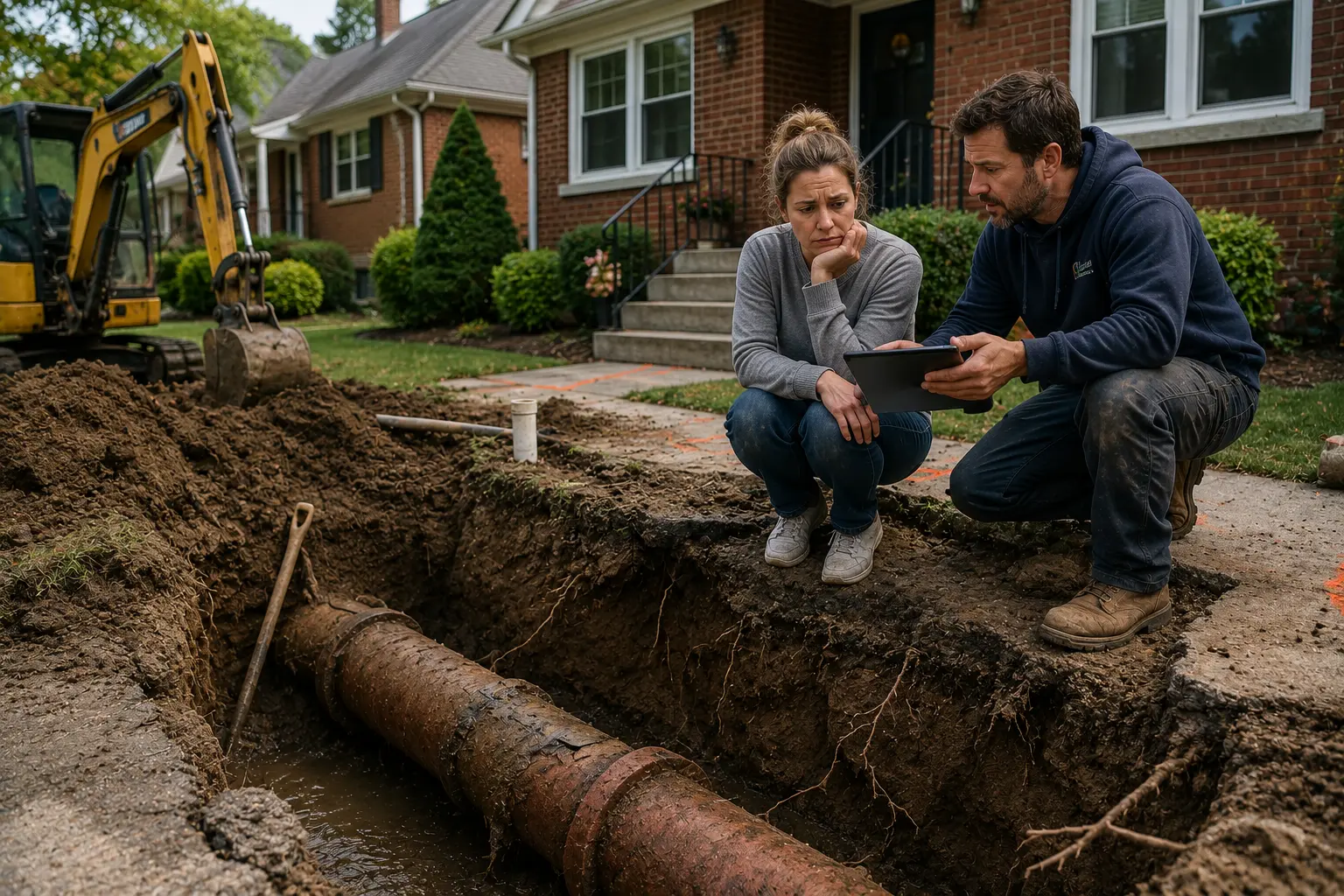
Sewer replacement can become urgent at the worst possible time. A homeowner may be dealing with sewage backups, unusable plumbing, a collapsed pipe, or an excavation estimate before there is enough cash available to pay for the work. When credit is already damaged, the situation can feel even more stressful.
Financing sewer replacement with bad credit is possible, but the options are usually more limited and may be more expensive. Homeowners may need to compare contractor payment plans, secured loans, personal loans, home equity options, municipal assistance programs, credit union financing, and staged repair approaches. The goal is not just getting approved. The goal is avoiding a payment structure that creates a bigger financial problem later.
For Chicago homeowners, the decision can be especially difficult because older sewer laterals, mature trees, finished basements, sidewalks, alleys, and excavation challenges can all increase repair complexity. This guide explains practical financing options, risks, tradeoffs, and decision points for homeowners who need sewer replacement but do not have strong credit. For more related insurance and financial protection topics, visit the Insurance & Financial Protection hub.
Key Takeaways
- Bad credit does not automatically prevent sewer replacement financing, but it can limit options and increase costs.
- Contractor payment plans may be convenient, but homeowners should compare interest rates, fees, loan terms, and lender rules.
- Secured financing may offer better approval odds, but it can put collateral at risk.
- Home equity options may be useful for homeowners with enough equity, but they are not always fast or available to everyone.
- Insurance, service line coverage, sewer backup endorsements, and warranty plans should be reviewed before assuming the entire repair must be financed.
- Homeowners should avoid high-pressure financing decisions during a sewer emergency.
- A written repair scope and multiple estimates can help prevent overborrowing or financing the wrong repair.
Can You Finance Sewer Replacement With Bad Credit?
Yes, some homeowners can finance sewer replacement with bad credit, but the best option depends on income, home equity, urgency, repair cost, existing debt, and whether any insurance or assistance applies. Common options include contractor financing, payment plans, personal loans, secured loans, credit union loans, home equity financing, and local assistance programs.
Bad-credit financing often comes with higher interest rates, shorter repayment terms, fees, or stricter approval requirements. Before signing, homeowners should compare the total repayment cost, monthly payment, prepayment rules, and what happens if the repair cost changes.
Start by Confirming What Actually Needs to Be Replaced
Before financing a sewer replacement, homeowners should make sure the proposed work matches the actual problem. Sewer emergencies create pressure, and pressure can lead to rushed decisions.
A proper repair decision usually starts with:
- A sewer camera inspection
- A written explanation of the defect
- The location and depth of the damaged pipe
- Photos or video documentation when available
- A clear repair or replacement scope
- An explanation of whether repair, lining, or full replacement is being recommended
- A written estimate that separates labor, materials, excavation, permits, and restoration where possible
If the problem is a collapsed sewer line, root intrusion, or severe deterioration, replacement may be justified. But if the issue is a localized defect, homeowners may want to understand whether a spot repair or another method is reasonable before financing a full replacement.
Check Insurance and Coverage Before Borrowing
Many homeowners assume sewer replacement is automatically out of pocket. Sometimes it is, but insurance and protection plans should still be reviewed before taking on debt.
Possible coverage sources include:
- Homeowners insurance, in limited covered-loss situations
- Service line coverage for underground sewer lines
- Sewer backup coverage for interior cleanup
- Sewer line warranty plans
- Home warranty add-ons, if applicable
Standard homeowners insurance often does not cover sewer replacement caused by age, deterioration, corrosion, or long-term root intrusion. However, homeowners with service line coverage may have more protection for the underground pipe itself.
Before borrowing, review Does Homeowners Insurance Cover Sewer Line Replacement? and Service Line Coverage for Sewer Lines: Is It Worth It? to understand the difference.
Common Financing Options for Sewer Replacement
There is no single best financing option for every homeowner. The right choice depends on urgency, credit score, income, equity, and how much must be financed.
| Financing Option | Potential Advantage | Key Risk |
|---|---|---|
| Contractor payment plan | Convenient and often arranged quickly | Terms may be costly or tied to a third-party lender |
| Personal loan | Can be unsecured and flexible | Bad credit may mean high interest or denial |
| Credit union loan | May offer more flexible underwriting | Approval still depends on income and credit profile |
| Home equity loan or HELOC | May offer lower rates for homeowners with equity | Uses the home as collateral |
| Secured loan | May improve approval odds | Collateral may be at risk if payments are missed |
| Assistance program | May reduce borrowing need | Availability, eligibility, and timing can vary |
| Credit card | Fast access in emergencies | High interest can make repayment difficult |
Contractor Financing and Payment Plans
Many sewer contractors offer financing through third-party lenders. This can be convenient because the homeowner may be able to apply during the estimate process and receive a decision quickly.
However, contractor financing should be reviewed carefully. The contractor may not be the lender, and the financing terms may come from a separate finance company.
Important questions include:
- What is the interest rate?
- Is the rate fixed or promotional?
- What happens when a promotional period ends?
- Are there origination fees or processing fees?
- Is there a prepayment penalty?
- What is the total repayment cost?
- Does approval require automatic payments?
- Can the loan amount change if the repair scope changes?
For more on this topic, read Sewer Repair Payment Plans Explained.
Personal Loans With Bad Credit
Personal loans may be an option for sewer replacement, especially when the homeowner does not want to use the home as collateral. However, bad credit can make unsecured personal loans harder to qualify for or more expensive.
Homeowners comparing personal loans should look beyond the monthly payment. A lower monthly payment may simply mean a longer repayment term and more total interest.
Review:
- Annual percentage rate
- Total interest over the full loan
- Loan term
- Monthly payment
- Fees
- Prepayment rules
- Whether the lender reports to credit bureaus
- Whether a co-borrower is allowed
Important: A loan approval does not automatically mean the loan is affordable. Homeowners should compare the payment against their real monthly budget, not just the urgency of the sewer repair.
Home Equity Options
Homeowners with enough equity may consider a home equity loan or home equity line of credit. These options may offer better terms than unsecured bad-credit loans, but they also come with serious responsibilities.
Home equity financing may be useful when:
- The repair is expensive
- The homeowner has sufficient equity
- The homeowner can wait through the approval process
- The monthly payment is manageable
- The homeowner understands the risk of using the home as collateral
However, home equity financing may not be practical during an urgent sewer emergency. Approval can take time, and damaged credit may still affect eligibility.
Secured Loans and Co-Borrowers
When credit is weak, some homeowners consider secured loans or applying with a co-borrower. These options may improve approval odds, but they add risk.
A secured loan may require collateral. A co-borrower may become legally responsible for the debt. Neither option should be used casually.
Before using collateral or involving another person, homeowners should ask:
- What happens if a payment is missed?
- What asset is at risk?
- Is the co-borrower equally responsible?
- Will late payments affect both credit reports?
- Is there a less risky alternative?
Chicago-Specific Considerations
Chicago homeowners should evaluate financing in the context of local sewer repair conditions. The final cost may be affected by more than the pipe itself.
Older Sewer Laterals
Many Chicago properties have older sewer lines that may require more extensive repair if deterioration is widespread. Financing only the smallest immediate repair may not solve the underlying issue if the rest of the pipe is failing.
Tree Root Damage
Root intrusion can lead to recurring clogs and eventual pipe damage. If roots are involved, homeowners should understand whether the repair plan addresses the entry point or only clears the blockage.
Coverage questions can also matter. See Insurance Coverage for Tree Root Sewer Damage for insurance-related considerations.
Urban Excavation Costs
Repair work may involve sidewalks, alleys, driveways, patios, fences, landscaping, or tight access. Homeowners should ask whether the estimate includes restoration after excavation.
Finished Basements
A sewer failure may create both pipe replacement costs and interior cleanup costs. If sewage has entered the home, insurance coverage for cleanup should be reviewed separately.
For cleanup-specific coverage, see Insurance Coverage for Sewer Backup Cleanup.
Questions to Ask Before Financing
Before signing a loan or payment plan, homeowners should slow down enough to compare the repair scope and the financing terms.
- Is sewer replacement definitely necessary?
- Was a camera inspection performed?
- Is the repair scope written clearly?
- Does the estimate include excavation, backfill, permits, and restoration?
- Can the repair be staged safely, or is immediate replacement required?
- Have insurance, service line coverage, and warranty options been reviewed?
- What is the total financed amount?
- What is the monthly payment?
- What is the total repayment cost?
- Are there fees or penalties?
- What happens if the repair uncovers additional damage?
Alternatives to High-Cost Bad-Credit Financing
If the first financing option is too expensive, homeowners may still have alternatives.
Possible alternatives include:
- Getting a second repair estimate
- Asking whether a spot repair is reasonable
- Checking service line coverage or warranty plans
- Contacting a credit union
- Asking about staged payment schedules
- Exploring home equity options
- Reviewing local assistance or repair programs
- Using emergency savings for part of the cost to reduce borrowing
- Having a qualified co-borrower, if appropriate
Homeowners should also review Tax Credits and Assistance Programs for Sewer Repairs to understand whether any assistance options may apply.
Common Mistakes and Warning Signs
Common financing mistakes include:
- Signing financing before understanding the full repair scope
- Comparing only monthly payments instead of total repayment cost
- Using high-interest credit cards without a repayment plan
- Ignoring insurance or service line coverage that may apply
- Assuming the cheapest repair solves the long-term problem
- Borrowing more than necessary without a written estimate
- Not asking whether the interest rate changes later
- Feeling pressured to decide immediately without reviewing terms
Warning signs include vague loan paperwork, unclear interest terms, large fees, pressure to sign before seeing the written estimate, or a repair recommendation that is not supported by inspection evidence.
Frequently Asked Questions
Can I get sewer replacement financing with bad credit?
Yes, some homeowners can qualify, but options may be more limited and more expensive. Contractor financing, secured loans, credit union loans, personal loans, or home equity options may be available depending on the situation.
Is contractor financing a good idea?
It can be convenient, but homeowners should review the lender, interest rate, fees, repayment term, total cost, and prepayment rules before signing.
Should I use a credit card for sewer replacement?
A credit card may be fast, but it can be expensive if the balance is not paid quickly. High interest can make an already stressful repair harder to manage.
Can insurance reduce the amount I need to finance?
Possibly. Homeowners should review homeowners insurance, service line coverage, sewer backup coverage, and any warranty plans before assuming the entire repair must be financed.
Will bad credit prevent home equity financing?
Not always, but credit history, income, debt, equity, and lender requirements all matter. Home equity financing also uses the home as collateral, so the risk should be considered carefully.
Can I finance only part of a sewer replacement?
Sometimes. A homeowner may pay part in cash and finance the rest, or ask whether a contractor offers staged billing. The repair must still be safe and complete enough to solve the sewer problem.
What should Chicago homeowners ask before financing sewer replacement?
They should ask for a camera inspection, written repair scope, itemized estimate, financing terms, total repayment cost, and confirmation of whether permits, excavation, and restoration are included.
Conclusion
Financing sewer replacement with bad credit is possible, but homeowners should proceed carefully. The fastest approval is not always the safest financial decision, especially when high interest, fees, short repayment terms, or unclear repair scopes are involved.
Chicago homeowners should first confirm the sewer problem, review insurance and coverage options, compare repair estimates, and understand the full cost of borrowing. Contractor payment plans, personal loans, secured loans, credit unions, home equity options, and assistance programs may all have a place depending on the situation.
The best financing choice is the one that solves the sewer problem without creating an unaffordable debt burden. Careful documentation, clear estimates, and realistic payment planning can make a stressful repair easier to manage.