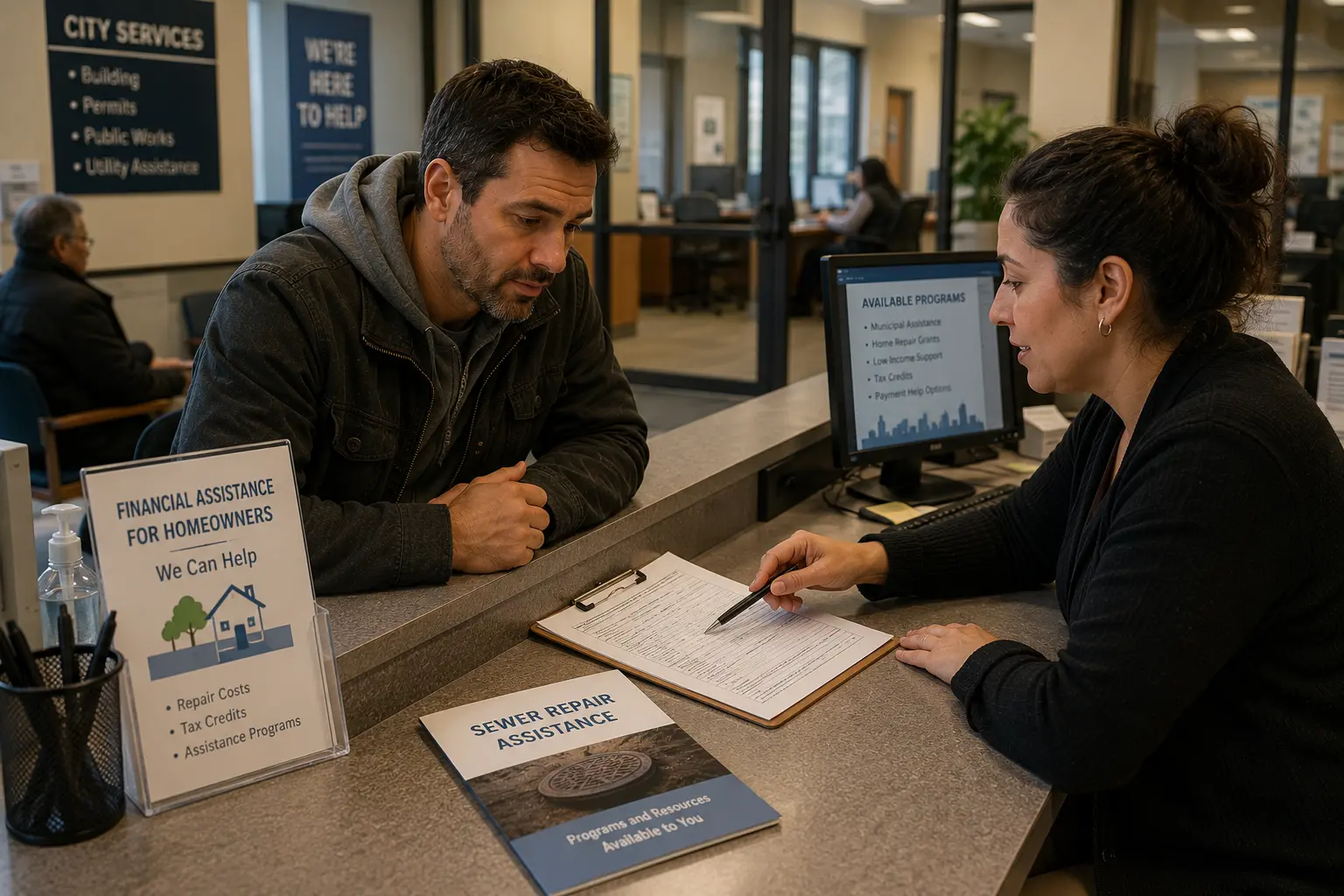
Sewer repairs can create a major financial burden for homeowners, especially when the problem is urgent and the plumbing system is no longer working properly. A collapsed sewer line, severe root intrusion, repeated backups, or a failed private sewer lateral can quickly turn into a repair decision that cannot be delayed.
Many homeowners look for tax credits, grants, city programs, insurance coverage, payment plans, or other assistance to help reduce the cost. The difficult part is that sewer repair assistance is not always simple, widely available, or guaranteed. Some programs are income-based, some are limited to specific repairs, some require applications before work begins, and some may not apply to private sewer laterals at all.
For Chicago homeowners, the best approach is to understand the difference between tax benefits, assistance programs, insurance coverage, warranty plans, and financing options before committing to a repair. This guide explains what may be available, what questions to ask, and how to avoid assuming financial help will apply when it may not. For more related topics, visit the Insurance & Financial Protection hub.
Key Takeaways
- There is usually no automatic universal tax credit for ordinary private sewer line repair.
- Some sewer-related costs may affect taxes in limited situations, but homeowners should confirm eligibility with a qualified tax professional.
- Local, state, nonprofit, or utility-related assistance programs may exist, but availability can vary by location, income, funding, repair type, and timing.
- Insurance, service line coverage, sewer backup endorsements, home warranties, and sewer line warranty plans should be reviewed before assuming the full cost is out of pocket.
- Some programs may require approval before work begins, so homeowners should not wait until after the repair to ask about assistance.
- Chicago homeowners should document the sewer problem carefully with inspection reports, photos, estimates, and invoices.
- If assistance is not available, payment plans or financing may still help spread the cost over time.
Can Homeowners Get Tax Credits or Assistance for Sewer Repairs?
Sometimes, but homeowners should not assume sewer repairs automatically qualify for a tax credit or public assistance. Ordinary sewer repairs on a private home are often treated as homeowner maintenance costs, but limited assistance may be available through local repair programs, income-based assistance, disaster-related programs, utility-related initiatives, or financing support.
Tax treatment depends on the situation. Some costs may be treated differently if the work is part of a larger home improvement, a rental property expense, a casualty loss situation, or a medically necessary modification, but these are fact-specific issues. Homeowners should verify tax questions with a qualified tax professional before relying on any deduction or credit.
Why Sewer Repair Assistance Is Often Confusing
Sewer repairs fall into an awkward financial category. They are often essential, expensive, and urgent, but they may still be considered private property maintenance.
That creates confusion because homeowners may hear about grants, tax credits, city programs, insurance coverage, or utility assistance and assume one of them will automatically apply.
In reality, financial help may depend on several factors:
- Whether the damaged sewer line is private or public
- Whether the repair is required for health or safety
- Whether the homeowner meets income limits
- Whether funds are available
- Whether the home is owner-occupied
- Whether the work has already been completed
- Whether the repair is part of a broader improvement project
- Whether insurance or warranty coverage applies
The earlier homeowners investigate options, the better. Some programs may not reimburse work that was completed before approval.
Are Sewer Repairs Tax Deductible?
For many owner-occupied homes, ordinary sewer repair costs are not automatically deductible as a personal expense. However, tax treatment can depend on the property use, type of work, and reason for the repair.
Possible tax-related categories may include:
| Situation | Possible Tax Treatment | Important Caution |
|---|---|---|
| Ordinary repair on a primary residence | Often treated as a personal maintenance expense | Usually not a simple tax credit or deduction. |
| Capital improvement | May affect home basis in some cases | Requires proper records and tax guidance. |
| Rental property sewer repair | May be treated differently as a rental expense or improvement | Rules depend on property use and repair scope. |
| Casualty-related damage | May have special tax considerations in limited cases | Strict rules apply, and not all losses qualify. |
| Medically necessary home modification | May have limited tax relevance in rare situations | Ordinary sewer repair usually does not fit this category. |
Because tax rules can change and depend on individual facts, homeowners should keep all invoices, permits, inspection reports, and payment records and ask a qualified tax professional how the repair should be handled.
Tax Credit vs. Deduction vs. Basis Adjustment
Homeowners often use the term “tax credit” broadly, but tax benefits are not all the same.
- Tax credit: Directly reduces tax owed if the taxpayer qualifies.
- Tax deduction: Reduces taxable income if allowed.
- Basis adjustment: May increase the home’s cost basis, which could matter when the home is sold.
- Rebate or grant: Provides financial help outside the tax return process.
- Loan or payment plan: Spreads cost over time but does not reduce the repair cost unless subsidized.
Important: Most ordinary sewer repairs should not be treated as tax credits without confirmation. Homeowners should avoid assuming a repair will produce a dollar-for-dollar tax benefit.
Assistance Programs That May Help With Sewer Repairs
Assistance programs vary by location and funding. Some programs may help with emergency home repairs, health and safety repairs, accessibility-related repairs, low-income homeowner repairs, senior homeowner repairs, or utility-related improvements.
Potential sources to investigate include:
- City or county housing repair programs
- State housing assistance programs
- Low-income homeowner repair grants
- Senior homeowner assistance programs
- Nonprofit housing organizations
- Utility-related repair or hardship programs
- Disaster recovery programs, if the damage is tied to a qualifying event
- Community development or neighborhood stabilization programs
Eligibility may depend on income, age, disability status, occupancy, property condition, repair urgency, and available funding. Some programs may prioritize repairs that affect health, safety, sanitation, or habitability.
Chicago-Specific Considerations
Chicago homeowners should evaluate assistance options with local property conditions in mind. Sewer repair needs can vary significantly depending on the age of the home, sewer material, tree coverage, basement use, and whether the damaged line is private or public.
Private Sewer Laterals
Many sewer problems involve the private sewer lateral serving the home. Assistance programs may treat private property repairs differently than public sewer infrastructure work. Homeowners should confirm responsibility before applying for help.
Older Homes and Legacy Sewer Materials
Many Chicago properties have older clay, cast iron, or other legacy sewer materials. These may fail due to age, roots, collapse, offsets, or deterioration, which may be considered homeowner maintenance unless a program or coverage source applies.
Basement Health and Safety Concerns
If sewer damage causes backups into a basement, the issue may involve sanitation, cleanup, and habitability concerns. This can affect how urgent the repair is, but it does not automatically guarantee assistance.
Permits and Code Requirements
Some assistance programs may require licensed contractors, permits, inspections, or approved scopes of work. Homeowners should ask about requirements before hiring someone.
Timing Matters
Some programs may not reimburse repairs that were completed before approval. If the sewer problem is not an immediate emergency, homeowners may want to check assistance options before authorizing major work.
Insurance and Coverage Options to Review First
Before assuming assistance or financing is the only option, homeowners should review existing insurance and protection plans.
Possible coverage sources include:
- Standard homeowners insurance
- Service line coverage
- Sewer backup endorsement
- Sewer line warranty plan
- Home warranty coverage
Standard homeowners insurance often excludes sewer replacement caused by age, deterioration, corrosion, roots, or maintenance issues. However, service line coverage may help with certain underground sewer line failures if the endorsement applies.
Homeowners should start with Does Homeowners Insurance Cover Sewer Line Replacement? and Service Line Coverage for Sewer Lines: Is It Worth It? to understand what may or may not be covered.
Backup Cleanup and Assistance Are Separate Issues
If the sewer problem caused sewage to enter the home, homeowners may be dealing with two separate financial issues: the sewer repair and the interior cleanup.
Cleanup may involve:
- Sewage removal
- Disinfection
- Drying
- Damaged flooring
- Drywall removal
- Personal property loss
- Odor control
Sewer backup coverage may help with cleanup if the homeowner has the endorsement and the loss meets policy requirements. It may not pay for the underground pipe repair itself.
For more detail, review Sewer Backup Insurance Coverage Explained and Insurance Coverage for Sewer Backup Cleanup.
Documents Homeowners Should Gather
Whether applying for assistance, filing an insurance claim, or asking about financing, documentation matters.
Useful documents may include:
- Sewer camera inspection report
- Photos and videos of damage
- Written repair estimates
- Contractor license information
- Permit information, if applicable
- Proof of homeownership
- Proof of occupancy
- Income documents for assistance programs
- Insurance declarations page
- Warranty or service contract documents
- Invoices and receipts
- Cleanup reports if sewage entered the home
Keeping records organized can help homeowners compare options and respond quickly if a program, insurer, or lender requests more information.
Questions to Ask Before Applying for Assistance
Before applying for sewer repair assistance, homeowners should ask practical questions to avoid delays or false expectations.
- Does the program cover private sewer lateral repairs?
- Is the program limited to emergency repairs?
- Are there income limits?
- Is the home required to be owner-occupied?
- Are seniors, disabled homeowners, or low-income households prioritized?
- Does the program require approval before work begins?
- Are only certain contractors allowed?
- Are permits or inspections required?
- Is the help a grant, loan, deferred loan, rebate, or reimbursement?
- How long does approval usually take?
- What documents are required?
- Is funding currently available?
When Financing May Be the Only Practical Option
Some homeowners may discover that they do not qualify for assistance, that funds are unavailable, or that approval will take too long for an urgent repair. In those situations, financing may be necessary.
Common options include:
- Contractor payment plans
- Third-party financing
- Personal loans
- Credit union loans
- Home equity loans or lines of credit
- Credit cards, used carefully
- Family loans or private arrangements
Homeowners should compare total repayment cost, monthly payment, interest rate, fees, and prepayment rules before signing. For more detail, read Sewer Repair Payment Plans Explained and Financing Sewer Replacement With Bad Credit.
Repair Scope Matters Before Seeking Help
Whether using assistance, insurance, or financing, homeowners should make sure the repair scope is clear.
| Repair Detail | Why It Matters |
|---|---|
| Cause of damage | May affect insurance coverage, assistance eligibility, and repair method. |
| Location of damage | Determines whether the line is private, public, or outside a program’s coverage area. |
| Depth of sewer line | Can affect excavation complexity and cost. |
| Repair vs. replacement | Programs or financing may require a clear scope before approval. |
| Restoration work | Concrete, landscaping, driveway, or basement repairs may or may not be included. |
| Urgency | Emergency situations may leave less time for applications and approvals. |
Common Mistakes and Warning Signs
Common mistakes homeowners make when looking for sewer repair assistance include:
- Assuming a tax credit automatically applies
- Starting work before checking assistance requirements
- Failing to document the sewer problem
- Not confirming whether the damaged line is private or public
- Confusing a grant with a loan or deferred payment program
- Ignoring insurance or service line coverage that may apply
- Relying on verbal promises instead of written program rules
- Not comparing financing terms when assistance is unavailable
Warning signs include vague claims of guaranteed assistance, pressure to sign before reviewing program rules, unclear contractor estimates, or advice to assume a tax benefit without confirming it with a qualified professional.
Frequently Asked Questions
Are there tax credits for sewer repairs?
There is usually no automatic universal tax credit for ordinary private sewer repairs. Tax treatment depends on the property, repair type, and individual situation. Homeowners should consult a qualified tax professional.
Can sewer repair costs be added to my home’s basis?
Some improvements may affect a home’s basis, but ordinary repairs may be treated differently. Homeowners should keep invoices and ask a tax professional how the work should be classified.
Are there assistance programs for Chicago sewer repairs?
There may be local, state, nonprofit, or utility-related programs depending on funding, eligibility, income, repair type, and timing. Homeowners should check current program availability before work begins when possible.
Will assistance programs cover private sewer laterals?
Not always. Some programs may exclude private sewer lines or limit assistance to specific health, safety, or habitability repairs. Homeowners should confirm whether private sewer lateral work is eligible.
Should I file an insurance claim before looking for assistance?
If insurance may apply, homeowners should review coverage and consider filing promptly. Assistance programs may ask whether insurance, warranty coverage, or other resources are available first.
Can I get help if I already paid for the sewer repair?
Possibly, but many programs require approval before work begins and may not reimburse completed repairs. Homeowners should check requirements as early as possible.
What if I do not qualify for assistance?
Homeowners may need to compare payment plans, financing, service line coverage for future protection, warranty options, or other financial resources. The best option depends on urgency, cost, credit, equity, and household budget.
Conclusion
Tax credits and assistance programs for sewer repairs can be helpful in limited situations, but homeowners should not assume they automatically apply. Ordinary private sewer repairs are often treated as homeowner maintenance costs, while assistance programs may have strict eligibility, timing, funding, and documentation requirements.
For Chicago homeowners, the best path is to act early: document the sewer problem, confirm whether the damaged line is private or public, review insurance and warranty coverage, ask about assistance before work begins, and compare financing options if help is unavailable.
A sewer repair can be financially stressful, but a careful approach can reduce confusion and prevent missed opportunities for coverage, assistance, or better payment terms.