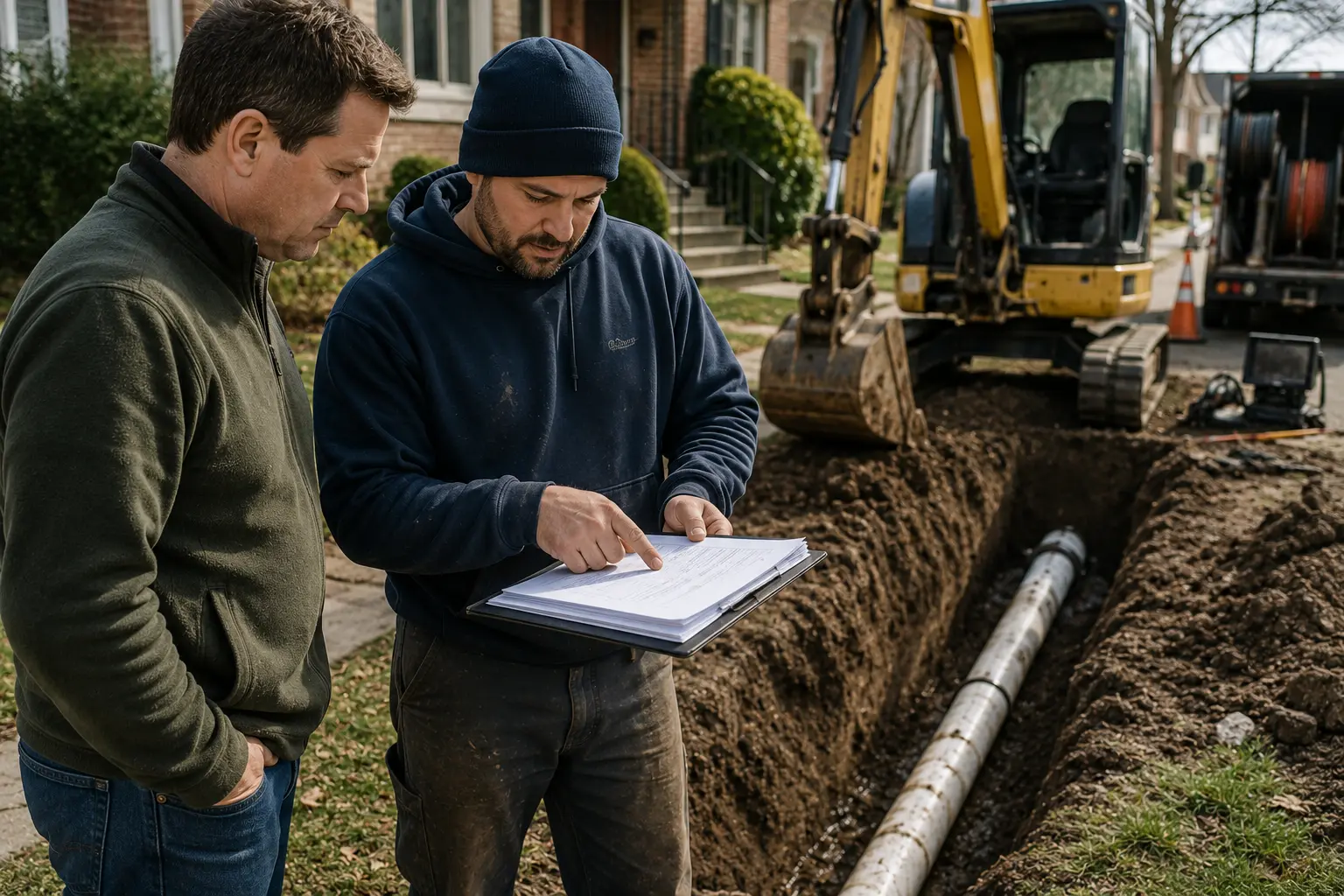
A sewer repair estimate should do more than list a price. It should explain what problem was found, what repair is being recommended, what work is included, what is excluded, and what could change once the project begins. For Chicago homeowners, this matters because sewer repairs can involve excavation, permits, inspections, pavement restoration, landscaping damage, and major differences between contractors.
When an estimate is vague, it becomes difficult to compare quotes or understand whether the proposed repair is reasonable. A clear checklist helps homeowners review each proposal with more confidence before signing anything.
This guide explains what should be included in a sewer repair estimate, what questions to ask, and which warning signs may indicate that an estimate is incomplete. For more help comparing contractors and quotes, visit the Contractor Selection & Quotes hub.
Key Takeaways
- A sewer repair estimate should clearly describe the problem, repair method, project scope, materials, permits, cleanup, restoration, warranty, and payment terms.
- Homeowners should ask for written estimates rather than relying on verbal pricing.
- The lowest estimate is not always the best choice if it leaves out important work.
- Sewer camera findings should support the repair recommendation whenever possible.
- Chicago properties may involve added complexity because of older pipes, alleys, sidewalks, utilities, and local permitting requirements.
- Comparing multiple estimates can reveal differences in scope, repair approach, and long-term value.
What Should a Sewer Repair Estimate Include?
A sewer repair estimate should include the diagnosis, repair method, location and length of the affected pipe, excavation details, materials, permit responsibilities, inspection requirements, cleanup, restoration, warranty terms, payment schedule, and any exclusions. Homeowners should also confirm whether the estimate is based on camera inspection findings and whether additional charges may apply if hidden problems are discovered.
Why a Detailed Sewer Estimate Matters
Sewer repair is not like replacing a fixture or clearing a simple drain clog. The final cost and disruption can vary widely depending on the pipe location, depth, access, repair method, soil conditions, and whether the work affects driveways, sidewalks, landscaping, or public areas.
A detailed estimate protects the homeowner by making the contractor’s assumptions clear. It also helps prevent misunderstandings after work begins.
Without a detailed estimate, homeowners may not know whether the quoted price includes:
- Permits
- Inspections
- Excavation
- Pipe materials
- Backfilling
- Concrete or pavement repair
- Landscaping restoration
- Hauling away debris
- Warranty coverage
If you are still deciding which contractor to hire, it may help to start with How to Choose a Sewer Repair Contractor in Chicago.
Sewer Repair Estimate Checklist
Use the checklist below when reviewing any sewer repair proposal.
| Estimate Item | What to Look For | Why It Matters |
|---|---|---|
| Diagnosis | A clear explanation of the sewer problem | Helps confirm that the repair matches the actual issue |
| Inspection Evidence | Camera footage, photos, or written findings | Supports the recommendation and reduces guesswork |
| Repair Method | Spot repair, replacement, lining, pipe bursting, or excavation | Different methods affect cost, disruption, and lifespan |
| Project Scope | Exact section of pipe being repaired or replaced | Prevents confusion about how much work is included |
| Materials | Pipe type, fittings, cleanouts, and related materials | Material quality affects durability and code compliance |
| Permits | Who obtains permits and whether fees are included | Important for compliance and inspections |
| Restoration | Concrete, pavement, lawn, or landscaping repair | Often a major source of unexpected added cost |
| Warranty | Written coverage terms and exclusions | Clarifies what happens if problems return |
| Payment Terms | Deposit, progress payments, and final payment timing | Helps avoid payment disputes |
Checklist Item #1: Confirm the Sewer Problem
The estimate should explain what is wrong with the sewer line. A contractor should not simply write “sewer repair” or “replace line” without describing the issue.
Common sewer problems include:
- Root intrusion
- Cracked pipe
- Collapsed pipe
- Offset pipe joints
- Pipe belly or sagging section
- Severe corrosion or deterioration
- Repeated blockages in the same area
Ask the contractor to explain how the problem was identified and why the proposed repair is appropriate.
Checklist Item #2: Ask Whether a Camera Inspection Supports the Estimate
A sewer camera inspection can provide important evidence before a homeowner approves major work. The estimate should ideally reference the inspection findings, especially for expensive repairs or replacements.
Ask whether the contractor can show:
- The location of the damage
- The depth of the affected pipe
- The length of damaged pipe
- Whether the problem is isolated or widespread
- Whether the pipe is structurally failing
If no inspection has been done, review Should You Get a Sewer Camera Inspection Before Hiring a Contractor? before approving a major repair.
Checklist Item #3: Identify the Proposed Repair Method
The estimate should state what repair method the contractor plans to use. This is one of the most important parts of the proposal because different methods involve different costs, risks, and long-term outcomes.
Common methods include:
- Drain cleaning: Used for blockages, but not a permanent fix for structural damage.
- Spot repair: Targets one damaged section of pipe.
- Traditional excavation: Involves digging to expose and replace the damaged pipe.
- Pipe lining: Creates a new lining inside the existing pipe when conditions allow.
- Pipe bursting: Replaces pipe by breaking the old line while pulling in new pipe.
Ask why the contractor recommends one method over another. If multiple contractors suggest different solutions, compare the reasoning behind each recommendation, not just the price.
Checklist Item #4: Clarify the Exact Scope of Work
The estimate should clearly identify what section of the sewer line is being repaired or replaced.
Important details include:
- Starting and ending points of the repair
- Approximate pipe length
- Pipe depth
- Location of excavation
- Whether cleanouts will be added or replaced
- Whether the work extends to the property line or another connection point
Without a defined scope, one estimate may cover a small repair while another includes a much larger replacement. This is why homeowners should compare written proposals carefully. For more guidance, see How to Compare Sewer Replacement Quotes.
Checklist Item #5: Review Materials and Components
The estimate should list the materials being used, especially for pipe replacement or major repairs.
Ask about:
- Pipe material
- Pipe diameter
- Fittings and connections
- Cleanouts
- Backfill materials
- Whether materials meet local code requirements
Materials affect durability, inspection approval, and long-term performance. If the estimate does not specify materials, ask the contractor to revise it before signing.
Checklist Item #6: Confirm Permits and Inspections
Many sewer repair and replacement projects require permits and inspections. This is especially important in Chicago and surrounding municipalities, where requirements may depend on the project location, scope, and whether work affects public property.
The estimate should explain:
- Whether permits are required
- Who obtains the permits
- Whether permit fees are included
- Who schedules inspections
- Whether work must pause for inspection approval
Important: A contractor who avoids discussing permits or inspections may be leaving out a critical part of the project. Homeowners should clarify this before work begins.
Checklist Item #7: Understand Excavation and Access
Excavation can be one of the biggest cost and disruption factors in sewer repair. The estimate should identify where digging will occur and what areas may be affected.
Ask whether the work could impact:
- Front yards
- Backyards
- Driveways
- Sidewalks
- Alleys
- Patios
- Landscaping
- Fences
In Chicago, narrow lots, mature trees, dense neighborhoods, garages, and alley access can all affect how difficult excavation becomes.
Checklist Item #8: Define Cleanup and Restoration
Cleanup and restoration are often overlooked when homeowners compare estimates.
A contractor may include pipe replacement but exclude full restoration of concrete, pavement, sod, landscaping, or hardscaping. That can make a lower estimate appear more attractive than it really is.
Ask whether the estimate includes:
- Backfilling excavated areas
- Soil compaction
- Removal of debris
- Temporary or permanent pavement repair
- Concrete replacement
- Lawn repair
- Landscape restoration
- Interior cleanup if work affects the basement
If restoration is excluded, ask for a realistic explanation of what the homeowner will need to arrange separately.
Checklist Item #9: Review Warranty Terms
Warranty terms should be written clearly in the estimate or contract. Do not rely on verbal assurances.
Ask:
- What is covered?
- How long does coverage last?
- Does the warranty cover labor and materials?
- Are backups, roots, settling, or misuse excluded?
- Is the warranty transferable if the home is sold?
- How does the homeowner file a warranty claim?
For a more complete list of warranty-related questions, review Warranty Questions to Ask Before Sewer Line Replacement.
Checklist Item #10: Confirm Payment Terms
The estimate should explain how and when payment is due.
Common payment terms may include:
- Deposit before work begins
- Progress payment after excavation or material delivery
- Final payment after completion
- Payment after inspection approval
Be cautious if a contractor demands full payment upfront, especially before permits, scheduling, or materials are confirmed.
Checklist Item #11: Ask About Change Orders
Hidden conditions can sometimes appear once excavation starts. However, the estimate should explain how unexpected work will be handled.
Ask whether the contractor requires written approval before adding charges for:
- Additional pipe damage
- Extra excavation
- Utility conflicts
- Soil or groundwater issues
- Additional restoration
- Code-related upgrades
A clear change order process protects both the homeowner and the contractor.
Chicago-Specific Considerations for Sewer Estimates
Chicago-area sewer estimates should account for local conditions that can affect project complexity.
Older Pipe Materials
Many homes in Chicago and nearby suburbs have older clay, cast iron, or other aging sewer materials. The contractor should identify existing pipe conditions and explain how the proposed repair addresses them.
Urban Excavation Challenges
Dense lots, alleys, sidewalks, fences, garages, and neighboring structures can make access more complicated. Estimates should reflect these realities when applicable.
Public Way and Sidewalk Issues
If work affects sidewalks, parkways, streets, or alleys, additional rules, permits, or restoration obligations may apply. Homeowners should ask whether public areas are involved.
Basement and Foundation Proximity
Many Chicago homes have basements. Sewer work near foundations may require special care to avoid structural or water intrusion concerns.
Weather and Scheduling
Winter conditions, heavy rain, and saturated soil can affect timelines. Estimates should include realistic scheduling expectations rather than vague promises.
How to Compare Sewer Repair Estimates
Once you have multiple estimates, compare them line by line.
Do not assume two quotes cover the same work just because the project descriptions sound similar.
| Comparison Point | Estimate A | Estimate B | Why It Matters |
|---|---|---|---|
| Repair Method | Clarify | Clarify | Different methods can produce different long-term outcomes |
| Pipe Length | Clarify | Clarify | One quote may cover more work than another |
| Permits | Included or excluded | Included or excluded | Missing permit costs can change the real price |
| Restoration | Included or excluded | Included or excluded | Concrete, lawn, and pavement repair can be expensive |
| Warranty | Written terms | Written terms | Warranty strength affects long-term protection |
If estimates vary widely, ask each contractor to explain the difference. You may also want to read Do You Need Multiple Sewer Repair Estimates?.
Common Mistakes and Warning Signs
A sewer estimate can reveal a lot about how a contractor operates. Be cautious if the estimate is unclear, incomplete, or pressured.
Warning signs to watch for:
- No written estimate
- Vague description of the work
- No explanation of the sewer problem
- No camera inspection or supporting evidence
- No mention of permits
- No warranty details
- Large upfront payment demand
- High-pressure deadline to sign immediately
- Unclear restoration responsibilities
- Refusal to answer questions
If an estimate raises concerns, review Red Flags to Watch for in Sewer Repair Contractors before moving forward.
Frequently Asked Questions
Should a sewer repair estimate be free?
Some contractors offer free estimates, while others charge for diagnostic work, especially sewer camera inspections. What matters most is understanding what the estimate includes and whether any inspection fee is credited toward the work.
Is a verbal sewer repair estimate enough?
No. Sewer repairs can involve too many variables to rely on a verbal quote. Homeowners should request a written estimate that clearly explains the scope, pricing, materials, permits, and exclusions.
Why are sewer repair estimates so different?
Estimates may differ because contractors recommend different repair methods, include different restoration work, use different materials, or make different assumptions about permits and excavation. Always compare the full scope, not just the total price.
Should I get a camera inspection before accepting an estimate?
For major sewer repairs or replacement recommendations, a camera inspection is often very helpful. It allows homeowners to see the problem and better understand whether the proposed work is justified.
What should I ask if the estimate seems too low?
Ask whether permits, inspections, restoration, debris removal, warranty coverage, and change orders are included. A low estimate may be legitimate, but it may also leave out important costs.
Does homeowners insurance cover sewer repair estimates or work?
Insurance coverage depends on the policy and the cause of the damage. Standard homeowners insurance often excludes many sewer line failures, but some policies or endorsements may provide limited coverage. Homeowners should contact their insurer before assuming a repair will be covered.
Can I negotiate a sewer repair estimate?
Sometimes. Homeowners may be able to clarify scope, remove optional items, or compare competing estimates. However, the goal should be a fair, complete estimate rather than simply forcing the lowest price.
Conclusion
A sewer repair estimate should give homeowners enough information to understand the problem, compare options, and make a confident decision. The best estimates are specific, written, and transparent about scope, materials, permits, restoration, warranty, and possible added costs.
For Chicago homeowners, this level of detail is especially important because sewer work may involve older infrastructure, tight access, public property, city requirements, and significant restoration concerns. Taking time to review the estimate carefully can help prevent surprises and reduce the risk of hiring the wrong contractor.