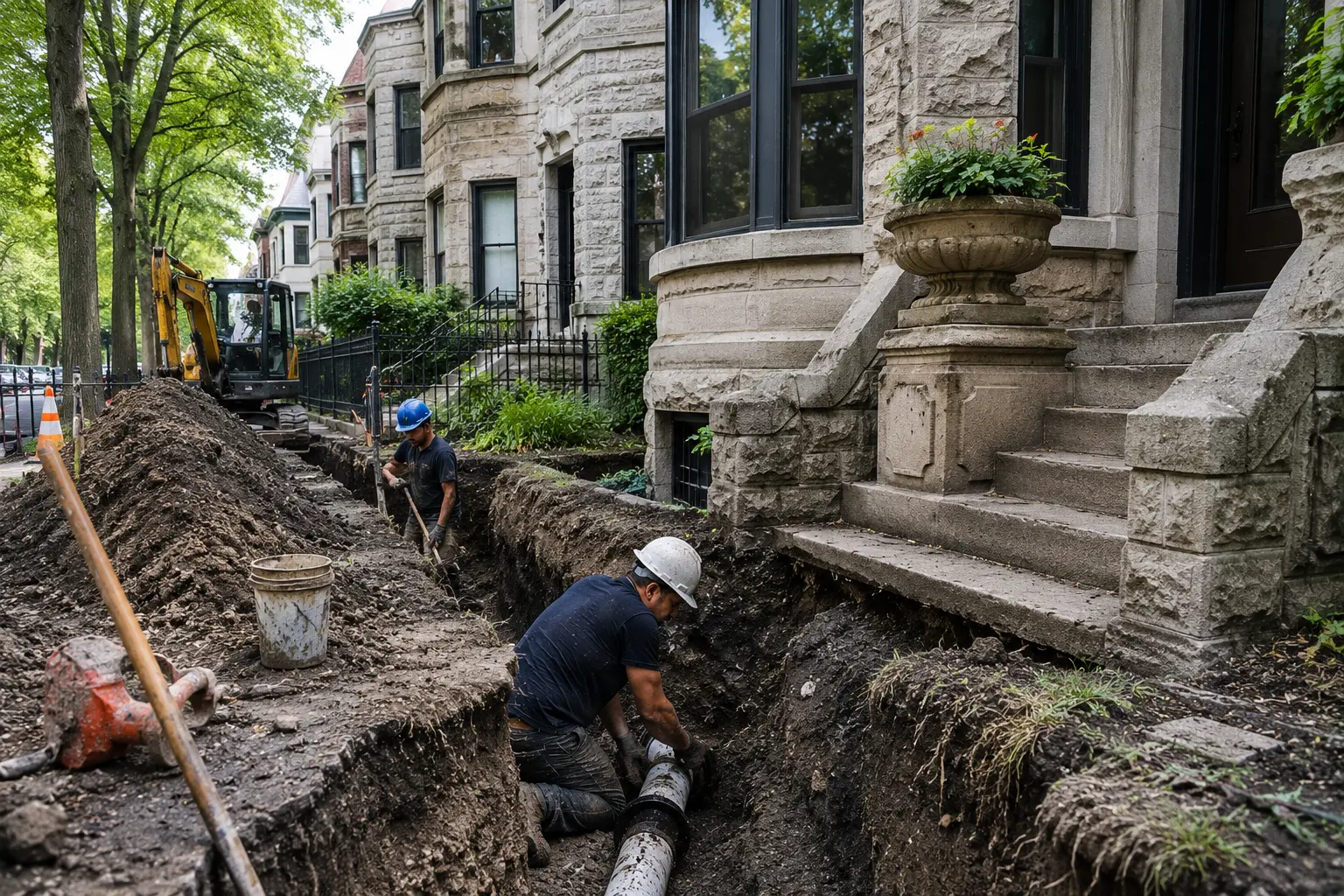
Chicago greystone homes are some of the city’s most recognizable older properties. Built with limestone façades, raised entries, basements, and durable masonry construction, many greystones have stood for more than a century. But while the visible structure may still look solid, the underground sewer line may be aging, damaged, or partially original.
Sewer repair for Chicago greystone homes often requires a more careful evaluation than repair for newer properties. Older pipe materials, deep basements, mature trees, narrow lots, shared side yards, and historic building features can all affect the repair approach. The right solution depends on the pipe condition, location of the defect, access limitations, and the homeowner’s long-term plans for the property.
This article explains the most common sewer issues in Chicago greystones, how repairs are evaluated, what replacement options may be considered, and what homeowners should think about before approving work. For more guidance on older property types, visit the Older Chicago Homes & Property Types resource hub.
Key Takeaways
- Chicago greystone homes often have aging sewer lines that may include clay pipe, cast iron, or older replacement materials.
- Common problems include root intrusion, cracked pipe, offset joints, sewer backups, and pipe deterioration.
- Basements and lower-level living areas can increase the damage risk if a sewer backup occurs.
- Sewer camera inspections are important because symptoms alone do not reveal the condition of the underground line.
- Repair options may include cleaning, spot repair, partial replacement, full replacement, or trenchless methods depending on the defect.
- Greystone repairs may be more complicated by limited access, masonry features, sidewalks, gangways, and mature landscaping.
What Should Greystone Owners Know About Sewer Repair?
Chicago greystone owners should know that sewer problems are often tied to the age and layout of the property. Many greystones were built when older sewer materials were standard, and decades of use can lead to cracks, root intrusion, offset joints, and recurring backups. A sewer camera inspection is usually the most useful first step because it shows whether the issue is isolated or part of a larger system failure.
Repair may be enough when damage is limited to one area. Replacement becomes more likely when the sewer line has widespread deterioration, repeated root intrusion, a collapsed section, or recurring basement backups. The best decision should balance immediate repair cost, long-term reliability, property access, and the risk of future damage.
Why Sewer Problems Are Common in Chicago Greystone Homes
Greystones are built to last, but their sewer systems were not designed to last forever. Many of these properties were constructed during periods when clay sewer pipes and older drainage methods were common. Even when a line has been partially updated, older sections may remain underground.
The sewer system may also have been affected by decades of repairs, renovations, tenant use, basement improvements, and neighborhood changes. This is why greystones often share many of the same risks discussed in Common Sewer Problems in Older Chicago Homes.
Older Pipe Materials
Many greystones may still have clay sewer pipe, older cast iron sections, or patched lines from prior repairs. Clay pipes are especially vulnerable at the joints, where roots and soil movement can create openings.
For a deeper explanation of clay pipe risks, see Clay Sewer Pipes in Chicago Homes: Risks and Replacement Options.
Mature Trees and Root Intrusion
Greystone neighborhoods often include mature parkway trees, backyard trees, and older landscaping. Roots naturally seek moisture and can enter sewer lines through small cracks or separated pipe joints.
Once inside the pipe, roots can expand, trap debris, and cause repeated blockages. Related concerns are covered in Sewer Issues in Homes Near Large Trees.
Basement and Lower-Level Risk
Many greystones have basements used for storage, laundry, mechanical systems, finished living space, or garden-level units. When a sewer backup occurs, the basement is often where damage appears first.
Common Sewer Problems Found in Greystone Properties
Recurring Sewer Backups
Recurring backups are one of the clearest warning signs that a sewer issue may be more serious than a simple clog. If backups return after cleaning, the line may have roots, structural damage, a belly, or a partial collapse.
Basement backups are especially important in greystones because many have usable lower levels. More information is available in Sewer Backup Problems in Chicago Basements.
Cracked or Broken Sewer Pipe
Older pipe can crack from soil movement, age, root pressure, or past installation issues. Cracks allow roots and soil to enter the line and may worsen over time.
Offset Joints
An offset joint occurs when two pipe sections no longer line up correctly. Waste and debris can catch at the offset, causing repeated clogs. Roots may also enter through the opening.
Sewer Line Bellies
A sewer belly is a low section of pipe where water and solids collect instead of flowing properly. This can happen when soil settles under the line. A belly may not always require immediate replacement, but significant standing water can create recurring problems.
Pipe Collapse
A collapsed sewer section is a serious structural failure. Cleaning cannot restore a collapsed pipe. Repair or replacement is usually needed once a collapse is confirmed.
Important warning: A sewer line can still drain partially even when it has serious defects. Occasional drainage does not prove the pipe is structurally sound.
How Sewer Repair Is Evaluated in a Greystone Home
The first step is usually diagnosis. Without seeing inside the sewer line, it is difficult to know whether the problem is a clog, root intrusion, structural defect, or system-wide deterioration.
Sewer Camera Inspection
A sewer camera inspection can identify the location and nature of the defect. It may show cracks, offsets, roots, collapsed sections, standing water, or older pipe materials.
This type of inspection is also useful during real estate transactions. Buyers considering older masonry properties should review Sewer Inspection Before Buying a Chicago Home.
Line Location and Depth
Greystone sewer repair may require locating the exact path and depth of the sewer line. This is especially important when excavation could affect sidewalks, gangways, stairs, landscaping, retaining walls, or basement floors.
Review of Access Points
Access can affect both cost and repair method. A contractor may evaluate whether the line can be reached from the basement, yard, gangway, alley, or public way. Limited access can make planning more important.
Repair Options for Chicago Greystone Sewer Lines
The right repair option depends on the inspection findings. Homeowners should be cautious about choosing a repair method before the condition of the sewer line is confirmed.
| Sewer Condition | Possible Repair Option | Homeowner Consideration |
|---|---|---|
| Simple blockage without visible pipe damage | Cleaning or maintenance | May be enough if symptoms do not return |
| Roots entering at one joint | Spot repair or monitoring | Depends on severity and recurrence |
| Several cracked clay sections | Partial or full replacement | Repeated repairs may become less practical |
| Offset pipe joint | Targeted repair or replacement | Severity and location matter |
| Sewer belly with standing water | Repair to correct slope | Cleaning alone may not solve the issue |
| Collapsed pipe | Excavation or replacement | Usually requires structural correction |
| Widespread deterioration | Full line replacement may be considered | Long-term reliability becomes the main issue |
Cleaning and Maintenance
Cleaning may be appropriate when the line is blocked but structurally sound. However, cleaning does not fix cracks, joint separation, bellies, or collapse.
Spot Repair
A spot repair targets a specific damaged section. This may be reasonable when the rest of the sewer line appears stable.
Partial Replacement
Partial replacement may be used when a longer section is damaged but the entire line does not need to be replaced. Homeowners should understand what older sections will remain in place.
Full Replacement
Full replacement may be considered when defects are widespread or the line has reached the end of its practical life. This is a larger project but may reduce repeated repair needs.
Trenchless Methods
Some greystone properties may qualify for trenchless sewer repair or replacement methods. These methods can reduce surface disruption, but they are not suitable for every condition. Severe collapse, major offsets, or slope problems may still require excavation.
Chicago-Specific Considerations for Greystone Sewer Repair
Historic Masonry Features
Greystones often include original stonework, raised entries, stairs, retaining walls, and decorative masonry. Sewer repair planning should consider how excavation or equipment access could affect these features.
Narrow Side Lots and Gangways
Many Chicago properties have narrow side access. Limited space can affect equipment choices, staging, excavation, and restoration.
Public Sidewalks and Parkway Areas
If the sewer problem extends toward the public way, sidewalk or parkway restoration may become part of the project. Permits and inspections may also affect timing.
Basement Configuration
Some greystones have finished basements, garden units, laundry rooms, storage areas, or mechanical equipment below grade. These layouts can increase the consequences of backups and influence how quickly a homeowner chooses to act.
For homes with finished lower levels, see Sewer Repair for Homes With Finished Basements.
Multi-Unit Use
Some greystones function as single-family homes, while others have multiple units or converted living spaces. More occupants usually means more water use and greater disruption if the sewer line fails.
Cost Factors Homeowners Should Expect
Sewer repair costs vary widely because the scope depends on underground conditions and access. Greystone homes can have additional cost variables due to age, layout, and restoration needs.
Common cost factors include:
- Depth of the sewer line
- Length of the affected section
- Pipe material and condition
- Whether excavation is required
- Whether trenchless methods are possible
- Access through basement, yard, gangway, or public way
- Concrete, sidewalk, stair, or landscaping restoration
- Permit and inspection requirements
- Emergency timing versus planned repair
- Whether interior basement finishes are affected
Practical note: A lower-cost repair may not be the best long-term choice if the remaining sewer line is badly deteriorated. Homeowners should compare the immediate fix with the likelihood of future repairs.
Repair Timing: When to Act Quickly
Some sewer issues can be monitored after inspection. Others should be addressed promptly because the risk of damage is high.
Homeowners should treat these signs seriously:
- Recent sewage backup into the basement
- Multiple backups within a short period
- Camera footage showing collapse
- Heavy root intrusion throughout the line
- Standing water caused by a significant belly
- Sewer odors that return after cleaning
- Drainage problems affecting multiple fixtures
Waiting can increase the risk of property damage, emergency repairs, and disruption to the household or tenants.
Contractor Considerations for Greystone Homes
Greystone sewer projects may require careful coordination because of older construction, access limitations, and potential restoration needs. Homeowners should evaluate contractors based on diagnosis, documentation, and clarity rather than pressure.
Useful questions include:
- Can you provide camera footage and explain the defect?
- Where exactly is the damaged section located?
- Is this an isolated issue or part of broader pipe deterioration?
- What repair options are realistic for this property?
- Will excavation affect masonry, sidewalks, stairs, or finished basement areas?
- What permits or inspections may be required?
- What restoration work is included and what is excluded?
- What older sections of sewer line will remain after the repair?
Common Mistakes Greystone Owners Make
Waiting for a Major Backup
Many sewer lines show warning signs before a serious failure. Repeated clogs, slow drains, and sewer odors should not be ignored.
Assuming the Sewer Line Was Updated
Even renovated greystones may still have older underground sewer sections. Interior updates do not always mean the sewer lateral was replaced.
Approving Work Without Camera Evidence
Homeowners should understand what defect is being repaired and where it is located before approving major work.
Choosing the Cheapest Short-Term Fix Automatically
A low-cost repair may be reasonable for an isolated defect, but it may not solve recurring problems caused by widespread pipe deterioration.
Forgetting About Home Sale Implications
Sewer issues can become negotiation points during a sale. Sellers may benefit from understanding the condition of the line before listing. Related guidance is available in Sewer Line Problems Before Selling a House.
Frequently Asked Questions
Do Chicago greystone homes usually have old sewer lines?
Many do, although the condition varies by property. Some have original or partially original sewer lines, while others have had repairs or replacements over time. A sewer camera inspection is the best way to confirm the current condition.
What is the most common sewer issue in greystone homes?
Common issues include root intrusion, cracked clay pipe, offset joints, and recurring basement backups. The exact issue depends on pipe material, tree proximity, soil movement, and repair history.
Can a greystone sewer line be repaired without replacing the whole line?
Yes, if the damage is limited to one section and the rest of the pipe is in acceptable condition. If defects are widespread, replacement may be more practical.
Is trenchless sewer repair possible for greystone homes?
Sometimes. Trenchless methods may reduce surface disruption, but they depend on pipe condition, alignment, access, and slope. A collapsed or severely offset pipe may require excavation.
Will homeowners insurance cover sewer repair?
Coverage depends on the policy and cause of damage. Normal wear, age, and deterioration are often excluded. Some policies may include sewer backup or service line endorsements, but homeowners should verify coverage details directly.
Should I inspect the sewer line before buying a greystone?
Yes, it is often wise. Sewer defects are not usually visible during a standard home inspection, and older properties can have expensive underground issues.
Why are basement backups a major concern in greystones?
Many greystones have basements used for storage, utilities, living space, or rental units. A sewer backup can damage finishes, belongings, mechanical systems, and tenant areas.
Conclusion
Sewer repair for Chicago greystone homes requires careful evaluation because these properties often combine older sewer materials, mature trees, basement exposure, and limited access. A visible drain problem may be a simple blockage, but it may also signal root intrusion, cracked clay pipe, offset joints, or a failing sewer line.
The most practical approach is to begin with clear diagnosis, review the inspection findings, compare repair and replacement options, and consider the long-term risk of recurring problems. For greystone owners, thoughtful sewer planning can help protect both the function of the home and the value of a historic Chicago property.