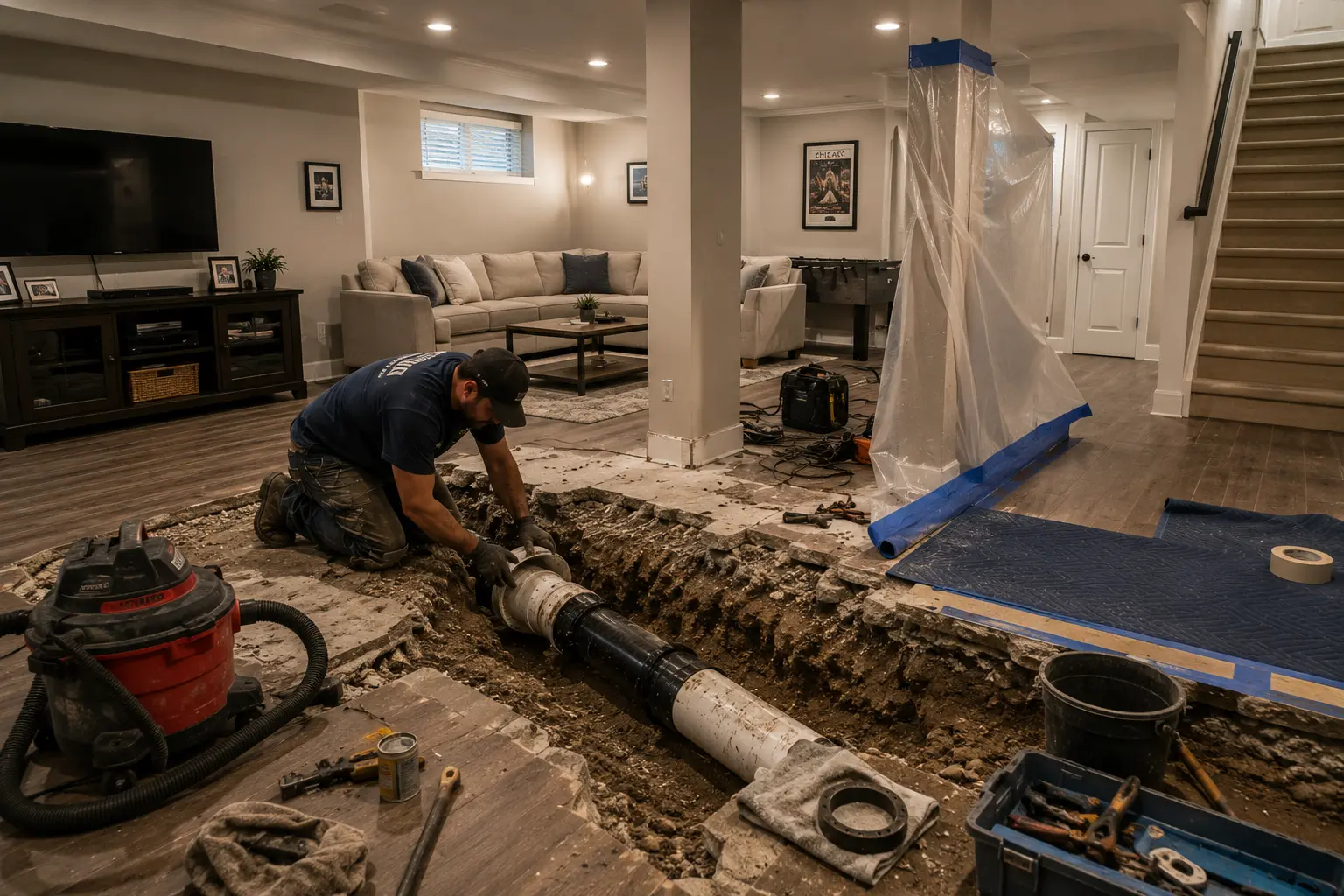
A finished basement can make an older Chicago home more livable, valuable, and functional. Many homeowners use basement space for family rooms, bedrooms, offices, laundry areas, storage, or rental-style living arrangements. But when a sewer problem develops, that finished space also raises the stakes.
Sewer repair for homes with finished basements requires extra care because a backup or failed sewer line can damage flooring, drywall, trim, furniture, appliances, mechanical systems, and personal belongings. In older Chicago homes, the risk is often tied to aging clay sewer pipe, mature tree roots, basement floor drains, lower-level plumbing fixtures, and sewer lines that may not have been fully updated.
The most important question is whether the sewer issue is a simple blockage or a sign of a larger structural problem. A finished basement does not automatically mean the sewer line needs replacement, but it does mean homeowners should take recurring sewer symptoms seriously. For broader guidance on older properties, visit the Older Chicago Homes & Property Types resource hub.
Key Takeaways
- Finished basements increase the potential damage from sewer backups and sewer line failures.
- Older Chicago homes may have clay sewer pipes, root intrusion, offset joints, bellies, or deteriorated sewer lines.
- Recurring basement backups usually deserve a sewer camera inspection, not just repeated drain cleaning.
- Repair options may include cleaning, spot repair, partial replacement, full replacement, or trenchless methods depending on the defect.
- Insurance coverage varies and often depends on sewer backup endorsements, service line coverage, and the cause of damage.
- Homeowners should consider both plumbing repair costs and restoration costs when evaluating sewer risk in a finished basement.
Why Finished Basements Change Sewer Repair Decisions
Finished basements change sewer repair decisions because the consequences of a sewer backup are usually more expensive than in an unfinished utility basement. Wastewater can damage flooring, drywall, insulation, furniture, built-ins, electronics, and stored belongings. If the basement includes a bathroom, laundry room, or living area, sewer problems can also affect day-to-day use of the home.
For Chicago homeowners, the best first step is usually to determine whether the issue is isolated or structural. A one-time clog may only need cleaning, but recurring backups, root intrusion, cracked pipe, or standing water in the sewer line may require repair or replacement planning.
Why Finished Basements Are Vulnerable to Sewer Problems
Basements sit below or near the level where sewer problems often show up first. When wastewater cannot move properly through the main sewer line, it may back up through the lowest available drain or fixture. In many homes, that means a basement floor drain, shower, toilet, laundry drain, or utility sink.
In an unfinished basement, cleanup may still be serious, but the damage may be limited to concrete floors and stored items. In a finished basement, the same backup can affect interior finishes and personal property.
Lower-Level Fixtures Increase Exposure
Finished basements often include bathrooms, laundry rooms, wet bars, utility sinks, or floor drains. These features make the space more useful, but they also create more points where sewer problems may appear.
Finished Materials Are Easier to Damage
Carpet, laminate flooring, drywall, baseboards, cabinetry, insulation, and upholstered furniture can absorb contaminated water. Even a limited backup may require cleanup, removal, drying, and replacement of affected materials.
Older Homes May Have Aging Sewer Lines
Many Chicago homes with finished basements were built decades before the basement was improved. The interior may look updated, while the underground sewer line remains old. These concerns overlap with Common Sewer Problems in Older Chicago Homes.
Common Sewer Issues in Homes With Finished Basements
Recurring Basement Backups
A recurring backup is one of the clearest signs that the sewer system needs further evaluation. If the same basement drain or fixture backs up more than once, the issue may be deeper than a temporary clog.
Homeowners dealing with repeated lower-level backups should also review Sewer Backup Problems in Chicago Basements.
Tree Root Intrusion
Older Chicago neighborhoods often have mature trees near sidewalks, parkways, yards, and alleys. Roots can enter sewer lines through small cracks or separated joints, especially in older clay pipe. Once inside, roots trap debris and restrict flow.
More detail is available in Sewer Issues in Homes Near Large Trees.
Cracked Clay Sewer Pipe
Clay sewer pipe is common in older Chicago homes. Clay pipe can remain functional for many years, but cracks, offsets, and separated joints can eventually allow roots and soil into the line.
For a deeper explanation, see Clay Sewer Pipes in Chicago Homes: Risks and Replacement Options.
Sewer Line Bellies
A sewer belly is a low spot in the pipe where water and solids collect. This can cause repeated blockages, slow drainage, and backups. Cleaning may temporarily clear the line, but it does not correct the sagging section.
Offset Joints
Offset joints occur when pipe sections shift out of alignment. Waste, paper, and debris can catch at the offset, causing recurring clogs. Roots may also enter through the opening.
Collapsed Sewer Line
A collapsed sewer line is a structural failure. If a pipe section has collapsed, cleaning alone will not provide a lasting solution. Repair or replacement is usually needed once collapse is confirmed.
Warning Signs Homeowners Should Not Ignore
Finished basement sewer problems often begin with small symptoms. The sooner a homeowner investigates, the more options may be available.
Warning signs include:
- Basement floor drain backing up
- Sewage odors in the basement
- Gurgling basement toilet or shower drain
- Water appearing near lower-level fixtures
- Slow drains throughout the home
- Repeated need for sewer rodding or jetting
- Backups after laundry, showers, or heavy water use
- Backups during or after heavy rain
- Wet flooring, baseboards, or drywall near drains
These symptoms do not always mean full sewer replacement is required, but they do mean the sewer line should be evaluated carefully.
How Sewer Camera Inspections Help Protect Finished Basements
A sewer camera inspection allows a contractor to view the inside of the sewer line and identify defects that cannot be seen from inside the home. This is especially important when a finished basement is at risk because homeowners need to know whether the problem is likely to return.
A camera inspection can help identify:
- Root intrusion
- Cracked pipe
- Clay pipe deterioration
- Offset joints
- Sewer bellies
- Standing water
- Collapsed pipe sections
- Improper connections
- Evidence of repeated blockages
For buyers considering an older home with a finished basement, sewer inspection can be an important part of due diligence. More guidance is available in Sewer Inspection Before Buying a Chicago Home.
Repair vs Replacement: How to Think About the Decision
The right solution depends on the condition of the sewer line, how often problems occur, and how much damage risk the basement presents. A finished basement does not automatically require full replacement, but it may make repeated temporary fixes less attractive.
| Finding or Symptom | Possible Approach | Finished Basement Concern |
|---|---|---|
| One-time clog with no pipe damage | Cleaning may be enough | Monitor for repeat symptoms |
| Minor roots at one joint | Cleaning, monitoring, or spot repair | Consider how quickly roots return |
| Recurring root intrusion | Repair or replacement may be evaluated | Backup risk remains if entry points stay open |
| Small isolated crack | Spot repair may be possible | Confirm the rest of the pipe is stable |
| Multiple cracked pipe sections | Partial or full replacement may be considered | Future backups could damage finished materials |
| Severe sewer belly | Repair may need to correct pipe slope | Cleaning alone may not prevent recurrence |
| Collapsed sewer line | Replacement or excavation usually required | Structural failure creates high backup risk |
Practical note: When a finished basement is involved, homeowners should compare the cost of sewer repair with the potential cost of repeated cleanup, flooring replacement, drywall removal, furniture loss, and disruption to the home.
Repair Options for Homes With Finished Basements
Sewer Cleaning
Cleaning may be appropriate when the sewer line is blocked but structurally sound. Rodding or hydro jetting can restore flow, but it does not repair cracks, offsets, bellies, or collapsed sections.
Spot Repair
A spot repair may address a limited damaged section, such as one cracked area or root entry point. This can make sense when the rest of the sewer line appears stable.
Partial Replacement
Partial replacement may be considered when a longer section is damaged but the entire line does not require replacement. Homeowners should ask what older sections will remain and whether those areas show signs of future risk.
Full Sewer Line Replacement
Full replacement may be considered when the line has widespread deterioration, repeated root intrusion, multiple defects, or a history of recurring backups. This is a larger project, but it may reduce the risk of repeated basement damage.
Trenchless Repair or Replacement
Some homes may qualify for trenchless sewer methods. These approaches can reduce digging and may help protect yards, walkways, and finished areas from unnecessary disruption. However, trenchless methods are not appropriate for every pipe condition. Severe collapse, poor slope, or major offset joints may still require excavation.
Chicago-Specific Considerations
Older Housing Stock
Many Chicago homes with finished basements are older properties that have been improved over time. The basement may be newly finished, while the sewer line remains original or only partially updated.
This is common in several older property types, including bungalows and greystones. Homeowners may find related guidance in Sewer Replacement for Chicago Bungalows: What Homeowners Should Know and Sewer Repair for Chicago Greystone Homes.
Renovations and Added Plumbing
Finished basements often include added bathrooms, laundry areas, wet bars, or floor drains. These improvements can increase drainage demand or expose older sewer issues that were less noticeable before the renovation.
If problems began after remodeling, see Sewer Problems After a Home Renovation.
Urban Lot Constraints
Chicago homes often have narrow gangways, concrete walks, rear garages, alleys, patios, and limited excavation access. These conditions can influence repair method, project cost, and restoration work.
Rental or Garden-Level Use
Some finished basements function as in-law spaces, garden units, or rental areas. Sewer problems in these spaces may create additional urgency because they can affect living conditions, tenant use, and property operations.
Cost Factors Beyond the Sewer Repair Itself
Homeowners often focus on the sewer repair estimate, but finished basements create additional cost considerations. A backup can produce cleanup and restoration expenses that are separate from the sewer line repair.
Potential cost factors include:
- Length of sewer line being repaired or replaced
- Depth of the sewer line
- Pipe material and condition
- Location of the defect
- Excavation requirements
- Whether trenchless methods are possible
- Permit and inspection requirements
- Concrete, basement floor, yard, or sidewalk restoration
- Removal and replacement of damaged flooring
- Drywall, trim, and insulation removal
- Cleaning and sanitizing contaminated areas
- Furniture, appliance, or personal property damage
- Temporary loss of basement use
| Finished Basement Feature | Why It Matters |
|---|---|
| Carpet or laminate flooring | May need removal after contaminated water exposure |
| Drywall and insulation | Can absorb moisture and require replacement |
| Bathroom or laundry fixtures | May be backup entry points |
| Mechanical equipment | Water exposure can create expensive secondary damage |
| Stored belongings | Personal property losses may exceed expected cleanup costs |
| Garden unit or rental space | May create habitability and tenant disruption concerns |
Insurance Considerations for Finished Basement Sewer Problems
Insurance coverage for sewer problems depends on the policy, endorsements, cause of loss, and damage type. Homeowners should not assume that a standard policy automatically covers sewer backup cleanup or sewer line replacement.
Important coverage questions include:
- Does the policy include sewer backup coverage?
- Does the policy include service line coverage?
- Are finished basement improvements covered?
- Are personal belongings covered after a sewer backup?
- Are mold, cleanup, and sanitation costs limited?
- Are roots, age, wear, or deterioration excluded?
- Does the policy cover pipe replacement or only resulting damage?
- What deductible and coverage limits apply?
Important: Sewer backup coverage and service line coverage are not always the same thing. One may apply to cleanup or resulting damage, while the other may apply to certain underground pipe failures. Homeowners should review policy language carefully.
Common Mistakes Homeowners Make
Assuming One Backup Was a Fluke
A single backup may be accidental, but repeated basement backups should be investigated. Finished materials make waiting riskier.
Replacing Flooring Before Solving the Sewer Issue
Restoring the basement before addressing the underlying sewer problem can lead to repeated damage.
Relying on Cleaning Without Inspection
Cleaning may clear a blockage, but it does not reveal whether the pipe is cracked, offset, sagging, or collapsing.
Ignoring Basement Plumbing Added During Renovation
New bathrooms, laundry areas, or drains can expose weaknesses in an older sewer line. Renovation history should be part of the evaluation.
Not Reviewing Insurance Until After a Loss
Homeowners should understand sewer backup and service line coverage before a backup occurs, not after contaminated water has already entered the basement.
Waiting Until Selling the Home
Sewer problems and prior basement backups can become negotiation issues during a sale. Sellers may benefit from reviewing Sewer Line Problems Before Selling a House.
Frequently Asked Questions
Does a finished basement make sewer repair more urgent?
It can. Finished basements contain materials and belongings that can be damaged by sewer backups, so recurring sewer symptoms often deserve quicker investigation.
What is the most common sewer problem affecting finished basements?
Recurring basement backups are a common concern. The underlying cause may be roots, cracked pipe, a sewer belly, an offset joint, a blockage, or a collapsed section.
Should I get a sewer camera inspection after a basement backup?
Yes, especially if the backup has happened more than once or if multiple drains are affected. Camera inspection helps determine whether the issue is structural or temporary.
Can sewer cleaning prevent future basement backups?
Cleaning can help if the problem is a simple blockage. If the sewer line has roots, cracks, bellies, or collapse, cleaning may only provide temporary relief.
Will homeowners insurance cover damage to a finished basement?
Coverage depends on the policy and endorsements. Sewer backup coverage may help with certain cleanup or damage costs, but normal wear, deterioration, and pipe replacement may be excluded unless separate coverage applies.
Should I repair the sewer line before refinishing a basement?
If the home has a history of sewer backups, slow drains, or root intrusion, it is wise to evaluate the sewer line before investing in new basement finishes.
Can trenchless sewer repair protect a finished basement from disruption?
Sometimes. Trenchless methods may reduce excavation, but eligibility depends on pipe condition, access, alignment, and slope. A collapsed or badly sagging pipe may still require excavation.
Conclusion
Sewer repair for homes with finished basements requires a practical balance between plumbing condition and damage risk. In older Chicago homes, a finished basement may sit above a sewer system that includes aging clay pipe, root intrusion, offset joints, bellies, or other defects that can lead to recurring backups.
The safest approach is to investigate repeated symptoms early, use inspection footage to understand the sewer line’s condition, and compare repair options before restoring or expanding finished basement space. For homeowners, protecting a finished basement starts with knowing whether the underground sewer line is reliable enough to support it.