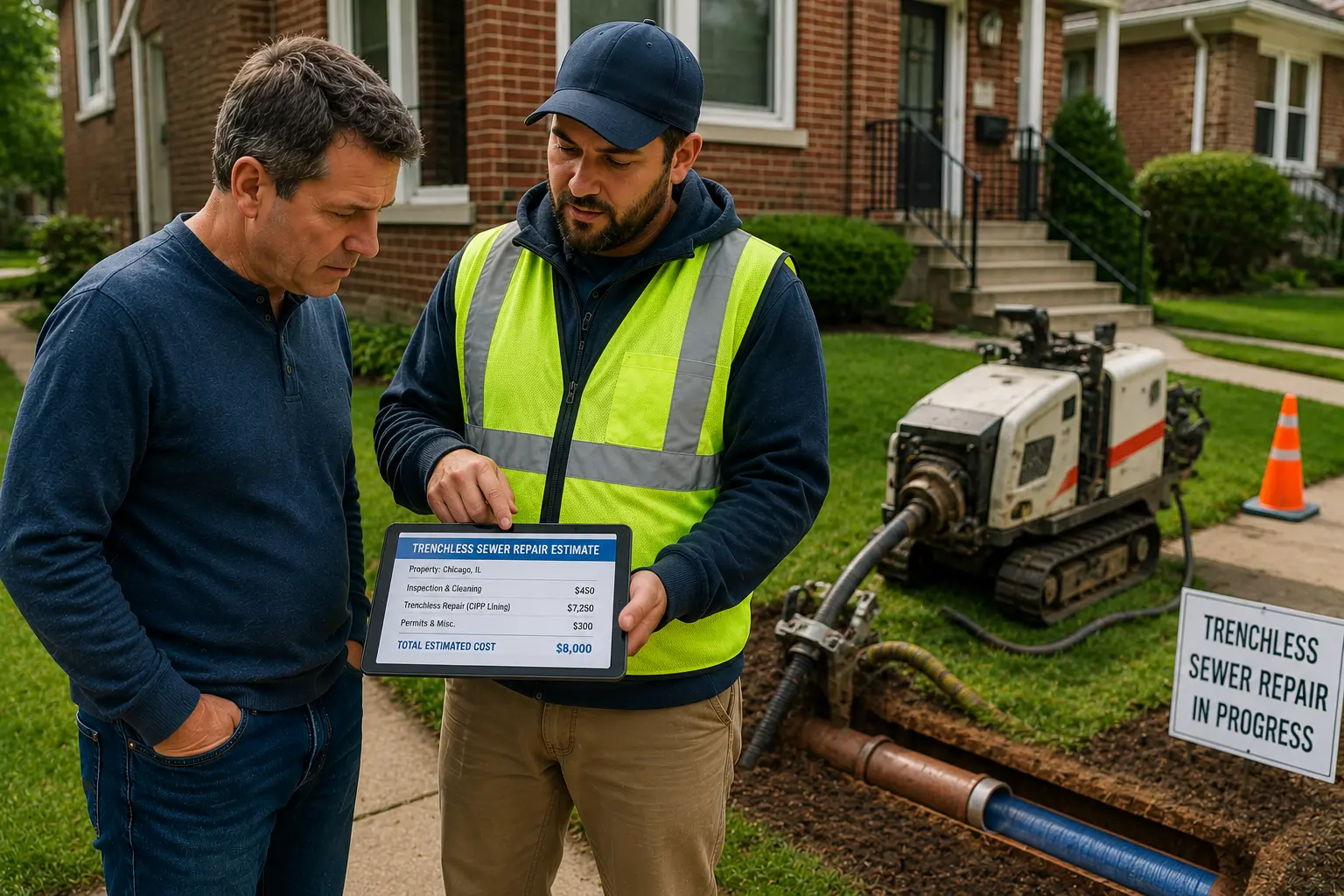
Trenchless sewer repair can be appealing for Chicago homeowners because it may reduce the amount of digging needed to fix or replace a damaged sewer line. Instead of opening a long trench across a yard, driveway, sidewalk, or basement area, trenchless methods may use smaller access points to repair the pipe from within or replace it with less surface disruption.
The cost of trenchless sewer repair in Chicago depends on the condition of the existing pipe, the repair method, the length of the damaged section, access points, pipe depth, cleaning requirements, inspection findings, and whether excavation is still needed at one or both ends of the line.
For many homeowners, trenchless repair is not automatically the cheapest option. Its real value is that it may reduce restoration costs, shorten disruption, and avoid tearing up hard-to-replace surfaces. This guide explains what affects trenchless sewer repair cost, when it makes sense, and when traditional excavation may still be necessary.
Key Takeaways
- Trenchless sewer repair cost in Chicago depends on pipe condition, repair method, access, pipe length, cleaning needs, and whether excavation is still required.
- Trenchless methods may reduce digging, but they are not suitable for every sewer line problem.
- Pipe lining, pipe bursting, and other trenchless methods have different cost structures and limitations.
- A sewer camera inspection is essential before deciding whether trenchless repair is realistic.
- Chicago properties may have older clay pipe, root intrusion, basements, sidewalks, parkways, alleys, tight lots, and concrete surfaces that affect the decision.
- The best option is the one that fits the pipe condition, not simply the one that sounds least disruptive.
How Much Does Trenchless Sewer Repair Cost in Chicago?
Trenchless sewer repair in Chicago is usually priced based on the specific method, the length of pipe being repaired, the condition of the existing sewer line, access requirements, cleaning needs, and whether any excavation is still needed. It is not always cheaper than traditional excavation, but it may reduce total disruption and restoration costs.
Trenchless methods can be more cost-effective when the sewer line runs under concrete, landscaping, sidewalks, driveways, or other surfaces that would be expensive to remove and replace. However, if the pipe is collapsed, severely bellied, badly misaligned, or has major slope problems, trenchless repair may not be suitable.
For a broader look at sewer project pricing, see the main Chicago sewer replacement cost guide.
Main Cost Sections for Trenchless Sewer Repair
Type of Trenchless Method
Different trenchless methods solve different problems. Pipe lining is often used to create a new interior surface inside the existing pipe. Pipe bursting may be used to replace an existing line by breaking the old pipe while pulling new pipe into place. Other spot repair methods may address a smaller section of pipe.
Each method has different equipment, preparation, labor, and material requirements. Homeowners should ask exactly which method is being proposed and why it fits the pipe condition.
Length of the Damaged Section
The amount of pipe being repaired affects the overall cost. A longer trenchless repair usually requires more liner, more preparation, more time, and more installation work. However, short trenchless repairs may still involve fixed costs for inspection, cleaning, equipment setup, access work, and curing or installation.
This is why a short repair can sometimes appear expensive on a per-foot basis. The total project scope matters more than the footage alone.
Pipe Condition
The existing pipe must be suitable for the trenchless method being used. Cracked pipe, root intrusion, and leaking joints may be good candidates in some situations. A fully collapsed pipe, severe belly, major offset, or poor slope may limit trenchless options.
If the pipe cannot support the method, trenchless repair may fail to solve the underlying problem. A proper camera inspection helps determine whether the line is a good candidate.
Cleaning and Preparation
Trenchless repair often requires the pipe to be cleaned before work begins. Roots, grease, scale, debris, and mineral buildup may need to be removed so the contractor can inspect the pipe clearly and prepare the surface.
Heavy root intrusion or buildup can add time and cost. If the pipe cannot be cleaned enough to complete the work properly, excavation or another repair method may be needed.
Access Points
Trenchless does not always mean no digging. Many projects still require access points, cleanouts, launch pits, receiving pits, or excavation near the damaged section. If the home lacks usable access, creating it may add to the project cost.
Chicago homes with basements, narrow gangways, finished landscaping, or limited exterior space may require more careful planning.
Restoration Savings
The biggest financial advantage of trenchless repair may be avoiding major surface restoration. If traditional excavation would require cutting a driveway, sidewalk, patio, basement slab, or landscaped area, trenchless repair may reduce the cost and disruption of replacing those surfaces.
Homeowners should compare total project cost, not just repair cost. A traditional excavation quote that does not include concrete or landscape restoration may look cheaper than it really is.
Trenchless Sewer Repair Cost Drivers
| Cost Driver | Why It Matters | Question to Ask |
|---|---|---|
| Repair method | Pipe lining, pipe bursting, and spot repairs require different materials and equipment. | Which trenchless method is being proposed and why? |
| Pipe length | Longer repairs usually require more material, labor, and installation time. | How many feet are included in the estimate? |
| Pipe condition | Collapse, bellies, offsets, and slope issues can limit trenchless options. | What did the camera inspection show? |
| Cleaning needs | Roots, grease, scale, or debris may need removal before repair. | Is cleaning included in the price? |
| Access points | Trenchless work may still require cleanouts, pits, or limited excavation. | Will any digging be required? |
| Surface restoration | Avoiding concrete, driveway, or landscaping restoration can affect overall value. | What restoration is included or avoided? |
| Permits and inspections | Some work may require permits or inspection coordination. | Who handles permits and inspection requirements? |
Chicago-Specific Considerations
Older Sewer Materials
Many Chicago homes have older sewer lines made from clay, cast iron, or a mix of materials from previous repairs. Clay pipe may crack or separate at joints. Cast iron may corrode or scale internally. Mixed-material transitions can create weak points.
Trenchless repair may be possible in some older lines, but the existing pipe must be stable enough for the proposed method. If the pipe has lost shape, collapsed, or shifted severely, excavation may still be required.
Tree Roots and Parkway Trees
Root intrusion is common in older residential sewer lines. Mature trees along streets, parkways, and lots can send roots into cracked or separated pipe joints. Cleaning may remove the roots temporarily, but the opening remains unless the pipe is repaired.
Pipe lining may help seal certain cracks and joints when the pipe is otherwise suitable. If roots have entered through multiple failed sections or the pipe is collapsing, a more extensive solution may be needed.
Basements and Interior Access
Many Chicago homes have basements, and sewer problems may show up first through floor drain backups, laundry tub backups, or lower-level fixtures. Some trenchless work may require access from a cleanout or basement area, depending on the layout.
Homeowners should ask whether any interior work is required and how the contractor plans to protect finished spaces.
Sidewalks, Driveways, Alleys, and Tight Lots
Chicago properties often have narrow side yards, sidewalks, alleys, parkways, porches, fences, and paved surfaces. These conditions can make traditional excavation more disruptive and may make trenchless repair more attractive.
However, tight access can also make trenchless setup more complicated. The estimate should explain where equipment will be staged and where access points will be created.
Permits and Local Requirements
Depending on the scope and location of the work, sewer repair may involve permits, inspections, or coordination with local requirements. Homeowners should ask whether the quote includes permit costs and who is responsible for scheduling inspections.
Trenchless Repair vs Traditional Excavation
Trenchless repair and traditional excavation solve sewer problems in different ways. Traditional excavation opens the ground to expose the pipe directly. Trenchless repair attempts to repair or replace the pipe with less digging.
Neither option is automatically better. Traditional excavation may be necessary when the pipe is collapsed, severely misaligned, or has slope problems. Trenchless repair may make more sense when the pipe is structurally suitable and excavation would be highly disruptive.
| Option | Potential Advantage | Potential Limitation |
|---|---|---|
| Pipe lining | May rehabilitate damaged pipe with limited digging. | May not fix collapse, major bellies, or severe offsets. |
| Pipe bursting | May replace the pipe while reducing full-length trenching. | Still requires access points and suitable site conditions. |
| Traditional excavation | Allows direct removal and replacement of damaged pipe. | Can disturb yards, concrete, sidewalks, or landscaping. |
| Spot repair | Can address one localized problem. | May not solve deterioration elsewhere in the line. |
Important Homeowner Note
Trenchless repair should be chosen because it matches the sewer line’s condition, not only because it sounds less invasive. The camera inspection should support the method being recommended.
Repair vs Replacement Considerations
Trenchless repair often sits between a small repair and a larger replacement decision. It may help homeowners avoid major excavation while addressing a damaged section of sewer line. But it is not a substitute for replacement when the pipe has widespread structural failure.
Trenchless Repair May Make Sense When
- The pipe has cracks, root entry points, or joint problems but is still structurally suitable.
- The damaged section runs under concrete, landscaping, or another difficult-to-restore surface.
- The line has enough access for equipment and installation.
- The pipe does not have major slope problems or severe collapse.
- The homeowner wants to reduce digging and surface disruption.
Traditional Replacement May Make More Sense When
- The pipe has collapsed or lost its shape.
- The line has a severe belly that holds standing water.
- The pipe has major offsets or poor slope.
- Several sections are deteriorated beyond repair.
- Access points for trenchless work are not practical.
- Inspection findings show that lining or trenchless replacement would not solve the issue.
If excavation is likely, review sewer line excavation cost factors so you understand why digging can raise the total price.
What Should Be Included in a Trenchless Sewer Repair Estimate?
A trenchless sewer repair estimate should explain the method, the inspection findings, and what preparation is required. A vague estimate makes it hard to know whether the proposed method fits the sewer line.
Before approving trenchless work, homeowners should ask whether the estimate includes:
- The specific trenchless method being used
- The length of pipe being repaired or replaced
- Camera inspection findings
- Pipe cleaning and root removal
- Access point creation or excavation
- Pipe material or liner details
- Permits and inspection requirements
- Testing or post-repair camera verification
- Cleanup and debris removal
- Surface restoration for any access points
- Conditions that could require excavation instead
For a closer look at one common trenchless method, read Sewer Pipe Lining Cost in Chicago: Is It Worth the Investment?.
Common Mistakes and Warning Signs
Mistake: Assuming Trenchless Means No Digging
Trenchless repair usually means less digging, not zero digging. Access points, cleanouts, pits, or limited excavation may still be required.
Mistake: Choosing Trenchless Without Inspection Evidence
A camera inspection should confirm that the pipe is suitable. Without inspection evidence, homeowners may not know whether the line has collapse, major offsets, or standing water that could limit trenchless options.
Mistake: Comparing Trenchless and Excavation Quotes Unequally
A traditional excavation quote may look cheaper if it excludes concrete, landscaping, or driveway restoration. Compare the total finished project, not only the repair portion.
Mistake: Treating Pipe Cleaning as a Permanent Repair
Cleaning can remove roots and debris, but it does not seal cracks or rebuild damaged pipe. If backups keep returning, the line may need a more permanent repair.
Mistake: Ignoring Financing Until the Problem Is Urgent
Trenchless repair can still be a significant expense. If cost is a concern, it may help to understand sewer replacement financing options for Chicago homeowners before an emergency backup forces a rushed decision.
Warning Signs That May Require Sewer Repair or Replacement
- Recurring backups after rodding or cleaning
- Tree roots repeatedly removed from the sewer line
- Basement floor drain backups
- Multiple fixtures draining slowly at the same time
- Gurgling toilets or drains
- Sewage odors inside or outside the home
- Camera inspection showing cracks, offsets, standing water, or collapse
- Wet, sunken, or soft areas in the yard
Decision Point
Trenchless repair may be a strong option when the pipe is damaged but still structurally suitable. If the line is collapsed, badly sagging, or improperly sloped, excavation may be the more reliable solution.
FAQ About Trenchless Sewer Repair Cost in Chicago
Is trenchless sewer repair cheaper than excavation?
Sometimes, but not always. Trenchless repair may reduce restoration costs when the sewer line runs under concrete, landscaping, sidewalks, or driveways. However, specialized equipment, preparation, cleaning, and access work can still make it a major project.
What affects trenchless sewer repair cost the most?
The biggest factors are the repair method, pipe length, pipe condition, access points, cleaning needs, inspection findings, and whether any excavation or restoration is still required.
Do I need a sewer camera inspection before trenchless repair?
Yes. A camera inspection helps determine whether the pipe is suitable for trenchless repair. It can reveal roots, cracks, offsets, standing water, collapse, bellies, and slope issues that affect the repair method.
Can trenchless sewer repair fix a collapsed pipe?
Usually not if the pipe is severely collapsed or has lost its shape. Some trenchless methods require the existing pipe path to be usable. A collapsed or badly misaligned line may require excavation.
Will homeowners insurance cover trenchless sewer repair?
Coverage depends on the policy, the cause of damage, and whether the homeowner has sewer backup or service line coverage. Many policies exclude wear and tear, deterioration, and long-term root intrusion, so homeowners should confirm coverage directly with their insurer.
What Chicago-specific issues affect trenchless sewer repair?
Older clay pipe, cast iron sections, mature tree roots, narrow lots, basements, sidewalks, driveways, alleys, parkways, and permit requirements can all affect whether trenchless repair is possible and how much it costs.
Is pipe lining the same as trenchless sewer repair?
Pipe lining is one type of trenchless sewer repair. It creates a new interior surface inside the existing pipe. It may be useful for certain cracks, leaks, and root entry points, but it is not suitable for every damaged sewer line.
Conclusion
Trenchless sewer repair cost in Chicago depends on the method, pipe condition, access, length, cleaning requirements, permit needs, and any excavation or restoration that remains necessary. It can reduce disruption in the right situation, especially when traditional excavation would disturb concrete, landscaping, sidewalks, or basement areas.
However, trenchless repair is not automatically cheaper or better. The existing sewer line must be suitable for the method, and the decision should be based on camera inspection findings rather than convenience alone.
For Chicago homeowners, the goal is to compare the total project scope and long-term reliability. A well-explained trenchless estimate should make clear what problem is being solved, why the method fits the pipe, and what costs are included before work begins.