Chicago Permits, Codes & Local Rules

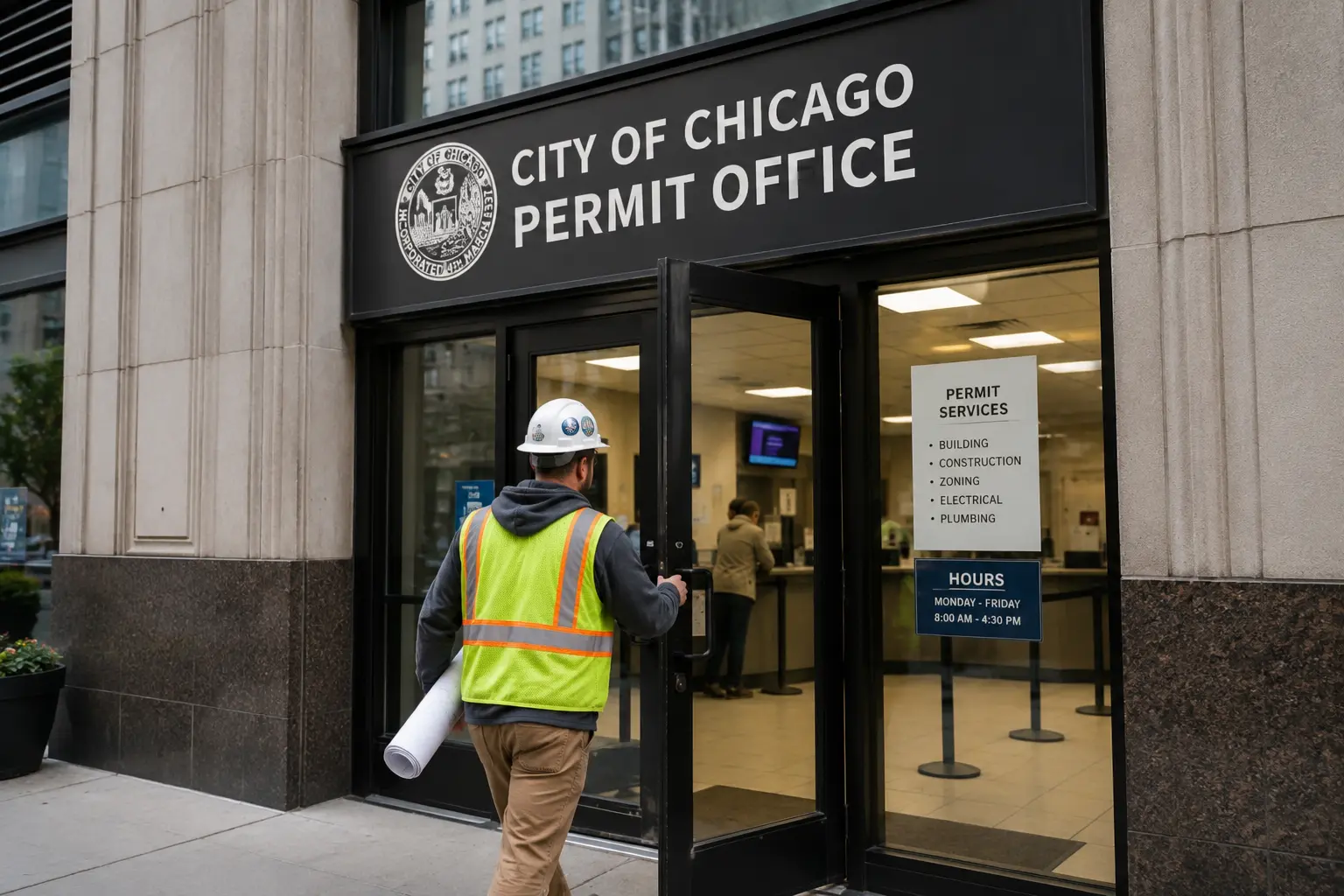
Construction worker carrying plans enters a Chicago permit office before beginning a residential sewer repair project.

Chicago Sewer Repair Permits: What Homeowners Need to Know

Many Chicago homeowners are surprised to learn that sewer repair work often requires permits before excavation, replacement, or major repairs can begin. Whether the project involves a damaged private sewer line, a repair near a public sidewalk, or work that connects to the city sewer system, permit requirements can affect project timelines, inspections, and overall […]
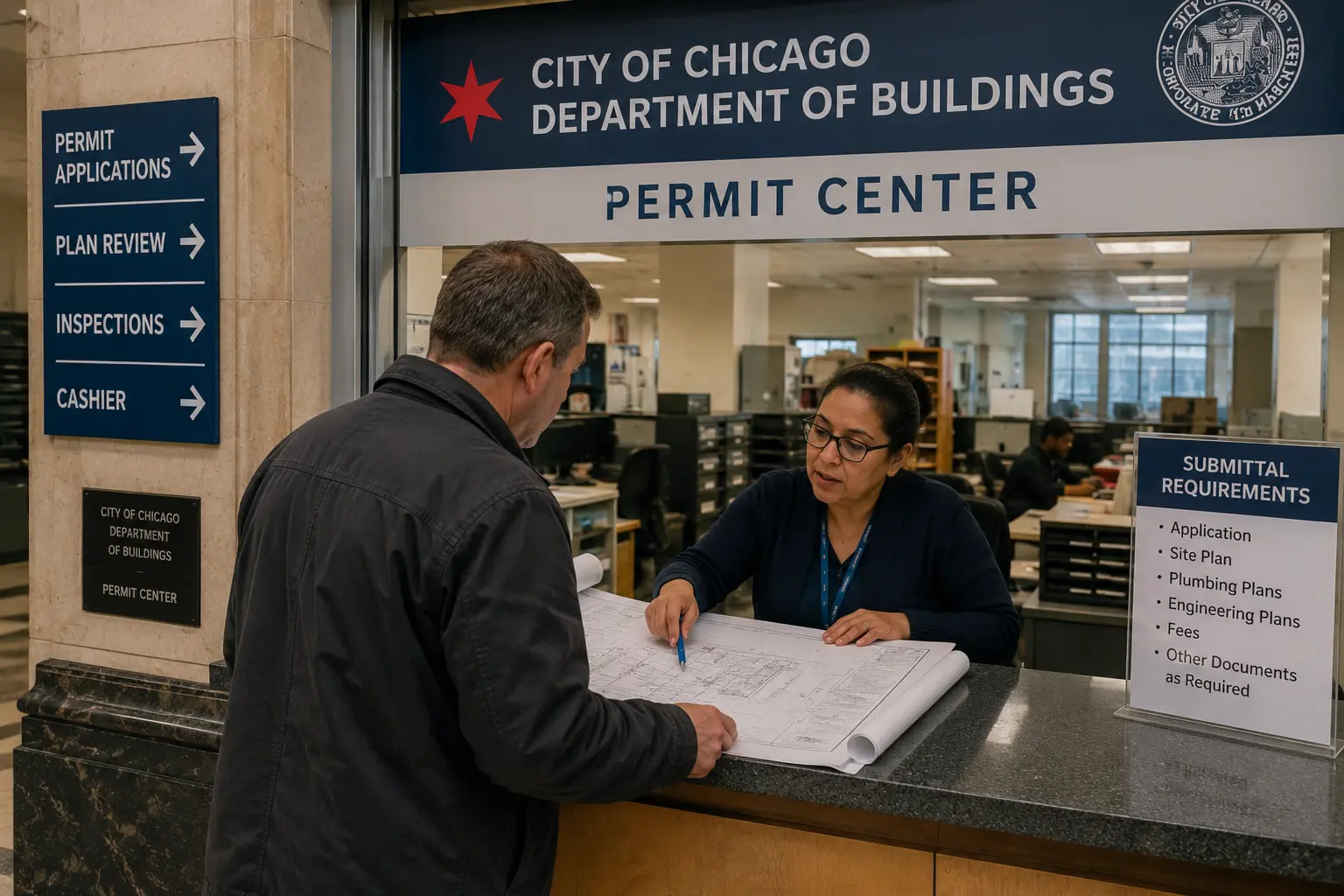
Property owner reviews sewer replacement permit documents with a City of Chicago permit office employee before a residential sewer project.

Chicago Sewer Replacement Permit Requirements

Replacing a sewer line in Chicago is a major project that often involves excavation, inspections, city regulations, and significant costs. One of the most important steps that homeowners frequently overlook is understanding permit requirements before work begins. In most cases, sewer line replacement projects require permits in Chicago. These permits help ensure that work complies

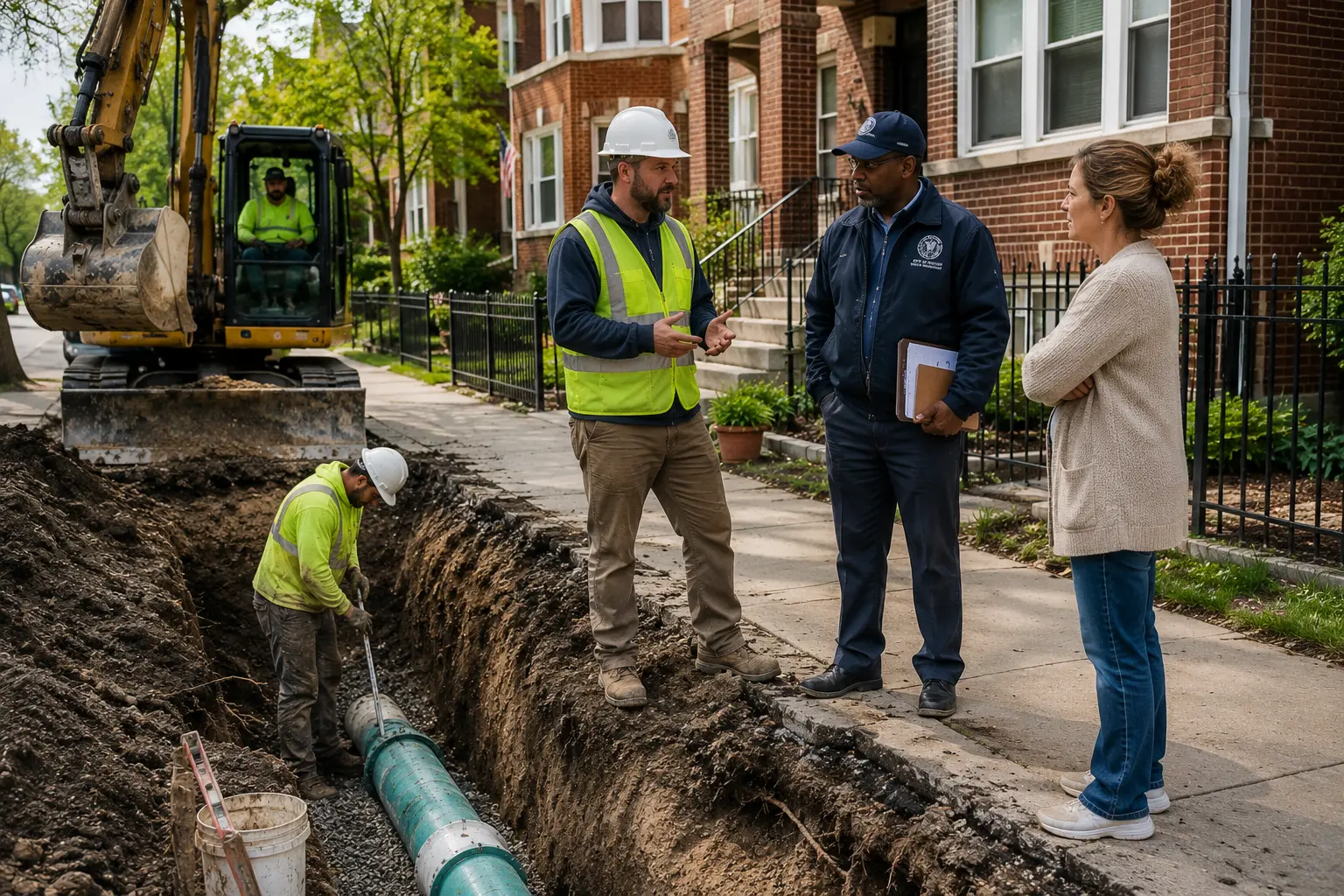
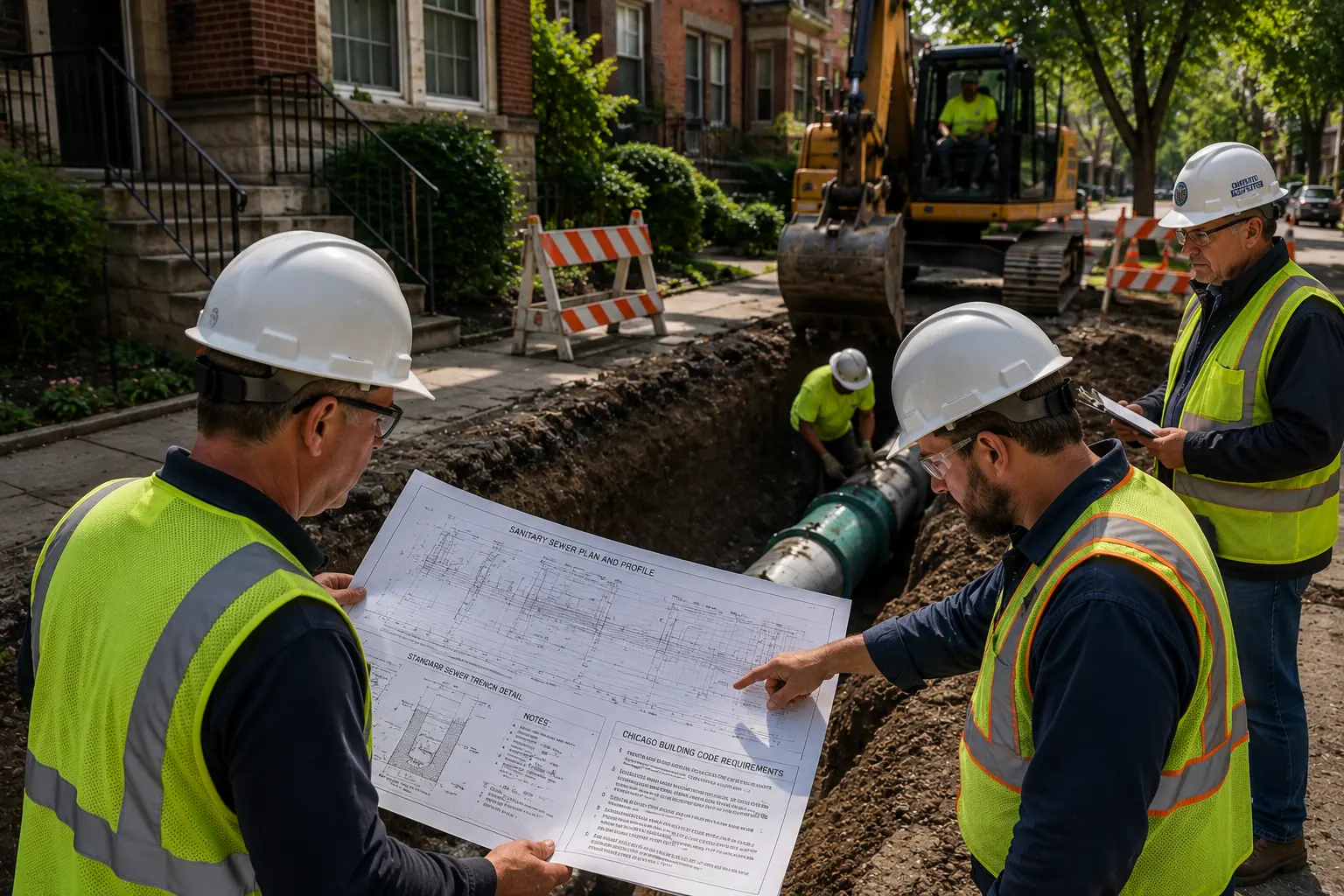
Construction supervisors review sewer installation plans beside an active trench while workers install a sewer line in a Chicago residential neighborhood.

Sewer Work and Chicago Building Code Explained

Sewer work in Chicago is not just a matter of digging up a pipe and replacing what is broken. Many sewer repairs, replacements, connections, and drainage changes must comply with Chicago building code requirements, plumbing rules, permit procedures, and inspection standards. For homeowners, the most important point is simple: if sewer work changes, replaces, extends,

Homeowner, city representative, and sewer contractor observe an active private sewer repair project in front of a Chicago residential property

Understanding Chicago’s Private Drain Program

Chicago’s Private Drain Program can be confusing because it sits between private homeowner responsibility and city sewer infrastructure. Many homeowners first hear about it after a sewer backup, repeated rodding, a camera inspection, or a contractor saying the problem may be under the public way. The most important thing to understand is that the program

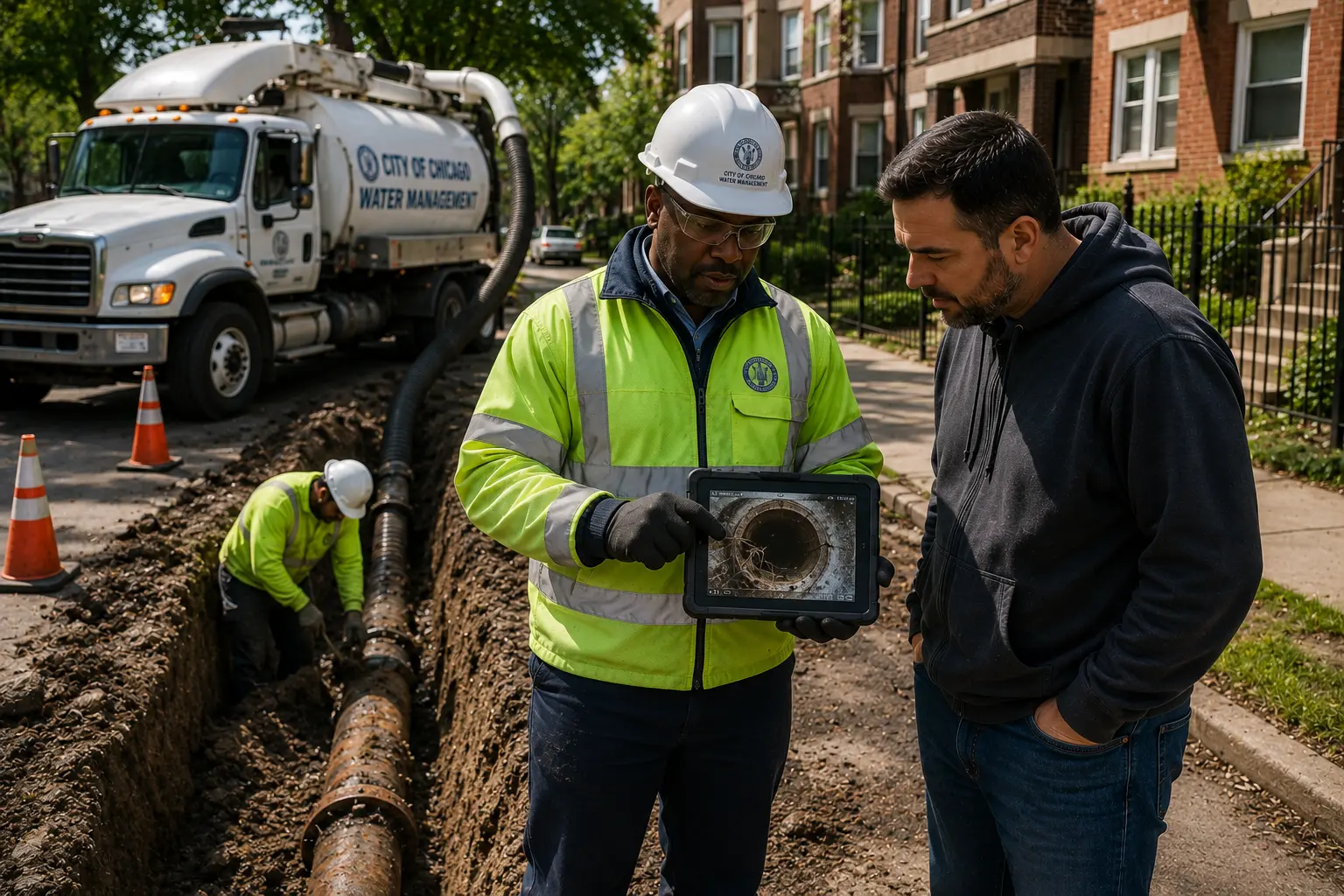
Chicago Water Department representative reviews sewer camera inspection findings with a homeowner beside an active sewer excavation in a residential neighborhood.

Common Chicago Water Department Sewer Issues

Chicago homeowners often do not know when a sewer issue is a private plumbing problem, a city sewer concern, or something that should be reported through the Chicago Water Department or 311. That confusion is understandable because sewer symptoms inside the home can sometimes be caused by private lateral problems, public sewer main issues, heavy

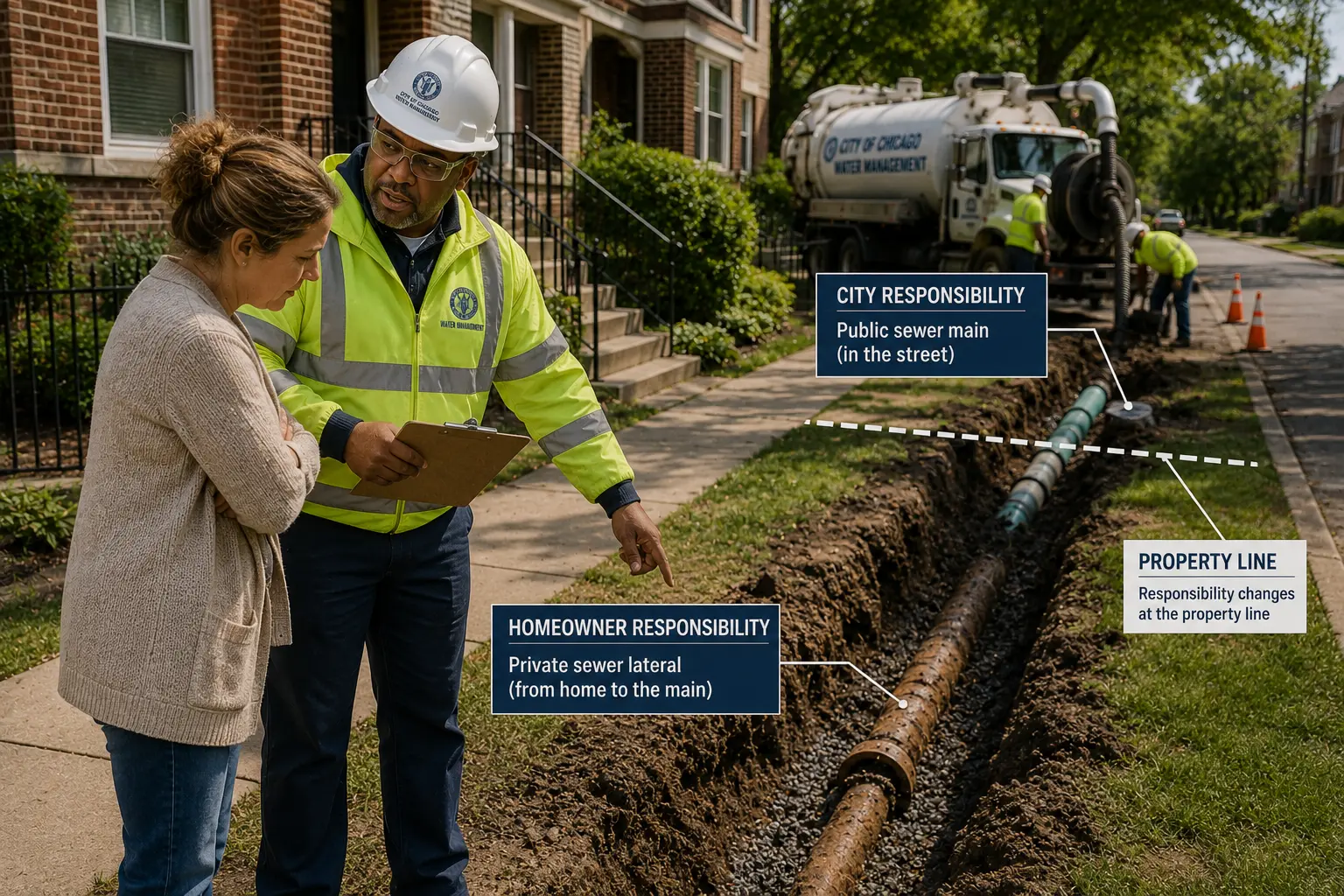
Chicago Water Department representative explains sewer line ownership and maintenance responsibility to a homeowner beside an exposed sewer line excavation.

Who Is Responsible for Sewer Lines in Chicago?

When a sewer line backs up, cracks, collapses, or needs replacement, one of the first questions Chicago homeowners ask is who is responsible for fixing it. The answer depends on where the problem is located, what part of the sewer system is affected, and whether the issue involves a private sewer lateral, public sewer main,

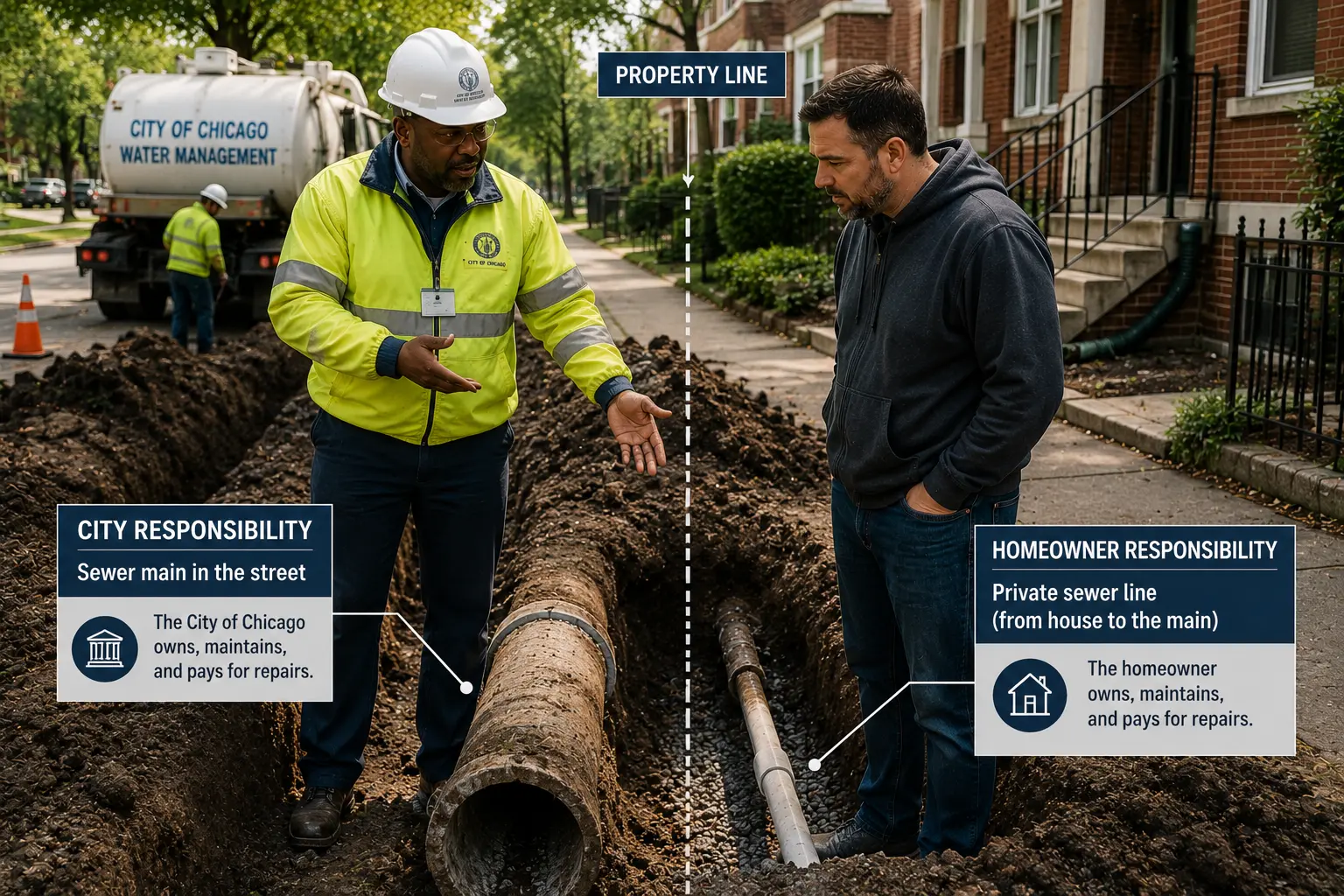
Chicago Water Department representative and homeowner stand beside exposed city and private sewer lines illustrating where financial responsibility changes.

City Sewer Main vs Private Sewer Line: Who Pays?

When a sewer problem appears in a Chicago home, the biggest financial question is often not how bad the damage is. It is who has to pay for it. A sewer backup, collapsed pipe, or repeated clog may involve a private sewer line, the city sewer main, a public-way defect, or a combination of issues

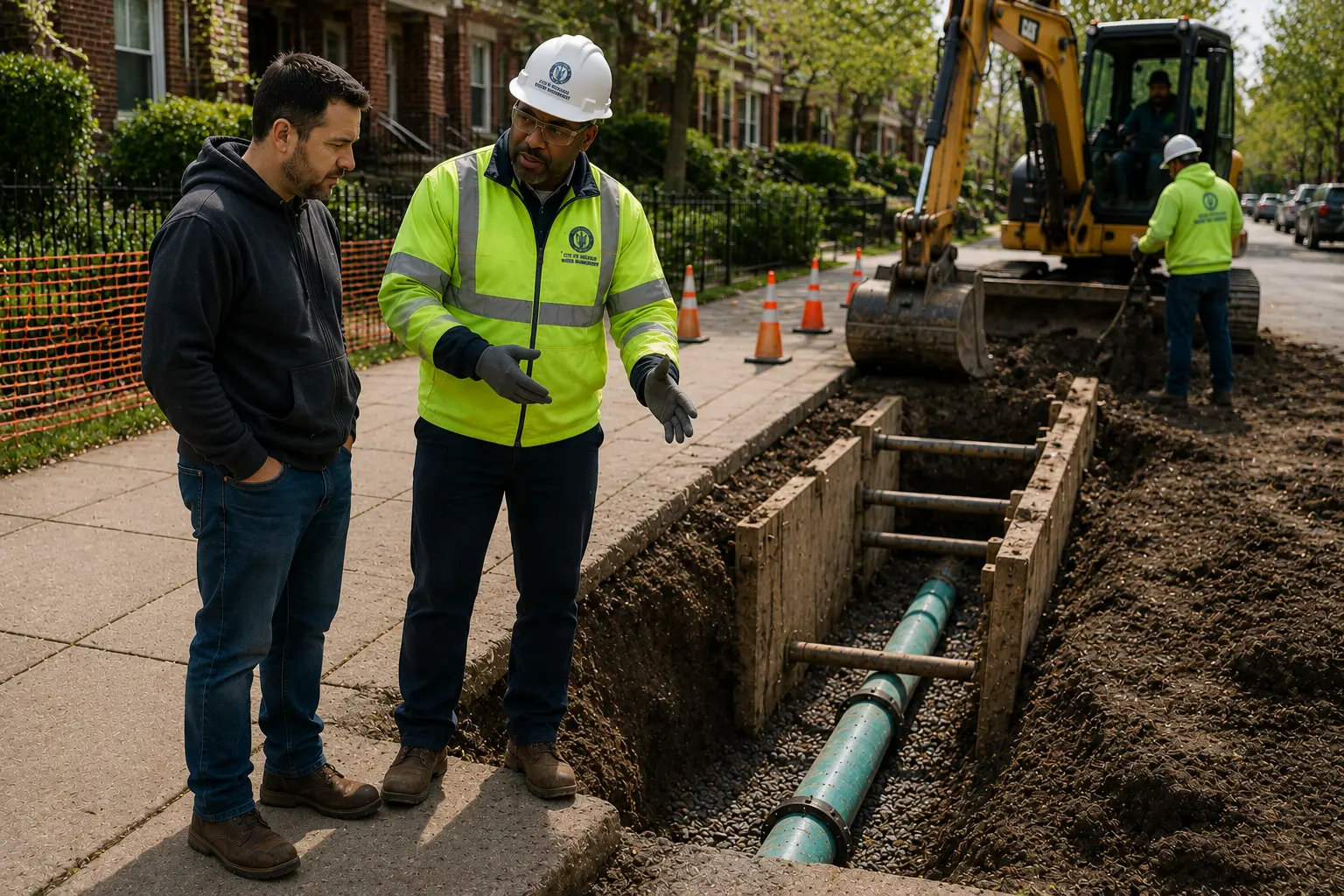
Workers perform sewer line repairs in a trench running directly alongside a residential Chicago sidewalk while excavation equipment operates nearby.

Sewer Repair Near Sidewalks in Chicago

Sewer repair near a sidewalk in Chicago can be more complicated than a repair in a basement, yard, or gangway. The pipe may still be part of the private sewer line, but the location of the problem can involve public-way rules, sidewalk restoration, permits, inspections, access issues, and possible city review. For homeowners, the most

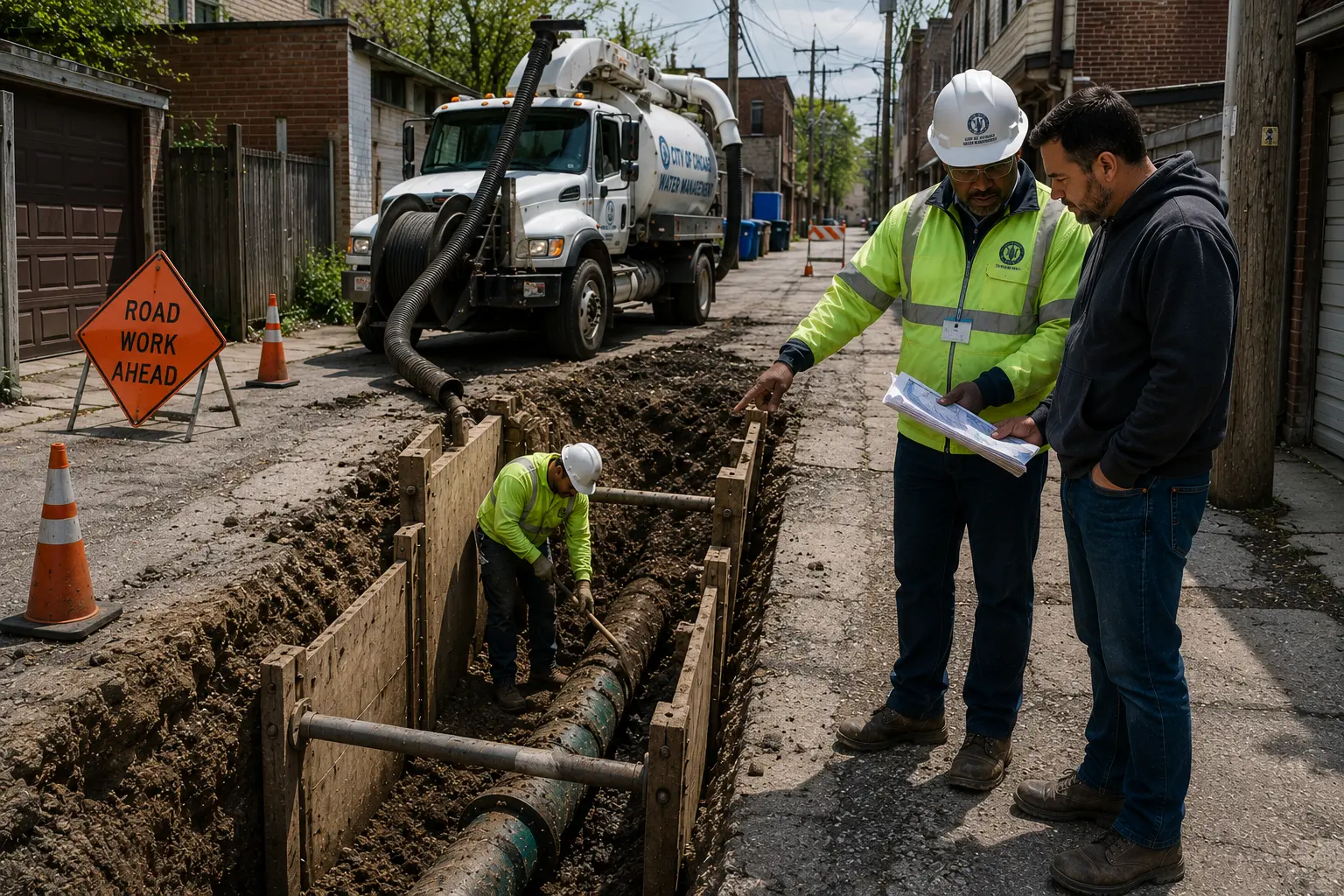
Workers repair a sewer line in a trench excavated through a Chicago alley while utility equipment and construction crews operate around the work zone.

Sewer Repair Near Streets and Alleys in Chicago

Sewer repair near streets and alleys in Chicago can be more complex than a typical private-yard repair. The damaged pipe may still be part of the homeowner’s private sewer line, but the location of the work can involve public right-of-way rules, city coordination, permits, inspections, access restrictions, pavement restoration, and questions about who should pay.

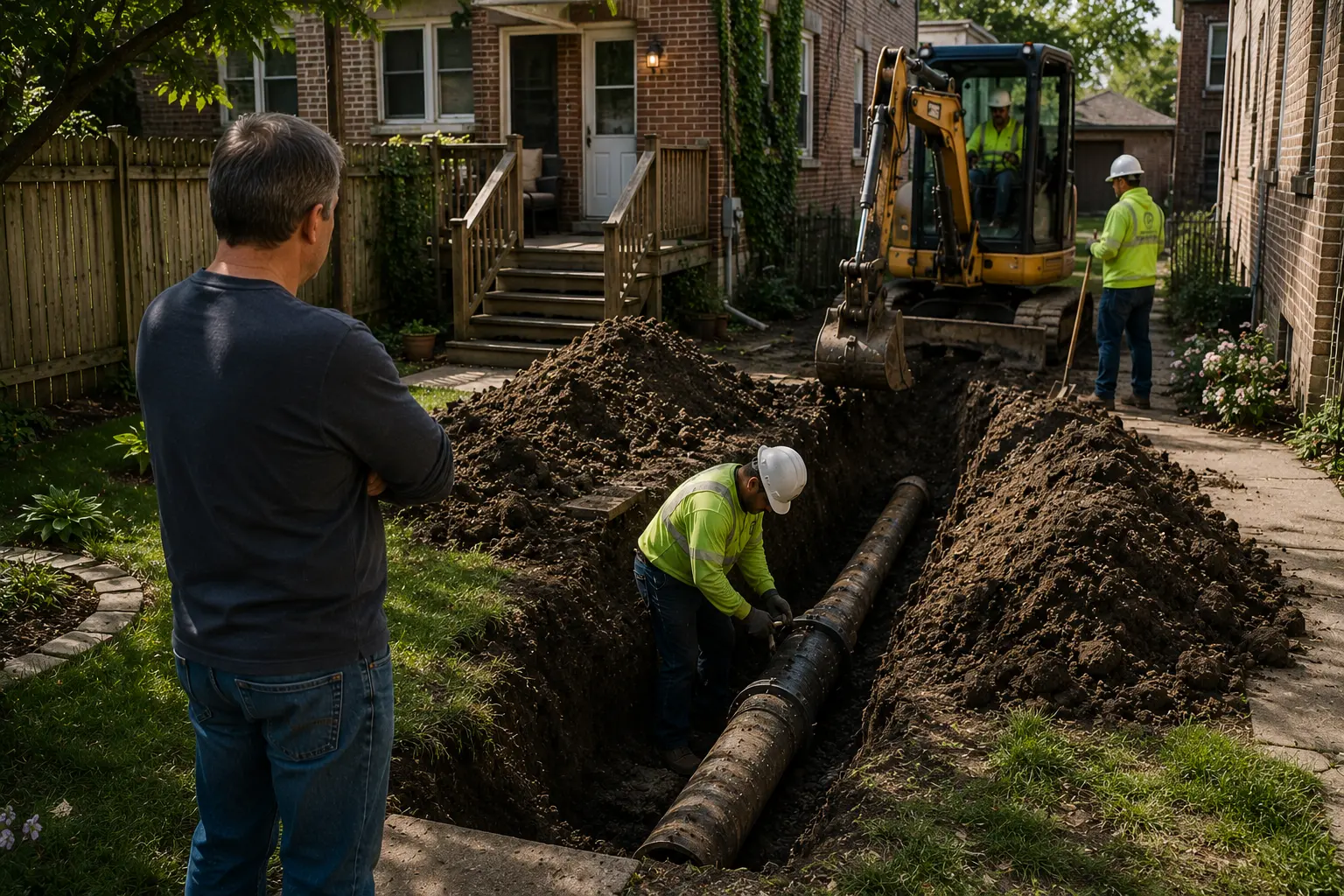
Contractors access and repair a sewer line crossing a Chicago homeowner's backyard while the property owner observes the excavation from a nearby lawn.

Understanding Sewer Line Easements in Chicago

Sewer line easements can create confusion for Chicago homeowners because the pipe serving a property may not always run in the most obvious place. A sewer line may cross a side yard, rear yard, shared gangway, neighboring parcel, alley area, or other access route before reaching the public sewer system. When that happens, repair decisions

Scroll to Top