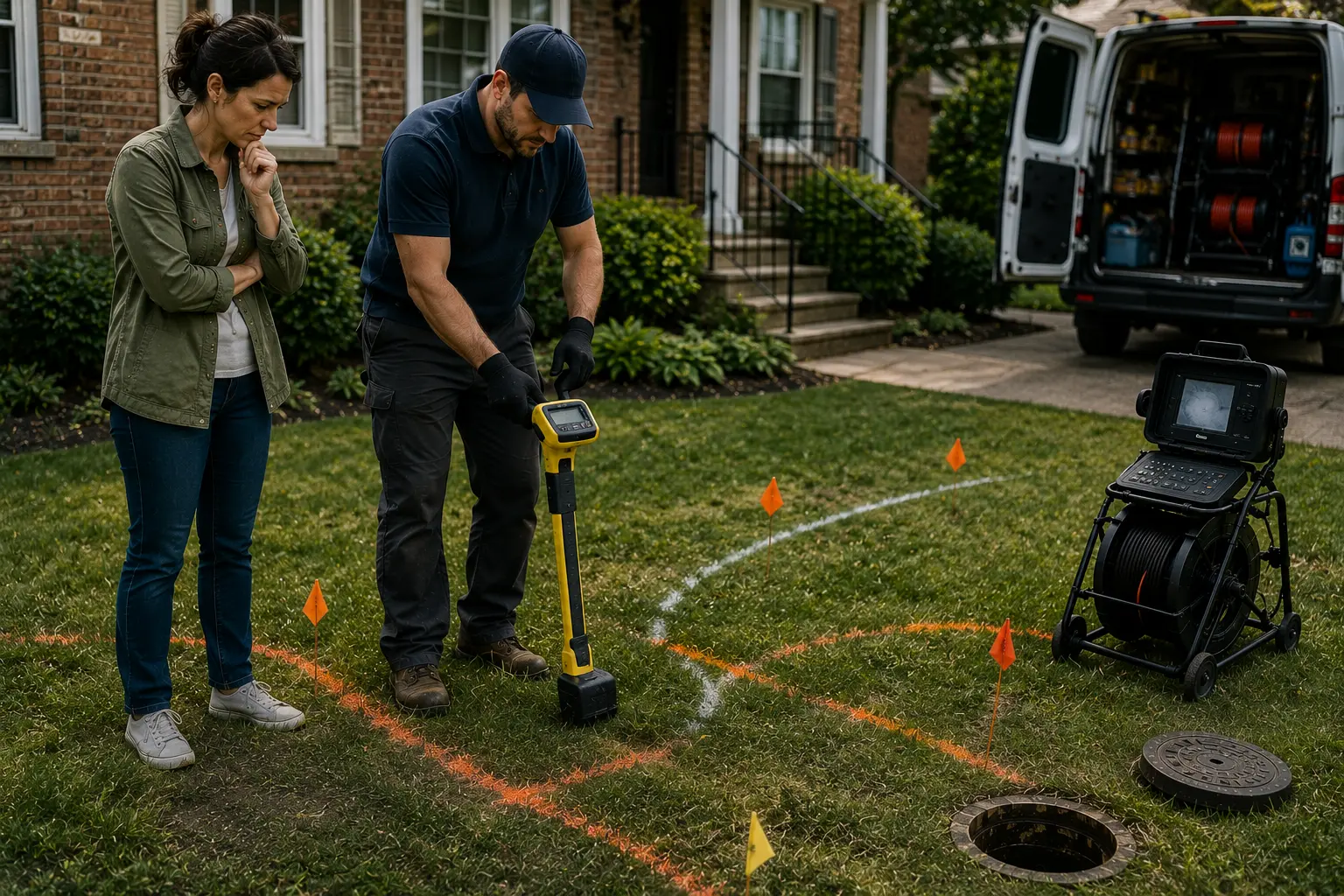
Finding a sewer line under your yard is not always as simple as looking for a straight path from the house to the street. Sewer lines can run toward the front, back, side, alley, or another connection point depending on how the property was built, where the public sewer is located, and whether repairs or modifications were made over time.
For Chicago homeowners, locating a sewer line can be especially important before sewer repairs, landscaping, driveway work, garage construction, home additions, or major excavation. Many Chicago properties have older sewer lines, narrow side yards, basements, sidewalks, parkways, mature trees, and prior repairs that can make the pipe route less obvious.
The safest and most reliable way to find a sewer line is usually through a combination of property clues, cleanout locations, records, camera inspection, and electronic locating equipment. Guessing can lead to wrong assumptions, unnecessary digging, or damage to underground utilities.
For more homeowner guidance on sewer diagnosis and inspection methods, visit the Sewer Inspections & Diagnosis hub.
Key Takeaways
- A sewer line does not always run in a straight line from the house to the street.
- Cleanouts, basement plumbing, property records, and sewer camera inspections can help identify the pipe route.
- Electronic locating equipment can often mark the sewer line and identify the approximate location of defects.
- Chicago homes may have sewer lines that run toward streets, alleys, parkways, or less obvious connection points.
- Finding the sewer line before digging, landscaping, or repairs can prevent costly mistakes.
- Homeowners should avoid exploratory digging without proper utility marking and locating support.
The Most Reliable Way to Locate a Sewer Line
The most reliable way to find a sewer line under your yard is to use a sewer camera with electronic locating equipment. The camera is sent through the pipe, and a locator detects the camera head from above ground. This can help trace the sewer route and identify the approximate location of defects, access points, or connection areas.
Homeowners can look for clues such as cleanouts, basement drain direction, past repair records, and property plans, but professional locating is usually needed when accuracy matters for repairs, excavation, or construction planning.
Why Homeowners Need to Find a Sewer Line
Homeowners may need to locate a sewer line for several practical reasons. Sometimes the goal is to diagnose a problem. Other times, the homeowner needs to avoid damaging the pipe during a project.
Common reasons include:
- Planning sewer repair or replacement
- Locating the source of a sewer backup
- Finding a damaged section identified during inspection
- Preparing for excavation
- Installing a patio, driveway, fence, garage, or addition
- Planning landscaping or tree removal
- Confirming the sewer route before buying a home
- Understanding whether the line runs under concrete, yard, or structures
If the issue is related to an inspection finding, Sewer Line Depth and Location Explained provides additional context on why both depth and route matter.
Start With Visible Clues Around the Property
Before any equipment is used, homeowners can often gather useful clues by looking around the property. These clues may not confirm the full sewer route, but they can help narrow the likely direction.
Look for Sewer Cleanouts
A sewer cleanout is an access point that allows a camera or cleaning equipment to enter the sewer line. It may appear as a capped pipe in the basement, yard, side gangway, front lawn, back yard, or near the foundation.
Cleanouts may be metal, PVC, cast iron, or older materials. Some are flush with the ground, while others extend slightly above the surface. In older homes, the cleanout may be inside the basement rather than outside.
Check Basement Plumbing Direction
In homes with basements, the location of floor drains, main stacks, laundry drains, or old cleanouts may suggest where the sewer exits the house. This is only a clue, not proof, because pipes can turn underground.
Look for Past Repair Marks
Patchwork in concrete, disturbed landscaping, newer sections of sidewalk, or old excavation scars may suggest where past sewer work occurred.
Consider the Street, Alley, and Public Sewer Location
Many homeowners assume the sewer line runs toward the street. In some Chicago properties, however, the line may route toward an alley or another connection point. Local property layout matters.
Use Property Records When Available
Property records may sometimes help identify the general sewer route, but homeowners should treat them as a starting point rather than a guarantee. Older records may be incomplete, outdated, or inconsistent with later repairs.
Potential sources of information include:
- Property survey documents
- Permit history
- Past sewer repair invoices
- Home inspection reports
- Sewer scope reports from prior owners
- Building plans or renovation documents
- Municipal records when available
Records are most useful when combined with on-site verification. A drawing or invoice may indicate that work was performed, but it may not show the exact current route, depth, or condition of the line.
How Sewer Camera Locating Works
Sewer camera locating is one of the most useful methods for finding a sewer line under a yard. A camera is inserted into the sewer line through a cleanout or other access point. As the camera moves through the pipe, the operator can watch the video and track distance.
Many camera heads include a transmitter. When the camera reaches a key point, a receiver above ground can detect the signal. This allows the operator to mark the approximate surface location of the camera.
This process may help identify:
- The sewer line route
- The location of root intrusion
- The location of a cracked or collapsed section
- The distance from the access point to a defect
- Whether the line runs under yard, concrete, sidewalk, or structure
- Approximate depth at specific points
For more detail on the inspection process, see Sewer Camera Inspection in Chicago: What Homeowners Should Know.
Common Sewer Line Locating Methods
Different methods may be used depending on the goal, access, and property conditions. Some are useful for broad clues, while others are better for repair planning.
| Method | What It Can Help Find | Limitations |
|---|---|---|
| Visual property clues | Possible cleanout locations, pipe direction, past repair areas | Cannot confirm the full underground route |
| Property records | General layout, past repair history, possible sewer routing | May be outdated, incomplete, or inaccurate |
| Sewer camera inspection | Pipe condition and distance to defects | May not provide surface location without locating equipment |
| Electronic camera locating | Approximate surface location and route of the sewer line | Accuracy depends on access, equipment, depth, and site conditions |
| Utility marking | Public utility locations before digging | May not fully locate private sewer laterals on the property |
| Exploratory digging | Physical pipe confirmation | Risky, disruptive, and should not be the first step |
For a closer look at professional locating, see Sewer Line Locating Services: What to Expect.
Chicago-Specific Sewer Line Location Considerations
Chicago properties often have factors that make sewer locating more complicated than homeowners expect.
Street Versus Alley Routing
Depending on the neighborhood and property layout, the sewer line may run toward the street, alley, or another connection point. The route may not match the most obvious visual path.
Basements and Lower-Level Plumbing
Many Chicago homes have basements with floor drains, laundry connections, utility sinks, and bathrooms. The location of these fixtures may provide clues, but older plumbing layouts may include turns and transitions that are not visible.
Side Gangways and Narrow Lots
Older city lots may have tight side access, fences, stairs, utility lines, and neighboring structures. This can affect where sewer lines were installed and how easily they can be accessed.
Sidewalks, Parkways, and Driveways
Sewer lines may run under concrete or public-facing areas. If a defect is located under a sidewalk or parkway, repair planning may involve added coordination, permits, and restoration considerations.
Older Pipe Materials
Clay tile, cast iron, and mixed-material sewer lines are common in older homes. A camera inspection may reveal transitions between materials, which can also help identify past repair locations.
Chicago homeowner tip: Do not assume the sewer line runs in a straight line from the basement to the front curb. Older homes, past repairs, alleys, and unusual lot layouts can create unexpected routes.
How Finding the Sewer Line Helps With Repairs
Knowing where the sewer line is located helps homeowners understand the real-world impact of a repair. A camera may show the defect, but locating tells you what is above it.
For example, a damaged section may be:
- In open yard space
- Under a sidewalk
- Under a driveway
- Below a patio
- Near a mature tree
- Under a basement slab
- Close to the public sewer connection
- Below landscaping or retaining walls
These details influence access, excavation, restoration, repair method, scheduling, and cost. A defect under open soil may involve a very different decision than a similar defect under a garage slab.
Cost Factors Related to Sewer Line Locating
The cost of locating a sewer line can vary depending on the method used, access conditions, property layout, and whether the locating is part of a camera inspection or separate service.
Important cost factors include:
- Whether there is an accessible cleanout
- Whether a camera inspection is needed
- Whether electronic locating is included
- How much of the line must be traced
- Whether the camera can pass through the pipe
- Whether heavy roots or blockages limit access
- Whether depth estimates are needed
- Whether written documentation or markings are provided
Repair-related cost factors can also depend on what the locating reveals, including pipe depth, concrete removal, yard restoration, and whether the line runs under difficult access areas.
Finding the Sewer Line Before Landscaping or Construction
Homeowners should consider locating the sewer line before major yard projects. This is especially true when installing anything that could block future sewer access or be expensive to remove later.
Projects where sewer locating may be useful include:
- Driveway replacement
- Patio installation
- Garage construction
- Home additions
- Fence installation
- Retaining walls
- Tree planting or removal
- Major landscaping changes
- Outdoor drainage work
Knowing the sewer route in advance can help avoid building over a problem area or placing trees too close to a vulnerable pipe.
Safety and Utility Marking Before Digging
Homeowners should never dig blindly in an attempt to find a sewer line. Underground areas may contain gas, electric, water, communication, drainage, and sewer infrastructure. Striking a utility can be dangerous and expensive.
Before excavation, homeowners should follow proper utility marking procedures and understand that public utility marking may not identify every private line on the property. Private sewer lateral locating may require separate evaluation.
Safety reminder: Locating a sewer line for planning purposes is different from digging to expose it. Any excavation should be approached carefully, with proper utility marking and qualified support when needed.
Related Diagnostic Tools
Sometimes finding the sewer line is only part of the diagnostic process. Depending on the issue, other methods may be needed.
Sewer Camera Inspection
A sewer camera shows the inside of the pipe and can help identify roots, cracks, offsets, bellies, buildup, or collapse. See What Does a Sewer Camera Inspection Show?.
Smoke Testing
Smoke testing may be used for certain sewer gas, venting, leak, or improper connection concerns. It is not the same as locating the physical sewer route. More detail is available in Sewer Line Smoke Testing Explained.
Dye Testing
Dye testing may help trace water movement or confirm drainage connections in specific situations. It is useful for flow questions but does not replace camera locating.
Common Mistakes Homeowners Make
Assuming the Line Runs Straight
Sewer lines can turn underground. The pipe may not follow the shortest or most obvious route to the street.
Relying Only on Old Records
Records may be useful, but older properties may have undocumented repairs or changes. On-site verification is often needed.
Digging Without Utility Marking
Exploratory digging without proper marking can be dangerous and may damage underground utilities.
Confusing Distance With Location
A report that says a defect is 50 feet from the cleanout does not automatically tell you where it is under the yard. Surface locating may still be needed.
Ignoring Depth
Knowing the route is helpful, but knowing the approximate depth can also matter for repair planning and excavation difficulty.
Accepting Vague Locating Information
If repairs are being discussed, the location should be clear enough to support estimates. If the inspection seems incomplete, review Signs a Sewer Inspection Was Done Poorly.
Frequently Asked Questions
Can I find my sewer line myself?
You may be able to identify clues such as cleanouts, basement drain direction, or past repair marks, but accurate locating usually requires camera and electronic locating equipment, especially before repairs or excavation.
Does the sewer line always run to the street?
No. Many sewer lines run toward the street, but some properties may route toward an alley or another connection point. Older homes and past repairs can make the route less predictable.
How deep is the sewer line under my yard?
Depth varies by property, grade, basement elevation, connection point, and pipe route. A locating service may be able to estimate depth at specific points.
Can a sewer camera locate the pipe underground?
Yes, when the camera includes a transmitter and the operator uses locating equipment above ground. A camera alone shows pipe interior; locating equipment helps identify where the camera is under the property.
Should I locate the sewer line before planting trees?
Yes, it can be wise to understand the sewer route before planting trees. Roots may eventually seek moisture near older sewer lines, especially if the pipe has joints, cracks, or weak areas.
What if there is no visible cleanout?
Older homes may have cleanouts inside the basement, hidden behind finishes, buried outside, or may require another access method. A professional inspection may be needed to determine the best entry point.
Will utility marking locate my private sewer line?
Public utility marking may not fully locate private sewer laterals on the property. Homeowners may need separate sewer locating services for the private line.
Can sewer locating help after a backup?
Yes. If a camera inspection finds roots, a collapse, or another defect, locating can help identify where that problem is under the yard or hardscape before repair decisions are made.
Conclusion
Finding a sewer line under your yard requires more than guessing where the pipe should be. Cleanouts, basement plumbing, records, surface clues, camera inspection, and electronic locating can all help build a more accurate picture of the sewer route.
For Chicago homeowners, locating the sewer line is especially useful because older homes, basements, alleys, sidewalks, parkways, narrow lots, mature trees, and past repairs can create unexpected pipe paths. Knowing the route and approximate depth can make repair planning, construction decisions, landscaping, and excavation safer and more informed.
Before digging, building, or approving major sewer work, homeowners should understand where the sewer line runs, how deep it may be, what is above it, and whether the information is based on reliable locating rather than assumption.